
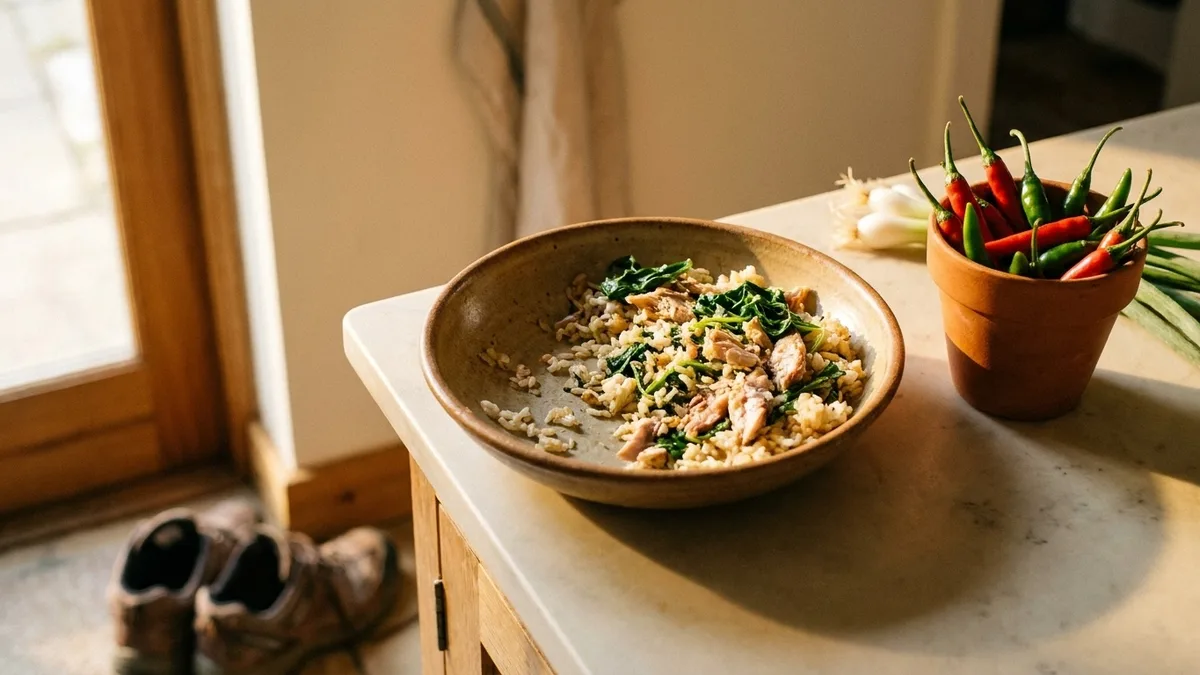
Most people assume the health gap between Hawaii and the mainland comes down to sunshine and scenery. Put a Hawaii resident in a Minnesota January and the habits mostly hold – the plate still gets assembled, the walk still happens, the break still gets taken.
The vacation picture is the easy one: plate lunches, poke, beach time, sun, and a plane ticket. Copy that at home and you are looking at a specialty shopping list and a fantasy calendar.
What actually travels is smaller. One bowl. A walk on any lawn. Thirty cool seconds at the end of a shower. A 12-inch pot. A 4:30 alarm and a chair in the shade.
Each of the nine below is a home version, not an island replica, and every one comes with a time, a gear list, or a price. You match, then you start.
So pick by your constraint, not your enthusiasm: no water access, no yard, or no spare hour. One ten-minute starter this week, one habit you deliberately skip for now, and the rest wait until something in your week changes.
Quick Tips Before You Start
Ten Minutes First
Do the ten-minute version of any habit for two weeks before stretching it to twenty.
Water Before Gear
Buy nothing until you have done the habit three times with what you already own.
Cut Fruit Wins
Fruit gets eaten when it is already cut, cold, and at eye level in the fridge.
Same Cue Every Time
Tie the new habit to something you already do daily, like the last email of the workday.
One Person, One Ask
Invite one neighbor for one dish instead of planning a group dinner you will cancel.
1. A one-bowl fish, rice, and greens plate
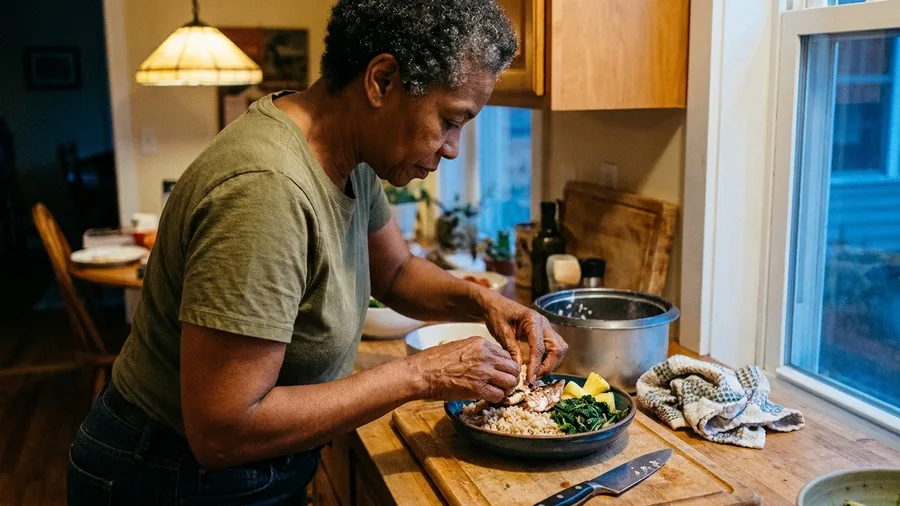
A Hawaiian plate lunch looks like a lot of food. The version worth copying is one bowl, and it comes together in about the time it takes rice to finish.
Start with 1 cup of cooked rice. Poi works too if you can find it, but rice is the honest home swap when taro paste means a drive to a specialty market. Then 4 ounces of grilled fish, a cup of greens, and half a cup of fresh fruit, all in the same bowl.
The fish is whatever you have. Fresh from the counter, frozen from the bag, or canned and drained, it all lands in the same place. Fifteen minutes, one pan, one bowl.
This is built for busy people who do not want a recipe. No marinade, no sauce to simmer, no three-part assembly. Rice on the bottom, greens wilted or raw, fish on top, fruit on the side of the bowl.
That is the whole mainland match: vegetable, protein, and fruit in one dish, with nothing you have to hunt down. The cost is the fish, the rice, the greens, and the fruit already in your kitchen.
One bowl does not need an island ingredient list. It needs a bowl and a Tuesday.
💡 Tip: Cook rice once for the week and portion it into four containers. The bowl takes 15 minutes only if the rice is already waiting.
Where the One-Bowl Plate Lands
A rough split of the bowl by weight, and what each part is doing there
Portions are a starting point, not a prescription. Adjust to your appetite and your doctor's advice.
2. A 20-minute barefoot beach or grass walk
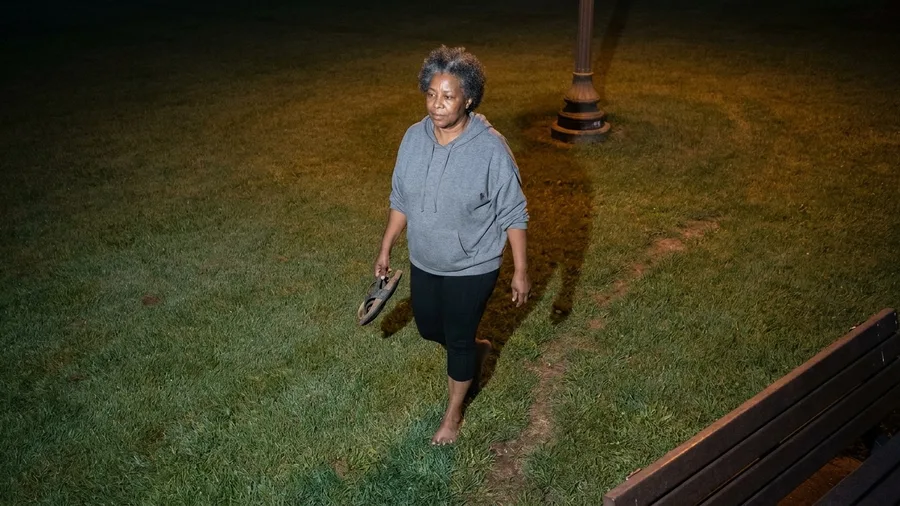
Any lawn or park strip will do. Shoes off, twenty minutes, no gear to buy and nothing to drive to.
The island version is sand at low tide, when the beach is packed hard and cool underfoot. Wet sand gives slightly with each step, so the small muscles around the ankle and arch work a little harder than they do on concrete. Over twenty minutes that is a mild balance and foot-strength session wearing a vacation disguise.
The swap is grass, a park, or a rubberized track. Same bare feet, same gait, and the ground stays soft. What you skip is hot pavement in July, which burns the soles and brings no benefit that grass does not already give.
Start with 10 minutes. First week, that is the whole assignment.
Two things surface after 50 that make this worth the effort. Balance declines quietly, and the ground underfoot stops being a background detail. Walking barefoot asks the foot to feel the surface and correct constantly, which is training you can do without a gym or a trainer.
If you live somewhere with no grass and no park, or your feet are numb from neuropathy, put the slippers back on and take the same 20-minute walk on the track. You lose the footwork, not the walk.
Eat first, then walk. A 15-minute one-bowl meal takes the friction out of the food side of the day, and a 20-minute walk takes almost none out of the movement side. One habit feeds the other.
💡 Tip: Walk the same loop every time. Familiar ground makes you braver about going barefoot, and a route you do not have to think about is a route you keep.
⚠️ COMMON MISTAKE
Do Not Start With Cold Water and a Hard Effort
The mistake people over 50 make with cold water is pairing the first dip with a workout or a fast walk, then treating the shivering as proof it worked. Do the dip on its own, at the end of the day, for the first two weeks. Cold plus exertion on a heart that is not used to either is a bad combination, and it is the reason so many cold-water habits die in week one.
3. A daily ten-minute cool-water dip
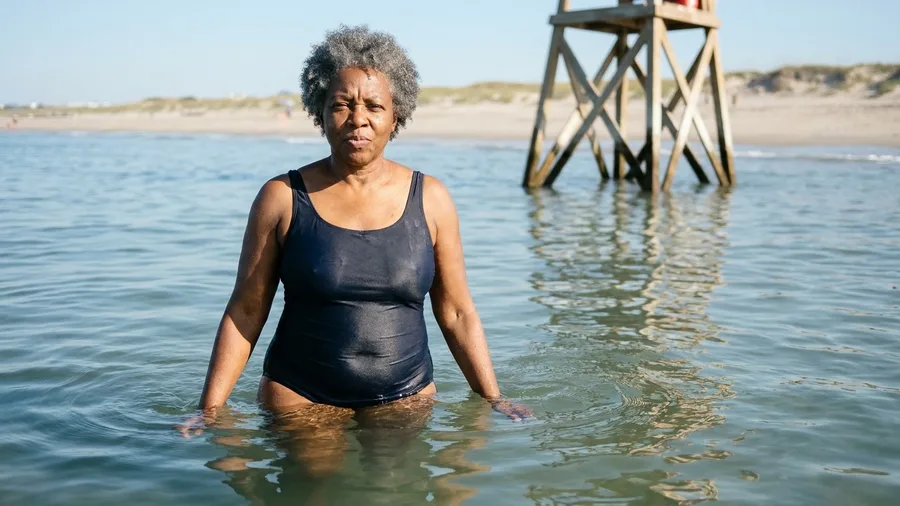
The reset does not require salt water, a pool membership, or a beach within driving distance. Ten minutes in cool water works the same whether the water is an ocean, a lap pool, or the shower you were going to take anyway.
In Hawaii the dip is often the swim itself: a slow float just past the break, or a few lengths, then out. What makes it a reset rather than a workout is the duration and the temperature, not the distance. Ten minutes, cool enough to make you breathe a little sharper at first.
Open water has one non-negotiable rule. A buddy or a lifeguard nearby, every time, no exceptions for strong swimmers or calm days. Cold water shuts down the ability to self-rescue faster than most people expect, and it does not announce itself.
This is for the person who needs a short reset, not a session. If your version of exercise means a hard hour, this is not that, and it is not meant to be.
The home swap is a normal shower finished with 30 seconds of cool. It costs nothing, needs no swimsuit, and fits into a morning that is already happening. The shock is the point, and the shock is the same.
Two practical notes. Thirty seconds feels like two minutes the first week, so count it rather than guessing. And if you have a heart condition or take medication that affects how you handle cold, ask your doctor before you start turning the dial.
That is the whole habit. One shower, one small push of cold at the end, ten minutes or a half minute depending on the day and the access.
Pot Garden: Home Version vs. No-Sun Swap
Sunny Sill or Patio
- 12-inch pot with drainage
- 6 hours of direct sun
- Water every 1 to 2 days
- Hawaiian chili peppers and green onion
- About $25 for pot, soil, two seedlings
Shade or Renter Without a Patio
- Green onion regrown in a glass of water
- Two inches of water, change it daily
- Snip the tops, keep the roots going
- No soil, no pot, no cost
- Stays productive about two weeks before it fades
4. A weekly talk-story meal with neighbors
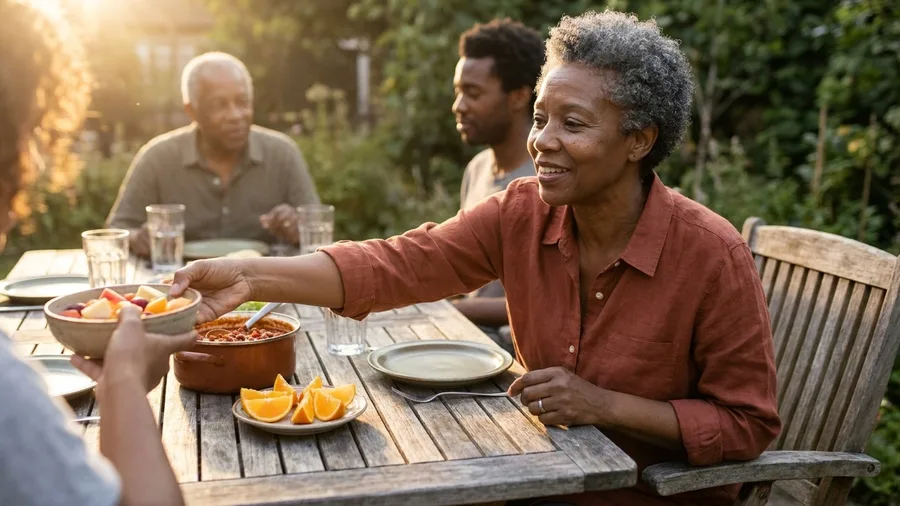
A ten-minute water reset is a solo act, and a health routine built only on solitude runs out of fuel. The social counterweight is a standing meal: four to six people, sixty to ninety minutes, one shared dish and one fruit on the table. Not a dinner party. A talk-story meal is the island version of what mainlanders call a potluck, and it works because the menu is deliberately boring.
The failure mode is ambition. People plan a full spread, cook for two days, and never do it again.
Keep the menu to one dish plus one fruit, and the meal becomes something a host can pull off on a Tuesday. The fruit does the work of dessert and side at once. Pick a night and hold it weekly, because a habit with no fixed slot quietly stops happening by the third week.
Who it fits: anyone who eats alone most nights, or skips meals entirely when the day gets busy. For adults over 50, shared meals do something a solo plate does not – they slow the pace of eating, add conversation, and turn a rushed refuel into a real pause. The meal itself is the point, not the food.
The people who should skip it are the ones who need quiet evenings to recover from the day. If a house full of people drains rather than restores you, a weekly cadence will start to feel like an obligation by month two – make it monthly instead, and protect it.
The home version is one dish and one fruit, nothing more. A pot of chili and a bowl of orange segments. A tray of baked chicken and sliced melon. That is the whole mainland match: no island ingredients, no feast, no occasion required beyond the people at the table.
One dish, one fruit, four chairs, ninety minutes. The meal is smaller than the reason you are having it.
— How to keep a weekly dinner from turning into a production
The habit fails when the menu is ambitious, not when the guest list is small.
5. A pot of Hawaiian chili peppers and green onion
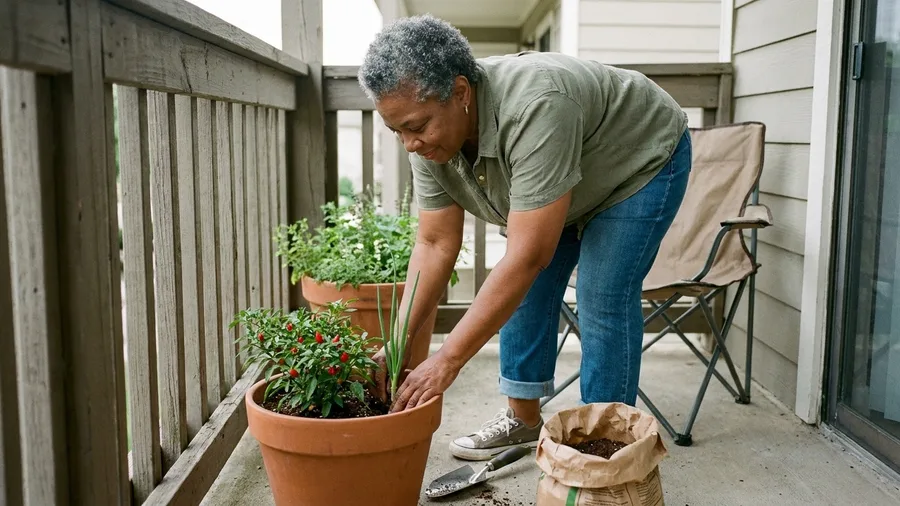
Anyone who has cooked a simple dish for a small group knows the recipe works only if there is something in it worth eating. Two seedlings solve that without a yard.
A Hawaiian chili pepper plant and a clump of green onion both grow in a 12-inch pot, need about 6 hours of direct sun, and want water every 1 to 2 days. The pepper is the one that gives the pot its personality, arriving small, bright, and hot enough that three or four of them carry a whole pot of stew, a plate of eggs, or a bowl of rice.
The setup costs about $25 for the pot, the soil, and the two seedlings, and you can find all of it at a hardware store or a weekend market.
This is the habit for renters. A sunny windowsill or a patio corner the size of a doormat is all it asks. The pot will not care that the lease is one year.
The sun is the part you cannot talk your way around. Walk the available space at 10 a.m. and again at 2 p.m. and watch whether the light hits the spot you picked. If 6 hours never lands there, do not spend the $25.
The free version is a green onion you already paid for. Put the root end, white base still attached, in a glass of an inch or two of water on the windowsill and change the water every couple of days. It goes green again within a week or so, and you snip the top and leave the base to keep going.
This is a small habit, and it behaves like one. The chili plant feeds a few meals a week from late summer into fall; the green onion feeds a garnish. Neither replaces a grocery run, and that is the point. The choice here is about the sunny spot, not about the ambition: $25 and a 12-inch pot for renters with light, a glass of water for anyone with a sill.
Counter Bowl — At a Glance
🍍 What Goes In
Pineapple and papaya, 1-inch pieces
🥣 How Much
2 cups total
📅 Eat Within
3 days
👀 Where It Sits
Eye level on the counter
🧊 Backup Swap
Frozen fruit if fresh will spoil
Why It Works
The bowl has to be more visible than the snack cabinet, or you will reach for the cabinet.
6. A countertop bowl of cut pineapple and papaya
The flavoring on the counter is one kind of default. The food you reach for when you are not hungry enough to cook is another, and the counter is where that one gets decided.
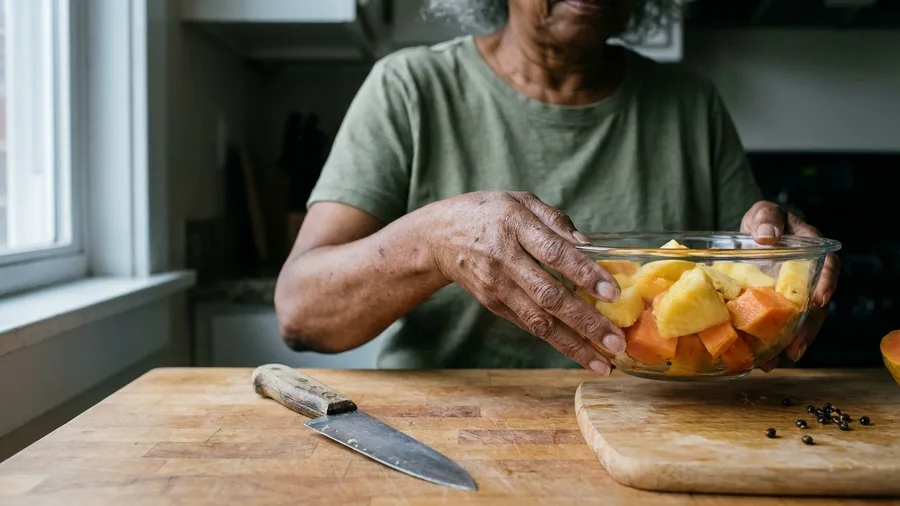
The island version is a bowl of cut pineapple and papaya sitting out, already in bite-size pieces, already cold. Cut the fruit into 1-inch chunks, 2 cups total, and put it where your eyes land before the pantry. At eye level on the counter, it wins the four-o'clock look; on the bottom shelf of the fridge, it does not.
The three-day clock is the part most people get wrong. Cut pineapple and papaya hold up for about 3 days in a lidded bowl in the fridge or a few hours on the counter, and after that the fruit turns soft and the bowl stops being inviting.
The waste-conscious swap is frozen fruit, which keeps the same habit alive for a fraction of the cost when a fresh pineapple will not get eaten in time.
This is for the snacker who wants an option already ready, but it depends on a mainland match: visible, cut fruit instead of a packaged snack. It guards against the whole pint and against the whole pineapple left in the crisper drawer to be discovered later.
The weekly spend can be modest because you are buying the fruit and nothing else. A pineapple and two papayas cost about the same as a bag of chips and a box of crackers, and the fruit bowl runs out of stock in a few days.
The habit is not a diet rule. It is a position on the counter, a knife, and three days of attention. Skip it if fresh fruit spoils faster than you eat it and a frozen bag will go the same way, and lean on the fruit you already know you finish.
💡 Tip: Squeeze half a lime over the cut fruit. It slows browning and makes the bowl taste deliberate rather than leftover.
🌅 Building the Pau Hana Break Into a Workday
Pick the cue
Choose the task that reliably ends your workday and make that the trigger.
Fill the glass first
Pour 24 ounces of lime water before you sit down so drinking it is not a decision.
Sit in shade, not sun
10 minutes at 4:30 p.m. on a porch, under a tree, or by a window with the screen off.
Leave the phone inside
The break stops being a rest the moment the inbox follows you onto the porch.
Stretch for eight minutes
Finish with five moves on the floor or a chair while dinner heats up.
Repeat the next day
Two weeks of the same cue turns a decision into a default.
7. A pau hana shade-and-water break
A ready snack handles the between-meal gap. The workday itself still needs a stop, and most people never build one.
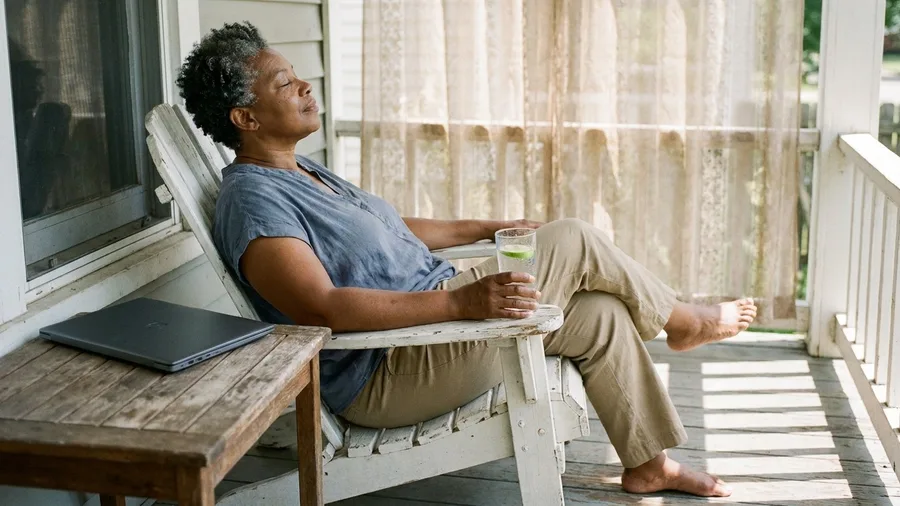
In Hawaii the stop has a name: pau hana, the moment work ends. The home version takes ten minutes in shade at 4:30 in the afternoon with 24 ounces of lime water, and the timing is the active ingredient, not a detail.
A fixed point in the late afternoon catches the hour when the day's worst decisions get made. That is when blood sugar is drifting, willpower is lowest, and the easiest thing is to slide straight into dinner prep, laundry, or a second shift of email with no seam between work and home.
The reason 4:30 works better than five, or whenever, is that it lands before the chores begin. A break taken after the evening starts is not a break. It is a rest stop on the way to more work.
One lime squeezed into 24 ounces of cold water is enough to make it feel like something bought rather than deserved. Seltzer and a slice work the same way.
Your cue matters more than your motive. Pair the pause with a task ending, or set a phone alarm labeled with what it is for. If the alarm says break, most people ignore it by day three.
This one is for the reader who already knows they skip breaks. If you are the person who finishes the yard or the project and goes right into the next thing, the schedule is your tool, not your willpower.
If your job keeps you outdoors, the arithmetic shifts: you may need more than 24 ounces and shade closer to the middle of the day, not the end of it. The pause still works. It just moves earlier and holds more water.
Nothing here needs a lanai, a view, or a bottle of cold water from the store. The mainland version is a ten-minute timer and a chair in whatever shade your building offers, placed before the evening starts instead of after it.
💡 PRO TIP
Hold the Stretch Long Enough to Count
The number that matters is time, not repetitions. Hold each of the five sunset stretches for 30 seconds, breathe through it, and do not bounce. Stretching that lasts 5 seconds per move feels productive and does almost nothing for the tissue. Eight minutes total, once, after dinner. That is the whole routine.
8. An eight-minute sunset stretch on the lanai
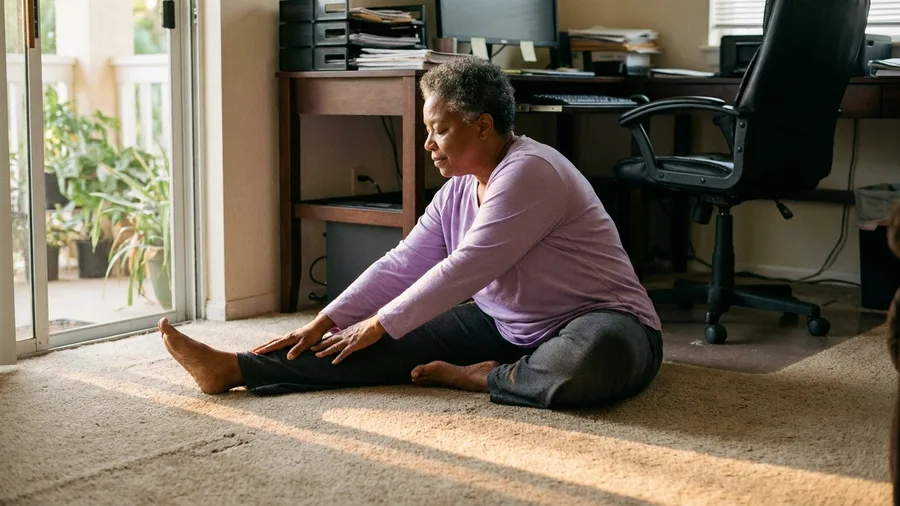
Once the evening has a seam in it, the hours after dinner can carry one more thing.
That is the point of the sunset stretch. Eight minutes and five moves, done on a lanai or a living-room floor, starting just after sunset or after dinner, not before.
This is the low-effort evening routine for people who sit most of the day. Eight minutes is short enough that there is no excuse to skip it and long enough to notice what has stiffened since the morning.
Five moves is the real ceiling. If you have to decide what to do, you will not do it.
The timing is what separates this from a workout. After dinner, the body is warm, the day is done, and a few slow moves through the hips, spine, and shoulders can shift the stiffness that built up at the desk without adding a training load at 8 p.m.
If standing balance is a concern, take the whole thing next to a chair and hold the back of it. Standing on one leg to raise the other hip is not a balance test. It is an unnecessary risk in a routine meant to relax you.
The mainland swap is a patch of floor. There is no gear to buy, no class to book, and no mat unless you want one. The barrier that stops most people is expectation, not equipment.
Eight minutes is the only number to hit. Skip the timer and the routine drifts into a few half-hearted reaches and a phone check. Set the timer and let it end at eight, even mid-stretch.
The version that holds is unglamorous: a chair for balance if needed, an open floor, and a short video or a sequence of five moves you can repeat without thinking.
💡 Tip: Run the five moves in the same order every time so you never have to remember what comes next. Order removes decisions.
9. A shared fruit shave ice once a week
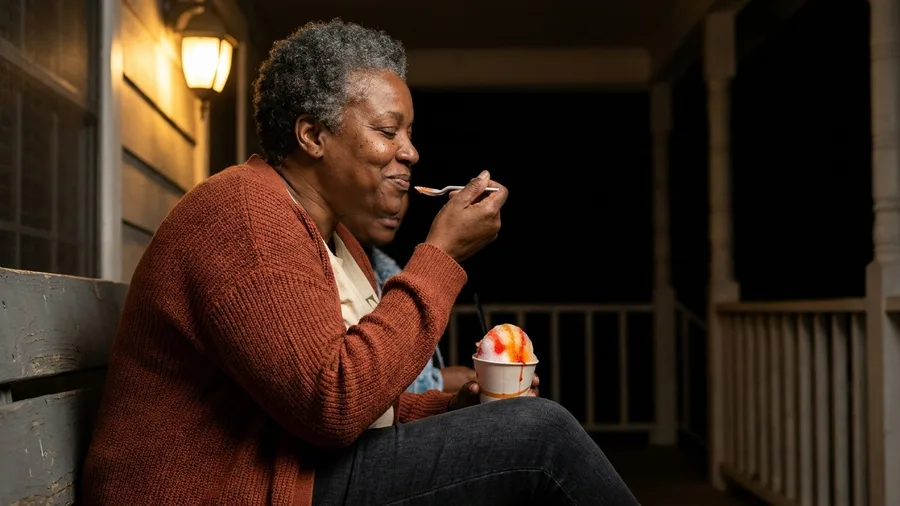
An evening stretch ends the day. A week is long enough to need its own ritual, and in Hawaii it often comes in a paper cup.
Shave ice is a cup of crushed ice, maybe 8 ounces, with fruit syrup poured over, eaten on a bench with someone else. Once or twice a week is the rhythm. Not daily.
What separates this from a dessert habit is the size and the company. A single 8-ounce cup cut between two people is a fraction of the treat most of us pour into a bowl on a Tuesday night for no reason.
The home version costs almost nothing: crushed ice, blended fruit spooned over instead of syrup, maybe a squeeze of lime. It tastes like the thing you remember because it is the thing you remember.
This is for the reader who eats a treat every day and cannot see it. If you want something sweet without opening a whole pint, the cup with a lid is the restraint.
Keep it occasional. Once or twice a week is the point. A daily shave ice stops being a ritual and becomes the day's sugar supply, which is a different habit with a different cost.
No beach stand required. The mainland version is crushed ice, fruit, and a shared cup on the porch or in the kitchen. The treat is not the setting. It is the pause and the sharing.
Frequently Asked Questions
Do I need poi or any specialty Hawaiian ingredient to start?
No. Rice is the home swap for poi and works in the same bowl. The one-bowl plate runs on fish, rice, greens, and fruit from any grocery store. Specialty ingredients are optional, and skipping them changes the cost, not the nutrition.
What if I have no beach, no pool, and no yard?
Do the cold-shower version of the dip: 30 seconds of cool water at the end of a normal shower, building to a minute over three weeks. For the walk, use a park lawn, a track, or a grassy median. The habit is the barefoot surface and the 10 to 20 minutes, not the ocean.
How long before any of these habits shows a result?
Expect two to three weeks for the shade break and the evening stretch to feel normal, and four to six weeks before the one-bowl plate or the walk changes how you feel in the morning. Cold-water dips tend to give an immediate afternoon effect and no long-term change unless you keep them up.
Is the weekly talk-story meal realistic if I do not have close neighbors?
Start with two people, not six. A cousin, a coworker, one neighbor you already nod to. One pot of something and a plate of cut fruit is a low enough bar to actually happen, and the group grows once people know the night is standing.
Can I do all nine habits at once?
You can, and most people quit by week two if they try. Pick one habit that matches your constraint, do the 10-minute version for two weeks, and add a second only when the first is automatic. Nine habits at 70 percent is worse than two habits at 100 percent.
Should I check with a doctor before starting the cold-water dips or the barefoot walks?
Ask your doctor about cold-water immersion if you have a heart condition, uncontrolled blood pressure, or a history of cold reactions. Ask about barefoot walking if you have reduced feeling in your feet or an unhealed foot wound. The other seven habits do not need clearance.
Which One Fits Your Week Right Now
Pick one habit by your constraint, not by your enthusiasm. That is the verdict: one starter this week, not nine.
No water access: end a normal shower with 30 seconds of cool water and skip the full open-water dip until a buddy or lifeguard is available. No yard: regrow green onion in a glass of water, or set one 12-inch pot on a sunny sill, and skip the garden if six hours of sun is not there. Limited time: walk 10 minutes on grass or a track, and skip the talk-story meal if quiet evenings are the only quiet you get.
The trip was never the habit. The home version is. Do your one starter this week, skip the one that does not fit yet, and the rest can wait until the constraint changes. The gap between Hawaii and the mainland was never the sunshine after all. It was the routine, and one bowl on a Tuesday is where yours starts.
Pick one and do the ten-minute version this week
Scroll back to habit one and assemble the bowl on Thursday, or start the shower dip tonight. One habit, two weeks, then decide about the second.