
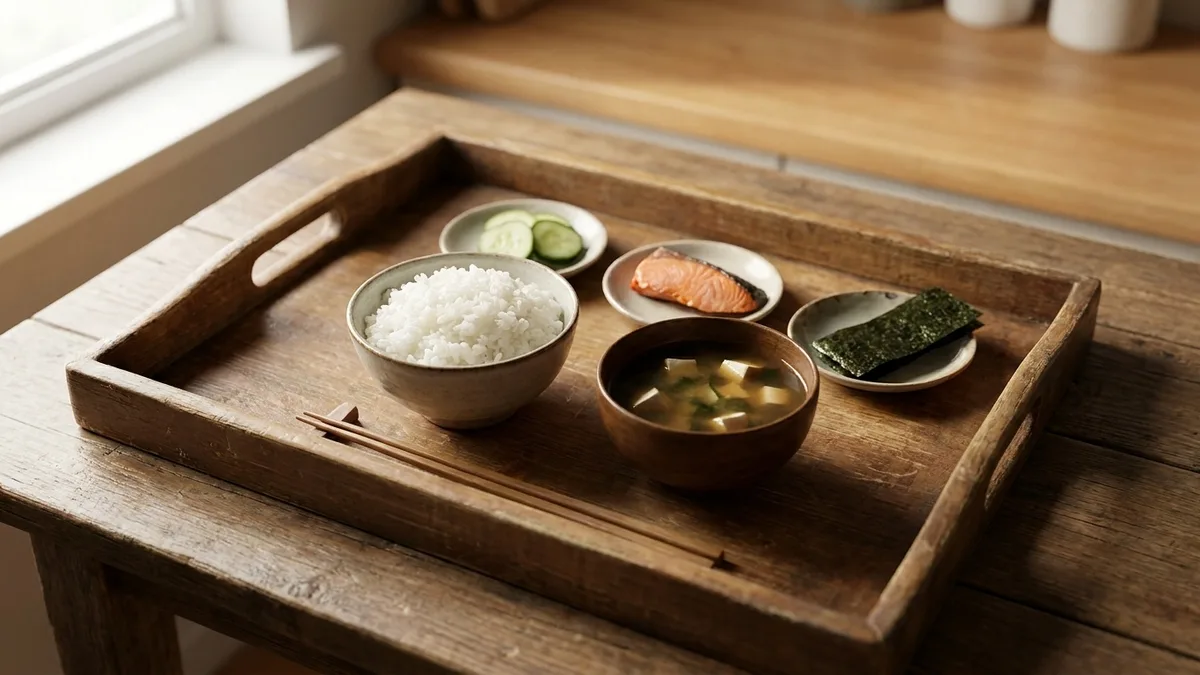
One cup of cooked short-grain rice, about 160 grams, and four to six dishes of two to four tablespoons each. That is the entire architecture of a Japanese breakfast, and the number that explains why your own morning feels nothing like it.
Picture that tray beside your usual one: two eggs, two strips of bacon, two slices of toast under butter and jam, orange juice, coffee with milk. Sweet, large, protein-first. The Japanese tray runs the opposite way, and the first bite can taste like lunch simply because nothing on it is trying to be sweet.
This is not a bigger American breakfast. It is plain rice made eatable by small salty and sour things, with no juice and no spread anywhere on the tray. The hotel spread you remember is hospitality, not what a Japanese household eats on a Tuesday.
The difference is proportion and job. Rice is the meal; every small dish is accompaniment, and that single reversal is what your morning palate has to adjust to.
A four-part version, starch and soup and protein and pickle, is enough to test it at home, for about five dollars and twenty minutes. What you are deciding is whether the tray earns its washing up.
| Element | Japanese version | Typical American version |
|---|---|---|
| Starch | 1 cup (160 g) cooked short-grain rice, plain | 2 slices toast with 1 tbsp butter and 1 tbsp jam |
| Protein | 1 egg over hot rice with 1 tsp soy sauce, or 4 oz (115 g) salted salmon | 2 scrambled eggs, 2 strips bacon |
| Soup or side | 1 cup (240 ml) miso soup: 1 tbsp (18 g) miso, 2 tbsp tofu cubes, 1 tsp dried wakame | None — or a second egg |
| Pickle | 2 tbsp (30 g) takuan or salted cucumber | None |
| Drink | 8 oz unsweetened green tea: 1 tsp leaves, 175°F water, 60–90 seconds | 8 oz orange juice, 8 oz coffee with 2 tbsp milk |
| Hands-on time | 20 minutes | 15 minutes |
| Cost per person | $4–6 | $3–6 |
| Dishes to wash | 4–6 small bowls and plates | 2–3 plates, 1 pan |
Rice is the meal; the rest is accompaniment
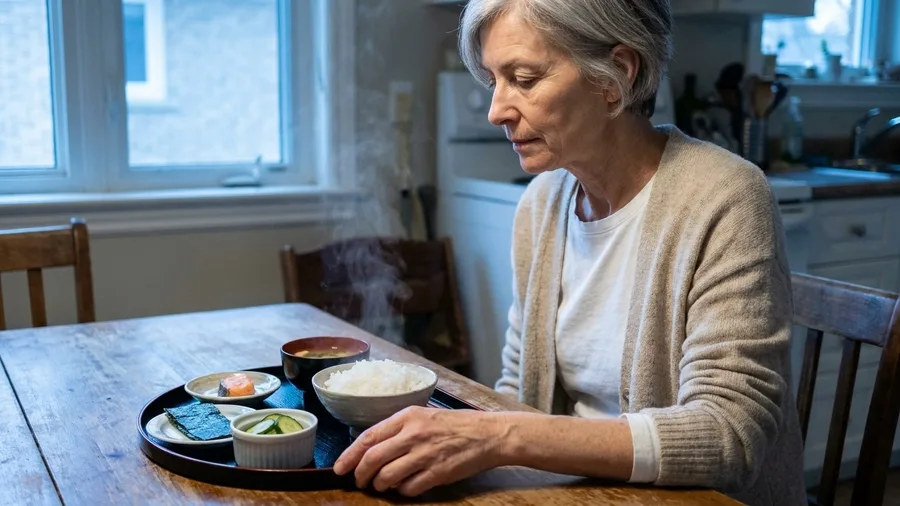
A Japanese breakfast is a bowl of plain rice with a handful of very small, salty or sour dishes arranged around it.
At the center sits 1 cup (160 g) of cooked short-grain rice, a full, generous portion, and it is left plain on purpose. No butter, no salt, no sauce pooled on top. It is the one thing on the tray you are meant to eat a lot of, and it is deliberately the least seasoned thing there.
Around that bowl go four to six small dishes, each holding only 2 to 4 tablespoons. Not a second course and not a third. Picture a ramekin of pickles, a small bowl of miso soup, a few bites of salted salmon, a raw egg with a teaspoon of soy sauce over it.
Every one of those dishes runs salty or sour, and that is not an accident of taste. Each is built to be eaten against unseasoned rice, so a little goes a long way and a lot would be too much.
The proportion is what throws people. The tray reads as several snacks set beside a bowl of rice, not a plate of food with sides crowding it. The rice is the meal; everything around it is seasoning.
Miso soup and pickles do the quiet work
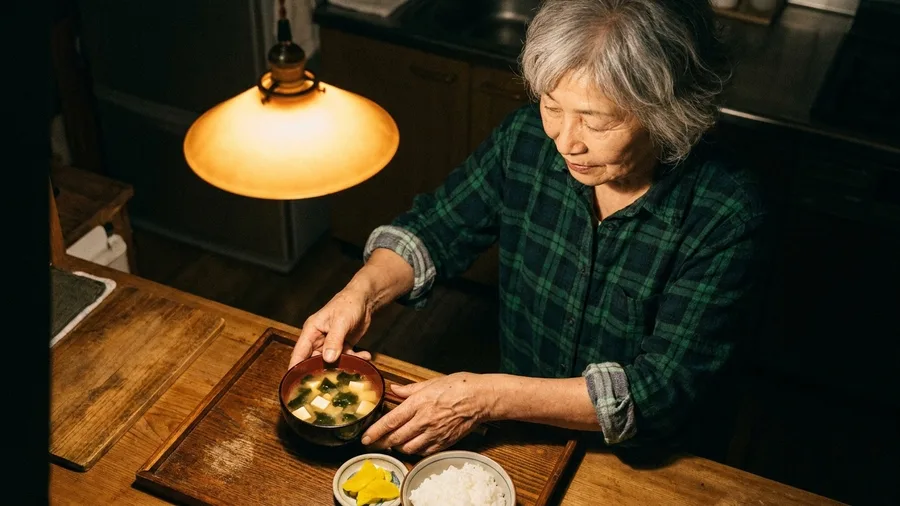
Soup and pickles carry most of that seasoning work, which is why they earn their own small dishes instead of being folded into one.
Start with the miso. Stir 1 tablespoon (18 g) of paste into 1 cup (240 ml) of water that is hot but not boiling, then add 2 tablespoons of tofu cubes and 1 teaspoon of dried wakame. The temperature matters: boil the soup and it turns grainy and bitter, and no amount of stirring brings it back.
The pickles go the other direction entirely. Two tablespoons (30 g), cold and crunchy, either store-bought takuan or thin cucumber slices tossed with 1 teaspoon of salt and left 20 minutes on the counter.
One is hot and wet, the other cold and sharp, and that contrast is the whole point. Neither is a side dish in the American sense. Each is a tool wielded against the rice, the thing that makes the next bite of plain grain taste like something.
The cost is almost nothing. Soup and pickles together run well under $1 a serving, and between them they supply the salt, the savoriness and the crunch that turn a bowl of rice into breakfast.
💡 PRO TIP
The off-heat rule for miso
Boiling miso paste turns it grainy and bitter. Heat the water to just below a simmer, take the pot off the burner, then whisk in one tablespoon of paste per cup. Add tofu and wakame after the miso goes in, not before.
The protein is small, never a plate
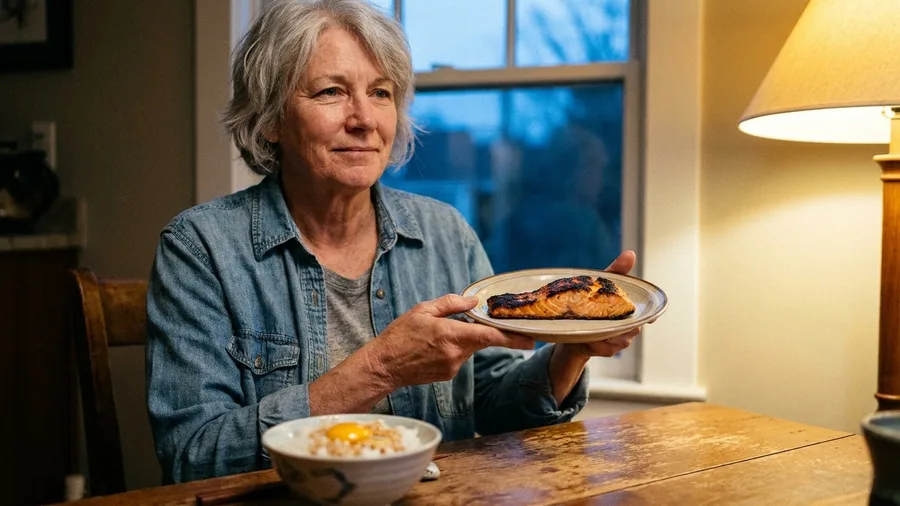
The meat is the smallest thing on the tray, a deck of cards rather than a plate, because its job is richness and savoriness, not bulk.
The quickest version is tamago kake gohan: crack 1 egg over hot rice and stir in 1 teaspoon of soy sauce, and the heat cooks it into something silky. If a raw egg is not for you, a soft-boiled egg on top does the same work without the worry.
For a cooked protein, take a 4 oz (115 g) salmon fillet, salt it and leave it 20 minutes, then broil it 6 to 8 minutes until the edges char. No marinade, no glaze, nothing that would compete with the rice underneath.
And there is a no-cook stand-in that fits the whole logic of the tray: a $2 can of mackerel, opened, drained and set down in its own small dish.
Notice the pattern across all three. Whether it is an egg, a fillet or a can of fish, the protein comes in at roughly a deck of cards and never grows into the main event. It adds a little fat or savor to the grain, then gets out of the way.
The Four-Part Formula — At a Glance
🍚 Starch
1 cup (160 g) cooked short-grain rice
🥣 Soup
1 cup miso soup (1 tbsp paste)
🍣 Protein
1 egg or 4 oz (115 g) salmon
🥒 Pickle
2 tbsp takuan or salted cucumber
⏱️ Hands-on
20 minutes
💰 Cost
$4–6 per person
The proportion is the recipe
Keep each dish small — 1 cup rice, 4 oz fish, 2–4 tbsp pickle — and you have a believable Japanese breakfast without a single special tool.
Nothing on the table is sweet
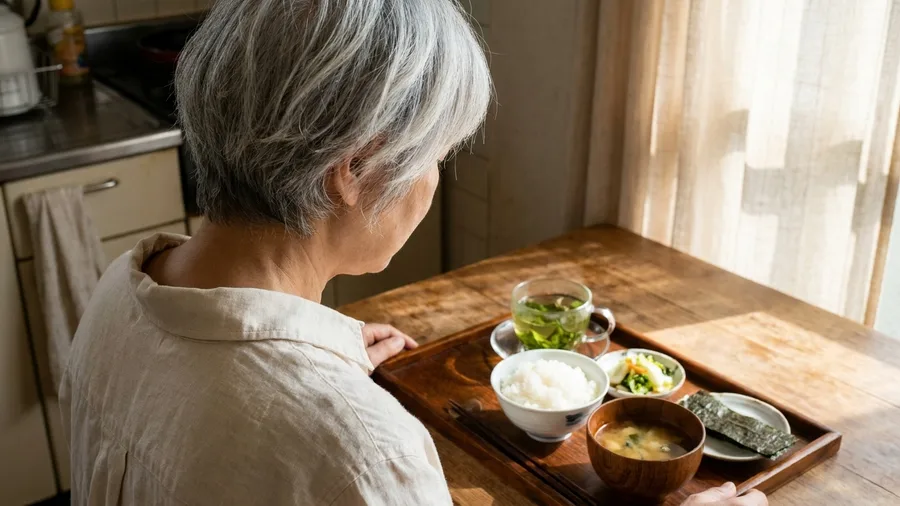
The flavor runs savory because nothing at the table is built to be sweet. There is no 8 oz glass of orange juice, no tablespoon of jam spread on anything, no sweetened cereal and no flavored yogurt. The two sweetest things on the American plate simply have no counterpart here.
The drink sets the tone. Brew 1 tsp of green tea leaves in 8 oz of water at 175°F and steep it 60 to 90 seconds, and you get something bitter-edged and grassy, with nothing added. No sugar, no honey. Several readers will taste it the first time and reach for something to soften it, and there is nothing on the tray meant to.
Sweetness is not banned; it just is not a course. When it shows up at all it arrives as a piece of fruit or a pickled plum, one small thing at the edge of the tray rather than a slot in the meal.
What carries the flavor instead is savoriness, and it comes from three places: miso in the soup, soy sauce on the egg or the fish, and a sheet of nori cut into strips. Salt, fermentation and seaweed do the work that sugar and butter do on toast.
This is the difference a Westerner tends to notice before any of the others, because it lands on the first sip and the first bite. Your morning palate expects a sweet note somewhere, and at seven o'clock its absence reads as strange before it reads as good.
The Japanese Tray vs. The American Plate
Japanese breakfast
- Plain rice at the center — 1 cup, unseasoned
- Four to six small dishes, 2–4 tbsp each
- Salty and sour flavors: miso, pickles, soy
- Unsweetened green tea to drink
- 20 minutes hands-on, $4–6 per person
Typical American breakfast
- Eggs and bacon at the center
- Two slices toast with butter and jam
- Sweet drink: 8 oz orange juice
- Coffee with milk and often sugar
- 15 minutes hands-on, $3–6 per person
It is comfort food, not a health program
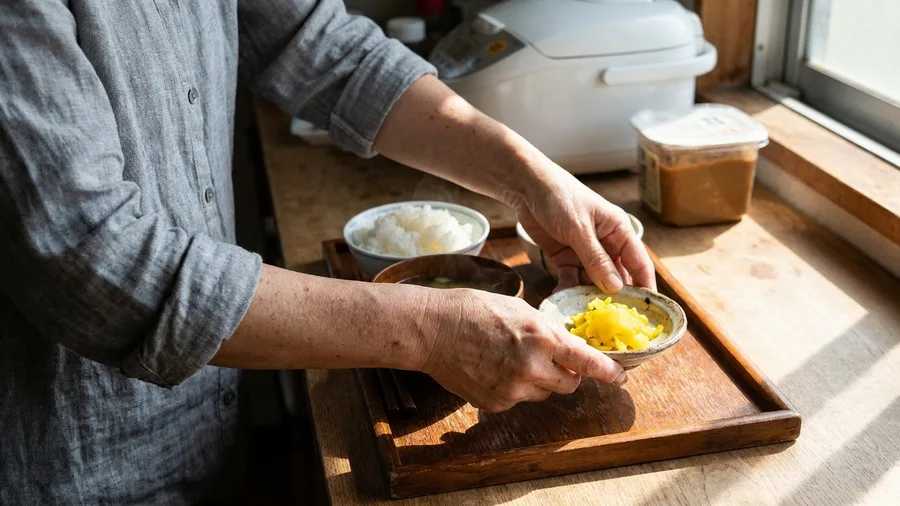
Ordinary home cooking, not a regimen anyone is following. Rice, soup and pickles are what people eat because it is Tuesday, and no one at the table is counting anything. It is the same category as toast and cereal in an American kitchen: the default, not a choice made for the body.
So treat the first experience with it as a taste, not a test. The tray answers no nutrition question, and it cannot tell you whether it suits your blood pressure, your blood sugar or your medications.
If you have a health condition, that conversation belongs with your doctor or a registered dietitian, not with a menu.
Comfort is where the meal actually earns its place. Familiarity is the whole engine of a breakfast: you eat the same thing most mornings because you grew up with it, and the emotional weight comes from repetition rather than from what the food does to you. For a close look at the ordinary foods that anchor another long-lived eating routine, see what active older eaters have daily. A Japanese tray inherited that role for the people who grew up on it.
What genuinely differs is the shape: plain rice with small salty, sour things around it, rather than a sweet plate or a supplemented one. Change the shape and you change how the morning feels. Whether it changes anything inside you is a different question, and this tray does not answer it.
Four to six dishes mean real washing up
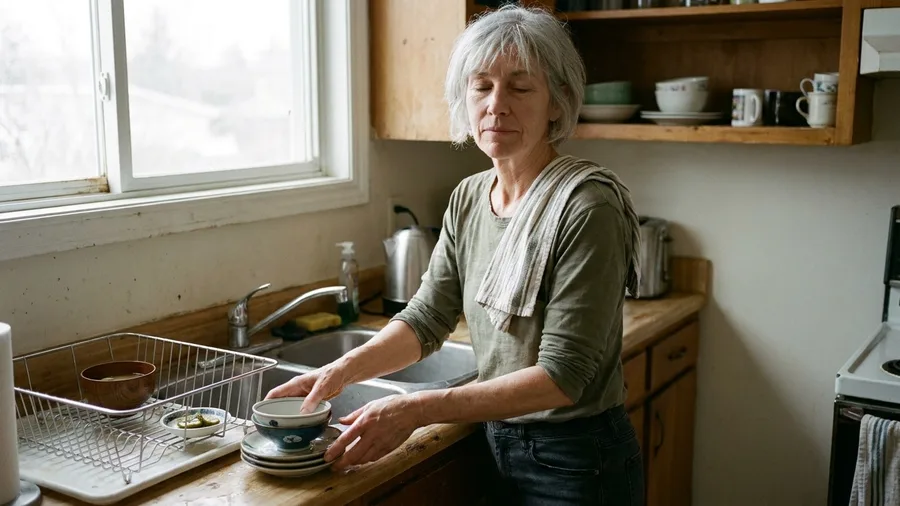
Budget 20 minutes of hands-on time and four to six bowls, plates and little dishes per person, usually washed by hand. That dish count, not the cooking, is the real weekday price of the full tray.
The first shop runs about $12 to $18 for miso, nori, short-grain rice and a jar of pickles, and those four purchases carry you through many mornings. After that a serving lands at roughly $4 to $6 per person, which is line for line what the bacon-and-toast plate costs.
But most weekday households in Japan do not run the full tray either.
They strip it back: rice, miso soup and one other thing. Sometimes that one thing is an egg, sometimes pickles, sometimes nothing at all. The eight-dish spread is an occasion, and holding yourself to it on a Tuesday would be like cooking a full American diner breakfast before work.
If three dishes feels like the right size for your kitchen, that is the meal, not a shortcut of it. Rice in one bowl, soup in a mug, pickles in a small dish, and the sink clears in a few minutes. The formula survives the trim; only the washing up changes.
How much breakfast can you actually handle on a weekday?
- 🟢 Rice, soup and a fried egg — Two dishes, 10 minutes — the weekday default
- 🟢 Rice, soup, pickles — Three dishes, 15 minutes — still honest
- 🟡 Rice, soup, salmon, pickles — Four dishes, 20 minutes — a Saturday tray
- 🔴 The full hotel spread — Eight to ten dishes — a showcase for guests, not a Tuesday
The hotel tray and the Tuesday tray differ
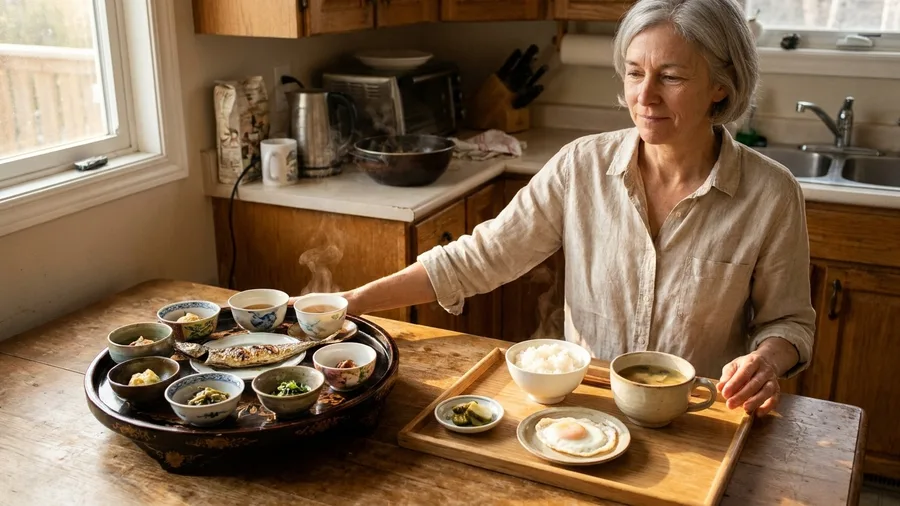
Japanese households do not eat the hotel spread on a weekday, and most mornings they eat less than the tray you saw on vacation.
The full ryokan or hotel breakfast runs 8 to 10 small dishes, arranged in a lacquered box with a grilled fish at the center and a dozen little bowls fanned around it. That tray is hospitality. It is put on for guests the way a diner puts on a short stack and three kinds of syrup.
Sunday at home is different. A normal weekday morning is a bowl of rice, a mug of miso soup, an egg and a spoonful of pickles, eaten standing at the counter or in ten minutes before the train. Bread and coffee are just as ordinary a Japanese breakfast as rice; bakeries open early for a reason.
Judging the everyday meal by the hotel tray is like judging an American breakfast by the laminated menu at a diner: same idea of breakfast, wildly different effort and occasion.
the weekday standard is three or four dishes, not eight. That is close to what a four-part version looks like, which is what makes building one at home realistic rather than theatrical.
Build it from starch, soup, protein, pickle
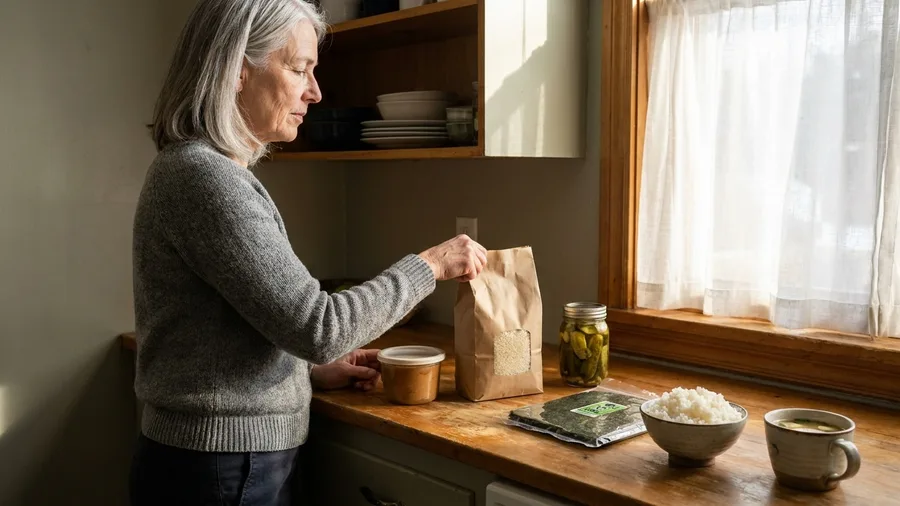
The formula is one starch, one soup, one protein and one pickle, and nothing on the list requires a Japanese market.
Rice is the starch: short-grain if you have it, but any rice you already cook will do. Soup is a sachet of instant miso stirred into hot water. Protein is an egg, a canned mackerel, or a fillet of salmon from the fish case. Pickle is a spoonful from a jar.
Keep every dish small. One cup of cooked rice, about 4 ounces of fish, 2 to 4 tablespoons of pickle. The proportion is the recipe, not the ingredient list, and a reader who piles the salmon on like a dinner plate has built a different meal.
Four elements are enough to test whether you like eating this way. A fifth thing, a sheet of nori torn into strips or a pickled plum or a sliced tomato, is a mood, not a requirement.
The three-dish temptation is real. Rice, soup and an egg is a fine breakfast, but leaving out the pickle leaves out the sharp cold thing that makes the rice taste like more than rice.
🍳 Your first Japanese breakfast in 20 minutes
Start the rice
Put 1 cup of cooked short-grain rice on — or reheat frozen rice if you are taking the shortcut.
Heat the water for soup
Bring about a cup of water to just below a simmer while the rice finishes.
Make the miso
Take the pot off the heat and stir in 1 tbsp miso, then add 2 tbsp tofu cubes and 1 tsp dried wakame.
Cook the protein
Salt a 4 oz salmon fillet for 20 minutes and broil it 6–8 minutes — or fry an egg instead.
Set out the pickle
Spoon 2 tbsp takuan or salted cucumber into a small dish and cut a sheet of nori into strips.
Brew the tea
Steep 1 tsp green tea leaves in 8 oz water at 175°F for 60–90 seconds — no sugar, no milk.
Sit down and eat
Everything should land on the table within 20 minutes, with four dishes to wash.
Four purchases cover weeks of breakfasts

Four items do it: a tub of miso or a box of sachets, a pack of nori, a bag of short-grain rice, and one jar of pickles. That is the whole list.
Ring it up at an Asian grocery and the total lands between $12 and $18. Skip the specialty store and the international aisle of a regular supermarket carries all four, though the pickle choice may come down to one brand.
The bag of rice is the big line item, and it is also the one that keeps going. Measured at 1 cup cooked per morning, a single bag covers weeks of breakfasts before you need to think about it again.
Some shortcuts hold up. Frozen cooked rice portions out in minutes, instant miso sachets remove the measuring spoon, and a can of mackerel at about $2 stands in for the salmon on a morning you have no intention of broiling anything. None of them breaks the formula – the four parts are still there.
You need no special crockery. A mug takes the soup, a cereal bowl takes the rice, and the pickle can sit in any small dish you already own. Four purchases, weeks of mornings, and the proportions from the tray intact.
Before You Shop for Your First Tray
-
Check your rice Short-grain, not long-grain — the stickiness is the point.
-
Decide on instant vs. tub miso Sachets are easier; a tub is cheaper per serving.
-
Pick one pickle you will actually eat Takuan is classic; cucumber with salt is the easy start.
-
Choose your protein Egg, salmon or canned mackerel — no need to buy all three.
-
Plan for four bowls Somewhere to wash and dry them without a fight.
The first one takes 20 minutes and $5
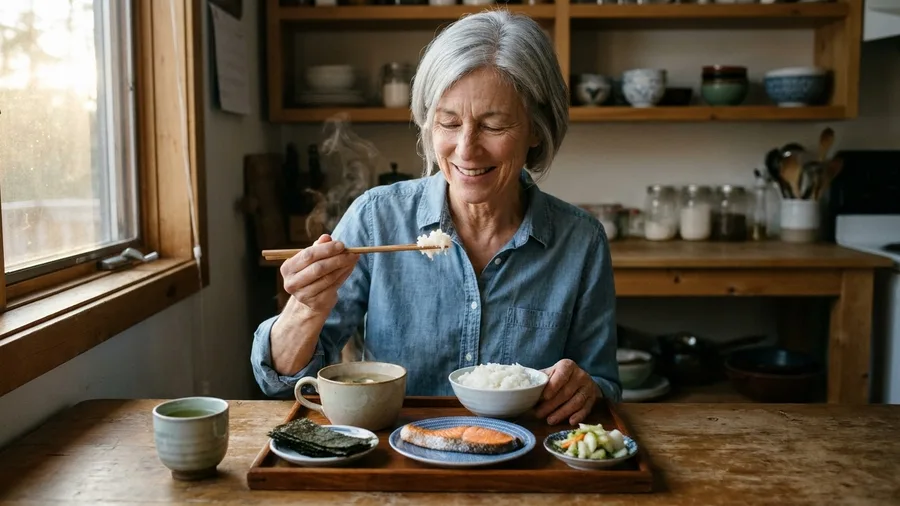
The whole breakfast is a sequence, not a recipe: rice first, salmon under the broiler, water on, and everything else assembled while those three things happen. Start the rice, and if it is frozen, one cup of cooked short-grain rice goes into the microwave before anything else is touched. While it heats, a 4 oz salmon fillet gets a salt rub and goes under the broiler for 6 to 8 minutes, long enough to cook through and short enough that you can watch it.
Water heats in a small pot to just below boiling, then comes off the heat before 1 tbsp of miso goes in. Stir it into the hot water off the burner, add 2 tbsp tofu cubes and 1 tsp dried wakame, and let the soup sit while the fish finishes. Boiling the miso after it goes in turns the soup grainy and bitter, so the pot comes off the heat first.
2 tbsp pickles go into a small dish, one sheet of nori gets cut into strips with kitchen shears, and green tea brews at 175 degrees for 60 to 90 seconds. The tray is done in the time the rice takes, and the hands-on work is about 20 minutes from cold stove to table.
Then sit down with it. The cost lands around $5 per person once the pantry is stocked, and four dishes go into the sink: the rice bowl, the soup mug, the plate the salmon sat on, and the pickle dish. That is the whole first breakfast, and it is the same four-part formula every morning after it.
Frequently Asked Questions
Is a Japanese breakfast healthy?
It can be part of a healthy diet, but the tray itself is not a health program. It is plain rice with small salty accompaniments — no promise about your body. If you have a health condition, ask your doctor or a registered dietitian rather than taking menu advice from an article.
Can I make a Japanese breakfast without special ingredients?
Yes. Use the four-part formula — starch, soup, protein, pickle — with instant miso sachets, canned mackerel or a fried egg, jarred pickles, and bagged rice from any supermarket. The proportion is what makes it work, not the shopping list.
Do Japanese people eat rice every morning?
Many do, but bread and coffee are ordinary Japanese breakfasts too. The full multi-dish tray is more common at hotels and inns than in a weekday home, where rice, miso soup, an egg and pickles is a realistic version.
Why does my miso soup taste grainy?
You probably boiled it. Miso paste should go into hot but not boiling water — take the pot off the heat first, then stir in one tablespoon of paste per cup. Boiling turns it grainy and bitter.
How much does a Japanese breakfast cost per person?
About $4 to $6 per person once the pantry is stocked, with a first shop of $12 to $18 for miso, nori, short-grain rice and pickles. That covers weeks of breakfasts.
What if I don't like pickles?
Start with the soup and protein and skip the pickle entirely for your first attempt. The four-part formula is a guide, not a rule — but the pickle is what makes plain rice taste new again, so try a small portion before you write it off.
Try the four-part version once — then decide if the dishes are worth it
The verdict is to build the four-part version once, rice and soup and protein and pickle, before you decide whether the full tray is worth the washing up. The test is the meal on your own table on an ordinary morning, not the hotel photograph. If the small salty dishes against plain rice make sense by the second bite, you will know; if they do not, you spent twenty minutes and five dollars finding out.
If what you actually want is a sweet, cold, five-minute breakfast, cereal and juice are a good morning and there is no failure in choosing them. Choosing what genuinely fits your morning is its own kind of curiosity, and the habits of curious people show how small daily questions keep that alive.
So start with the four staples, miso and nori and short-grain rice and pickles, or, if even that is a step too far, a box of instant miso sachets and a bag of frozen rice. Eat them with a fried egg tomorrow. One cup of rice at the center, three small things around it, and the tray is yours.
Start with the four staples
Buy miso, nori, short-grain rice and pickles on your next shop — or grab instant miso and frozen rice if that is all you can manage. Tomorrow morning, cook one cup of rice, stir one tablespoon of miso into hot water, fry an egg, and sit down to eat it.