

The rice cooker clicks to warm, the skillet comes off the heat with the salmon still glossy, and a small saucepan of miso broth is the last thing on the counter. Dinner is done before anyone has asked what is for dinner.
Six p.m. arrives, the fridge door swings open, and there is still no plan. Maybe ichiju sansai turned up in a feed a few weeks ago and got filed as either a Japanese recipe or something restaurants do.
It is neither.
It is a count: one soup, three sides, rice alongside. That count is the entire instruction. Dinner stops being what should I cook and becomes which three sides, with rice already decided before the fridge opens. By the end you will be able to sort any dish into soup, protein side, vegetable side, or pickle, and build tonight's meal from a normal grocery run for roughly $5 a serving.
Ichiju sansai means one soup, three sides
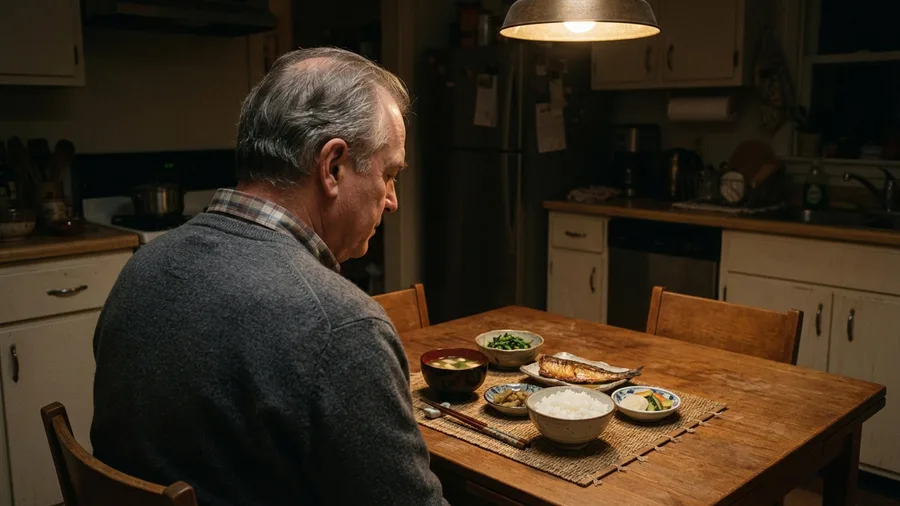
Ichiju sansai translates as one soup, three sides, and the name is doing arithmetic rather than describing a dish. Ichi is one, ju is soup, san is three, sai is a side dish. Read the phrase as a count and it stops looking like a recipe you have to find and starts looking like a number you have to hit.
On a given night the table holds a small bowl of miso, a plate of something protein, a vegetable, and something pickled. The dishes change with the season and the fridge. The count does not, which is why Japanese home cooking can repeat the same structure night after night without anyone getting bored of it.
Rice is on the table every time, but it is not one of the numbers. The formula describes what sits around the rice, never the rice itself.
Four counted components total, soup plus three sides. A restaurant kaiseki menu runs many courses and a chef decides them. Ichiju sansai is the everyday home table, a plain count anyone can fill from whatever is in the kitchen.
Rice is the base, not one of the three sides
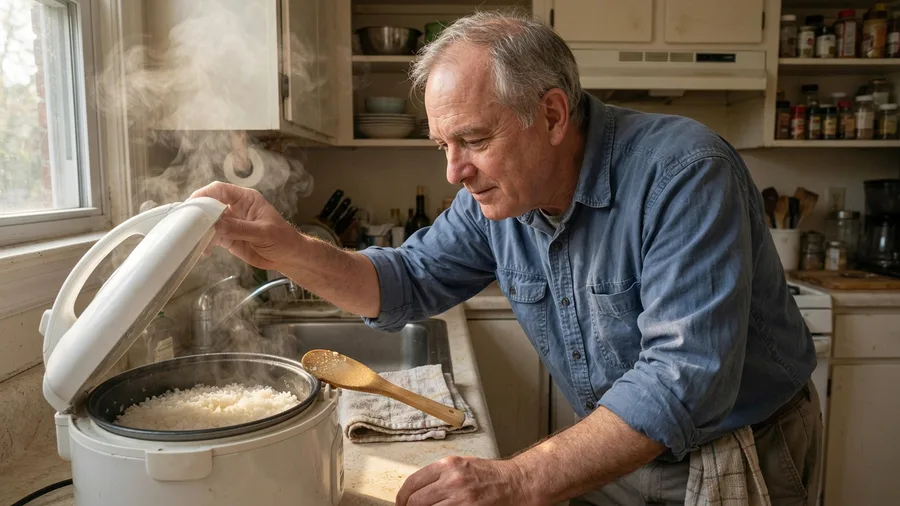
Rice sits outside the count because the count assumes it is there. Strip it away and soup plus three sides is a plate of condiments, nothing to dilute the salt or soak up the broth; the phrase never bothers to name rice because no Japanese cook would set the table without it.
What goes in the bowl matters less than most people expect. One cup of cooked short-grain rice per person is the working amount – the plump, faintly sticky grains that hold together well enough to lift with chopsticks and give a bite some resistance.
Switch to barley, or cut the rice half-and-half with it, and nothing in the formula shifts. Barley is a variation inside the base, not a fourth side smuggled in the back door.
Now taste a spoonful of the soup on its own and notice how strong it reads. That intensity is deliberate: miso broth and teriyaki salmon are seasoned harder than a Western main because every bite lands against plain rice, which softens the salt and stretches a small portion of fish across a full bowl.
The payoff is a decision you never make at 6 p.m. Rice is the one position on the table already settled before the fridge opens, and it is the cheap bulk that lets three modest sides feed four people.
| Component | Example | Amount for four | Approx. cost |
|---|---|---|---|
| Rice (base, not counted) | Steamed short-grain | 4 cups cooked, 1 cup per person | $0.60 |
| Soup | Miso with tofu and wakame | 4 x 8-ounce bowls | $3.00 |
| Protein side | Teriyaki salmon | 16 ounces, 4 ounces per person | $12.00 |
| Vegetable side | Sesame spinach | 2 cups cooked | $2.50 |
| Pickle side | Cucumber sunomono | 1 cucumber, 2-3 tablespoons per person | $1.50 |
| Total | About $5 per serving | $19.60 |
The soup is a small separate bowl
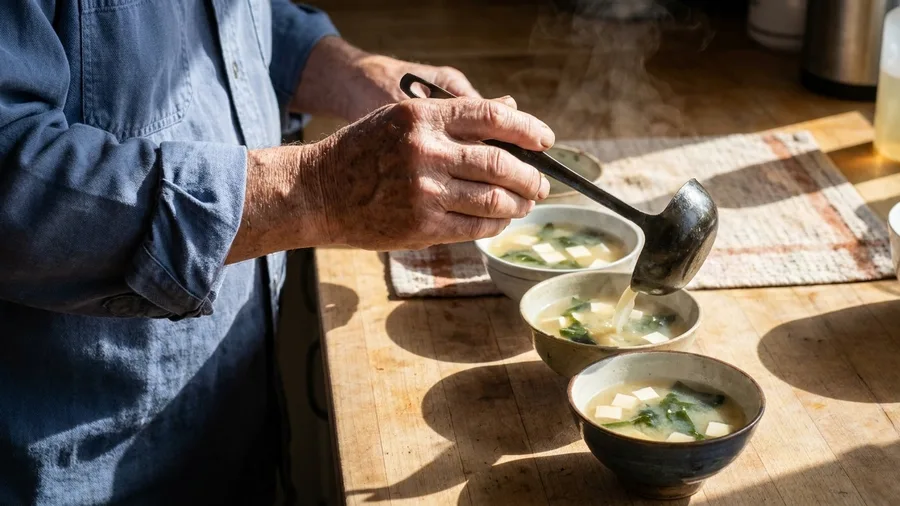
Expect an eight-ounce bowl – a small vessel that sits beside the rice rather than under the meal, usually miso or a clear broth, contributing salt, umami, and liquid instead of volume.
For four people that means roughly two tablespoons of miso stirred in at the end, four ounces of tofu cubed, and a tablespoon of dried wakame rehydrated in the pot. It takes one small saucepan and about the time the rice needs to finish.
Eight ounces cannot carry a dinner, and it is not asked to. Think of it as the thing that makes dry rice swallow easily and warms the table before the salmon arrives.
Dashi powder is fine here. The stock is a pantry shortcut, not a compromise – the formula tracks the slot, not the pedigree of the broth.
This is the cheapest counted position on the table: about $3.00 for four bowls, and the one you can make without rereading a recipe. A pot of water, a spoon of paste, and the decision is done.
Three sides usually mean protein, vegetable, pickle
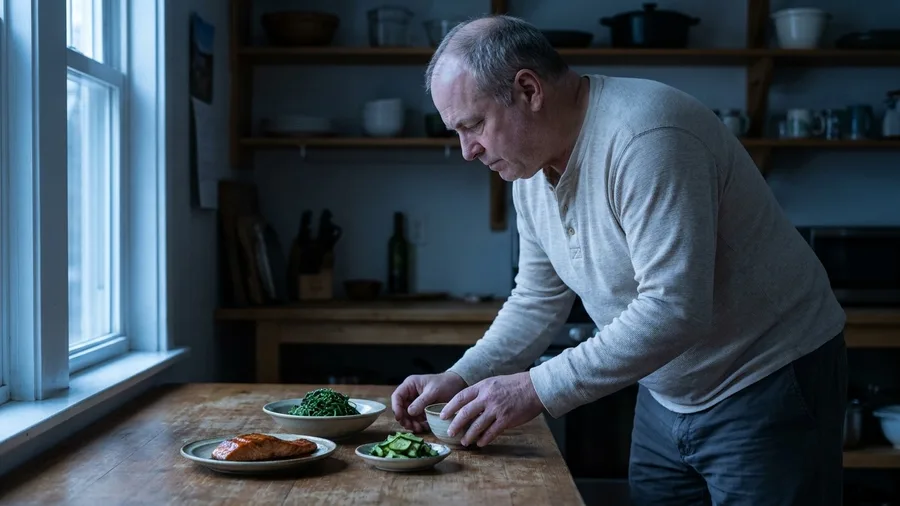
The three sides are not interchangeable: each one earns its place by doing a job the other two cannot.
Give one slot to protein, one to something green and fresh, and one to something sharp and acidic. That covers substance, freshness, and cut in three moves, and nothing on the plate repeats a note already sounded.
The protein is a 4-ounce piece of salmon per person, glazed with teriyaki and finished in the same skillet you will use all night. Four ounces is smaller than most American dinner portions, and that is deliberate: with soup, rice, and two more sides on the table, it reads as plenty.
The vegetable side is sesame spinach. Two cups of cooked spinach for four people, blanched for about a minute, squeezed dry, and tossed with toasted sesame and a little soy. Roughly half a cup lands on each plate, a heap that wilts down from what looks like far too much raw spinach in the pot.
The pickle is cucumber sunomono, and it is the smallest thing on the table, 2 to 3 tablespoons per person from a single cucumber for four. That little portion is doing specific work: the vinegar cuts the richness of the glazed salmon and resets your palate between bites of fish and rice.
Three protein sides would unbalance the meal and the bill at once. Put 4 ounces of protein in all three slots and you triple the most expensive position on the table while leaving nothing acidic or crisp to break up the fat.
The pickle costs about $1.50. The salmon costs $12.00. That gap is the whole reason the sides are assigned different jobs.
💡 PRO TIP
Salt the cucumber 10 minutes ahead
Slice the cucumber, toss it with a pinch of salt, and let it sit while you cook the salmon. The salt pulls out water so the sunomono stays crisp and the dressing does not turn into a puddle at the bottom of the bowl. Drain and dress it right before it goes to the table.
The formula cuts decisions without cutting variety

It is easier because a recipe asks you to invent one meal, and this asks you to fill four positions whose jobs are already named.
Soup, protein side, vegetable side, pickle side. You are not standing in the kitchen deciding what sounds good, you are scanning the fridge for something to drop into each of four labeled holes, and the rice is already sorted before any of it starts.
the rice never changes, and the rest rotates. A Tuesday and a Friday built from this formula share the same outline and share almost nothing else on the plate, so the repetition is in the structure rather than the food.
Nothing gets banned, either. Every dish you already cook can be sorted into one of the four positions, which means the formula organizes what you like instead of striking it from the list.
The protein slot is the proof. Salmon one night, chicken or tofu or eggs or a pot of beans the next, and it still works because the position outlives the ingredient. That is why the formula survives a fridge that does not match whatever you had in mind, which is most fridges on most nights.
Money behaves the same way. Protein is the one slot where the number moves around, and the other three stay small and predictable no matter what you put in them.
From first attempt to habit
Timings and costs from the sample meal for four.
A weeknight version takes about 30 minutes
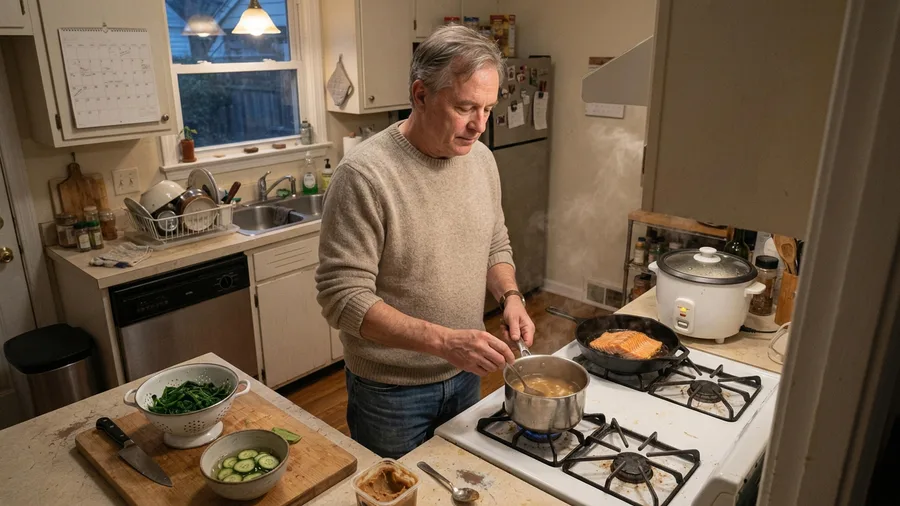
Thirty-five minutes from a cold stove to a set table, twenty-five of them with your hands actually moving, and the rice cooker doing the rest on its own.
Start the rice first because it is the longest job and the only one that needs no attention. While it steams, warm the dashi and stir in the miso for the soup, get the salmon into the skillet, drop the spinach into boiling water for about a minute, then squeeze it dry and dress it. The cucumber gets sliced last, thin, and tossed with vinegar and a pinch of sugar.
The final 10 minutes are not work. The rice finishes while you carry plates over and set the table, which is why the clock reads 35 and your actual effort reads 25.
Three pieces of equipment cover the whole meal: a rice cooker, one small saucepan, and a single skillet.
The bill for four lands near $20, which is $5 a serving. Rice $0.60, soup $3.00, salmon $12.00, spinach $2.50, cucumber $1.50. The salmon is more than half of it, so that is the line that moves when the week gets tight.
Two slots can be made ahead and two cannot. Rice and the soup base hold for 3 days in the refrigerator, so a Sunday batch takes the edge off Monday and Tuesday. The cucumber side is the exception, best the day you make it, so slice it fresh and let the other two do the pre-work.
⏱️ The 35-minute order of operations
Start the rice
Do this before anything else — it is the only task that finishes unattended and the clock cannot start without it.
Put the soup on
Keep the miso out of a hard boil: add it after the dashi comes off the heat so the aroma survives.
Cook the salmon
Skin-side down first, and do not move it until the fillet releases on its own — that is your cue to glaze.
Blanch the spinach
Squeeze harder than feels right; trapped water is what makes the sesame dressing slide off instead of cling.
Slice the cucumber
Salted and drained only while you plate — any earlier and it goes limp before the rice is served.
Ladle and sit down
Four bowls of soup, four of rice, three sides centered. The meal reads as a set, not a scramble.
It adapts to US groceries and a modest budget

Seven items, all from the regular aisles: short-grain rice, miso, dashi powder, tofu, salmon, spinach, cucumber. No second stop, no specialty shop, no ingredient you will use once and abandon in the back of a cabinet. A 30-minute dinner only works if the shopping behind it is just as short, and this list keeps it to one cart.
Substitutions stay inside their slots, which is why a swap never breaks the meal. Chicken or tofu stands in for salmon, green beans or broccoli for spinach, quick-pickled carrots for cucumber. The formula holds because the slot holds, not the ingredient. When the store is out of one thing, you fill the same position with something else and the count stays four.
The sample meal for four runs about $20, which is $5 a serving. Salmon is $12.00 of that total, more than half the bill on its own.
That single line is the budget lever. When the week is tight, the protein slot is where you spend less: tofu or chicken in place of salmon pulls the total down while the soup, vegetable, and pickle stay small and steady. The other three slots barely move.
Specialty stores are optional here, not required. The version built in this article comes from ordinary shelves, and whether you buy miso at a chain or a Japanese grocer, the four slots and the count are exactly the same.
Where ichiju sansai helps, and where it does not
Worth adopting
- You want dinner decided in minutes, not researched
- You cook for a household of two to four on weeknights
- You already own a rice cooker and one skillet
- You want a structure that survives a fridge that does not match the plan
Skip it if
- You want one big composed plate and no small dishes
- You are unwilling to wash four or five separate bowls
- You want a restaurant kaiseki experience at home
- You need a plan built around a single protein and nothing else
Frequently Asked Questions
Is rice counted as one of the three sides in ichiju sansai?
No. Rice sits outside the count and is served alongside every meal. The formula names one soup plus three sides, and those are the only four counted components. A full table holds five things because rice is always there.
Can I make ichiju sansai without a rice cooker?
Yes. Cook short-grain rice in a covered pot on the stove — bring it to a boil, drop to the lowest heat, cover, and leave it for about 15 minutes, then rest it off the heat for 10. The rest is what gives you the texture that clumps enough for chopsticks.
How much does this meal actually cost per person?
The sample with teriyaki salmon runs about $20 for four, or roughly $5 a serving. Salmon is $12.00 of that total, so swapping the protein for tofu or eggs drops the cost substantially while the four-slot structure stays the same.
Can I make the soup and rice ahead of time?
Rice and the soup base both keep about 3 days refrigerated. Keep the miso and the tofu separate from the dashi until you reheat, and add the wakame at the end. The cucumber side is best the same day — it loses its snap by the next morning.
Do all three sides have to be Japanese dishes?
No. The slots are jobs, not cuisines — protein, vegetable, and something pickled or acidic. A roasted chicken thigh, a green salad with lemon, and quick-pickled red onion fill the same three positions and the meal still balances.
How is ichiju sansai different from kaiseki?
Kaiseki is a multi-course, chef-led restaurant format with its own sequencing and presentation. Ichiju sansai is the everyday home table: one soup, three sides, rice, cooked on a weeknight. Same country, different job.
Fill four slots tonight and stop deciding
For tonight, pick one soup, one protein side, one vegetable side, and one pickle. Cook the rice. That is the whole instruction, and it takes less time than reading through a recipe you have never made.
The open fridge at 6 p.m. now has four named positions to fill and one already settled. That is the difference between staring and cooking.
The slots outlive tonight's ingredients: swap the salmon for tofu, the spinach for broccoli, the cucumber for carrots, and the meal is the same meal. The rice cooker clicks to warm, the skillet comes off the heat, and the count finishes the table. Three picks and rice, tonight.
Write your four slots before you shop
Name the soup, the protein, the vegetable, and the pickle on a note before you leave the house. Four lines, one short list, and the weeknight dinner question is already answered. The sample table above is where to start.