Want to Lose Weight Fast? Stop Doing These 7 Things
You are not failing at weight loss. Your habits are failing you. Most people trying to lose weight fast are unknowingly doing a handful of things every single day that cancel out every good choice they make. The frustrating part? Nobody tells you what those habits are.
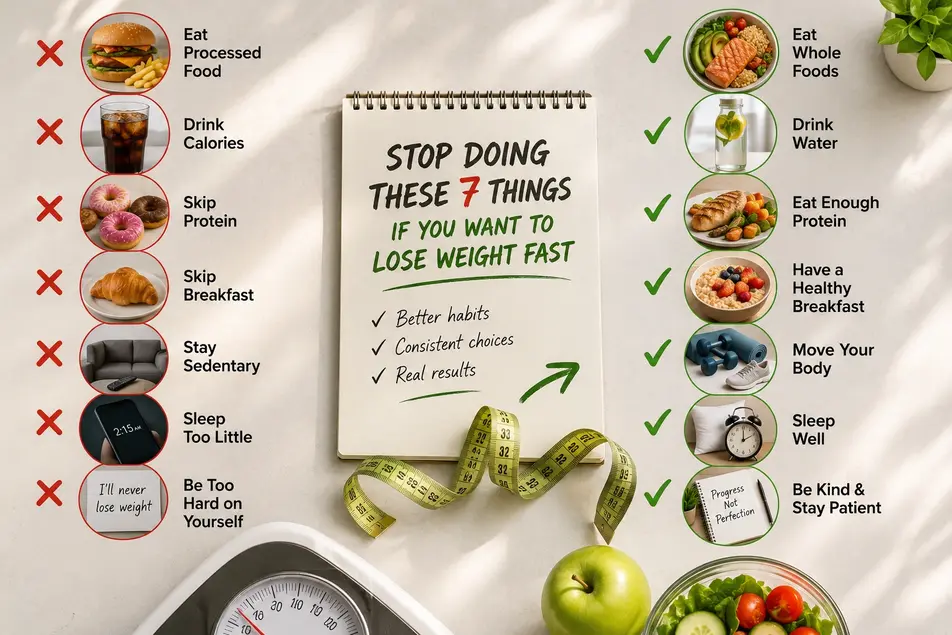
This is not another list of things to add to your already packed routine. This is permission to stop the seven specific behaviors that research and nutrition experts consistently identify as the biggest blockers of real fat loss. Drop these, and your body gets a fighting chance.
10 Lazy Weight Loss Tips for Beginners That Actually Work
What Habits Stop You From Losing Weight Fast?
What are the things you should stop doing to lose weight fast?
The habits most likely blocking fast weight loss include eating processed foods daily, skipping breakfast, drinking liquid calories, eating late at night, relying only on cardio, staying chronically stressed, and not sleeping enough. Removing even two or three of these habits from your routine can restart stalled fat loss without adding any new effort.
1. Stop Eating Processed Food Every Single Day

What Processed Food Actually Does to Your Weight
Processed foods chips, packaged cookies, instant noodles, fast food, breakfast cereals are engineered to make you eat more than you intend to. They are dense in calorie, low in fiber, and digest quickly, which means hunger returns fast. Eating them daily makes it nearly impossible to maintain the calorie deficit needed to lose weight fast.
The Sodium Problem Nobody Talks About
Beyond calories, processed food is loaded with sodium. High sodium causes your body to retain water, which pushes the scale up and hides actual fat loss progress. This is one of the sneakiest bad habits for weight loss you might actually be losing fat, but the bloating from salt keeps the number on the scale frustratingly still.
🚫 You do not have to give up all processed food forever. Start by eliminating it five days a week. That single change cuts hundreds of hidden calories without any other adjustment.
What to Eat Instead
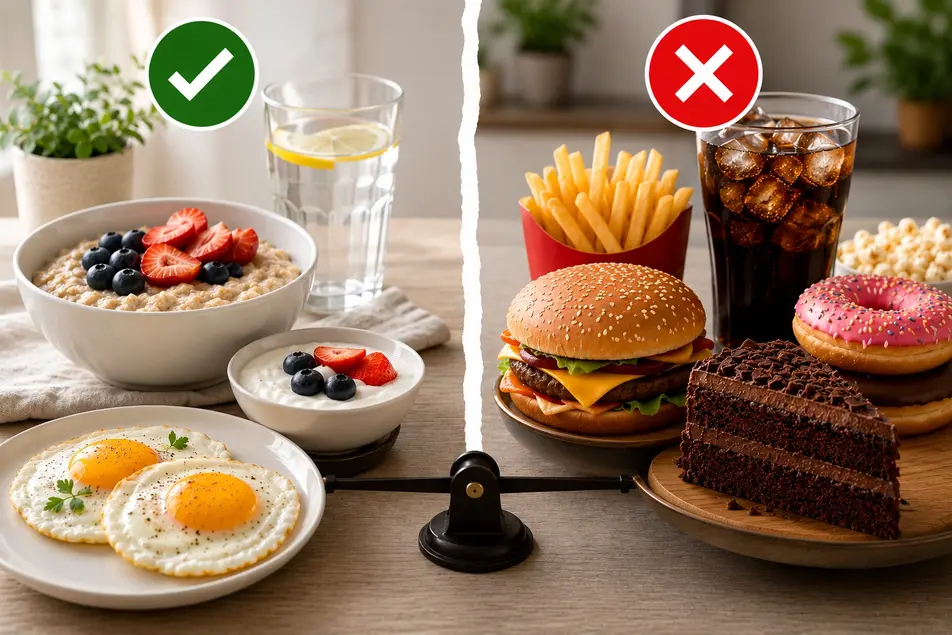
Whole foods with one or two ingredients eggs, rice, vegetables, lentils, fruit, plain yogurt keep you full longer and give your body actual nutrients. You will not need to count calories obsessively if your plate is mostly real food. The natural fiber and protein do the hunger management for you.
2. Stop Drinking Your Calories
Liquid Calories Are the Invisible Enemy
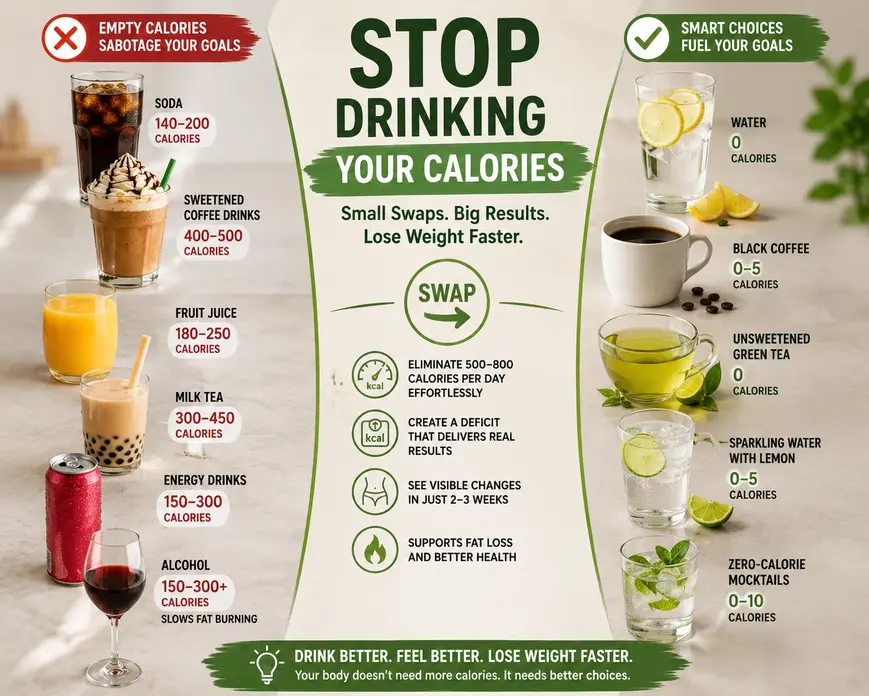
Soda, sweetened coffee drinks, fruit juice, energy drinks, flavored milk teas, and alcohol all carry significant calories that your brain does not register the same way solid food does. A large sweetened coffee drink can hold 400–500 calories. A glass of juice has nearly as much sugar as soda. Yet neither makes you feel full or satisfied.
How This Sabotages Fast Weight Loss
If you drink two to three sweetened beverages daily and replace them all with water, you can eliminate 500–800 calories per day without changing anything you eat. That is a meaningful deficit on its own the kind that creates visible results within two to three weeks. Most people chasing ways to lose weight fast overlook this entirely.
💧 Switch to water, plain black coffee, unsweetened green tea, or sparkling water with lemon. These have near-zero calories and some actively support metabolism.
Alcohol Deserves Its Own Mention
Alcohol not only adds calories it actively slows fat burning. Your liver prioritizes processing alcohol over everything else, which means fat metabolism pauses while you drink. Even moderate regular drinking can stall fat loss noticeably. This is not about perfection; it is about understanding the trade-off.
3. Stop Skipping Breakfast — Then Overeating Later
Why Skipping Breakfast Backfires
Skipping breakfast feels like a calorie shortcut. In reality, for most people it leads to intense hunger by mid morning or lunch, which results in eating far more than the skipped meal would have cost. Arriving at lunch ravenous removes all portion control and makes high calorie, high fat choices much more likely.
The Late Meal Compensation Trap
People who skip breakfast commonly eat their heaviest meals later in the day dinner and late night snacking become their primary calorie sources. Eating the bulk of your calories late, when activity is lowest, is one of the most studied weight loss mistakes in nutrition research. It works against the body’s natural energy rhythm.
🍳 A simple breakfast of two eggs, or yogurt with fruit, or oats with milk takes five minutes and prevents a hunger-driven eating spiral that can last all day.
The Exception: Intentional Intermittent Fasting
There is a difference between skipping breakfast unintentionally due to a rushed morning and intentionally following an intermittent fasting schedule. Structured fasting, done deliberately with a defined eating window, can support fat loss. Skipping breakfast by accident and then snacking all evening is not fasting it is chaotic eating.
4. Stop Eating Late at Night

Why Late Night Eating Causes Weight Gain
Your body does not stop burning calories at night, but your activity level does drop significantly. Calories eaten late at night are more likely to be stored as fat simply because there is no physical activity coming after them to burn them off. The body’s metabolic rate also naturally slows during sleep preparation, making late night calories less efficient.
The Habit Loop Behind Night Snacking
Late-night eating is rarely driven by genuine hunger. It is almost always boredom, stress, the habit of eating in front of a screen, or the visual cue of seeing food while in the kitchen. Identifying which trigger applies to you is more useful than any willpower exercise, because the trigger is what needs to change not your discipline level.
⏰ Set a kitchen close time ideally 2–3 hours before bed. Brush your teeth at that point. The act of brushing teeth sends a psychological ‘done eating’ signal that many people find surprisingly effective.
What to Do When Nighttime Hunger Feels Real
If genuine hunger hits late at night, reach for high-protein, low calorie options: Greek yogurt, a boiled egg, cottage cheese, or a small handful of nuts. These options satisfy without spiking blood sugar, which means they do not trigger a hunger loop the way chips or sweets would. This supports weight loss goals rather than derailing them.
5. Stop Doing Only Cardio

The Cardio-Only Trap
Cardio burns calories during the workout. That is real. But doing only cardio — especially at the same pace, same duration, same machine every week — leads to rapid adaptation. Your body becomes efficient at the movement and burns progressively fewer calories doing it. Many people who exercise daily are still not losing weight fast because of this exact pattern.
Why Strength Training Changes Everything
Muscle tissue burns more calories at rest than fat tissue does. Adding strength training even two days per week of bodyweight exercises builds muscle that raises your resting metabolic rate. This means your body burns more calories during sleep, at your desk, and while doing nothing. Cardio is a session. Muscle is a 24-hour investment.
💪 You do not need a gym. Squats, lunges, push ups, and planks at home two days per week create the muscle stimulus needed to boost your metabolism and support faster fat loss.
The Right Combination for Fast Fat Loss
Combining cardio with strength training is more effective for body composition than either alone. A practical beginner structure: three days of 20–30 minute cardio (walking, cycling, dancing) and two days of strength focused bodyweight circuits. This combination is what separates people who lose weight fast from those stuck in a plateau for months.
6. Stop Letting Stress Run Your Eating

Stress and Weight Gain Are Physically Linked
Chronic stress elevates cortisol — a hormone that signals the body to store fat, particularly in the abdominal area. This is not a willpower issue or an emotional weakness. It is a measurable physiological response. High cortisol also increases cravings for high-sugar, high-fat foods, which is why stress eating tends toward cookies and chips rather than salads.
Emotional Eating Is Not About Emotion Alone
Emotional eating often feels like a character flaw. It is not. It is a deeply wired response to discomfort the brain learns that certain foods produce short term relief, and it seeks them out during stress, boredom, sadness, or frustration. Willpower alone does not break this loop. Recognizing the trigger and having a replacement behavior ready is what actually works.
🧘 A five minute walk, three deep breaths, or a glass of water before opening the fridge can interrupt the stress eating loop. The urge usually passes in 90 seconds if you delay the automatic reach for food.
Building Stress Management Into Your Routine
Daily stress management is a weight loss tool not a soft suggestion. Walking, journaling, talking to someone, reducing screen time before bed, and setting work boundaries all lower cortisol over time. These habits do not show up on a diet plan, but for many people they are the missing piece that makes everything else finally work.
7. Stop Treating Sleep as Optional

Sleep Controls Your Hunger Hormones
One night of poor sleep — under six hours — measurably raises ghrelin (the hunger hormone) and lowers leptin (the fullness hormone). The result is increased appetite the next day, stronger cravings for high-calorie foods, and reduced ability to feel satisfied after eating. You can follow a perfect diet and still struggle to lose weight fast if your sleep is consistently bad.
Sleep Deprivation and Belly Fat
Chronic sleep deprivation is associated with increased fat storage, particularly visceral fat — the fat stored around your organs and midsection. This type of fat is the most visible and the most metabolically problematic. No supplement or workout routine fully compensates for consistently poor sleep when it comes to belly fat specifically.
😴 Aim for 7–9 hours. Set a consistent bedtime even on weekends. A regular sleep schedule regulates hormones more effectively than sleeping in on Saturdays to catch up.
The Sleep Exercise -Appetite Connection
Poor sleep also reduces exercise performance and motivation, which creates a compounding cycle:
Bad sleep → less energy → skipped workouts → increased appetite → weight gain → worse sleep.
Breaking this cycle almost always has to start with the sleep itself. Fix the sleep first, and the energy and willpower to make better food choices often follow naturally.
📊 7 Habits to Stop: Full Comparison Table
Quick reference each habit, why it blocks fat loss, and what to do instead:
| Bad Habit | Why It Stops Lose Weight Fast | How Quick to Fix | Replace With |
| Eating processed food daily | High calories, sodium, low satiety | 1 week | Whole foods with 1–2 ingredients |
| Drinking liquid calories | 500–800 hidden calories per day | Immediate | Water, green tea, black coffee |
| Skipping breakfast | Leads to overeating at lunch & dinner | 3–5 days | Quick protein-rich breakfast |
| Eating late at night | Calories stored as fat with no burn-off | 1 week | Kitchen close time 2–3hrs before bed |
| Doing only cardio | Body adapts, metabolism stops rising | 2–3 weeks | Add 2x/week strength training |
| Chronic stress & emotional eating | High cortisol stores belly fat | Ongoing habit | Walk, breathe, 90-sec pause rule |
| Poor sleep (under 6 hrs) | Disrupts hunger hormones, kills willpower | 1–2 weeks | 7–9 hours, consistent bedtime |
Author Words:
The fastest path to weight loss is not finding something new to add it is removing what is silently working against you. These seven habits are not failures of character. They are common patterns that most people fall into without realizing the cost. Stopping even two or three of them this week gives you a real chance to finally lose weight fast without a crash diet or extreme exercise plan.
Pick the one habit on this list that sounds most like your daily life. Focus on that one for two weeks. Then come back and tackle the next.
Disclaimer
The information in this article about habits that block your ability to lose weight fast is for general educational purposes only. Individual results vary based on health status, age, hormones, medications, and consistency. If you have a medical condition such as hypothyroidism, PCOS, insulin resistance, or are on medications known to affect weight, consult a qualified healthcare provider before making significant changes to your diet or lifestyle.
FAQ’s
1. What are the biggest habits that stop you from losing weight fast?
The most impactful habits blocking fast weight loss are drinking liquid calories, eating processed food daily, sleeping under seven hours, and chronic stress. Each one independently creates either a hidden calorie surplus, a hormonal disruption, or both. Addressing even two of these simultaneously can produce visible results within two to three weeks.
2. Does late night eating really cause weight gain?
Late-night eating does not directly cause weight gain by itself total daily calories determine fat gain. But eating late tends to push people over their calorie target because late-night eating is usually driven by habit or boredom rather than hunger. It also means those calories have no physical activity to burn them off, making storage more likely.
3. Why is cardio alone not enough to lose weight fast?
Cardio burns calories during exercise but does not significantly raise resting metabolism. The body adapts to repetitive cardio, burning fewer calories over time. Strength training builds muscle tissue that burns more calories around the clock even at rest. Combining both is the most effective approach for sustained, fast fat loss.
4. How does stress stop weight loss even when I eat well?
Stress raises cortisol, which signals the body to store fat especially around the belly. It also increases cravings for sugary, high-fat foods and can cause water retention, both of which mask progress on the scale. Managing stress through sleep, movement, and daily decompression is as important as diet for consistent fat loss results.
5. Can stopping just one of these habits help me lose weight faster?
Yes, particularly if that one habit is responsible for a significant hidden calorie surplus. Cutting liquid calories alone can remove 500–800 calories per day, which is enough to create meaningful fat loss over three to four weeks without changing anything else. Start with whichever habit matches your current pattern most closely.