I Lost 30 Pounds Without Gym — Here’s My Exact Plan
Let me be real with you.
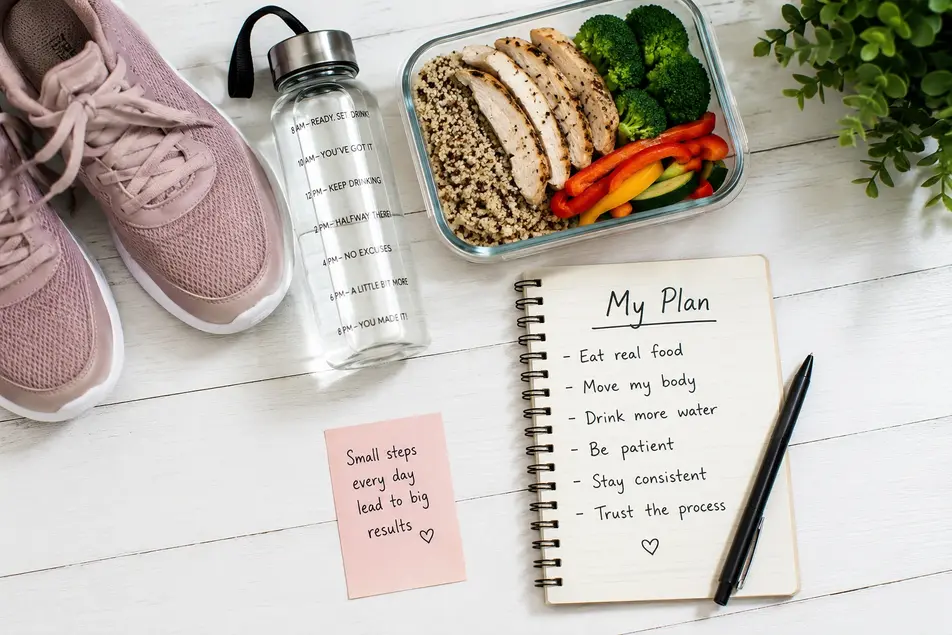
I did not wake up one morning with perfect motivation. I did not join a gym, hire a trainer, or follow a 90-day challenge. I lost 30 pounds in eight months from my kitchen, my living room, and the sidewalk outside my front door.
No equipment. No membership. No misery.
If the gym has never felt like your place — this is for you.
Why I Stopped Waiting for the “Perfect” Plan
I had spent two years telling myself I would start when:
- Work calmed down
- The kids were older
- I found the right program
- I actually felt motivated
None of those things happened. What happened instead was that I stepped on a scale one morning, saw a number I did not expect, and decided that day that I was done waiting.
I did not have a perfect plan. I had a decision.
That decision led to the system below — simple enough to actually follow, effective enough to drop 30 pounds.
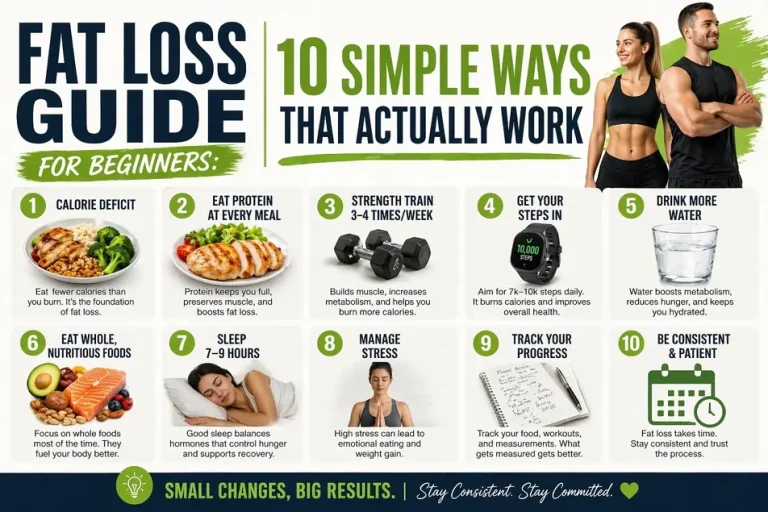
10 Lazy Weight Loss Tips for Beginners That Actually Work
Step 1. I Fixed My Kitchen Before I Fixed My Body
is the truth most fitness content skips: 80% of weight loss happens in the kitchen, not the gym.

I was eating what I thought was healthy. Grilled food, salads, not much junk. But I was also:
When I tracked my food for just two weeks, I discovered I was eating 2,600 calories a day. For my body and activity level, that meant slow but steady weight gain.
I did not go on a diet. I simply brought my daily intake down to 1,900–2,000 calories. That 600-calorie gap, held consistently over eight months, is where the 30 pounds came from.
My 3 Food Rules (That I Actually Followed)
Rule 1. Protein at every single meal:
Eggs, Greek yogurt, grilled chicken, canned tuna, cottage cheese. Protein keeps you full. When I had it at breakfast, my 10am snack cravings disappeared completely.
Rule 2. Half the plate = vegetables:
Not because vegetables are magic. Because they fill the plate, fill your stomach, and leave less room for the things quietly causing weight gain. Roasted broccoli, spinach salad, cucumber anything worked.
Rule 3. One glass of water before every meal:
Simple. Boring. Worked every single time. Drinking water 10 minutes before eating reduced how much I put on my plate without me even trying.
💡 What I still ate:
Carbs, Chocolate, Social meals, Weekend dinners out. I just fixed my everyday defaults the Tuesday lunch, the usual breakfast, the standard dinner. Get those right, and the occasional treat does not matter.
Step 2. How I Moved My Body Without a Gym
I tried three home workout programs. All three were too intense for where I was starting. I would do four days, get sore, miss a week, feel like a failure, and quit.
So I stopped trying to be athletic and started trying to be consistent.
The Walk That Changed Everything
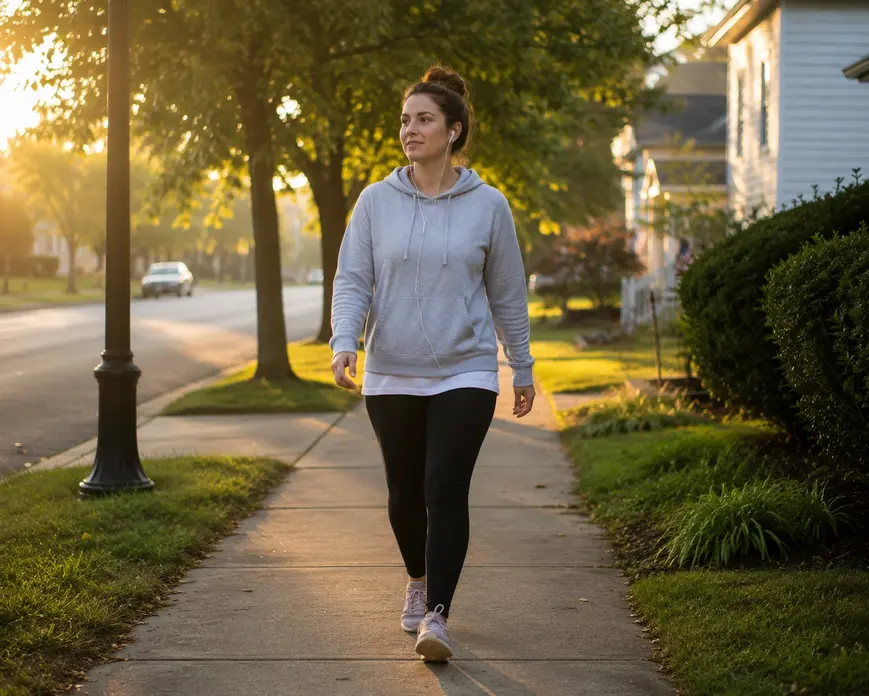
I started with 20 minutes of walking per day. That is it.
Not power walking. Not jogging. Just moving.
Here is what happened over time:
- Week 1–2: 20 minutes, moderate pace
- Month 1: 30–35 minutes, slightly faster
- Month 2: 45 minutes most mornings
- Month 3 onward: 45–60 minutes, felt like nothing
A 45-minute walk burns roughly 200–300 calories depending on your weight. Over a week, that is 1,400–2,100 calories — without a single squat rack or treadmill.
Walking also did something I did not plan: it reduced my stress, which reduced my emotional eating. Two problems solved with one habit.
Step 3. My 4-Move Home Workout (Living Room Floor, No Equipment)
I kept my workout to four movements to avoid the decision fatigue that had made me quit before. Three sets each, three to four times a week, 25 minutes’ total.

🔥 Move 1 — Wall Sit
What it does: Builds leg and core strength with zero equipment and zero joint impact.
How to do it:
- Stand with your back flat against a wall
- Slide down until thighs are parallel to the floor
- Hold for 30–60 seconds
- Rest 20 seconds, repeat 3 times
My start: 20 seconds. By month 3: 60 seconds, easy.
🔥 Move 2 — Modified Push-Up
What it does: Upper body strength, better posture, and faster metabolism from building muscle.
How to do it:
- Knees on the floor, hands slightly wider than shoulders
- Lower chest toward the floor, push back up
- Keep your core tight throughout
My start: 5 reps. By month 3: 20 full push-ups.
🔥 Move 2 — Modified Push-Up
What it does: Upper body strength, better posture, and faster metabolism from building muscle.
How to do it:
- Knees on the floor, hands slightly wider than shoulders
- Lower chest toward the floor, push back up
- Keep your core tight throughout
My start: 5 reps. By month 3: 20 full push-ups.
🔥 Move 3 — Glute Bridge
What it does: Activates glutes, hamstrings, and lower back — muscles weakened by hours of sitting.
How to do it:
- Lie on your back, knees bent, feet flat on the floor
- Push hips up toward the ceiling, squeeze at the top
- Lower slowly and repeat
- 15–20 reps per set
This one fixed my lower back pain as a bonus I did not expect.
🔥 Move 4 — Standing March
What it does:
Keeps heart rate elevated between exercises without jumping — perfect for flats or anyone with joint issues.
How to do it:
- Stand tall and lift knees one at a time as high as comfortable
- Swing opposite arm with each step
- Do this for 60 seconds between other exercises
My Weekly Schedule
| Day | Activity | Time |
| Monday | Walk + 4-move workout | 65 min |
| Tuesday | Walk only | 30 min |
| Wednesday | Walk + 4-move workout | 65 min |
| Thursday | Walk only | 30 min |
| Friday | Walk + 4-move workout | 65 min |
| Saturday | Long walk or bike ride | 60–90 min |
| Sunday | Full rest | — |
Step 4. The Thing Nobody Told Me About Sleep
Two months in, I was doing everything right and barely losing weight. I was frustrated and close to quitting.

Then I looked at my sleep. I was averaging 5.5 hours a night.
A University of Chicago study found that people on a calorie deficit who slept only 5.5 hours lost 55% less fat than those sleeping 8.5 hours — on the exact same diet. The sleep-deprived group also lost muscle instead of fat.
I started going to bed 45 minutes earlier. Just 45 minutes. Within three weeks, the scale started moving again.
What poor sleep does to weight loss:
What Eight Months Actually Looked Like
I want to be honest about the timeline because social media makes this look faster than it is.
| Month | What Changed |
| Month 1 | Started tracking food. Started 20-min walks. Lost 3 lbs. |
| Month 2 | Added home workouts. Sleep improved. Lost 4 lbs. |
| Month 3 | Walks increased to 45 min. Push-ups got easier. Lost 4 lbs. |
| Month 4–5 | Habits felt automatic. Lost 8 lbs total across both months. |
| Month 6–7 | Hit a 3-week plateau. Stayed consistent. Broke through. Lost 7 lbs. |
| Month 8 | Hit 30 lbs total. Felt completely different. |
The Honest 5-Thing Summary
If I had to reduce everything to what actually drove the 30 pounds:
1. Calorie awareness: Not counting forever, just understanding what I was actually eating
2. Protein at every meal: This one change killed my snacking habit
3. Daily walking: Free, sustainable, and more powerful than I expected
4. Four home exercises, done consistently: Not intensely, Just regularly.
5. More sleep: The most underrated weight loss tool that exists
Author Words:
Do not start with five things. Start with one.
Your only job this week: walk for 20 minutes every day.
That is it. Do not change your diet yet. Do not start a workout program. Just walk for 20 minutes, every day, for 7 days.
Let momentum build before you stack anything else on top of it. The plan above grew slowly from exactly that starting point. You do not need the gym. You need a decision and enough patience to let it work.
Disclaimer:
This article reflects a personal experience and is shared for informational purposes only. Weight loss results vary based on individual health, starting weight, age, and medical history. The strategies described are general wellness practices, not medical advice. Consult your doctor or a registered dietitian before making significant changes to your diet or physical activity, especially if you have any existing health conditions.
FAQ’S
Q1. Can you really lose 30 pounds without a gym?
Yes, Fat loss comes from a calorie deficit, not from gym equipment. Walking, home bodyweight exercises, and dietary changes can create that deficit just as effectively as a gym membership.
Q2. How long does it take to lose 30 pounds at home?
At a safe, sustainable pace of 1–2 pounds per week, 30 pounds takes roughly 15–30 weeks. A slower pace of half a pound per week takes longer but lasts. Eight months is healthy and realistic.
Q3. What home exercises burn the most fat?
No single exercise burns fat directly, fat loss comes from an overall calorie deficit. However, walking, bodyweight circuits, and strength exercises that build muscle (like push-ups and glute bridges) increase the calories you burn throughout the day.
Q4. Do you need to count calories to lose weight?
Not permanently. But tracking for 2–3 weeks builds awareness of what you actually eat versus what you estimate. Most people underestimate their intake significantly. A short tracking period is more useful than any diet plan.
Q5. What do you do when you hit a weight loss plateau?
Stay consistent, Plateaus are normal,your body adapts to a deficit over time. Before changing anything, make sure you are still hitting your calorie target accurately, sleeping enough, and not under-eating protein. Most plateaus break within 2–4 weeks without dramatic changes.