The Only Weight Loss Checklist a Beginner Will Ever Need
Most people do not fail at weight loss because they lack motivation. They fail because they do not know where to start. There are a thousand opinions online cut carbs, count macros, try intermittent fasting, hit the gym six days a week and before a beginner even buys groceries, the overwhelm has already won.
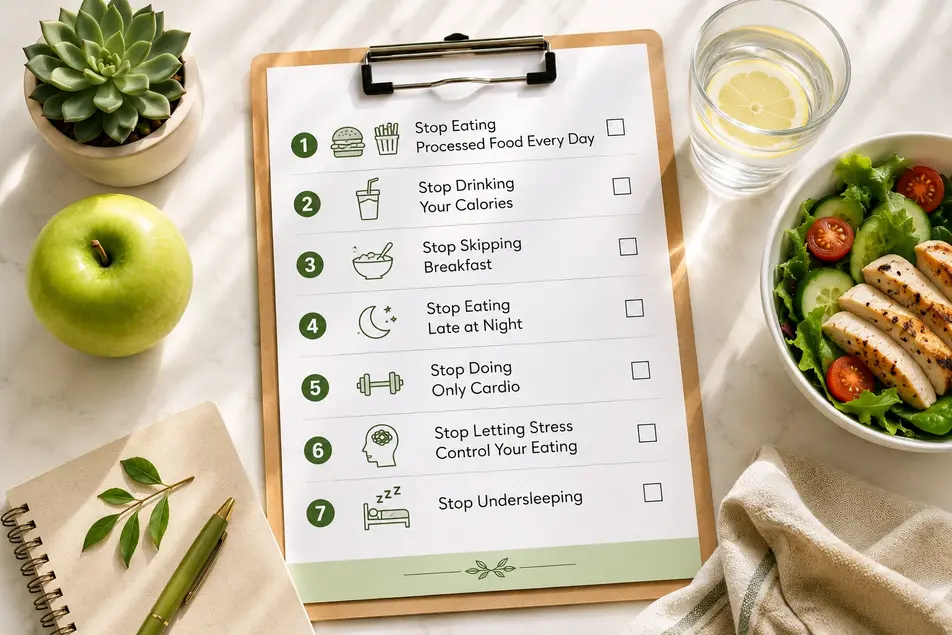
This weight loss checklist for beginners cuts through every conflicting message. It covers exactly what to do first, what to do next, and what to stop second guessing. No gym membership required. No extreme diet. Just the right steps in the right order.
Want to lose weight without counting a single calorie? Check out this guide is for you.
Want a quick version you can follow daily? Download the free 7-Habit Weight Loss Checklist and keep it handy while you build better weight loss habits.
What Should a Beginner Do First to Lose Weight?
What is the first thing a beginner should do to start losing weight?
A beginner should start by setting one realistic goal, cleaning up their kitchen of processed food, and committing to one small daily habit such as walking 20 minutes or drinking water before every meal. The CDC recommends aiming for 1 to 2 pounds of loss per week through gradual, consistent changes rather than drastic restriction. Slow and steady produces results that actually last.
Phase 1: Mindset Checklist — Before You Change Anything Else
Most beginners skip this phase completely. It is the most important one.
Set a Specific, Realistic Goal
Vague goals produce vague results. ‘Lose weight’ is not a goal it is a wish. A goal sounds like ‘I want to lose 10 pounds in 10 weeks by walking daily and cutting soda.’ Specific goals give your brain a direction and a timeline. Write it down. The act of writing it makes the commitment more real than keeping it in your head.
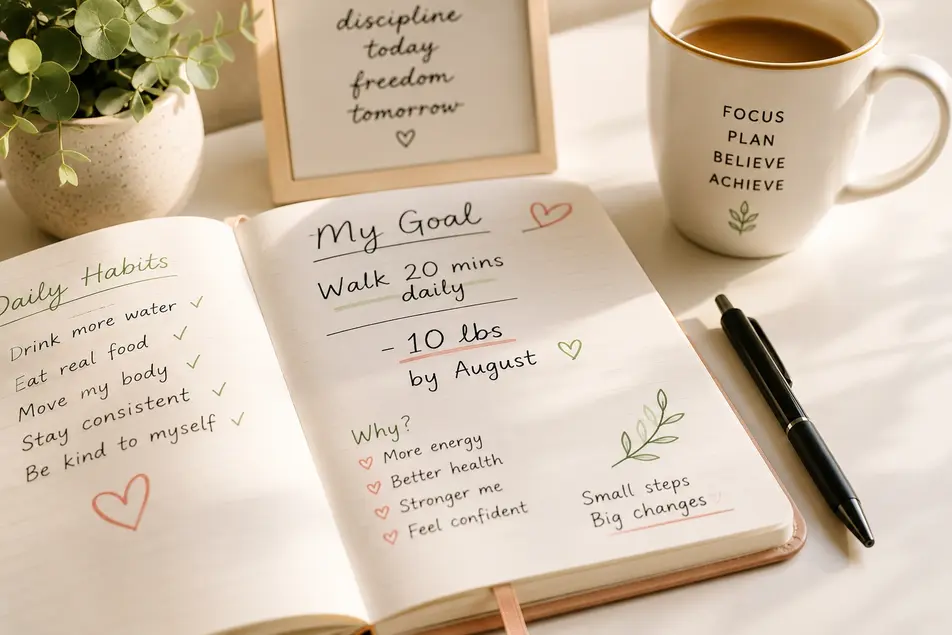
📝 Write your goal in this format: I want to lose [amount] by [date] by doing [specific habit]. Keep it somewhere you see every morning.
Know Your ‘Why’ Beyond the Scale
The people who succeed at long term fat loss are not motivated by a number on a scale. They are motivated by having more energy, sleeping better, feeling confident, reducing health risk, or keeping up with their kids. Identify what weight loss actually means to your daily life. That reason will carry you through the weeks when the scale does not move.
Commit to Progress, Not Perfection
Research consistently shows that people who aim for 80% consistency over weeks outperform people who aim for perfection and quit after one bad day. Weight loss is not a clean line. It is a messy, non linear process with good weeks and harder ones. Commit now to getting back on track after slipping not starting over on Monday.
MINDSET CHECKLIST:
Phase 2: Kitchen and Food Checklist
What is in your kitchen decides what you eat. Willpower is unreliable. Environment is not.
Remove the Easy Temptations
You cannot out discipline a kitchen full of processed food. Chips, cookies, white bread, sugary cereals, and sweetened drinks are not willpower tests they are obstacles. Remove them or move them out of immediate reach. What you see first when you open a cabinet or refrigerator is what you will reach for. This is not a theory, it is basic behavioral science.

🗑️ Do not throw everything out at once if that feels overwhelming. Start with the top three processed items you eat most and remove those first.
Stock the Basics
A beginner does not need a perfect pantry. They need a functional one. Eggs, oats, brown rice, lentils, canned chickpeas, frozen vegetables, plain Greek yogurt, chicken or fish, fruit, and nuts cover most nutritional bases without requiring cooking skill or expensive ingredients. These foods are filling, affordable, and require minimal preparation.
Plan Three Meals Not Forever, Just for This Week
Meal planning sounds like a major commitment. It is not. Deciding three dinners for the coming week removes the 6pm decision fatigue that sends most beginners to fast food. Write the three meals. Buy those ingredients. That is the entire plan. As this becomes habit, extend the planning further. But week one, three dinners is enough.
KITCHEN CHECKLIST:
Phase 3: Daily Eating Habits Checklist
No strict diet required here. Just these specific habits applied consistently.
Eat Protein at Every Meal
Protein is the single most impactful nutritional change a beginner can make. It keeps you full longer, reduces cravings, supports muscle preservation during fat loss, and requires more calories to digest than carbohydrates. Aim for one clear protein source per meal two eggs, a cup of Greek yogurt, a palm of chicken, a serving of lentils. No measuring required just consistency.
🥚 If you do nothing else from this checklist today, add protein to your breakfast. Research shows a protein rich breakfast reduces calorie intake for the rest of the day automatically.
Fill Half Your Plate With Vegetables
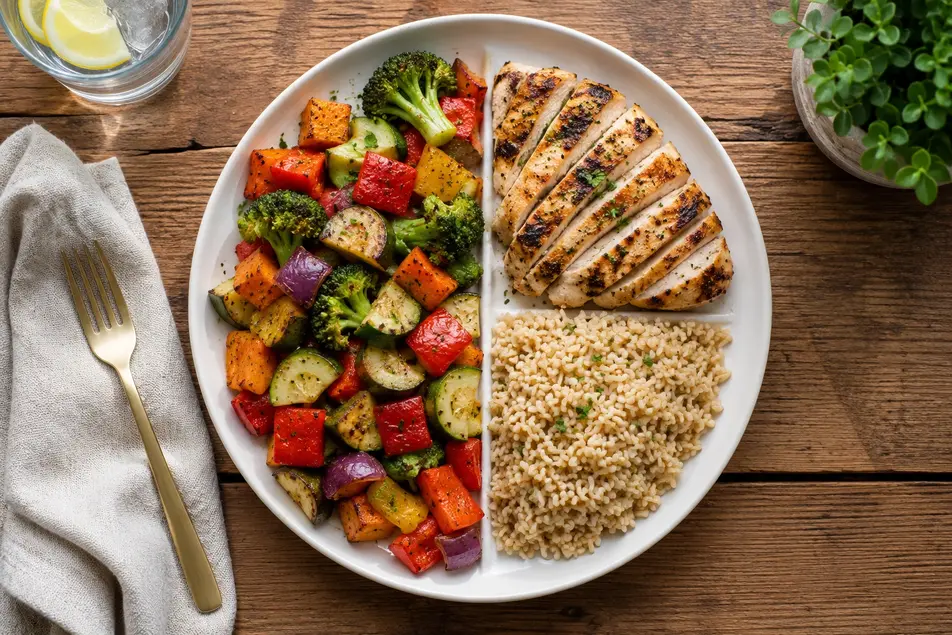
Before anything else goes on the plate, fill half of it with non starchy vegetables. Broccoli, spinach, zucchini, peppers, cucumbers, tomatoes, green beans any of these. They are high in fiber and water, which creates fullness without adding significant calories. This one visual habit changes the composition of every meal without any calorie counting.
Drink Water Before Every Meal and Cut All Sugary Drinks
Drink a full glass of water 20 minutes before eating. This reduces how much you eat at that meal. Then replace all sweetened beverages soda, juice, flavored coffee drinks, sweetened tea with water, plain black coffee, or unsweetened green tea. Liquid calories are invisible, unregistered by the brain as filling, and one of the fastest ways to eliminate a hidden daily calorie surplus.
Habits CHECKLIST:
Phase 4: Movement Checklist
You do not need a gym. You need movement that fits your current life.
Walk Before You Run
Walking is the most underestimated tool in a beginner’s weight loss checklist. A 30-minute brisk walk burns roughly 150 to 200 calories depending on body weight and pace. It requires no equipment, no gym, no special clothing, and no prior fitness. The CDC recommends at least 150 minutes of moderate movement per week which is just 22 minutes per day. Start there.
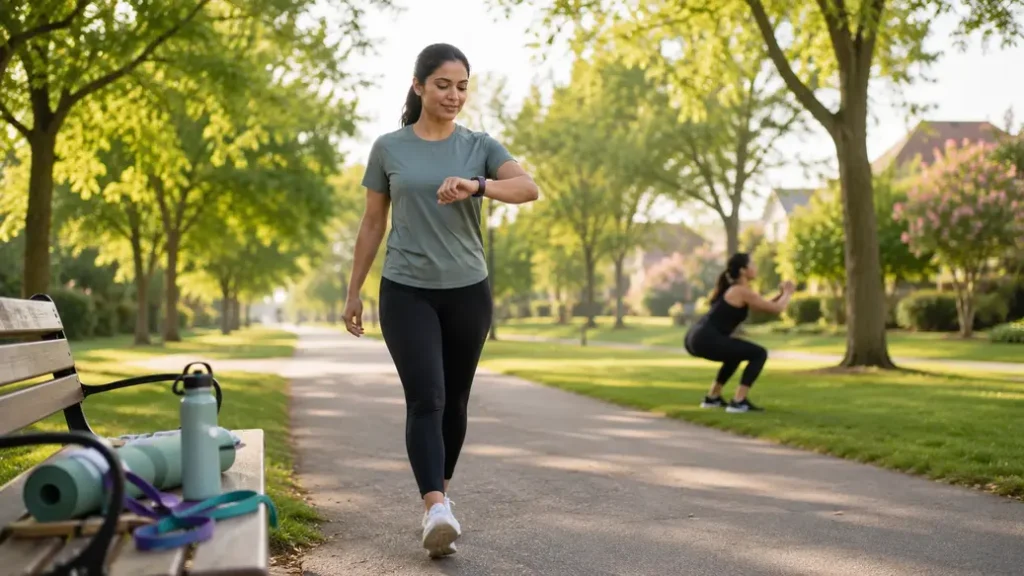
👟 Do not start at 10,000 steps if you currently walk 2,000. Start at 4,000. Add 1,000 each week. Gradual increase prevents burnout and injury, and each level becomes the new normal before you push further.
Add Bodyweight Strength Training Twice a Week
Muscle tissue burns more calories at rest than fat tissue. Two days per week of simple bodyweight exercises squats, lunges, push-ups, glute bridges, planks builds the muscle base that raises your resting metabolic rate over time. Each session needs only 20 minutes no equipment, No gym. These beginner friendly movements build the foundation that makes future fat loss progressively easier.
Move More Throughout the Day — Not Just During ‘Workouts’
Daily movement outside structured exercise matters significantly. Take stairs instead of elevators. Park further from the entrance. Walk during phone calls. Stand while working if possible. These small additions across a full day accumulate into hundreds of extra calories burned weekly without any formal workout scheduled. This is called non exercise activity thermogenesis, and it is a meaningful contributor to a calorie deficit for beginners.
Movement Checklist:
Phase 5: Sleep and Recovery Checklist
No weight loss plan works well on broken sleep. This phase is non-negotiable.
7 to 9 Hours Is the Target
Poor sleep raises ghrelin (the hunger hormone) and lowers leptin (the fullness hormone). One night of under six hours increases next-day appetite measurably, drives cravings for high calorie food, and reduces the motivation to exercise. Over weeks, consistently poor sleep adds a quiet calorie surplus that no diet fully compensates for. Sleep is not recovery it is part of the fat loss process itself.

Consistent Bedtime Matters More Than Total Hours
Going to bed and waking at the same time every day including weekends regulates your body’s hunger and energy hormones more effectively than irregular long sleep. A consistent sleep schedule is what produces the hormonal stability that makes healthy eating feel easier rather than like a daily willpower battle. Set a fixed bedtime and protect it like any other appointment.
😴 Keep your phone outside the bedroom or face down on a nightstand. Screen light delays sleep onset. This one change adds 30–45 minutes of sleep to most people’s nights without any other adjustment.
Manage Stress as Part of Your Plan
Chronic stress raises cortisol, which signals the body to store fat especially around the midsection and drives cravings for sugary, high fat foods. Stress management is not a bonus habit for weight loss. It is a requirement. A short daily walk, five minutes of deep breathing, journaling, or reducing one stressor in your week all lower cortisol over time and make fat loss more efficient.
SLEEP & RECOVERY CHECKLIST:
Phase 6: Progress Tracking Checklist
Weigh Weekly, Not Daily
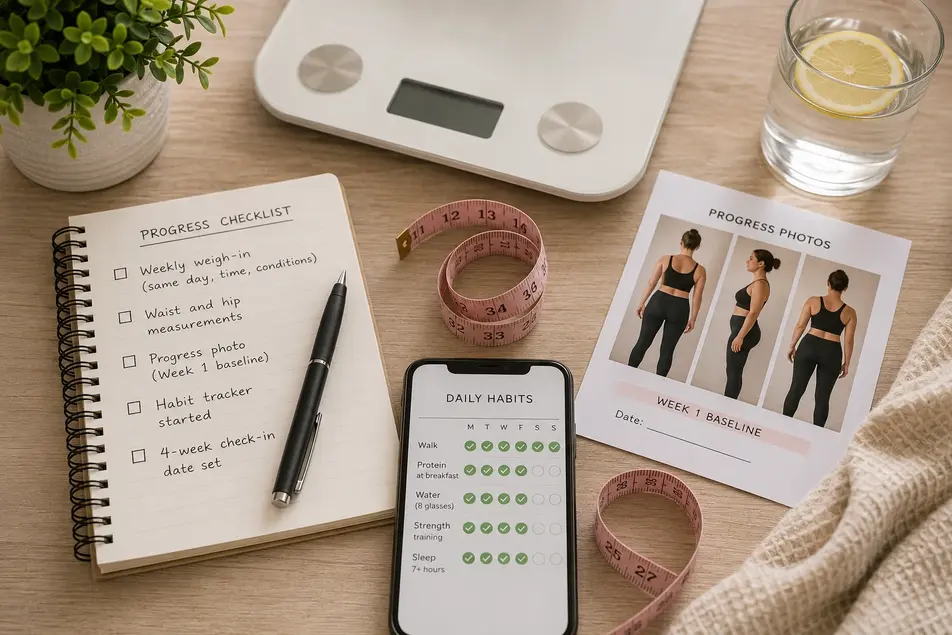
Daily weigh-ins create misleading data. Your weight fluctuates by 1 to 3 pounds throughout each day based on water, food, hormones, and sodium. Weighing at the same time each morning and averaging the numbers across a week gives a far more accurate picture of actual fat loss trends. A flat daily number does not mean the plan is not working the weekly average is the real signal.
Measure Your Body, Not Just Your Weight
The scale is one imperfect tool. Tape measurements of your waist, hips, and thighs catch progress that the scale misses particularly when strength training adds muscle while fat decreases. Taking measurements every two weeks alongside weekly weigh-ins gives a more complete and often more encouraging view of what is actually happening in your body during a beginner weight loss journey.
📏 Take photos every four weeks in the same lighting, same clothing, same angle. Body composition changes are often visible in photos long before they show up as a meaningful number change on the scale.
Track Habits, Not Just Outcomes
Weight is an outcome. Habits are what create outcomes. Tracking whether you walked today, ate protein at breakfast, drank your water, and slept seven hours gives you actionable data. If the scale does not move, habit tracking shows you exactly where the gap is. If you did all the habits and still did not lose weight, that tells you to adjust a variable not to quit.
PROGRESS TRACKING CHECKLIST:
📊 Master Beginner Weight Loss Checklist
Print this, screenshot it, save it to Pinterest. This is your complete starting roadmap.
| Phase | Checklist Action | Category | Priority |
| 1 | Write your specific weight loss goal with date | Mindset | Day 1 |
| 2 | Identify your ‘why’ beyond appearance | Mindset | Day 1 |
| 3 | Commit to 80% consistency not perfection | Mindset | Day 1 |
| 4 | Remove top 3 processed snacks from kitchen | Kitchen | Day 1–2 |
| 5 | Replace sugary drinks with water and tea | Kitchen | Day 1–2 |
| 6 | Stock protein, vegetables, and one whole grain | Kitchen | Week 1 |
| 7 | Plan 3 dinners for this week | Kitchen | Week 1 |
| 8 | Add protein to every meal (no skipping breakfast) | Eating | Week 1 |
| 9 | Fill half your plate with vegetables first | Eating | Week 1 |
| 10 | Drink water 20 mins before each meal | Eating | Week 1 |
| 11 | Eat slowly fork down between bites | Eating | Week 2 |
| 12 | Stop eating 2 to 3 hrs before bedtime | Eating | Week 2 |
| 13 | Walk 20 to 30 minutes daily | Movement | Week 1 |
| 14 | Schedule 2 bodyweight sessions per week | Movement | Week 2 |
| 15 | Add post dinner 10 minutes walk habit | Movement | Week 2 |
| 16 | Set consistent bedtime every night | Sleep | Day 1 |
| 17 | Remove phone from bedroom or face down | Sleep | Week 1 |
| 18 | Identify and reduce one main daily stressor | Recovery | Week 2 |
| 19 | Take baseline weight and measurements (Week 1) | Tracking | Day 1 |
| 20 | Start simple daily habit tracker | Tracking | Week 1 |
| 21 | Set 4 week review date to adjust the plan | Tracking | Week 2 |
Author Words:
This weight loss checklist for beginners is complete but that does not mean you do everything at once. Pick the three items marked Day 1 in the table write your goal, set a bedtime, and take your starting measurements. Do those today. Then tackle the Week 1 items over the next seven days. Let each phase build on the last.
Weight loss is not a sprint that starts at full speed. It is a series of small decisions that become automatic habits over weeks. The checklist does not change. Your ability to execute it consistently is what grows.
Disclaimer
This weight loss checklist for beginners is intended for general informational and educational purposes only. It does not replace advice from a qualified physician, registered dietitian, or certified fitness professional. Individual results vary based on age, starting weight, health conditions, medications, hormones, and consistency. If you have any underlying medical condition including thyroid disorders, PCOS, insulin resistance, heart disease, or a history of disordered eating consult your healthcare provider before beginning any new diet or exercise program.
FAQ’s
1. What is the most important first step for beginner weight loss?
The most impactful first step is setting a specific goal and removing processed food and sugary drinks from your immediate environment. These two actions address mindset and environment the two factors that determine whether any eating habit change actually sticks. Changing what is in your kitchen changes what you eat without requiring willpower.
2. How fast should a beginner expect to lose weight?
The CDC and Mayo Clinic both recommend aiming for 1 to 2 pounds per week as a sustainable, healthy rate. The first week often shows faster loss due to water weight. After that, consistent progress of half to two pounds weekly is realistic. Faster loss often comes from muscle loss or unsustainable restriction both of which cause regain.
3. Do beginners need to count calories to lose weight?
No, The habits in this weight loss checklist for beginners more protein, more vegetables, no liquid calories, walking daily, and better sleep naturally create a calorie deficit without any numerical tracking. Calorie counting can be useful for short term awareness but is not required for sustainable fat loss, particularly in the beginner phase.
4. How many days a week should a beginner exercise for weight loss?
Start with five days of 20 to 30 minute walks and two of those days, add a short bodyweight circuit of 15 to 20 minutes. That is a realistic starting point that builds habit without causing burnout. The CDC recommends 150 minutes of moderate activity per week achievable with daily 22 minute walks alone. Consistency over weeks matters far more than intensity in the first month.
5. What should a beginner eat to start losing weight?
Focus on three things: a protein source at every meal, vegetables at every meal, and removing liquid calories. Beyond that, choose whole foods with simple ingredients over processed ones. You do not need a specific meal plan in week one just these three rules applied to the foods you already recognize and enjoy. Complexity comes later. Simplicity creates the habit.