

Two people pick up the same rec-center flyer. One reads the watercolor listing, hears the sentence at the kitchen counter before any question gets asked, and drops it in the recycling. The other reads the same line and calls to ask about supplies. Same class, different sentence in the head, and years later the two lives look nothing alike.
The class meets Tuesdays at 10 a.m., costs $45 for six sessions, and is labeled beginner level. The fee is refundable. The sentence, I am too old for that, is not a finding about age. The age did no work at all, because the phrasing closed the next step before the facts arrived.
Most people walk in believing feeling young is something you either have or you do not. It is not a mood and not a refusal to admit your age. It is eleven separate habits, each copyable, each with a smallest first step and one guardrail to keep it from sliding away. You do not need all eleven.
Name your bottleneck first, whether it is social, purpose, energy or fear, then choose the one shift that matches it. Put its first step in this week's calendar, and start there.
Quick Tips Before You Start
Pick one shift
Choose the one that matches your biggest friction point this week, not the one that sounds most inspiring.
Schedule the first step
Put the smallest action on your calendar within 48 hours, or it will not happen.
Say it aloud
New self-talk needs to be heard, not just thought. Three repetitions a week is the minimum dose.
Tell one person
A witness turns a private intention into a social expectation, which is what makes it stick.
1. Age-Neutral Self-Talk Swap

The flyer is in your hand and the sentence is already out: too old for that. Notice the order. The verdict arrived before a single question was asked of the class, the fee, or the schedule.
That is what makes the age sentence so expensive. It is spoken at the sign-up sheet, at the invitation, at the doorway, and it is never once tested against the actual requirements. The requirements are almost always smaller than the sentence assumes.
So start by naming it. Not the general wish to be more positive – that intention cannot be caught in the moment, when the sentence is already halfway out of your mouth. One memorized phrase can be caught. Which one is yours: too old, too late, or not for people my age?
Most people have a single default they reach for. Finding the exact words is the whole first move, because you cannot interrupt a habit you have never heard yourself say.
Then swap it for a line that keeps the next step open without pretending to be thirty. I haven't learned this yet. I can try the first step. Both are true, both are survivable to say out loud, and neither requires you to feel any particular way about your age.
Do it three times a week, and say each swap aloud. This sounds excessive until you count the other side: the old sentence has been rehearsed for decades, in your own voice, usually without an audience. The new one has had no hearings at all.
Measured in repetitions, not belief, three swaps a week for a month is twelve times the new line leaves your mouth. That is the honest unit to judge it by, because the wording will sound false at first and that is not a verdict on whether it works – it is just what the first few hearings of any new sentence sound like.
Week three is when most people quit, convinced the phrase is a lie because it still feels awkward. Keep the count instead. Twelve hearings before you decide anything about the wording.
💡 Tip: Write the old phrase and the new phrase on an index card and keep it where you see the flyers: by the front door, on the fridge, near the computer.
2. Weekly Beginner's Curiosity Slot

Curiosity rarely dies in a single moment. It drains on the weeks when the mood is low, the energy is gone, and nothing on the calendar pulls you toward anything new.
Fix it by giving curiosity a time and a day instead of a feeling. A standing appointment shows up whether or not you feel like it that morning, and that is precisely why it works when motivation does not.
Pick something small and pick it on purpose: the call of one bird outside your window, a card game a neighbor mentioned, one soup you have never cooked. The moment you promise yourself you will get good at it, the whole thing turns back into a test with a pass or fail, and tests are what you retired from.
Then block the time. Thirty to forty-five minutes, same day each week, treated with the same seriousness as a dentist appointment. A slot you can move is a slot that has already quietly moved itself off the calendar.
Tell one person what you learned. Not a lecture, just a sentence: the wren has a different call than the sparrow, the card game has a rule that surprised you. Someone now expects the report, and that small expectation is what keeps the block from disappearing.
Being visibly bad at it is the design, not the price of entry. The standard for the week is that the block happened at all, not that the bird call got identified correctly.
The link to the wider argument is simple. Clearing a blocking sentence out of your head opens the door, and the weekly slot is what walks through it, which means curiosity has to be given somewhere to happen before it can lead anywhere.
💡 Tip: Put the slot on a day you already leave the house, so the appointment has a natural anchor.
⚠️ COMMON MISTAKE
The 'Someday' Trap
Most people wait for curiosity to strike before scheduling it. It rarely does. The appointment creates the curiosity, not the other way around.
3. One Younger Friend in Rotation

A circle narrows without anyone deciding it should. You stop commuting, the committee that met every third Thursday folds, a couple of people move away, and one morning you notice everyone left in your regular week is roughly your own age.
Nothing was chosen there. It is what happens by default. So the habit worth building is deliberate: one person fifteen or more years younger than you, kept in a monthly rhythm rather than hoped for.
Pick someone you already like. A neighbor whose dog you know, a former coworker, someone from a class, a niece or nephew you actually enjoy. Existing liking is the whole point, because it removes the stiffness that comes from setting out to make a younger friend on purpose, which never works and feels like a project.
Invite them for a walk or a coffee, once a month, and ask about their world before you say anything about yours. Ask what their week looks like, what they are working on, what they are worried about. The questions are the friendship; the advice can wait, and most of the time it should.
That distinction matters more than it sounds. The instant you start correcting, recommending, or steering, the relationship turns into a mentoring arrangement, and mentoring arrangements are the first thing people quietly drop when their schedule tightens.
Let them set the pace. If they suggest the day, the place, the length, that is not a loss of control; it is what makes them want to come back next month.
In rotation is the operative phrase. A note on the calendar, a standing invitation, a rhythm you can point to. Running into them at the store is not the habit; the monthly walk is.
And it connects to what came before. Something learned in a quiet weekly block wants somewhere to go, and the best place to send it is a person whose world is not your own. That is how the slot stops being solitary and starts building a life.
4. Next-Season Plan on the Calendar
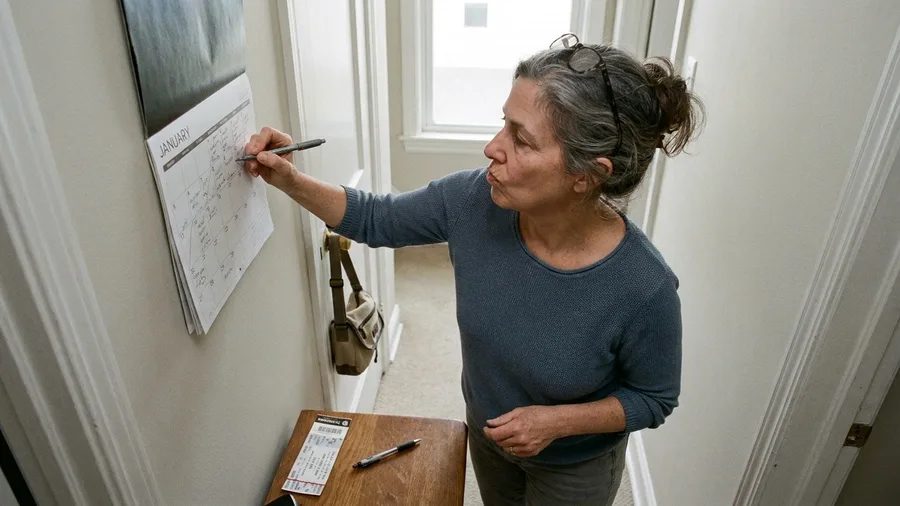
A monthly walk gives an afternoon a shape. Ask what the calendar holds three months out and most people draw a blank, then name the weeks as if that were the answer.
Weeks with no dated event in them flatten into one long Tuesday. Anticipation, not rest, is what gives a day a direction you can feel pulling.
So pick something with a date on it, and let the date be the point. A concert, a class series with a start night, a trip with a booked room, a volunteer shift with a time slot. Undated, it stays a wish; dated, it becomes something the week arranges itself around.
The next move is the one people skip. Put the date, the cost and how you will get there in the calendar, and pay the deposit now. Money and transport are the two exits these plans leave by, and both doors are shut in five minutes.
Then look at the month ahead and decide, honestly, whether you would go alone. If a table for one is the reason you would cancel, invite someone when you book, not the week of.
Review it once a month. That is what turns a single booking into a habit of always having something ahead of you.
💡 Tip: Book the transport at the same time as the ticket. A plan without a ride is a plan with a hole in it.
Calendar Plan — At a Glance
📅 Book By
Before the date is 30 days out
💰 Deposit
At least $25 — enough to sting
🚗 Transport
Door-to-door time, not distance
👥 Companion
Ask before you pay, not after
🔄 Review
First Sunday of the month, 10 minutes
Why It Works
A sunk cost plus a fixed date creates a commitment the week can organize around — the opposite of a wish that waits for perfect conditions.
5. Small Playful Risk Budget

A booking on the calendar proves a season can hold a date. The ordinary Tuesday between events still needs something in it, and that is where the test shows up.
Nobody says the standard out loud, but it is there: try something new and you are supposed to be good at it by the end of the hour. That unspoken bar is what makes a first attempt feel like an exam.
The fix is to stop defending against a bad result and price it in advance, the way a household budget covers a purchase nobody has to justify.
Set a monthly limit you are willing to lose outright. Twenty dollars and two hours is the range most people find workable, because it is small enough to spend without deliberation and large enough to buy a real attempt.
Then spend it on something with no track record: a dish you have never ordered, a walking route you have only driven, a one-off class, a small museum with odd exhibits. Low stakes is the requirement, not a bonus.
Judge the outing by whether you laughed or learned, not by whether you were good at it. A bowl of something unfamiliar that turned out wrong still counts if it was interesting going down.
And the amount you do not spend is the failure, not the try that went badly. This breaks the usual accounting, so say it plainly to yourself: the habit being built is the spending itself.
The twenty dollars caps the damage of a wrong guess at a sum you already agreed to lose. It never covered the bigger cost anyway, which is the afternoon spent deciding.
💡 Tip: Keep the budget in cash in an envelope. Spending it feels different from tapping a card.
The Curiosity Slot: Before and After
6. Weekly Tech Experiment Hour

Most new experiments run through a phone now, whether it is the route, the ticket or the class listing. That puts the device itself in the same frame as everything else you are trying.
The dread lifts once you stop grading the whole machine. The test is one feature, not the entire device and not your competence.
Pick a single feature for the week. Photos, maps, video calls, a banking alert. Not the whole phone, not one more app, one feature.
Spend thirty minutes on it, then write down the two steps you want to keep. The sequence is the first thing to leak away, and two lines on paper are what hold it.
When you get stuck, ask. A younger friend, the helper at the library desk, the person behind the customer service counter. The point is using the thing, not defending your pride.
It is the same beginner's stance as any curiosity slot: a fixed half hour, one stuck point, a person to ask. What ends the hour early is embarrassment, not the touchscreen.
💡 Tip: Write the two steps on a sticky note and stick it to the back of your phone. Future-you will thank present-you.
💡 PRO TIP
The Two-Step Rule
After every tech experiment, write down only the two steps that mattered. More than two is a manual nobody reads. Two is a habit you can repeat.
7. Contribution Over Achievement Reframe

A retired teacher still fixes things around the house, but nobody asks her to anymore. The tools and the know-how are unchanged. What vanished is the person at the door with a broken lamp and the assumption that she was the one to call.
For most of adult life, worth gets measured in output. The job title says what you do, and the paycheck and the promotions attach a number to it without you ever having to ask. Retire, and that question – what have I achieved – loses the scoreboard it was always answered on. The slot does not stay empty for long before it starts to feel like a verdict.
The replacement question is not about achievement at all. It is: where am I useful? That one has an answer at any age, because usefulness does not depend on a title, a salary, or a performance review. It depends only on whether someone's week is lighter because of you.
Start by listing the skills you still enjoy using. Organizing, cooking, fixing things, listening to someone who needs it, teaching, writing – the specific list matters less than the filter you apply to it: enjoyed. A skill you keep up out of obligation starts to feel like a chore, and a chore is the first thing you quietly stop offering.
Then take one of those skills and offer it to a group that needs it. Two hours a month. No title, no committee seat, no open-ended promise you will regret by March. The small, bounded offer is what makes it repeatable; the specific hours are what make it something you can check. Maybe it is a Saturday morning at a food pantry, or an hour with a neighbor's struggling laptop, or reading to kids at the library.
There is a trap here, and it is easy to walk into. Being busy and being needed look identical on a calendar. The difference is what you feel walking out the door – one leaves you filled and the other leaves you wondering where the day went.
Busy can fill every square of the week and still leave the question untouched. Usefulness is narrower and deeper. It is the difference between having a place to be and having a place in someone's week.
Two hours a month is small enough that you can actually keep it going, and precise enough that you can tell whether it happened. That is the whole design. Achievement is a scoreboard kept by other people, and they can put the scoreboard away at any time. Usefulness is a place you hold in someone else's routine, and nobody can retire you from it.
Achievement vs. Contribution
Achievement
- Measured by titles and scores
- Requires an audience to notice
- Ends when the role ends
- Asks: What have I done?
Contribution
- Measured by who relies on you
- Works without a title
- Continues as long as you show up
- Asks: Where am I useful?
8. Energy Audit for Invitations

The invitation arrives on a Tuesday for a Saturday event, and the answer is out of your mouth before you have thought about it. Yes. Then you hang up and try to remember what you have just agreed to.
That reflex is how weeks fill with commitments nobody actually chose. A reception here, a dinner there, a committee meeting that seemed harmless in the moment. The drain does not show up until the following week, when you cannot work out why you are so tired and the calendar is the last place you think to look.
There is a measurement that fixes this, and it takes about thirty seconds. After each event, give it a score from one to five. One means you came home drained. Three is neutral. Five means you left with more than you came with.
You score it after, not before, because the forecast is bad. The dinner you dreaded can turn out to be the best evening of the month. The party you were sure would be fun can flatten you for two days. Your prediction is unreliable; the actual experience is data.
Run the scores for a few weeks and a pattern appears. Now you can act on it with something besides a hunch. Keep the two regular commitments that score high. Drop one that scores low. That single drop is the whole intervention – not a personality overhaul, not a rule about never going out again.
One more habit goes with the scoring. Anything big gets a recovery block the day after. A wedding, a long trip, a full day of grandchildren – the yes to the event is also a yes to the quiet morning that follows it. Book the recovery the way you book the event, or the recovery is the first thing to disappear.
The point of all this is not to say no to life. It is to protect the energy that the other things you have started – the weekly curiosity hour, the monthly walk with a younger friend, the two hours a month of being useful – actually run on. Those commitments cannot survive a calendar that has already spent the week before they begin.
The score makes the choice repeatable, which is what a reflex is not. A number you can look back at is harder to argue with than a vague memory of being tired. Over a season, it turns yes from an automatic response into a decision you made on purpose.
💡 Tip: Rate the event before bed, not on the drive home. Sleep changes the score.
9. Nostalgia Plus One New Thing

The shoebox comes out on a Sunday afternoon. Forty years of photographs, a few letters, a program from a concert you barely remember attending. It is a good afternoon. Then Monday arrives, and the present week looks gray by comparison.
Memory is worth having on purpose. The trouble is the comparison it invites. The old street looks friendlier, the old job looks simpler, the old friends look closer – and the current week starts to feel like something to be endured until the next good thing is over. The past was never as smooth as the photographs suggest, but the photographs do not mention the plumbing or the arguments.
The rule that keeps this from turning into a hiding place is simple. Share the memory with someone who was there, or with someone who asks real questions. An audience with genuine interest keeps it a memory. A monologue to a polite listener turns it into a loop.
Pair the memory with one new thing in the same week. A recipe you have never cooked. A walking route you have not taken. A shop that opened last month. A song someone mentioned. It does not need to be ambitious. It needs to be new, and it needs to happen inside the same seven days as the memory.
The pairing rule is what does the work. The memory gets the afternoon. The new thing gets the calendar. If nostalgia is allowed the whole weekend, it will take it and the new thing will slide to next week and then to never. Put both on the page and neither one crowds out the other.
End the memory with a question that points forward rather than backward. What should we try next? Not: things were better then. The first question keeps the conversation open and gives you a plan. The second closes the door and leaves you in a past you cannot get back to.
This is the same guardrail that runs through every habit on this list. The thing itself is good – memories, invitations, usefulness, curiosity. What kills it is the drift, the slow slide into the version that no longer feeds anything. The pairing rule is the small, repeatable action that stops the slide. One memory, one new thing, the same week. That is the whole practice, and it is enough.
A Week of Small Shifts
10. Two-Minute Morning Body Check-In

Every plan for a new recipe or a new walking route runs on the same assumption: a body that shows up for it. The body files a different report each week, so the day has to start by reading it.
The usual enemy is not age. It is the old plan, held too tightly.
The same two miles at the same pace, the same chair at the same table, forced onto a body reporting something different that morning, is how a good habit gets dropped altogether. Not because the habit failed, but because the version of it stopped fitting. After 60, sleep quality, joint stiffness and balance shift from week to week in ways they did not at 40, and a fixed routine stops hearing the feedback.
Two minutes, before the day's list opens.
Run through four things: how you slept, where you feel stiff, your mood, and how steady you feel standing. That is the entire check. No app, no notes, no score.
Then make one adjustment. Not a new regimen, one adjustment.
Shorten the walk or slow the pace. Change the shoes. Move to the firmer chair. Take a flatter route. Or slot a rest block into the afternoon before you feel you need it. The check-in is data, not a verdict on the day, and choosing a single adjustment keeps the commitment intact instead of trading the whole thing away.
What it is not: a diagnosis.
A twinge that shows up one morning is weather. A stiffness or a balance wobble that keeps showing up, week after week, is worth a conversation with your own doctor. This is a pacing habit, and pacing habits are not screening. Persistent or worrying changes belong to a clinician, not to a two-minute ritual.
Expect the first week to feel fussy. By the third or fourth morning it takes less time than waiting for the kettle.
The point is not to monitor decline. It is to keep showing up, in the version of the habit the body can accept that day. That is the smallest action available, and it is the one that survives.
💡 Tip: Keep a pair of supportive shoes by the door. The easiest adjustment is often the one your feet feel first.
📆 Your First-Week Plan for Any One Shift
Name the bottleneck
Decide whether your friction is social, purpose, energy, or fear.
Pick one shift
Choose the single mindset shift from the list that matches that bottleneck.
Define the smallest step
Write down the one action that takes under 30 minutes and can happen this week.
Schedule it
Put the step on the calendar within 48 hours, with a time and a place.
Tell one person
Say aloud what you are trying so someone else expects the report.
Review and repeat
At the end of the week, note whether it happened. If it did, do it again next week.
11. Unfinished Business Shortlist

Once the daily habits are paced to the body you actually have, a shorter inventory is left over: the wants that never got a date. Someday is not a time. It is a drawer.
Every year the same three items sit in it – a trip, a language, an instrument, a volunteer role, a class – and the calendar fills around them with things that asked to be there.
So make the drawer visible. Write down three postponed things on one sheet of paper and keep it where you pay bills, not in your head, where it has already been filed away for years.
Then pick the one whose opening move is smallest.
Not the one you want most, not the one that sounds best at a dinner party – the one where the first step is a single errand. A search for a teacher's phone number. An email asking about times. For most of these, the first move is not a commitment at all; it is a question that can be answered with a yes, a no, or a price.
Do that step inside a week.
A seven-day window is short enough to stay in working memory and long enough to survive a busy Thursday, and it gives the item a deadline it has never had before.
The part that needs planning is what comes next: the first surge of enthusiasm. It is real, and it reliably fades within days, which is why the second step has to be written into the calendar before the surge passes.
A penciled appointment for the phone call, the registration, the drive to the store – something with a day and an hour attached – outlasts any amount of resolve, because resolve has to be re-decided every morning and an entry does not.
Applied to the flyer still sitting by the kitchen phone, this is not signing up for six Tuesdays. It is one call to the rec center asking whether the 10 a.m. class still has space and what the fee covers – a question, not a vow.
What gets cleared is not the whole list, only the waiting.
Finish the one item, then reach back into the drawer for the next. Two or three of these, moved from someday into a week, and the question stops being whether there is time for any of it and becomes which one is next.
Frequently Asked Questions
How long does it take to feel a difference from these mindset shifts?
Most people notice a change in the first two to four weeks if they stick to one shift and its smallest step. The self-talk swap, for example, needs about twelve repetitions before the new sentence starts to sound true. The calendar and social shifts tend to show results after the first completed event or monthly walk.
What if I try a shift and it does not stick?
That is data, not failure. Check whether you chose the smallest possible first step. Most shifts fail because the first step was too big or never made it onto the calendar. Shrink the step and schedule it again within 48 hours.
Do I need to do all eleven shifts at once?
No. In fact, trying all eleven at once is the fastest way to do none of them. Pick the one that matches your current bottleneck: social, purpose, energy, or fear. Add a second shift only after the first has become routine, usually after four to six weeks.
Is this just positive thinking?
No. Positive thinking is a mood. These are habits with specific actions, timings, and guardrails. The self-talk swap is measured in repetitions, the curiosity slot is a scheduled block, and the risk budget has a dollar limit. The structure is what makes them work when the mood does not.
What if my health limits what I can try?
Every shift here can be adapted. The curiosity slot can be a podcast or a book instead of a class. The younger friend can be a phone call. The body check-in is specifically designed to help you adjust rather than cancel. For persistent or worrying symptoms, talk to your doctor before starting something new.
Choose Your Bottleneck, Then One Shift
Choose by bottleneck, not by preference. If the weeks feel narrow, start social: one younger friend in rotation, one invite sent this week. If they feel full but pointless, start purpose: the contribution reframe, two hours a month offered to one group. If you are wrung out, start energy: the audit, one low-scoring commitment dropped, a recovery block after the next big event. If fear stops you at the flyer, start with the age-neutral swap, said aloud three times, or spend the $20 risk budget on one unproven thing.
Whatever you pick, the commitment is the smallest first step this week, written on the calendar. The call, the invite, the $20, the two-minute check-in before the list. A second shift goes on only after the first is routine. Eleven collected is a reading list; one running is a change.
The flyer is still on the counter. The sentence over it now reads, I can try the first step, and that step is one phone call to the rec center before Tuesday. The goal was never to feel younger. It is a week with something in it, and a next season with a date on it.
Pick One Shift and Schedule It Now
Open your calendar and block 30 minutes this week for the shift that matches your bottleneck. That single entry is the whole start.