

Forty minutes sounds like a real walk. The version people over 50 are trying from Japan asks for the same 40 minutes, just cut into five fast blocks and five easy ones — and most people who try it find the first session is less about distance and more about whether they can stand watching a timer.
You already know how to walk. What you are deciding is whether a watch beeping every three minutes makes the walk more likely to happen or more likely to be skipped. Here is what the session actually is, how to pace it without a lab, and how to tell whether the timer is scaffolding or a nuisance for you.
What Japanese interval walking actually is
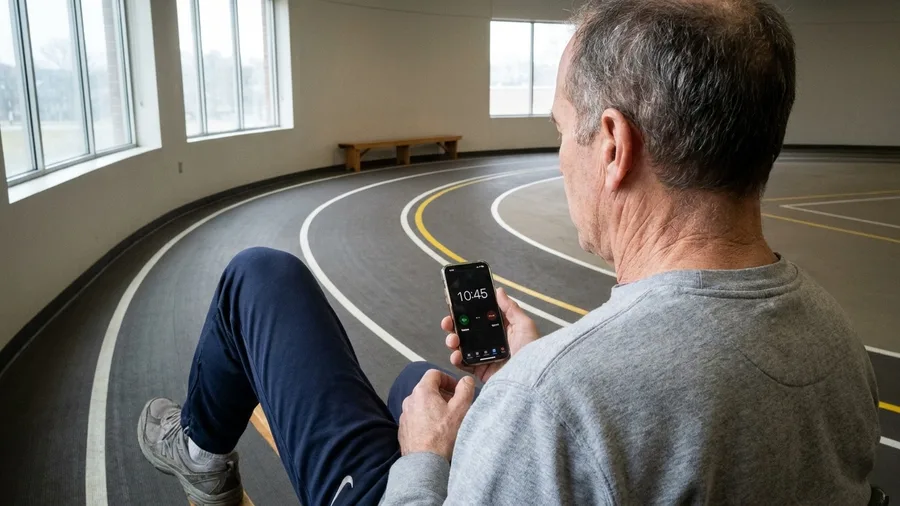
You would walk for 40 minutes with a timer running, alternating between brisk and easy in 3-minute blocks. The structure is fixed and short: 5 minutes easy to warm up, then five rounds of 3 minutes brisk followed by 3 minutes easy, then 5 minutes easy to cool down.
That is the entire session. It is walking, not jogging — no running gait, no gym, no equipment list beyond a phone timer or a watch.
Three things get you through it: a pair of supportive shoes, typically $60 to $120, and a flat 1-mile loop, a mall corridor or a high school track. Flat matters, because pace changes on a hill are a different workout. The loop matters so traffic lights are not deciding your intervals for you.
The label does some misleading work here. "Japanese" names the alternating pattern — fast block, easy block, repeat — not a class, a club or an instructor. There is no membership to buy, no session to join, nobody checking your form at the trailhead.
One rule holds the whole thing together. Brisk enough that you feel the effort; easy enough that you have recovered before the next brisk block begins. Get that wrong in either direction and the pattern stops doing what it is for.
So the cost side of the ledger is short. You are already walking. The timer is the only thing being added.
| Point | Steady walk | Japanese interval walk |
|---|---|---|
| Structure | One continuous 40-minute pace | Five 3-minute brisk + five 3-minute easy blocks |
| Attention needed | Low — you can sink into the walk | Higher — you watch a timer and change pace |
| Pace range | Whatever feels comfortable | Brisk 3.0–3.5 mph; easy 2.0–2.5 mph |
| Best for | People who already walk consistently | People who get bored or quit long walks |
| Kit | Shoes, route | Shoes, route, phone timer or watch |
| Total time | About 40 minutes | About 40 minutes, including warm-up and cool-down |
Why the fast-slow pattern feels different
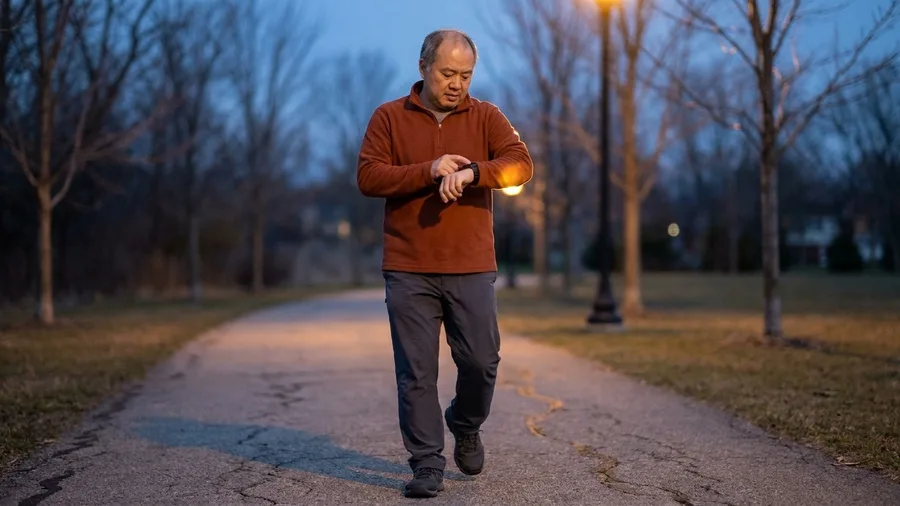
Five start lines and five stops do something to a walker's head that one long push never does. The reason is simple arithmetic: with a 3-minute block running, the next change is never more than about 180 seconds away, and there are five of those finish lines tucked inside the 40 minutes.
So the walk stops being a wall of distance and becomes a short string of manageable pieces. Stand at minute 24 of a steady walk and the remaining sixteen minutes sit there as one gray stretch with no landmark in it. In the interval version, minute 24 lands you somewhere inside a brisk block with a hard stop already clocked in your head.
Be clear about what this is, though. It is how attention behaves, not a finding from a lab. This piece cites no studies and claims no proven effect on motivation or on fitness – just the plain observation that near finish lines are easier to walk toward than distant ones.
What it costs is attention of its own. Across the session you make ten pace changes, and every one of them wants you to look at the phone, hear the beep, and shift gear – mid-conversation, mid-thought, mid-song. Some people find that rhythm refreshing; others find it nags.
It probably suits you if your walks tend to die near the 25-minute mark. It probably does not if the walk is already the quietest half hour of your day and a beeping phone would break it open.
One honest way to settle it: think back to your last three long walks. Did you finish them, or did you quietly turn for home early?
How to do your first 40-minute session
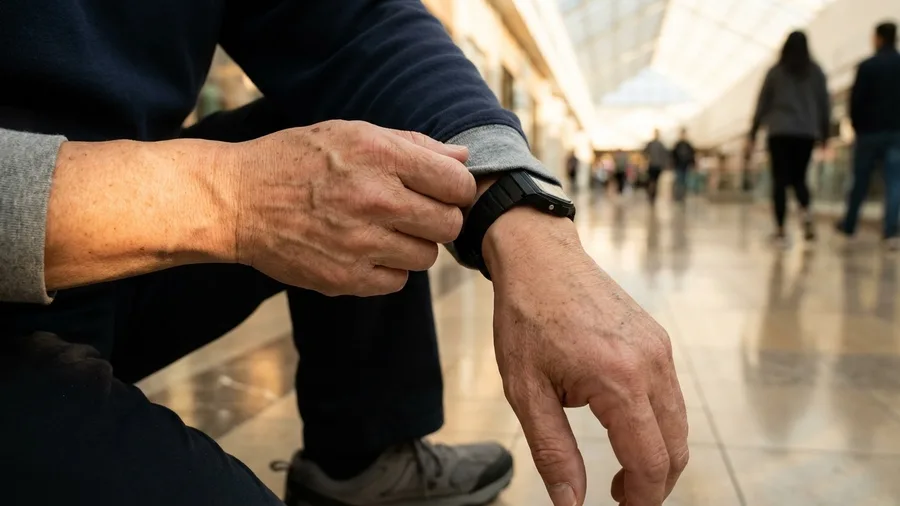
The session is the sequence itself, so walk it in the order written and the first round will carry you. You begin with 5 minutes easy to warm the legs, then alternate five times – 3 minutes brisk, 3 minutes easy – and finish with 5 minutes easy to cool down. Those bookends sit inside the 40 minutes; they are not extra credit.
Set up before you leave the house, not at the trailhead. A phone timer or a watch, shoes with real cushioning that run about $60 to $120, and a flat 1-mile loop, an indoor mall or a track – flat because a hill or a stoplight will wreck the pacing you are trying to hold. No gym, no membership, none of it.
If the phone pulls your attention every time the screen lights, two substitutes work. A watch with a repeating alarm keeps your hands free. Or count landmarks instead: brisk until the second bench, easy to the lamp post, brisk again at the fountain – a rough timer built out of the scenery.
Now the part most first-timers get wrong. You are not chasing a pace on day one; 3.0 to 3.5 mph in the brisk blocks is a guide, not a grade. The goal is to finish comfortably, a bit warm and glad it is over, because the session you end in relief is the one you are willing to repeat on Thursday.
Today the timer is doing one job: keeping the order straight. It is not testing you, and there is no score at the end.
🚶 Your first 40-minute session
5 minutes easy
About 2.0-2.5 mph, conversational. Use this to check your shoes and that the loop is flat.
3 minutes brisk
3.0-3.5 mph, too quick for full conversation. If you cannot finish a sentence, ease off 0.2 mph.
3 minutes easy
Drop back to 2.0-2.5 mph. The recovery block is what lets the next brisk round hold its pace.
Repeat four more times
Five brisk and five easy blocks. New or deconditioned? Stop after 2-3 cycles in a 20-25 minute walk and add one cycle a week.
5 minutes easy
Cool-down at 2.0-2.5 mph. Stop and call a clinician if you get chest pain, dizziness, unusual breathlessness or joint pain.
Set the right pace without a lab

The talk test settles it, and it costs nothing: on a brisk block you can get out a short sentence and no more, and on an easy block you can hold a real back-and-forth. Try it out loud on the sidewalk. If you can narrate your grocery list, speed up; if you are gulping between words, ease off.
The numbers line up behind the test. Brisk tends to land around 3.0 to 3.5 mph, easy around 2.0 to 2.5, which in the body feels like a purposeful stride against a browse. Check yourself against those once or twice, not every block.
Know the four things that end the session rather than slow it: pressure or pain in the chest, light-headedness, breathlessness out of proportion to the effort, or a joint that hurts rather than works. Any of those and you stop and get it looked at before the next walk, not after.
If five rounds is too much at first, run two or three of them inside a 20 to 25 minute walk, then add one round each week until the full set fits. The talk test keeps the fast blocks honest without a treadmill, and the stop signs are what let you relax into the easy ones.
⚠️ COMMON MISTAKE
The most common first-session mistake
Most people over 50 make the brisk blocks too fast on day one because they confuse brisk with hard. If you cannot say a short sentence during the brisk interval, you are walking too fast for this method. The brisk block should feel like a 6 or 7 out of 10, not an 8 or 9.
How often should I walk and build up
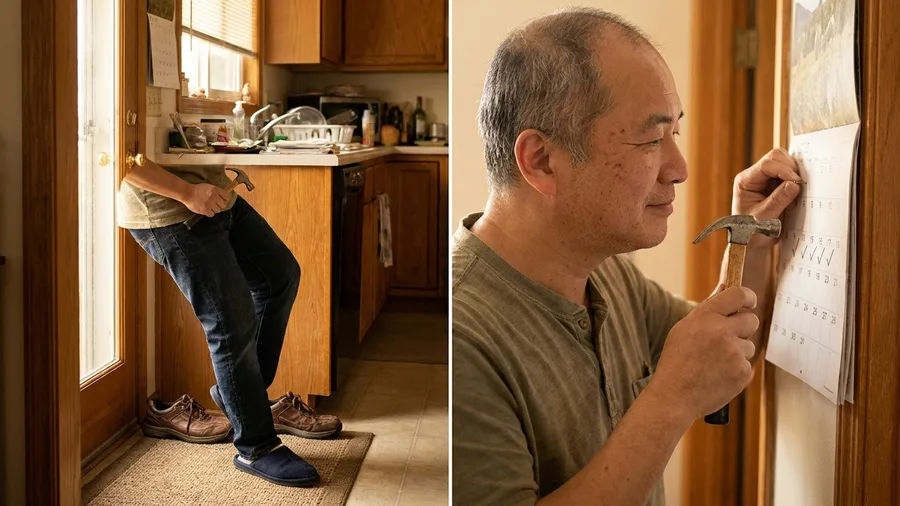
Three sessions a week, spaced so a day off always sits between them, is the rhythm to start on. That rest day is on the calendar the same way the walks are, because it is what makes Thursday's brisk blocks feel like Tuesday's instead of a grind.
Add a fourth or fifth session only when the day after a walk feels ordinary, no lingering heaviness in the legs. Build cycles before speed: one more round per week, and only then a slightly quicker brisk block.
Anchor the session to something that already happens, so it does not depend on a decision. The same trick of tying a new habit to an existing one is what keeps people feeling young at heart after sixty, as these mindset shifts show. The shoes go by the door the night before, the walk starts at the same hour, and the calendar gets a tick, which turns a good intention into a visible count.
A neighbor who walks with you, or a log with a line per session, does the same work. Miss a Thursday and it is one blank line, not a collapse. Three walks a week is small enough to fit a real week and structured enough that you notice when it does.
Which walk fits your week?
Choose the interval walk if…
- Long walks tend to get abandoned around minute 25
- You like a timer and small finish lines
- You want more structure than a plain loop
- Your schedule allows a set 40-minute slot
Choose a steady walk if…
- You already walk consistently without a plan
- You want unbroken quiet on your walk
- Timers and pace changes feel like a nuisance
- You walk with a chatty group and want to talk
How it compares with a steady walk
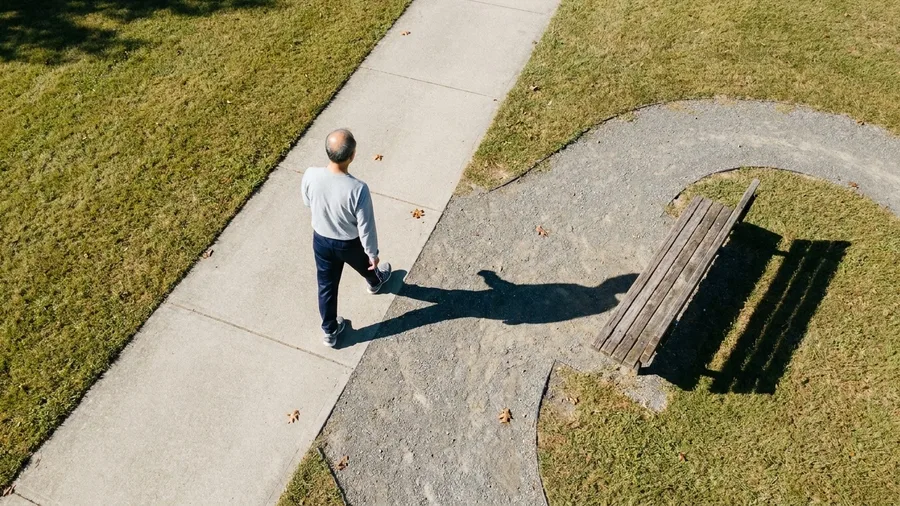
It is not better, it is shaped differently, and the shape is the whole argument. A steady walk is one continuous 40-minute pace with nothing to check and no changes to make; the interval version takes those same 40 minutes and cuts them into ten blocks, five quicker and five easier, with a timer deciding when each one ends.
That difference matters most to people who quit long walks. If the walk tends to die around minute 25, ten short blocks give you something to finish ten times over. If the walk is already the quietest hour of your day, the timer is a guest you did not invite.
It also matters less than the headline suggests for people who already walk consistently. The walk is already happening; the question is only whether the structure holds it up or gets in its way. No method wins that contest in general, only for a given walker.
For anything tied to a health condition, this article is not the guide. Exercise is Medicine and your own clinician are, and they will tell you what your version of brisk means. The honest test is your own week: does the timer act as scaffolding, or as the nuisance that gets the walk dropped by week three?
Frequently Asked Questions
Do I need special shoes for Japanese interval walking?
No special brand or model. A supportive walking shoe in the $60–$120 range covers most people well. Replace them when the midsole feels compressed — roughly every 300–500 miles, sooner if you walk on pavement daily.
Can I do interval walking if I have knee or hip arthritis?
Many people with mild to moderate arthritis walk intervals comfortably, especially on flat, even surfaces like a mall or track. Start with 2–3 cycles in a 20–25 minute walk. If joint pain lasts more than a day after a session, cut a cycle and check with your clinician before adding it back.
How fast is brisk, really?
Brisk is about 3.0–3.5 mph and too quick for full conversation — you can say a short sentence but not chat. Easy is about 2.0–2.5 mph and conversational. The talk test is more reliable than a speed readout because it accounts for hills, wind and how you feel that day.
What if I miss a week?
Pick up at the same number of cycles you left off at, or drop one cycle if the first session back feels hard. Do not restart from zero and do not try to make up the missed sessions. The weekly count matters less than the habit of returning.
Is this the same as Japanese slow jogging?
No. Slow jogging uses a gentle jogging gait; interval walking stays at a walking gait throughout. If running or jogging bothers your knees, the walking version is the one to try first.
How long before I notice a difference?
Most people notice the sessions feel easier within 3–4 weeks — the brisk blocks become less daunting and recovery between them shortens. Changes in stamina or how stairs feel typically show up around week six if you are consistent with three sessions a week.
Your First Week of Interval Walking
The verdict by situation is plain. If you are cleared for brisk walking and you want structure, try one 40-minute session this week: 5 easy, five rounds of 3 brisk and 3 easy, 5 easy. If you would rather have no timer and no pace changes, choose the steady walk and do not treat it as the lesser option.
If you are new to brisk walking or unsure of your heart and joints, start with 2 to 3 cycles inside a 20 to 25 minute walk, and check with a clinician before building up.
The Japanese label never meant a class or a jogging plan. It means the walk you already take, chopped into brisk and easy blocks, and the timer exists to serve that walk rather than to grade it.
The walk that survives a Thursday in February beats the smarter walk that does not. Pick the version you will actually do, and if it is the interval one, put the timer on and let the first brisk block carry you.
Before your first session, check one thing
Set your timer for 3-minute repeats and walk one easy block today. If the timer feels like a nuisance rather than a help, you have your answer — and a steady walk is still a good walk.