

Seventy. That is roughly how many questions a genuinely curious adult has looked up in the past year, according to surveys on curiosity and aging – and the count barely moves between 45 and 80. What separates the engaged from the disengaged is not curiosity itself, then, but whether the looking-up ever happens. Notice the friend who once argued about everything, and who now reruns the same 1980s workplace story. The energy dip is real, and the social circle does shrink. But the pull is not curiosity drying up. It is questions closing too fast because nothing in the week holds them open.
The people who stay engaged past 70 are not more naturally inquisitive, either. They have installed routines that make a question easy to carry and not-knowing safe to show. That is the whole trick, and it is copyable. Capture questions as they arrive, stay a visible beginner somewhere, read outside your usual opinions, keep one fixed slot, quit things cleanly, hold one long project, and trade teaching with people younger than you. Some of these ask for a thick skin; skip those if a term of looking like the worst in the room would end the effort.
The rest of it is a question list and an hour. Write the first entry this week – the thing you have wondered about for years and never looked up.
Quick Tips Before You Start
Keep It Physical
A paper notebook by the armchair or a dedicated note on your phone beats a mental list every time.
Use Dead Minutes
Commutes, waiting rooms, and queues are hunting time — pull out the list instead of scrolling.
Say It Out Loud
A fair-trial verdict spoken to someone else makes a clean quit easier than a silent drift.
Put It on the Calendar
A standing date with a recurring entry is worth more than ten should-catch-ups.
Ask for the Full Lesson
When a younger person teaches you, ask for the beginner version — not the shortcut.
Finding Things to Be Curious About
Curiosity does not arrive on its own. It is manufactured — deliberately, in small daily moves. The first three habits are about keeping a steady supply of open questions and making the state of not-knowing feel survivable, especially in public.
This matters more after 70 because the social pressure to appear competent is strong, and the easy path is to stick to what you already know. These habits push back against that pull.
1. A question list turns idle minutes into hunting time.
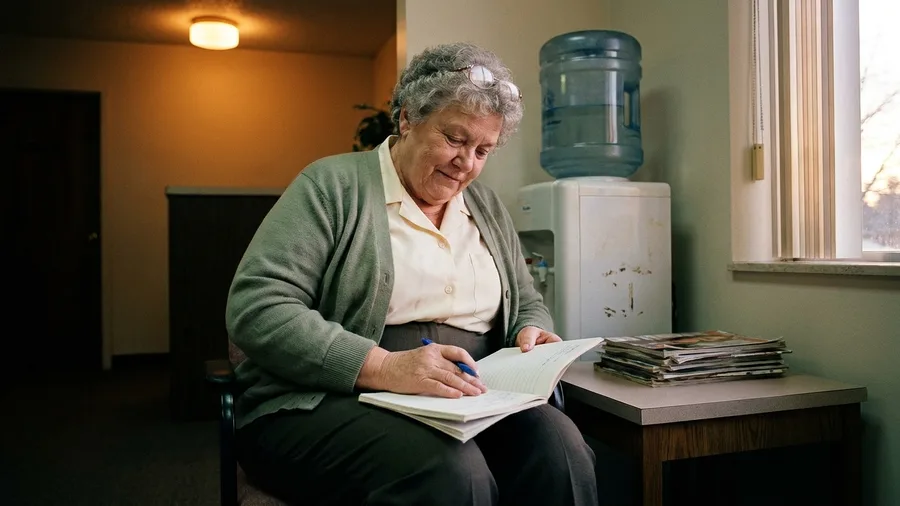
The people who always seem to have something to chew on are not working from a bigger well of natural curiosity. They are working from a list.
A paper notebook on the side table by the armchair, or a note on the phone if that is where your hands already live. The only rule that matters is that new entries get added at least weekly, even small ones. Why do the joints on the old bridge clack louder in August heat? Who decided the highway exit numbers should skip? What did your mother actually mean by that phrase she used for forty years?
Nothing fancy goes on the list. The list's job is to hold the question so your mind can keep returning to it without having to remember it.
The second rule is what keeps the list alive: a question stays written there until it is answered or until you deliberately cross it off. Crossing off is recorded, not silently forgotten. If you decide a question is not worth chasing, you write dropped beside it and the date, so the list stays honest and the page does not fill up with ghost entries that make you feel behind.
Now the part that pays. The gaps in an ordinary day, the commute, the waiting room, the queue at the pharmacy, are minutes you would otherwise spend scrolling. With a list in your pocket or bag, those minutes become hunting time. You have a question and a phone and eight minutes, and you go looking.
The notebook question about the clacking bridge joints sat there for six weeks. It got answered in a dentist's waiting room, thumbing through a state transportation department page, because the wait was eleven minutes and the list was in the bag.
it manufactures present-tense questions on demand.
💡 Tip: Keep the list short — 10 to 15 open questions max. More than that and you start scanning instead of hunting.
Long Project — At a Glance
⏱️ Time
2–4 hours a week
📅 Pace
Years, not weeks
📂 Visibility
Keep it out on a desk or bench
🔁 After a gap
The next step is obvious
🎯 Goal
A place for curiosity, not a deadline
Why It Works
A long project gives you a default next action, so you never have to decide what to be curious about.
2. Staying a visible beginner makes not-knowing normal.

Write the questions down and a harder problem shows up behind them: someone has to be seen not knowing. That is the cost this habit asks you to pay on purpose.
Pick one skill where your progress is on display. A Tuesday-night language class, a community choir, a beginners' woodworking course at the rec center – anything with other faces in the room and a weekly meeting on the calendar.
Then book the entry level, not the rung you could technically survive. The intermediate class flatters you and teaches little; the beginners' section is where the actual learning happens, and where nobody expects you to be good yet.
At 70 the looking-silly tax is real. Reading aloud in French at half the pace of the room, hitting the wrong note while the altos carry on, holding up a crooked dovetail for inspection – a term of that is the price of admission, and it does not shrink with experience.
This habit suits people who can tolerate being the worst in the room for a few months. If your sense of self depends on being the capable one, the weekly bruise will end the effort before the skill takes – choose private lessons or a solitary craft instead, and let the public version go without guilt.
What the arrangement does is quietly reclassify ignorance. Not knowing stops being a verdict on your mind and becomes the ordinary state you walk into every week, the same way the class walks in with you.
The first four sessions are the hardest. After that the room has seen you fumble enough that it stops being news, and the beginner's seat starts to feel like a place you belong rather than a test you are failing.
⚠️ COMMON MISTAKE
Starting Too High
Signing up for a course above your level so you won't look like a beginner defeats the purpose. The public fumbling is the mechanism — it makes not-knowing normal. Choose the 101 class.
3. Reading past agreement keeps the questions from closing.

Standing in front of others as a beginner keeps the discomfort of not-knowing manageable, but it does not stop you from collecting only the answers that already agree with you.
So once a week, read one source from outside your usual politics or your usual field. An opposing column you would normally skip. A trade magazine for an industry you know nothing about. A newsletter from a denomination that is not yours. One source, once a week, chosen so that the first paragraph makes you want to argue.
The trick is what you do while reading. Reading to argue means hunting for the weak sentence, the shoddy statistic, the sentence you can knock down. Reading to understand means reconstructing the strongest version of the argument and then naming one question it raises that you cannot answer. The second kind is the one that keeps the questions alive.
When the opposing view is badly argued, and sometimes it will be, name the specific fallacy, close the tab and move on. There is no obligation to keep reading junk in the name of open-mindedness. The obligation is one honest attempt at understanding per week, not equal time for every crank claim.
Here is how a week looks. A reader marks one line in an opposing column, a line that surprises her, and looks up the underlying figure. The figure does not settle the argument. It raises a new question about how the number was collected, and that question goes on the list. The point is not to win the debate. The point is that the question stays open rather than the debate closing it.
💡 Tip: Pick your source on Sunday and read it on Tuesday. Making it a scheduled probe prevents it from becoming a one-time experiment.
From Closed Questions to Open Ones
One weekly probe is enough to keep the questions from closing.
Protecting the Time and Attention
Curiosity does not survive on good intentions. It needs protected time and a clean exit strategy when an interest turns dead. The next three habits are about making curiosity fit your week and knowing when to quit.
Errands expand to fill any unscheduled hour. That is not a personal failing — it is human nature. The fix is a fixed slot and a fair-trial rule.
4. A fixed weekly slot protects curiosity from errands.

A question you carried home from a source outside your usual reading needs a place to go, or it goes nowhere. The obstacle is rarely interest. It is the calendar.
Errands expand to fill every unscheduled hour. Anyone past sixty who has said 'when I get around to it' about a library visit knows how that sentence ends.
The fix is a standing hour: Tuesday morning at the library, a Saturday lecture series, a lesson that meets whether or not you feel like it. One hour, same day, same time, week after week, treated as an appointment and not a hope.
The hour has to be defended. A spouse, a neighbour, a paid carer or an adult child takes over the chores and the caregiving for those sixty minutes. Groceries get done a different morning. It helps to say the arrangement out loud to the household so nobody schedules over it.
Life breaks the pattern, and the restart rule is what saves it. Miss two weeks running and the next meeting shrinks to thirty minutes at the kitchen table. Then the full slot comes back. It is a restart, not a cancellation.
Tuesday, nine to ten, in the library, phone off. That is the whole plan. It will feel rigid for a month and ordinary by the second.
💡 Tip: Put the slot in your calendar as a recurring event with an alarm. If it is not on a calendar, it is not real.
🧭 The Fair-Trial Quit Sequence
Set the trial
Choose a set number of sessions or one full season before you judge the hobby.
Do the sessions
Attend every one. No quitting mid-trial unless something is physically unsafe.
Say the verdict out loud
Tell someone: 'I gave it a year, it's not for me.' A spoken verdict is a decision.
Deal with the equipment
Sell it, donate it, or shelve it with a date. Do not let it become a permanent guilt object.
Keep the ties worth keeping
Maintain one coffee friend from the class. You are quitting the activity, not the person.
Move on
Attention goes to the next question on the list. The slot is free.
5. Fair trial, clean quit, then attention moves on.

A standing hour has a way of sorting the real interests from the obligations. Sit in the same chair at the same time for a few months and the thing you keep showing up for starts to feel different from the thing you keep dreading. Not every experiment is going to earn a second year, and deciding that on purpose is its own skill.
The rule that keeps it honest is a trial period you set before you begin: ten sessions, or one full season, whichever comes first. Pick the number when you are still enthusiastic, write it on the back of the enrollment receipt, and do not renegotiate in week three when the enthusiasm has thinned. You owe the experiment the full trial and nothing beyond it.
the studio hour is the best part of your week, or it is a chore you are already planning to skip.
When the answer is no, say it out loud to one person. "I gave it a year, it's not for me." The sentence sounds small, and it does more work than you would expect. It turns a private fade into a decision with a witness, and a decision is something you can act on rather than carry around.
Then close the books. Sell the wheel, donate the tools, shelve the leftover clay with a date stuck to the lid. Keep the one classmate you actually liked for coffee and let the rest go without apology. You have no obligation to keep showing up to something you have already decided against, and the friend will still be there on a different Tuesday.
The trap to name is the dead hobby that quietly becomes a duty. Drifting has no date and no verdict, so the unused easel just sits in the corner and the Tuesday slot fills with errands, and you spend a year feeling vaguely guilty without ever deciding anything. A quit is different: it has a decision, a spoken sentence, and a calendar entry for what comes next. The attention you free is not lost. It is the raw material for the next thing you are going to be curious about.
💡 PRO TIP
Report Back
When you teach before you are ready, always report back what you learned. The report-back is what turns a stumble into a habit of curiosity.
6. One long project gives curiosity somewhere to return.

A clean exit empties the calendar, which is useful and a little unnerving. Curiosity needs somewhere to go that will still be there in eighteen months, and that is a different kind of structure from a class or a Tuesday hour.
A few hours a week, held for years rather than a season, is the pace that works. Not a sprint, not a weekend project you finish before the leaves fall. Something sized to your actual week: two hours on a Sunday, one evening midweek, whatever fits without a fight. The point is the length of the runway, not the speed on it.
The shape varies with the person. A family history that takes a decade to trace, a garden grown from seed in trays on a windowsill, a chair or a small table built from rough lumber. What they share is that they cannot be finished in a determined push. They are the kind of work that rewards showing up with a few hours and no particular deadline.
The reason this matters more than it sounds is that a long project survives neglect. Leave it for a month, come back to the windowsill, and the next step is still visible: one page of notes, one seed tray to water, one board still waiting to be sanded. You do not restart from zero. The work holds its place, which is exactly what a body and a calendar in their sixties need it to do.
One ancestor's record a month is a perfectly good pace. You trace a birth certificate in March, come back in May, and the file is exactly where you left it, the next name circled in pencil. A month away costs you nothing except the month.
The project does not have to be finished to be worth doing. That is the part most people get wrong, because they measure a long project against a completion date and give up when the date slips. The project is a place for your curiosity to land when it comes home. Whether you finish it is almost beside the point.
💡 Tip: Keep the project out where you can see it — a folder on the desk, a seed tray on the windowsill. Out of sight is out of mind after 70.
💡 PRO TIP
The Two-Hour Rule
If a session of your long project runs more than two hours, stop. Longer sessions create a backlog of chores that makes the next session harder to start. Short and repeatable beats long and heroic.
Keeping Other People in the Loop
Curiosity is social. The habits that keep you engaged past 70 all involve other people — younger teachers, standing dates, the simple move of saying 'let's find out' instead of guessing.
This is where isolation does its damage. Without other people in the loop, questions close faster and curiosity has nowhere to go.
7. Being taught by someone younger keeps expertise loose.

A project you tend alone can slowly turn inward, until the only voice in the room is your own. The fix is counterintuitive: deliberately put yourself under someone younger, and let them be the expert for an hour.
Most people past sixty get asked to teach far more often than they get asked to learn. Flip that. Ask a grandchild to walk you through a phone app, or a teenage neighbour to show you the card game everyone at the table already knows. The point is not the skill. It is rehearsing the position of the person who does not yet know.
Then ask for the beginner lesson, not the shortcut. When a 12-year-old offers to set up your photo album, the tempting reply is "just do it for me." Decline that. Ask for the full first lesson, step by step, so you actually fumble the buttons and learn where they are.
The younger teacher gets something out of this too: patience, a little status, and a real reason to explain what they know. Explaining to an adult who is genuinely listening is rare currency for a kid.
Impatience will surface on both sides. Cap sessions at 15 minutes, stop the moment either of you huffs, and book the next one before you part. A short lesson you repeat beats a long one you both dread.
None of this asks you to be bad at everything, just at one thing, on purpose, in front of someone. That single weekly dose of not-knowing keeps your expertise from hardening into the only thing you trust.
8. Answering with 'let's find out' turns talk into practice.

Saying 'I don't know' out loud is where most people stop. The habit is the four words that follow: let's find out.
Adults in their sixties and seventies spent careers being the one with the answer. That reflex is fast, and it shuts the question down before anyone else can pick it up.
The swap is small and it is learned by doing. When a question lands and the answer is not there, you name the gap and then reach for a source together, whether it is a phone, the old encyclopedia on the shelf or the reference desk at the library on the way home.
A grandchild sees it happen and files it away. An adult can be unsure, say so and go check, and nothing bad follows. That is a lesson no lecture delivers as well as a search at the dinner table.
The test case is easy to picture. Someone asks why the moon looks bigger near the horizon, the phones come out, and one lookup settles it. The moon was never the point.
There are times the question does not wait. If it is about a person's safety, a child's bedtime worry or a plain yes-or-no that ends the conversation, answer quickly and look it up later, or the search becomes a way of avoiding the answer.
The lookup itself is short, often under a minute. The point is not the answer, it is the motion of going to find one with other people in the room, and it turns any table into a place where a question goes somewhere instead of fading.
💡 Tip: Keep a small encyclopedia or a phone within reach at the dinner table. Friction kills the 'let's find out' move.
A Standing Date vs. a Vague Catch-Up
Standing Date
- A calendar entry with a recurring date
- A next meeting booked before leaving
- Happens whether or not you feel like it
- The slot stays even if one person moves away
- You add a new person from a class or lecture
Vague Catch-Up
- 'We should catch up sometime'
- No calendar entry, no recurrence
- Depends on energy and availability
- Collapses when one person moves
- Replaced by nothing
9. Standing dates with curious people keep the exchange going.
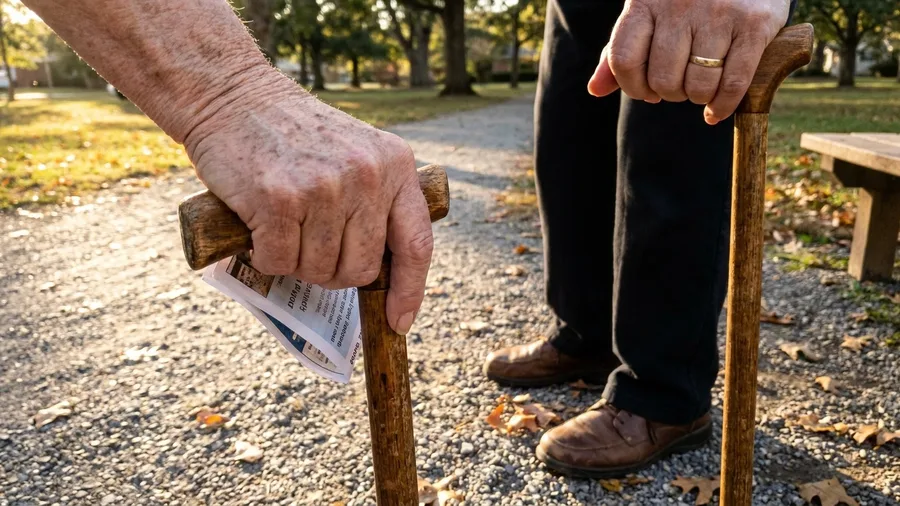
Joint lookups need other people, and other people need a date. Left as good intentions, the curious friend you mean to call drifts out of reach within a season.
That is what a standing date fixes: a monthly book group, a walking friend at the same hour each week, a lecture buddy who meets you at the door. Not "we should catch up" but a calendar entry, a recurrence, and a next meeting agreed before either of you leaves.
The test is simple. When you part, does the next date already exist? If not, it is a wish, not a fixture, and wishes thin out as circles shrink.
People move away, lose interest, or get sick. When that happens, keep the slot and fill it with someone else: a neighbour, a member of your class, a younger colleague from work. The time stays protected even when the person changes.
First Monday of the month at the book group was the anchor; when the original friend moved to be near her daughter, the slot stayed. A woman met at the lecture series got the invitation, and the exchange kept going without a gap.
10. Teaching before you're ready exposes the gaps that matter.
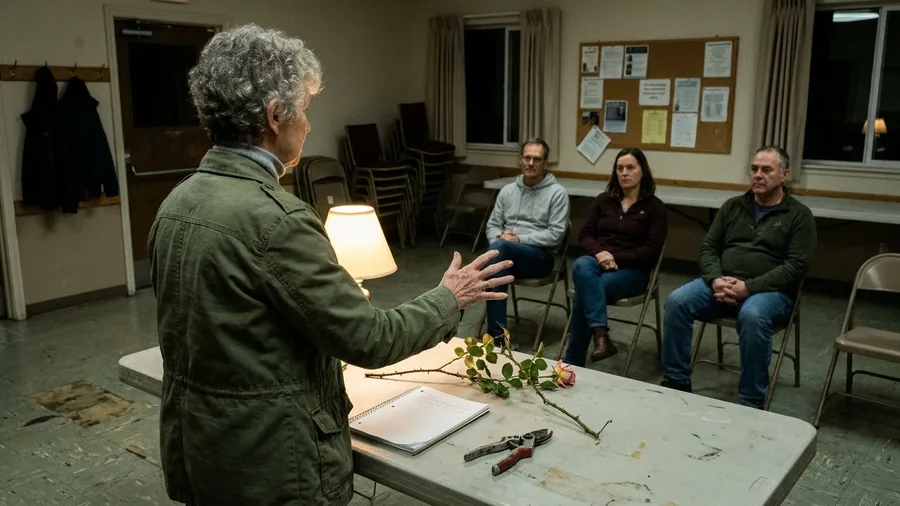
Regular conversation with the same curious people eventually asks something of you. Someone turns to you and says: explain this to me. That request is where learning gets its teeth.
The format matters less than the act. Five minutes on how to braise a chicken, a short note in the garden club newsletter, a grandchild's homework on why leaves change color. You stand at the counter and talk with no index cards. You are not polished and that is the entire point.
Waiting until you have mastered a subject feels responsible, and it is the trap. While you wait, the gap in your understanding stays vague, a fog you can walk around. The moment you try to explain it, the fog sharpens into one missing step.
A reader who gardens offers to show a neighbor how to prune a rose, and in five minutes the explanation lands on a specific bud and stalls. Which side of the cane? Above or below the node? The mouth knows before the mind does.
That stumble is not a failure. It is the exact location of the hole, labeled and lit, and it is worth more than an hour of reading because it tells you what to look up.
So look it up. Then report back. The return call, the note next week, the text saying the answer was the outward-facing bud. That second explanation is where the knowledge sets, because now you are saying it with your feet under you.
A boundary holds here, and it matters after 50 when people start treating you as the person who knows. You teach your hobby, not your professional opinion. Money, medication, legal and mental-health questions get handed to the people qualified to answer them, and the hobby stays a hobby.
The point is not mastery. The point is a subject that keeps meeting the resistance of your own words until the vague becomes clear, one small gap at a time, for as long as anyone is willing to ask.
💡 Tip: Keep a five-minute clock for your explanation. If you are not done, the gap is the lesson — stop and look it up together.
Frequently Asked Questions
How many questions should I keep on my question list?
Aim for 10 to 15 open questions at any one time. Fewer feels thin; more and you start scanning instead of hunting. The list is a tool, not an archive.
What if I feel embarrassed about being a beginner in public?
That is the cost, and it is real. Pay it once in a low-level class and the feeling fades. If your identity truly depends on being capable, choose private instruction instead — the mechanism is the same, only the audience changes.
Does the fair-trial rule mean I have to quit things I enjoy?
No. The rule is for what to do after the trial, not before. A fair trial gives you a clear decision point. If you enjoy it, keep going. If it is dead, quit cleanly and free the slot.
How do I find a standing date when my friends are not interested?
Keep the slot and fill it from a class, a lecture, or a neighbour. The habit is the slot, not the original person. A recurring calendar entry with a rotating cast is far more durable than waiting for the old group to reassemble.
What is the best first step if I want to start this week?
Start the question list. One notebook, one page. Write down one thing you have wondered about for years and never looked up. Then answer it before Sunday.
Write Down the Question You Have Carried Longest
Curiosity in the seventies is held up by structures, not temperament. Copy the question list, the fixed Tuesday hour and the standing exchange with someone who looks things up with you. Skip visible beginnerhood if a term of looking silly would end the effort; being the worst in the room is optional, and the other habits carry the work without it.
The friend who only talks about the past is not a separate species. The difference is a notebook by the chair, an hour on the calendar and one person to look things up with. Start this week with the list, not the class and not the standing date. Write one thing you have wondered about for years and never looked up on the first line, and answer it before Sunday. Then write the next question under it, and answer that one before the Sunday after.
Start Your Question List Today
Open a notebook, write down one question you have carried for years, and answer it before Sunday. That single move is where the curiosity habit begins.