

Twelve days. That is the whole experiment, not the six months you just priced out in your head while the job listing sat open in another tab.
Somewhere in the last few weeks you stopped feeling like yourself, and the fix you keep circling is dramatic: the new job, the move, the 5am regimen, a different life by spring. It feels like the honest answer, which is why nothing happens on a Tuesday.
What reads as a verdict on your whole life is usually several separate loads wearing the same clothes: sleep, the first hour, attention, contact with people, the state of the room, how you talk to yourself, work. An overhaul moves all of them at once and tells you nothing about which one was heavy.
So test them one at a time. Twelve resets, 5 to 20 minutes each, under $20, one per day in the order given, nothing stacked, twelve days total. No day off, no purchase beyond an alarm clock. Give each three days, and if nothing shifts, drop it rather than adding another.
Before you start, write one page: hours slept, nights out or drinking, screen time after 10pm, days since a full day off. That page is the only measuring stick you get.
By day twelve you will know which two parts of feeling off actually moved, and whether the next step is a doctor, a therapist, a real overhaul, or nothing more than the small changes already working.
Quick Tips Before You Start
Write the baseline
One page: sleep hours, drinks, screen time after 10pm, days since a full day off. Do it before reset one.
One per day only
Run them in the order given. Stacking two makes it impossible to tell which one moved anything.
The three-day rule
Every reset gets three days. If nothing shifts in three days, drop it instead of adding a new one.
Keep it under $20
Nothing here needs a subscription, an app, or a piece of equipment. The alarm clock is the only purchase allowed.
Score it honestly
Rate the day 1 to 5 at bedtime. A reset that doesn't move the number twice in three days is not your reset.
No overhauling yet
No resignations, no relocations, no 5am cold plunges until the twelve days are done.
1. A walk before the first scroll

The first hour of the day is the one stretch most people hand over without deciding anything about it. Wake, reach, scroll, and by the time both feet are on the floor the mood is already set.
ten minutes outside, walking, before the phone gets picked up. No headphones. No podcast. No step count to hit.
Ten minutes is under the length of a coffee break. Outside matters more than pace, because morning light in the first hour is one of the steadier signals your body clock uses to decide when the day starts and when it ends. The walk is not exercise. It is a marker.
It also displaces something. The usual twenty minutes of scrolling in bed, the kind done before the day has begun, is what sets the tone before the feet even touch the floor. Walking first means that stretch of the morning is spent differently by default, not by willpower.
Before day one, spend fifteen minutes on a single page: hours slept, nights out or drinking, screen time after 10pm, and days since a full day off. This is your baseline, and it is the only way to know in three days whether anything actually moved.
Expect the first three days to feel wrong. Somewhere around minute four there is a hard pull back toward the phone, a restlessness that reads as 'this isn't working.'
That pull is the habit complaining. It is not evidence against the reset.
This one fits the person whose worst hour of the day is the first one, the stretch that starts bad and drags the rest along behind it. If your worst hour is 4pm, the walk is probably not your variable, and three days will tell you so.
The measure is simple: did you get outside before the screen, three mornings running. Not whether you enjoyed it. Whether you did it.
💡 Tip: Leave your shoes by the door the night before. Removing one decision at 6:40am is worth more than a better plan.
| Reset | Time it takes | Cost | Start here if… |
|---|---|---|---|
| Walk before the first scroll | 10 min | $0 | Your worst hour is the first one |
| Water before coffee | 2 min | $0 | You want to start with something free |
| Phone sleeps in the kitchen | 10 min setup | $10 alarm clock | Sleep is wrecked despite exhaustion |
| One-page brain dump | 10 min | $0 | The same four worries circle all day |
| Three items on the list | 5 min | $0 | You end every day feeling behind |
| Calendar block labeled nothing | 15–20 min | $0 | Rest feels like falling behind |
| Lunch away from the desk | 20 min | $0 | 4pm is always a wall |
| Naming the feeling | 5 min | $0 | You have called the month 'fine' |
| One call instead of ten texts | 10 min | $0 | You talk all day and still feel lonely |
| Twenty-minute tidy of one surface | 20 min | $0 | The flat makes you feel worse than the problem |
| Complaint-free first hour | 60 min | $0 | You can't tell situation from commentary |
| Friday shutdown note | 10 min | $0 | Work follows you into Saturday |
2. The glass of water before coffee

The first hour sets the tone, and the next thing to look at is what runs it on autopilot. For most people that is the reach for coffee, made before any decision has been taken.
One full glass of water first. Before the kettle goes on, before the café order comes out of your mouth. That is the entire change, and it costs nothing – which is exactly why it belongs near the start of the list, where the point is to find out how much of the morning is reflex.
The second half is the coffee itself: nothing after 2pm. Caffeine has a long tail, and a 3pm cup is still measurably working on the body well past a reasonable bedtime, which is part of why the answer to bad sleep is often not a boring daily habit but an earlier cutoff.
Do the setup the night before. Glass out on the counter, in the line of sight when you walk into the kitchen. The whole trick is that morning-you, who is not at their most deliberate, does not have to decide anything – the decision was already made by someone with more patience.
If a change this small feels too trivial to matter, that reaction is worth noticing. It assumes a problem needs an equal-sized solution, and the point of testing cheaply is to discover that feeling off is often not one big thing. It is a handful of automatic reaches, and each one you interrupt tells you whether that particular load was ever heavy.
💡 PRO TIP
The Three-Day Rule
Every reset on this list gets three days, not a week. If the day-rating doesn't move twice in those three days, drop it and move on. Dropping is not failure, it is the test returning a result. Never replace a dropped reset with two new ones.
3. The phone that sleeps in the kitchen
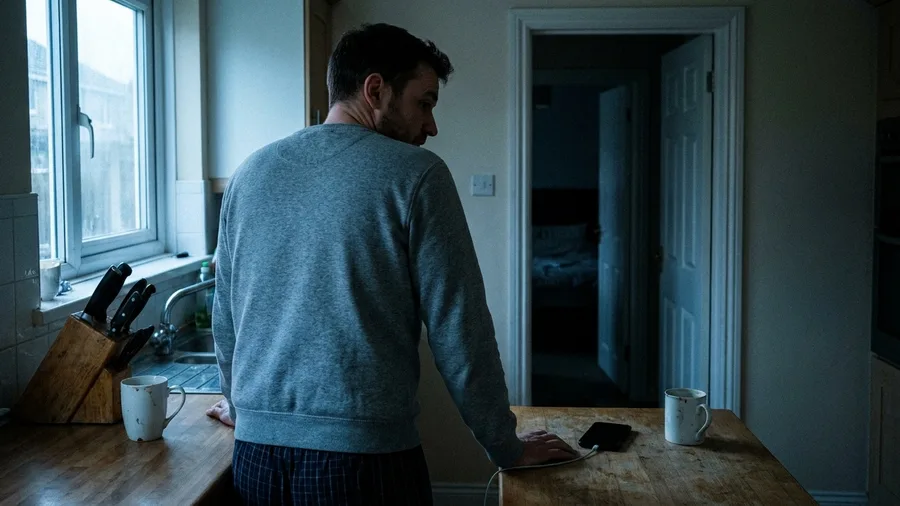
Pushing coffee earlier only helps sleep if the last stretch of the evening is not being spent with a lit screen an inch from your face. So the next variable is where the phone spends the night.
The setup costs about $10 and takes one evening. Buy a cheap alarm clock. Then set the phone to charge in the kitchen overnight – charger, cable, and all – so there is nothing to reach for at 11pm.
This is not really about blue light. It is about the last ten minutes before sleep and the first ten after waking, both of which currently belong to whoever texted last. Moving the phone returns them to you.
If you are exhausted all the time and your sleep is still bad, this is worth testing before assuming something is wrong with you. A phone by the bed is a slot machine within arm's reach, and the reach happens before the thinking part of the brain is awake enough to decline.
The first night is the rough one. You will get into bed, feel the absence, and get up once to check something. Around the third night the 11pm reach starts to fade – not because you have more discipline, but because the phone is simply not there to reach for.
Leave a pad and pen on the nightstand. When a thought arrives that feels too important to lose, write it down instead of picking the phone up. Half the time it reads as unremarkable in the morning, which is the point.
Two groups should skip this one. If your job puts you on call overnight, the phone stays. If you use it as a monitor for a health condition – a glucose reading, a heart trace – the phone stays too, and that is a conversation for your own doctor about a setup that works.
For everyone else, three nights answers the question. Either the 11pm reach fades or it does not, and you will know which.
Phone in the Kitchen — At a Glance
🔢 Position in trial
Day 6 of 12 — do not start it early
📝 Log the night before
Note the after-10pm screen hours on your baseline page, then compare
🚫 Fails if
You move the charger but keep the phone on airplane mode by the bed
📅 Three-day verdict
Reach gone by night 3 = keep it; still reaching = drop it, do not add a fix
✅ Afterwards
One of the four resets most people keep — stack it only once the twelve days are done
What changes
The phone stops being the first thing your hands find, so the morning ten minutes go to whatever you choose — and the 2pm coffee cutoff has something to work with.
4. A one-page brain dump each morning

The phone sleeping in the kitchen clears the room of the reflexive reach. What fills the quiet that's left is usually the same short list of worries, cycling in the background of every other thing the day does.
The reset is one longhand page, ten minutes, written before the inbox opens and before the first meeting. Nothing on it is edited or ordered. Whatever is circling goes down exactly as it surfaced, and spelling does not count.
Ten minutes is the whole appointment. Longhand, not a notes app, because the hand moving across the page slows the loop enough to see what it is made of. The list is usually shorter than it feels.
When the page is full, circle the single item that genuinely belongs to today. One circle. The other fifteen lines stay on the paper where they can be read again, not rewritten into the forehead.
That transfer is the mechanism. A worry held only in the head has to be carried by every hour, because the brain can't tell the difference between a task and a threat once it's loose in memory. Written down and left physically on the desk, it becomes a thing the eye can find again instead of something to keep watch over.
Tear off the top sheet and the loop has somewhere to sit other than the middle of everything else the day does. It is a cheap three-day test of whether this particular load is the kind a small change can move.
Expect the page to look repetitive for the first few mornings. Same four items, same mid-sentence blanks in your own writing. That sameness is not evidence the reset is failing. It is the first honest look at how small the actual list is.
With the night and the first minutes less reactive, the mind's background noise becomes the next thing that's visible.
5. Three items on the day's list
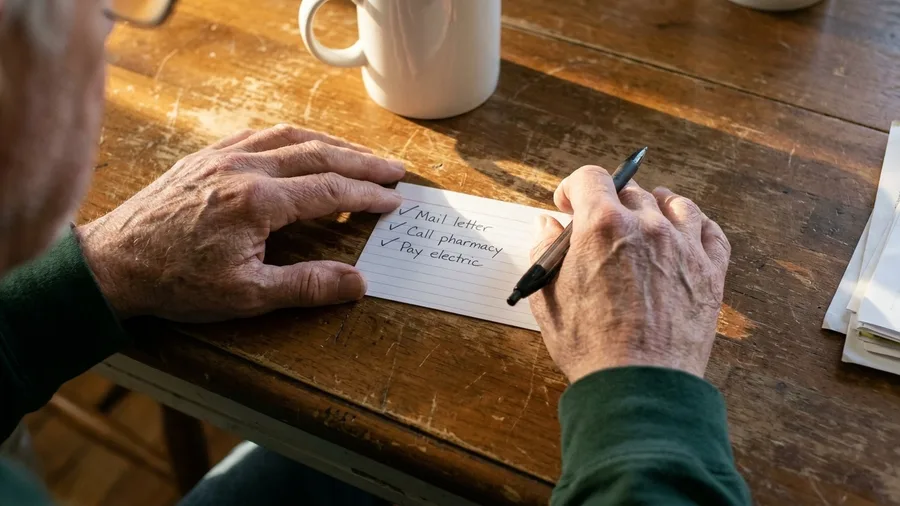
Once the day's real item is out of the head and onto a page, the next question is whether the day could actually end with anything finished. For most people the honest answer is no, because the list has twelve things on it and the day only has room for three.
Twelve items is not a plan. It is a wish with checkboxes.
The reset is three items, no more, written the night before. Three is the number that fits on a sticky note, survives an ordinary interruption, and can still be finished when the day goes sideways. The first one should be small enough to finish before 10am, so the day starts with a tick instead of a deficit.
Anything new that arrives mid-morning goes on a separate list, labeled later. Not onto the three, and not squeezed in at the bottom. The later list is not a punishment or a graveyard; it is a place where tomorrow's items wait without pressing on today's.
The end-of-day question is narrow on purpose. Not did everything get done, which it never does, but did all three. A day where three things were finished feels different at 6pm than a day where nine things were touched and none were closed.
That feeling is the actual subject here. Most of the exhaustion after a busy day is not the work; it is the low hum of nothing being complete. Finishing is what turns the hum off.
There is one week where three is a lie: a genuine firefighting week, a launch, a family emergency. In that week, skip this one and run it the following Monday. Pretending three items are three when the work is twelve is just another way to fail at something carefully designed to be winnable.
💡 Tip: Write the first item as a verb and a finish line. 'Draft the email to Priya' gets done. 'Work on project' does not.
The Load Pyramid
What the twelve resets actually test, from surface habit down to the foundation
Each reset probes one layer. Nothing here probes two at once, by design.
6. A calendar block labeled nothing

A three-item list that can actually be finished shows a person something they hadn't noticed: they're tired, and not purely from work. Rest that lives only on an idea of a quieter week is the first thing given away when the calendar fills, so this reset puts the empty time on the calendar itself.
The block is fifteen to twenty minutes, at the same hour every day, entered like any other appointment and left there. Fifteen is enough. Twenty if the day allows it. Lunchtime and mid-afternoon are common choices; the hour matters less than its sameness.
The title is the trick. Call it something a boss or partner would not interrupt for: a data review, a chiropractor call, a tire rotation. The honest label, an empty block, invites the exact negotiation that erases it. A slightly absurd one survives the week.
No screen, no podcast, no errand folded in. Not for meditation, though it can be. The point is that nothing productive is scheduled inside it. The productive version, the walk that doubles as a call, is how a rest block quietly grows a job and stops being rest.
A blocked quarter-hour reads as a commitment; an unblocked one reads as a gap, and gaps are what get filled. The same fifteen minutes that seem absurd to defend at first become the part of the day nobody touches after two weeks.
The measure is not whether it felt calm. Some sits will be restless and clenched, and those count. The measure is whether the appointment was kept, and a week with five out of seven is a different thing from a week with none.
That number answers the reader's question, since what feels like falling behind is often a response to a calendar in which nothing was ever set down. Recording an empty block is an act of recording, not a break from it.
Give the block three days. If it turns into an anxious countdown every time, drop it rather than stacking another reset on top of it.
Kept vs. Dropped — Where the Three Days Land
A reset worth keeping
- Kept on 3 of the last 5 days
- The hour gets protected before anything else claims it
- Adds to the running total with the other resets, not the only one tried
- Passes the three-day check and earns a place in the stack of four that tends to survive
One to drop this round
- Kept 0 or 1 times in three days
- Turns into an anxious countdown every time the hour arrives
- Piled under a second reset before the first showed anything
- Kept but never written down, so the trial has no line for it
7. Lunch eaten away from the desk

The afternoon gives out in the same place for a lot of people, somewhere around 4pm, and the desk is usually where it happened. A real break at midday is the cheapest way to interrupt that slide, and it is also the first thing given away when the calendar tightens.
Eat somewhere that is not the desk. The kitchen table four feet away counts. So does a bench outside the building, the passenger seat of the car, or the top step of a stairwell nobody uses during lunch. The location is the whole instruction; the food is not.
Twenty minutes minimum, and the phone goes face down for the first ten. The first ten are the ones that usually get eaten by a screen, and they are also the ones where the shoulders come down and the jaw unclenches. Ten minutes with the phone face up at a table is a different lunch than ten with it face down, even though the sandwich is identical.
This costs one errand or one email. That is the bill, and it is real. The first week feels wasteful, borderline irresponsible, because the hour you were squeezing has suddenly got a gap in the middle of it. That gap is the point.
Most people eat at the desk while answering something, so the afternoon starts with the morning's unfinished business still warm on the plate; nothing has been put down. Separation is what lets the break do anything.
A lunch with a real break in it stops the afternoon being a tired replay of the morning. Same inbox, same tasks, but a person who had twenty minutes off in between.
⚠️ COMMON MISTAKE
Don't Stack the Resets
The most common way this fails: feeling a lift on day three and adding three more resets the same week. Stacking makes it impossible to say which change did anything, and that knowledge is the entire payoff. Run one at a time, twelve days, in order.
8. Naming the feeling before fixing it

Give an afternoon a gap and the mood underneath it becomes easier to see. What most people find there is not a mood so much as a knot with no name on it, and the fastest way to loosen it is to say what it is before trying to make it go away.
One sentence, specific, out loud or on paper: I'm not angry, I'm embarrassed about how the meeting went. Not I'm stressed. Not it's been a lot. The precise word pins a vague fog to a particular thing that happened.
Say it before doing anything about it. This is the part that gets skipped, because the reflex is to fix in the same minute, phone already out, and the fixing is often just busy motion. No fixing for the length of one sentence. The sentence gets a moment to land.
Vague counts as a start. Off, weird, heavy, flat, whatever word shows up first is allowed on the page, because the precise word usually arrives second. The first word is the doorman; the second is the guest.
This one suits anyone who has been describing the last month as fine. Fine is a word that can cover something real. Saying the truer sentence, once, to yourself or to whoever is nearby, turns a fog to be argued with into something with edges you can work on.
9. One phone call instead of ten texts

A feeling named precisely usually points at a person. The embarrassment from the meeting belongs to someone in that room.
And a week of answering messages back and forth is not the same as hearing a voice, even when the thread never goes quiet.
So the test here is blunt: choose one person, dial rather than type, and give it ten minutes with nothing to arrange and no reason for the call. Just catching up. That is the entire task.
Group chats and side-by-side work conversations can fill a day without leaving anyone feeling met, which is why talking all day and feeling alone sit comfortably together.
There is nothing wrong with an ordinary call. It counts as a reset even when the whole conversation is weather, a shared complaint about parking, and a dog that would not stop barking in the background.
Nothing has to be solved on it, and no plan has to come out of it. Being known does not require a topic.
The hard part is short. The first half-minute, before either of you settles into a rhythm, is where most calls get abandoned or never placed at all.
One opening question ready before dialing keeps that half-minute from deciding things: how is the kitchen renovation going, did the knee hold up on the hike.
It can be small and almost silly. The point is to have something to say after hello so the dial does not stall.
A single voice conversation tends to leave a different residue than a week of written messages. Tone, pauses, the laugh before the sentence ends. Those are the parts that register as being known.
Texts carry information. They rarely carry presence.
This one does not suit everyone this week. If a particular call would cost more than it gives, do not make it.
Reach for the easy person, not the honest one. The old friend who picks up on the second ring, not the sibling where every conversation has an edge.
If even the easy call feels like too much, that is useful information about the load, not a failure of the reset.
A baseline page written before any of this starts makes the result easier to read. Put down hours slept, nights out or drinking, screen time after 10pm and days since a full day off, then note after the call whether anything loosened.
Three days of one ten-minute call to one person is the whole trial. If nothing shifts by the third, drop it and move on rather than adding a second call to the week.
10. A twenty-minute tidy of one surface

A call with someone outside the house often does one thing you did not ask it to: it makes the room you are sitting in visible again. You hang up and notice the chair with the coat pile, the counter with the post, the table you have been eating around rather than at. The question is whether the environment is part of the load, and there is a cheap way to find out.
Set a timer for twenty minutes and pick one surface. The dining table, the kitchen counter, the chair things get dropped on. One. Not the room, not a floor, not the cupboard that has become a threat.
When the timer goes, stop, even if you are mid-pile. The stopping is not laziness; it is the detail that makes the thing repeatable tomorrow, because a job with an edge is a job you will do again. A job with no edge is one you avoid for six weeks.
No buying storage. A bag or a box you already own, or nothing at all. The moment a reset requires a trip to a shop, it has become a project, and projects stall.
What one cleared surface does is give the eye somewhere to rest. And a resting eye reads the rest of the mess differently: temporary, manageable, not a verdict on how you are living. That shift is the whole test. If clearing one table changes how the room feels for three days, the environment is carrying some of the weight and this reset stays. If nothing shifts, the mess is not your problem and you can drop it without guilt.
Twenty minutes. One surface. Then the timer goes.
The Numbers Behind the Twelve Days
Rate each day 1 to 5 at bedtime. Without a rating, memory will lie to you by day six.
11. A complaint-free first hour
Clear one surface and something unexpected happens: the running commentary gets louder by contrast. You notice how much of the morning you spend narrating what is wrong – the traffic, the email you are dreading, the thing your colleague said, the weather, your own slowness. The next cheap test is how much of the off feeling is the day itself and how much is the talk track laid over it.
From the moment you wake until you leave the house, no complaint spoken aloud. That includes the silent rehearsal of one, the imaginary argument in the shower, the mental draft of the email you are going to send. Spoken and unspoken both count.
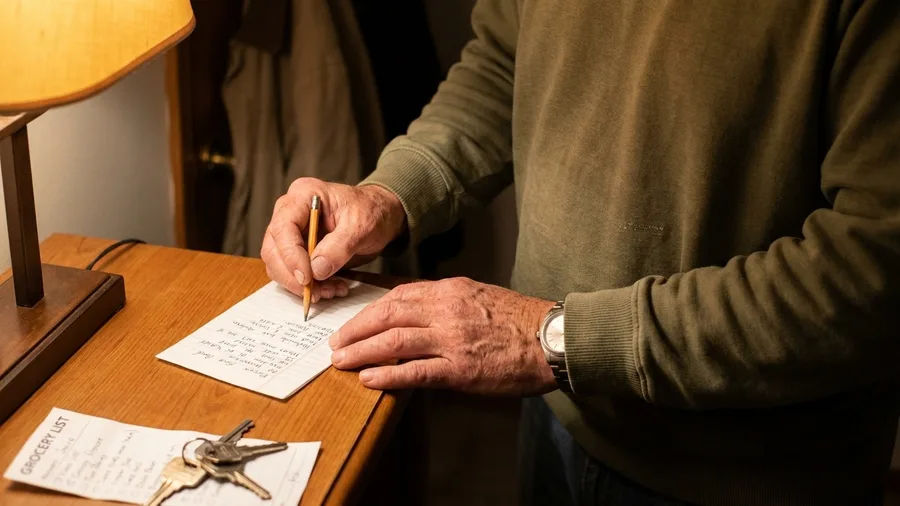
When you catch one, do not argue with yourself about it. Jot the topic on a scrap of paper and restart the hour from that point. The restart matters more than the catching.
the useful output is not virtue. It is the list. By Friday you have a record of what you actually complain about, and those topics are the real problems, the ones worth a reset of their own. The weather does not appear on the list. The thing that appears seven times does.
It also answers the question you came in with. If the complaint-free hour is easy and the morning feels fine, the day was never the problem. If it is almost impossible and the hour stretches like a wet week, you have learned that a lot of the load is running commentary, which is workable.
One honest caveat. If the week contains a genuine crisis – a diagnosis, a death, a job actually ending – complaining is doing necessary work and this reset waits. Run it a fortnight later, when the crisis has become a Tuesday.
12. The Friday shutdown note

Work is the topic that keeps turning up on that complaint list, and the weekend is where it does the most damage – Saturday morning arrives and the head is already at Wednesday's unfinished thing.
So the last reset puts the week on paper before it can spread.
Ten minutes on a Friday, no more, in the last hour of the afternoon: a short list of what actually got finished, a second column of what is still hanging, and – the part people skip – one concrete first move for the next working morning. Not 'deal with the Henderson thing.' Something a tired Monday version of you can start inside five minutes.
Write it somewhere Monday-you will see it without looking: a sheet of paper taped to the laptop lid, or a note stuck to the monitor frame.
What it must not become is a system – no app to configure, no tags, no weekly review ritual that needs its own review. The point is to get it out of the head and onto one visible surface, and leave it there.
Then close the laptop, push the chair in, and if the week needs a marker to feel finished, say so out loud.
Frequently Asked Questions
Do I have to do all twelve?
No, and most people shouldn't. Run them in order for twelve days, apply the three-day rule, and expect to keep two or three. The other nine are tests that returned a result, which is the point of running them cheaply.
What if I miss a day?
Keep going from where you stopped rather than restarting the twelve days. The order matters more than the calendar, and the baseline page is still your measuring stick.
How do I know a reset actually worked, rather than just a good day?
The 1-to-5 bedtime rating, recorded daily. You need the number to move twice within the reset's three days before you keep it. One good day after a good night's sleep is not evidence.
Can I do two at once if they're both tiny?
No, and this is where the plan usually falls apart. Two changes at once means you cannot say which one moved anything, and that knowledge is the entire return on twelve days of effort.
I feel worse, not better, after a week. Should I push on?
Stop the resets and look at the foundation layer instead: sleep debt, drinking, no full day off in weeks. If the flat feeling arrives with not eating, not sleeping or hopelessness, that is a doctor or therapist conversation, not a thirteenth reset.
Is a real overhaul ever the right answer?
Sometimes, yes — a job that is genuinely untenable stays untenable after a morning walk. The resets are simply the cheapest way to find out whether the problem is small enough to move, before you spend six months and a deposit finding out the hard way.
Decide by What's Broken, Then Keep Two
Skip the full list and pick by symptom. Sleep wrecked, phone to the kitchen tonight. Flat and joyless, the morning walk. Scattered and behind, the three-item list written before bed. Each gets three days; if nothing shifts, drop it and do not add a replacement.
Keep two of the twelve and throw the other ten away without guilt. That is the intended result, not a discipline failure. Plenty of people keep four, usually the 15-minute walk after waking, coffee stopping at 2pm, the phone charging in the kitchen, and the Friday shutdown note, but four is what happened, not a standard to hit.
If two weeks of resets move nothing, or the feeling arrives alongside not eating, not sleeping, or hopelessness, the next step is a doctor or therapist rather than a thirteenth reset.
The job listing in the other tab may still be the right move. The resets are simply the cheapest way to find out before you sign the lease or hand in the notice, which is all that open tab ever needed from you.
Write the Baseline Page Tonight
Six minutes, four numbers: sleep hours, drinks, screen time after 10pm, days since a full day off. Everything on this list gets judged against it.