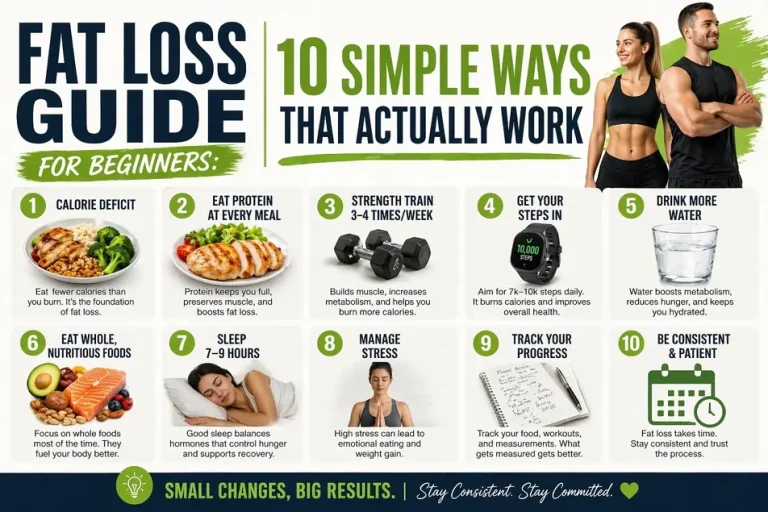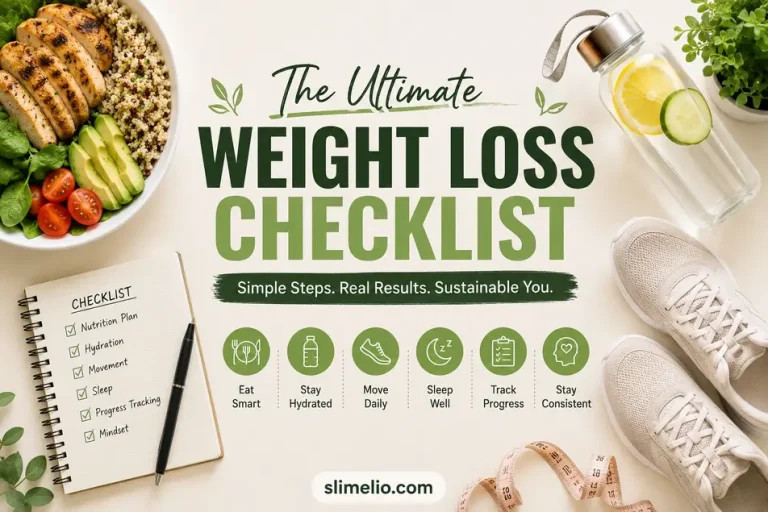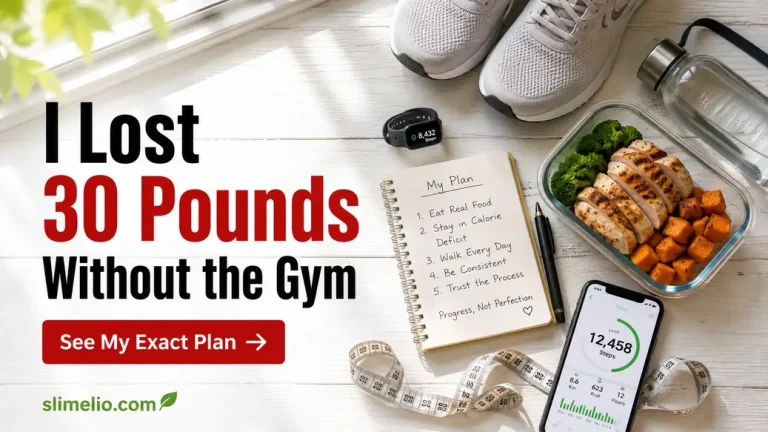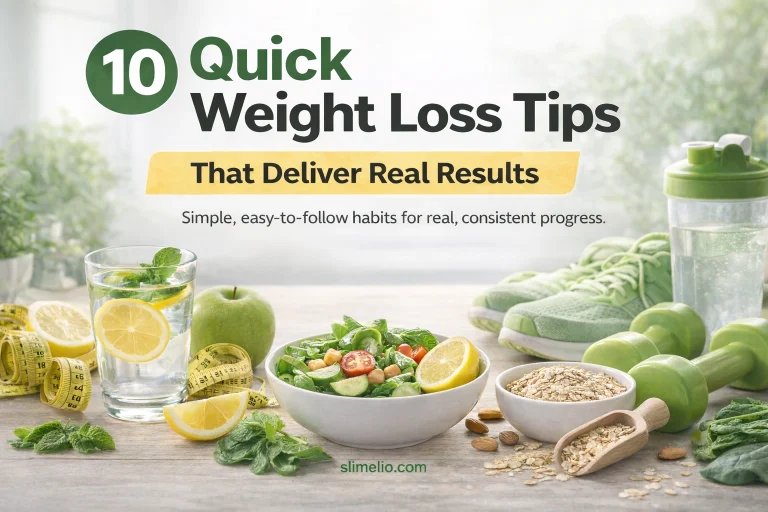
How I Lost Weight Without Counting a Single Calorie
For two years I tracked every bite. I weighed my food. I logged meals into apps. I hit my calorie targets most days. And I barely lost a pound. The moment I stopped counting calories, the weight started coming off slowly at first, then steadily, week after week. I know that sounds backwards. It is not.
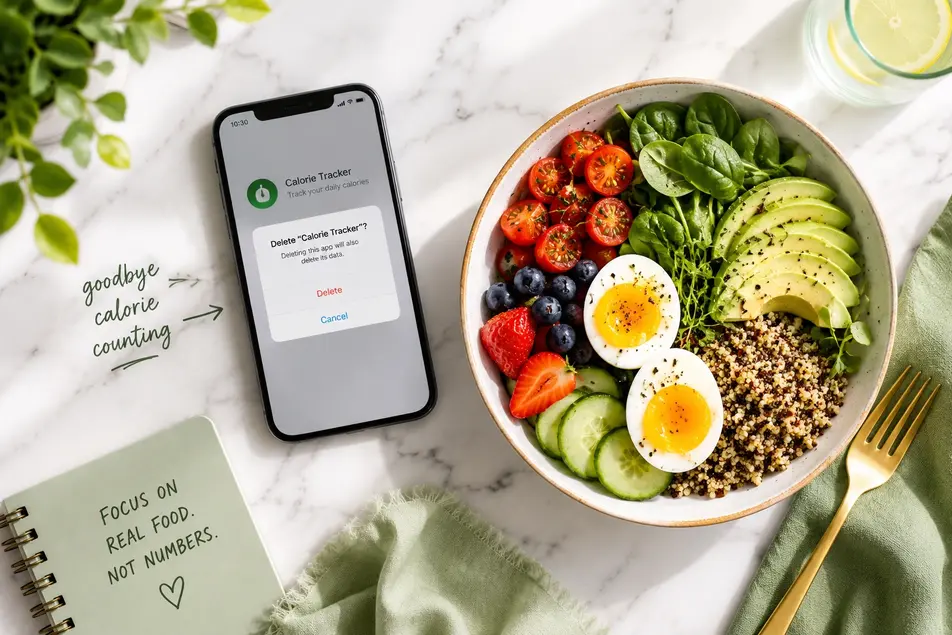
This article is not about a magic trick. It is about the specific habits I changed habits backed by nutrition research that let my body naturally eat less without me obsessing over numbers. If you have ever burned out on calorie counting, this is for you. And if you have never started, even better.
Want to Lose Weight Fast? Stop Doing These 7 Things
Can You Lose Weight Without Counting Calories?
Can you really lose weight without counting calories?
Yes, and research consistently supports it. Losing weight without counting calories works by improving food quality, eating more protein and fiber, using visual portion cues, eating slowly, and cutting liquid calories. These changes create a natural calorie deficit through better food choices and improved hunger signals without logging a single number into an app.
Why Calorie Counting Failed Me (And Millions of Others)
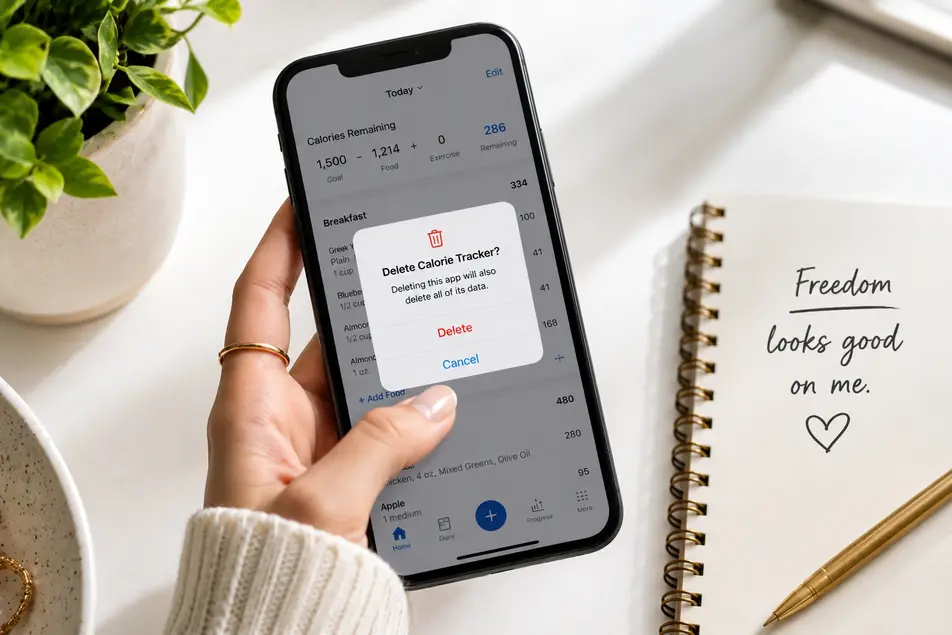
The App Became the Problem
Calorie counting works in theory. Energy in versus energy out is a real principle. But what nobody tells you is that food labels carry a legal margin of error of up to 20%, restaurant meals vary wildly, and most people underestimate their portions by 20 to 50%. You can hit your calorie target every day and still be eating more than you think.
The Psychological Cost Nobody Counts
After months of tracking, I stopped trusting my own hunger. If I had already hit my calorie limit by 7pm, I would ignore genuine hunger. If I went over by 50 calories, I felt like I had failed the day. Nutrition researchers have documented this pattern strict calorie tracking can create an unhealthy psychological relationship with food, especially for people prone to all or nothing thinking.
🔍 Try logging every bite for three days including cooking tastes and drinks. Most people are genuinely surprised by what adds up.
📱 The app was managing my eating, not me. The moment the app stopped running my choices, I had no idea how to eat normally. That is a dependency problem, not a diet problem.
What Research Actually Says
Multiple randomized trials comparing calorie tracking approaches to non tracking methods have found comparable weight loss outcomes over 12 months with meaningfully better long term adherence in the non-tracking groups. The deficit still happens. It just happens as a result of better eating behavior rather than active numerical management. This was the shift I needed to understand.
Habit 1: I Started Eating More Protein at Every Meal
Why Protein Changed Everything
Protein is the most filling macronutrient. It triggers satiety hormones, digests more slowly than carbohydrates, and requires more energy to process meaning your body burns more calories digesting protein than it does digesting the same number of calories from bread or pasta. When I added protein to every meal, I naturally ate less at the next one without trying.
What the Research Shows
Nutrition research has consistently found that increasing protein to around 30% of total calories leads people to eat meaningfully fewer calories at subsequent meals automatically, without any instruction to reduce intake. The satiety effect is hormonal, not willpower based. Your body simply stops sending hunger signals as quickly when it gets adequate protein.
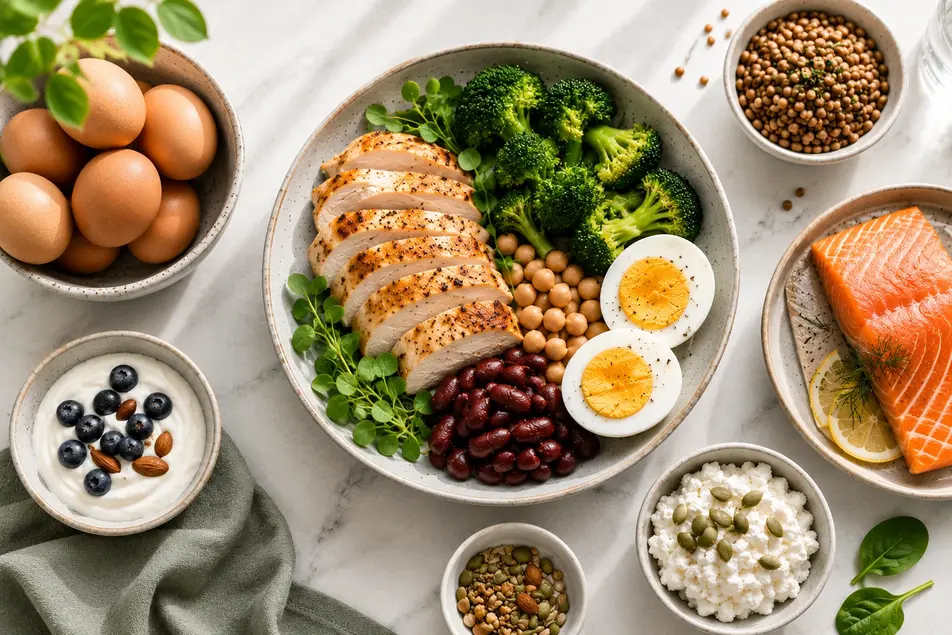
🥚 I aimed for a palm-sized portion of protein at every meal eggs at breakfast, chicken or lentils at lunch, Greek yogurt or fish at dinner. No measuring. Just a visual guideline that took five seconds to apply.
The Practical Version
You do not need to calculate grams. Add one clear protein source to every plate: two eggs, a cup of lentils, a piece of fish, a bowl of Greek yogurt, a handful of chickpeas. This one change alone reduced my afternoon snacking dramatically because I stopped getting hungry two hours after eating. Protein is the simplest tool to lose weight without counting calories.
Habit 2: I Filled Half My Plate With Vegetables First
The Harvard Plate Method Without the Complexity
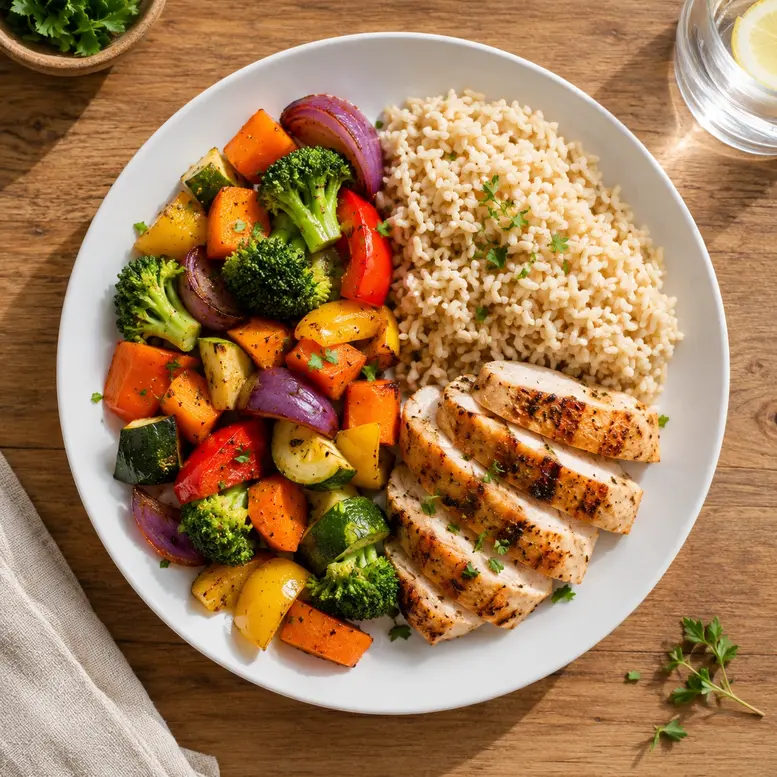
Nutrition scientists at Harvard T.H. Chan School of Public Health developed a visual eating framework called the Healthy Eating Plate. Half the plate is vegetables and fruits. A quarter is whole grains. A quarter is protein. The insight is simple: filling half your plate with vegetables before adding anything else automatically lowers the calorie density of the meal not because you calculated anything, but because vegetables take up space that would otherwise go to higher-calorie food.
Volume Eating Without Tracking
Non-starchy vegetables broccoli, zucchini, spinach, peppers, cucumber, lettuce are high in water and fiber and very low in calorie density. A large plate filled half with vegetables is visually satisfying, physically filling due to fiber and volume, and significantly lower in total calories than a plate filled with rice, bread, and meat. This is how you eat less without counting calories or feeling deprived.
🥗 I made one rule: fill half the plate with vegetables before anything else goes on it. Not after. Before. This one habit reshaped my meals without a single number.
Why Fiber Matters Here
Dietary fiber slows digestion and extends the physical feeling of fullness by several hours. When you eat a vegetable heavy meal, you are not just eating fewer calories you are also suppressing appetite for longer. This means less snacking, smaller portions at the next meal, and fewer random hunger spikes throughout the day. All without tracking a thing.
Habit 3: I Cut All Liquid Calories

The Invisible Calorie Source
Sweetened coffee drinks, soda, juice, alcohol, sweetened teas, and flavored milks all carry significant calories that your brain does not register as food. Liquid calories do not trigger the same fullness signals that solid food does. This means you can drink 400 calories and feel no more satisfied than before you started. These are purely additive they sit on top of your regular food intake without replacing any of it.
What I Replaced Them With
Water. Black coffee. Unsweetened green tea. Sparkling water with lemon or mint. The switch felt restrictive for about four days. After that, it became automatic. My taste adjusted. What I did not expect was how quickly the scale responded losing water weight initially and then actual fat as the hidden calorie surplus disappeared. No app needed. No logging. Just a drink swap.
💧 Replacing two sweetened drinks per day with water can remove 400–700 calories daily without changing a single food choice. That is the single fastest calorie reduction available to most people.
The Alcohol Consideration
Alcohol deserves a specific mention. It is not just the calories alcohol temporarily pauses fat metabolism because the liver prioritizes processing it over everything else. Regular drinkers who reduce alcohol intake often notice fat loss resuming even without other changes. This is not about complete elimination. It is about knowing what alcohol does and factoring it into your choices honestly.
Habit 4: I Learned to Eat Slowly and Stop Before I Was Full

The 20-Minute Delay
Your stomach sends fullness signals to your brain, but those signals take approximately 15 to 20 minutes to arrive after eating begins. If you eat at a normal or fast pace, you will consistently overshoot your actual satiety point before your brain has time to register it. Eating slowly closes this gap. You stop eating when you are actually satisfied rather than when you notice you are overstuffed.
Mindful Eating Is Not a Wellness Buzzword
Research on mindful eating programs eating with attention, without screens, chewing fully, pausing between bites has found it reduces calorie intake by roughly 10 to 15% per meal without any instruction to eat less. That is a meaningful reduction applied across three meals, every day, with no tracking required. This is not a philosophy. It is a practical method to lose weight without counting calories.
🍽️ I put my fork down between every few bites. I ate at the table without my phone. Two changes. They felt trivial. They made a visible difference within three weeks.
The 80% Rule
A practical eating principle from Japanese culture sometimes called hara hachi bu is to stop eating when you feel about 80% full. The last 20% of a meal provides a small amount of additional calories but significantly extends the time before you feel hungry again. Stopping just before full, consistently, over weeks, creates a quiet calorie reduction that compounds into real fat loss without any counting.
5: I Switched to Whole Foods and Stopped Buying Processed Ones
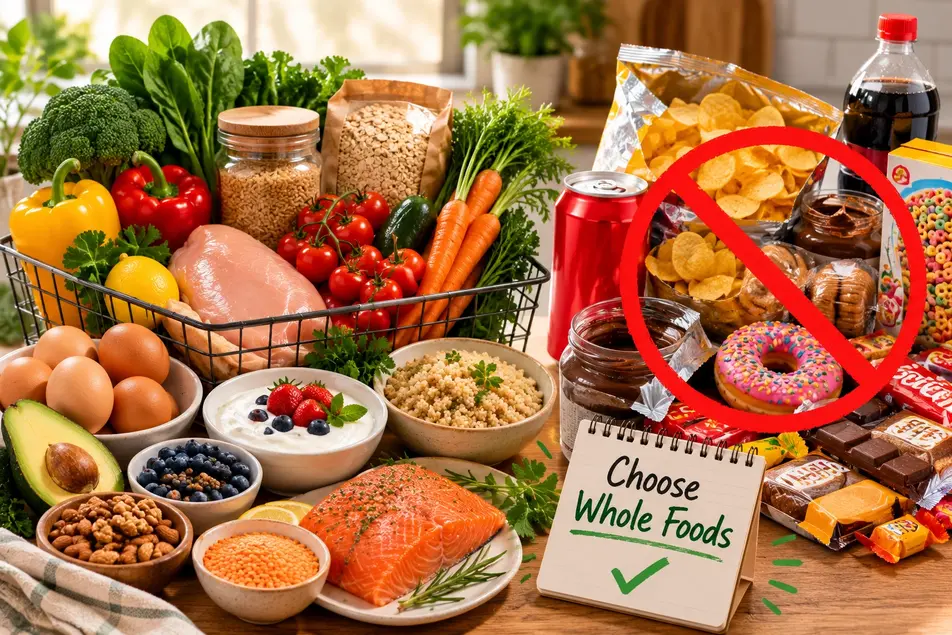
Whole Foods Self-Regulate Intake
Here is something that does not get said enough: people eat significantly more calories when eating ultra processed food than when eating whole food even when the meals contain the same number of calories on paper. Processed food is engineered to be hyper palatable and easy to keep eating. Whole food requires more chewing, digests more slowly, and triggers satiety signals more reliably. Switching to primarily whole foods can reduce total daily intake meaningfully without any conscious restriction.
What I Actually Ate
Eggs. Oats. Brown rice. Lentils. Chicken. Fish. Vegetables. Fruit. Plain yogurt. Nuts in small amounts. These foods do not sound exciting. They are not supposed to. But they kept me full for hours, they did not trigger the urge to keep eating after one portion, and they naturally crowded out the processed options that were quietly fueling my calorie surplus for years.
🛒 My grocery rule became simple: shop the perimeter of the store. Fresh produce, protein, and dairy. Anything in the middle aisles went in the cart only if it had five ingredients or fewer.
The Food Quality Shift Nobody Talks About
When you eat better-quality food, cravings for processed food genuinely reduce over two to three weeks. This is not motivation or willpower it is biology. Your gut microbiome shifts, your blood sugar stabilizes, and the constant cycle of spike and crash hunger that drives snacking begins to flatten out. The longer you eat real food, the easier eating real food becomes. This is how sustainable weight loss without calorie tracking actually works.
Habit 6: I Drank Water Before Every Meal

Why This Simple Habit Works?
Drinking a full glass of water 20 to 30 minutes before a meal creates a mild feeling of fullness that reduces the amount you eat at that sitting. Your stomach has limited volume liquid takes up space that would otherwise go to food. This does not require willpower or planning beyond having a glass of water nearby before you sit down to eat.
Thirst Disguised as Hunger
A large portion of between meal hunger is actually mild dehydration misread as appetite. Before reaching for a snack, drink a glass of water and wait five minutes. A significant number of snacking urges disappear within that window not because the water was nutritious, but because the body got what it actually needed. This habit alone reduced my unplanned snacking noticeably within the first week.
🥛 I kept a full water bottle visible at all times on my desk, on the kitchen counter, beside my bed. Out of sight means out of habit. Visible means automatic.
Water and Metabolism
Drinking adequate water supports normal metabolic function. Being chronically slightly dehydrated can slow metabolic rate. While the effect is not dramatic, staying well hydrated removes one small obstacle to fat burning that many people do not realize is there. Combined with the appetite reducing effect before meals, proper hydration is a genuinely useful tool to lose weight without counting calories.
Habit 7: I Fixed My Sleep First

Sleep Is a Fat Loss Tool
Poor sleep raises ghrelin the hormone that drives hunger and lowers leptin, the hormone that signals fullness. One night under six hours of sleep reliably increases next-day appetite and cravings for high-calorie foods. Over weeks of poor sleep, this creates a consistent calorie surplus that no diet plan fully overcomes. I did not realize how much my broken sleep schedule was working against my goals until I fixed it.
What Changing Sleep Did
When I started sleeping seven to eight hours consistently, my afternoon snack cravings dropped within two weeks. Not completely but noticeably. The 3pm energy crash that always sent me to the kitchen became less severe. My willpower around food felt easier, not because I was trying harder but because my hunger hormones were in better balance. Sleep is not optional support for weight loss. It is foundational.
😴 I set a consistent bedtime same time every night, including weekends. No dramatic sleep routine. Just consistency. The body responds to regular sleep timing faster than most people expect.
The Compound Effect
Better sleep improved my energy levels during the day, which meant more movement without formal exercise. More movement meant slightly higher calorie burn. Higher calorie burn combined with better hunger hormones and better food choices all without counting a single calorie created the slow, steady, sustainable fat loss I had been chasing with apps for two years. Everything connects.
📊 Comparison: Calorie Counting vs. No Counting Method
Which approach is more sustainable for long term weight loss without counting calories?
| Factor | Calorie Counting | No-Counting Method |
| Daily effort required | High — weigh, log, calculate every meal | Low — simple visual habits |
| Accuracy | Inconsistent — label errors up to 20% | Naturally adjusts via hunger signals |
| Relationship with food | Risk of anxiety and obsessive tracking | Builds trust in body’s hunger cues |
| Sustainability | Low — most people quit within months | High — habits become automatic |
| Speed of results | Faster initial loss | Slower start, steadier long-term |
| Lose weight without counting calories? | No — requires constant tracking | Yes — the entire method works this way |
| Works if app deleted? | Results usually stop | Habits remain without the tool |
| Best for | Short-term data awareness | Long-term sustainable fat loss |
Author Words:
Counting calories gave me data. It did not give me a better relationship with food, and it did not produce lasting results. Dropping the app and replacing it with these seven habits more protein, more vegetables, no liquid calories, eating slowly, whole foods, water before meals, and better sleep did something the app never could: it made eating feel normal again. And when eating felt normal, lose weight without counting calories stopped being a dream and became what actually happened.
You do not need to apply all seven habits at once. Pick the two that sound most like your current gap and start there. Let them become automatic before adding the next. Slow is not failure slow is how permanent change gets built.
Disclaimer
The approach described in this article to lose weight without counting calories is based on general nutrition principles and personal experience. Individual results vary based on starting weight, health conditions, hormones, medications, and consistency. This article does not replace professional medical or dietary advice. If you have a medical condition including thyroid disorders, PCOS, insulin resistance, or a history of disordered eating, consult a qualified healthcare provider before changing your eating habits significantly.
FAQ’s
1. Can you actually lose weight without counting calories?
Yes, Multiple nutrition studies have compared calorie tracking to non-tracking approaches and found comparable weight loss at 12 months. Non tracking methods work by improving food quality, increasing protein and fiber intake, and building eating habits that naturally reduce calorie intake without active monitoring. The deficit still happens you just do not calculate it manually.
2. What do you do instead of counting calories to lose weight?
Focus on four things: eat more protein and vegetables, cut liquid calories, eat slowly and stop before you are completely full, and switch from processed food to whole food. These changes naturally reduce how much you eat without requiring any tracking. Adding better sleep and drinking water before meals makes the approach even more effective over time.
3. How long does it take to lose weight without counting calories?
Most people notice changes within two to four weeks when they apply multiple habits at once cutting liquid calories, adding protein, and eating more vegetables. The initial loss is often water weight. Actual fat loss tends to appear steadily from weeks three to six onward. Progress is typically slower than aggressive calorie restriction but significantly more sustainable beyond six months.
4. Is intuitive eating the same as not counting calories?
Intuitive eating is a broader framework that includes responding to hunger and fullness cues, rejecting diet culture, and making peace with food. Not counting calories is one component of it. You can stop counting calories without fully adopting intuitive eating simply using visual portion guides, whole foods, and mindful eating practices is enough to produce fat loss without a philosophical commitment to the full framework.
5. Will I gain weight if I stop counting calories?
Not necessarily and many people lose weight when they stop. Calorie counting can create a cycle of restriction and rebound eating that results in more intake overall, not less. When you shift to better food quality and eating habits, your natural appetite regulation often improves. The key is replacing tracking with real habits, not simply removing the app and eating the same foods as before.