

An active 80-year-old eats oats, berries, yogurt, an egg, greens, beans, nuts, salmon and sweet potato, and no part of that list is special. What is special is that the same nine foods show up day after day, in the same slots, with almost no decisions in between. It starts at 7:30 in the morning with a bowl of 1/2 cup rolled oats, 1 cup berries and 1/2 cup plain Greek yogurt, built in under three minutes.
The rest of the day stays just as ordinary. Lunch at 12:30 is 2 cups mixed leafy greens, 1/2 cup beans and 1 hard-boiled egg. At 3 p.m., 1 ounce of mixed nuts. Dinner at 5:30 brings 3 ounces of baked salmon and one medium sweet potato. All nine foods together run about $55 to $65 a week at a mid-range US supermarket, and frozen berries and canned beans keep it near the low end.
Nothing here follows a special diet. Each food earns its place on the same four counts: cheap across the week, low prep between you and the plate, soft enough to chew comfortably, and easy to tolerate. That is the whole logic, and it is why the pattern survives a bad week.
Start by deciding which of the nine already fit your kitchen. If you change one thing today, make it the breakfast: keep the oats, add the berries and the plain yogurt. Then check whether dairy, nuts or eggs are limited for you, and adjust only what has to move.
Quick Tips Before You Start
Buy Frozen Berries
A bag of frozen mixed berries costs less than fresh and never spoils before Friday.
Boil Eggs in Batches
Six eggs on Sunday covers lunch protein for most of the week, peeled and ready in the fridge.
Rinse Your Canned Beans
A quick rinse under cold water cuts the surface starch that causes most gas.
Microwave, Then Roast
Six minutes in the microwave plus ten in a hot oven gives sweet potato a roasted edge without the hour.
Freeze the Salmon in Portions
Ask the counter to cut 3 oz pieces so you pull out one dinner at a time, not a whole fillet.
Water on the Table
Thirst signals dull with age, so put a glass at every meal instead of waiting to feel thirsty.
1. Rolled Oats at Breakfast
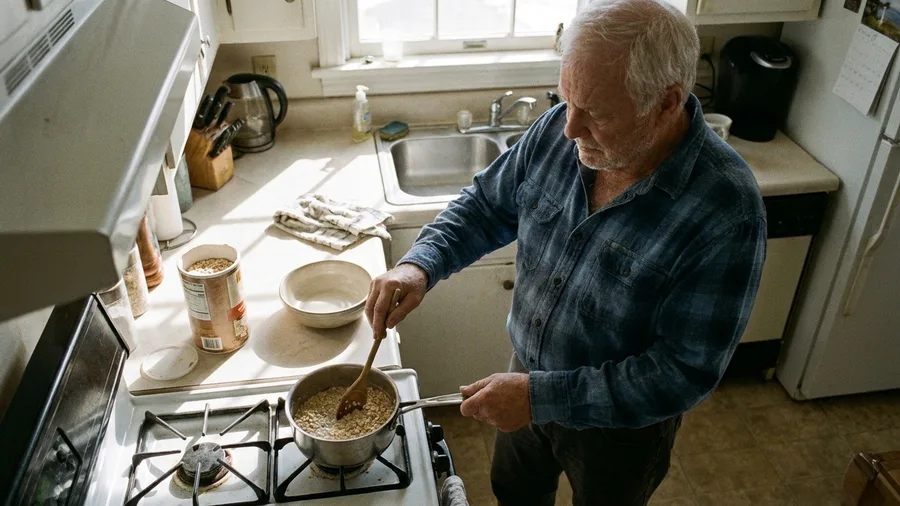
At 7:30 in the morning, the bowl is already working. Half a cup of rolled oats, cooked with water or milk, sits at the bottom of it – plain rolled oats from a canister, not a boxed cereal with a health claim on the front.
That is the whole base. Oats are cheap, they keep in the cupboard for months, and they go soft when you cook them, which is the friction test passing all at once on a single ingredient.
The fiber and the warmth do the morning's heavy lifting. A warm bowl settles a smaller appetite in a way a cold plate does not, and it takes about as long to make as boiling water.
If standing at the stove feels like too much, microwave the oats or build overnight oats in a jar the night before. Either way, cook them until they are soft, not chewy – that texture is the point, and it matters most if chewing has become a chore. Granola and puffed cereal sit at the other end: crunchy, more expensive, and harder work for the jaw.
This bowl suits someone who wants a warm, low-effort breakfast with fiber and no cleanup to speak of. Your first move is the oats. Everything else on the plate gets built on top of them.
💡 Tip: Cook oats thinner than the package says. Older appetites respond better to a looser bowl, and you can always add fruit for body.
2. Berries With Breakfast
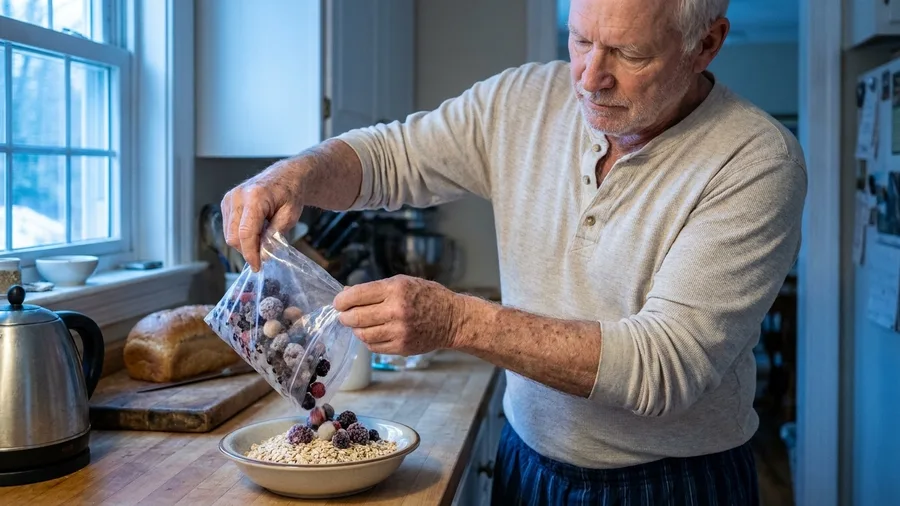
A warm bowl of oats needs something on it, and the fastest thing is a cup of berries – fresh or frozen, straight from the container, no cooking at all. They bring color and sweetness to a plain base without a spoonful of sugar.
Stir them in, or set them beside the bowl and eat them with the yogurt. Either way the berries are a topping, not a second meal to plan and prepare.
Frozen berries are the quiet cost fix. They keep the week's groceries at the low end of the $55-$65 range, and they remove the deadline that fresh fruit sets – no soft spot to catch by Thursday, no guilt over what spoiled in the drawer.
A measured cup is also the portion that adds fruit without a second preparation. That suits a smaller appetite: you get fruit in the bowl without committing to a whole piece of fruit and the fuss around it.
The berries cost you nothing in effort. They only ask for a cup in the morning.
⏱️ A Week in One Sunday Hour
Boil the eggs
Six eggs, ten minutes, then straight into cold water and into the fridge.
Wash the greens
Two containers of leaves, dried on a towel and stored with a paper towel.
Rinse the beans
Two cans rinsed and stored in a covered bowl, ready to spoon out.
Portion the salmon
Three 3 oz pieces wrapped separately and frozen so one comes out per dinner.
Roast the sweet potatoes
Two or three roasted at once, cooled, and reheated through the week.
3. Plain Greek Yogurt

The berries want something thick to sit against, and half a cup of plain Greek yogurt is what turns oats and fruit into a breakfast that holds on the spoon. Spoonable, dense, no cooking, no separate plate.
This is breakfast protein that is already there. By the time the oats are warm and the berries are in, the yogurt is one scoop away – the friction test passed before the day really starts.
It is worth being deliberate about plain. Presweetened cups add sugar the berries were already going to supply, and you lose the reason the bowl works: fruit for sweetness, yogurt for protein, both in the same spoonful.
This suits anyone who needs easy protein and can tolerate dairy, and dairy is the first limit to check against this breakfast. If a clinician has told you to cut back on it, the yogurt is the item to swap, not the whole bowl.
Half a cup. Cold, thick, and on top of everything else.
💡 PRO TIP
Build the Bowl in the Right Order
Oats first, berries second, yogurt last. Putting the yogurt on top keeps it cold and thick instead of melting into the hot cereal, and you get a visible half cup rather than an eyeballed spoonful.
4. Eggs at Lunch

Somewhere past 80, lunch is the meal where good intentions usually collapse. Breakfast has its bowl, dinner gets planned, and the middle of the day turns into crackers standing at the counter.
The egg is what stops that slide. One hard-boiled egg at 12:30, sitting on 2 cups of mixed leafy greens and 1/2 cup of beans, and lunch becomes a plate instead of a snack.
Familiar matters here. An egg is a food this reader has eaten ten thousand times, and familiarity means no learning curve, no label to squint at, no new flavor to get used to at an age when appetite is already a little fragile.
It also costs almost nothing per serving, which is the quiet reason it survives the weekly grocery list when fancier proteins get dropped.
The cooking happens once, not at lunch. Set a half dozen eggs in a pot on Sunday or Monday, bring them to a boil, cover, and let them sit off the heat for about ten minutes, then cool them in cold water.
Peel them right away and they keep in the fridge for the week, ready to grab. One egg per lunch, already done, no pan at midday.
Which is the point: at 12:30 there is nothing to cook, nothing to time, nothing to wash but a bowl. The egg comes out of the fridge, the greens and beans go in a bowl, and the whole plate comes together in the time it takes to sit down.
That is the difference between a lunch that happens and one that gets skipped, and for a reader in their 70s or caring for a parent in their 80s, the lunch that happens is the one worth planning for.
If a clinician has told you to limit eggs, the egg is the piece of this lunch to adjust, not the greens and the beans. Those stay. The plate still works without it.
The trick is knowing which part is the loaded item. It is the one that carries the protein, and if that one is off the table, the greens and beans still give you a lunch, just with one fewer building block.
💡 Tip: Older eggs peel more easily than fresh ones. Buy a dozen and boil them on day eight or nine.
5. Leafy Greens at Lunch

The egg and beans are topping. Something has to be underneath them, and that something is the reason a smaller lunch still reads as a meal rather than a snack.
At 12:30 the base is 2 cups of mixed leafy greens, tossed with the beans and the egg. Two cups is the number to notice, because greens shrink in the mouth but not in the bowl.
Volume and crunch do the work here. Leafy greens take up space on the plate and give each bite a fresh resistance, so a lunch with modest calories still feels finished when the bowl is empty.
The prep shortcut is a single washing session. Wash and dry the greens once when they come home, store them in a container lined with a paper towel, and every lunch after that is toss-and-eat.
Tender leaves matter if chewing is a limit. Baby spinach, butter lettuce, or greens cut smaller with a knife make the plate easier to manage without changing anything else about the meal.
Greens That Work vs Greens That Fight Back
Easy to Chew
- Baby spinach
- Butter lettuce
- Mixed spring greens
- Chopped romaine
Tough at the Table
- Raw kale leaves
- Thick cabbage ribbons
- Whole leaves with stiff stems
- Anything that needs a steak knife
6. Beans or Lentils

Greens on their own are volume without staying power. A salad built on leaves alone is gone by two o'clock, and the beans are what keep lunch holding until the afternoon handful of nuts.
At 12:30 the beans go in at 1/2 cup, tossed with the greens and the egg. Lentils work the same way, and the difference between the two is mostly habit and what is already in the cupboard.
This is where the salad becomes substantial. Beans bring protein and fiber at a price that stays flat across the week, and canned beans sit on a shelf for months without spoiling.
The cost note matters for anyone picturing a fresh-food regimen: canned beans keep the weekly grocery example at $55-$65, at the low end. Rinse them well and the salad gets a clean flavor without any cooking.
If digestion is sensitive, start with a smaller spoon. Rinsing the beans thoroughly and introducing them slowly rather than at full speed is the practical way in.
💡 Tip: Chickpeas, black beans and lentils all swap in one for one. Keep two cans of each in the cupboard and lunch never runs out.
⚠️ COMMON MISTAKE
Do Not Skip the Rinse
Most people pour beans straight from the can into the bowl and then wonder why lunch sits heavily. A fifteen-second rinse under cold water removes the starchy liquid, and the beans taste cleaner besides.
7. A Handful of Nuts

At 3 p.m., four hours after lunch and two and a half before dinner, there is a stretch of the afternoon that no meal covers. An ounce of mixed nuts covers it without a plate, a recipe, or a burner.
One ounce is the whole snack. Unsalted or lightly salted, eaten with water, it is a small handful that fits in a custard cup and disappears standing at the counter. That measure matters: a handful poured from a bag while reading tends to be two or three servings, and a snack that size starts pressing on dinner.
This is the lowest-friction item on the whole plate, and that is the reason it earns the slot. There is nothing to wash, chop, cook, or reheat; the prep is opening the container.
Walnuts, almonds, a mixed bag, whatever is on sale that week, since the point is the interval it fills and not a particular nut. The friction test: cost spread across a week of afternoons stays modest, prep is zero, and the texture is the one thing to check, because whole nuts ask more of teeth and dentures than the rest of the day's foods do.
If chewing is the sticking point, nut butter on a spoon or ground nuts scattered over yogurt deliver the same snack without the crunch. And if a clinician has put a limit on nuts for you, this is the item in the pattern to adjust, not the meals around it.
What the 3 p.m. handful buys is the end of the afternoon gap, filled before it becomes a hunt through the pantry.
The 3 p.m. Snack — At a Glance
🥜 Count It Out
About 20-24 almonds, or 14 walnut halves
🔥 Roughly
160-200 calories, 3-4 g fiber
📦 Divided Into
7 airtight portions on Sunday, grab one a day
💰 Weekly Cost
About $4-5 of the $55-65 total
⚠️ Chew-Friendly Fix
2 tbsp nut butter or 2 tbsp ground nuts
Watch This
Salted bags can push past 200 mg sodium an ounce. Buy unsalted and salt to taste.
8. Baked Salmon at Dinner

Dinner at 5:30 wants a centerpiece that goes from cold to fork-tender fast. Three ounces of baked salmon is what that looks like: a piece the size of a deck of cards, baked or roasted rather than fried, in the oven long enough to flake but not long enough to dry.
The small piece is deliberate. A larger fillet takes longer, dries at the edges, and leaves leftovers nobody planned for; three ounces is dinner for one and comes out soft enough to break with the side of a fork. That matters after 80, when a tender protein is easier to finish than a chewy one.
The prep shortcuts are where this food passes the friction test. A fillet bakes straight from frozen, so there is no thawing deadline to miss; vacuum pouches need no cooking at all; canned salmon is the cheaper swap that keeps the same dinner slot and the same soft texture.
That last point is worth saying plainly: canned salmon lowers the weekly cost without changing what dinner is. The centerpiece stays, the price drops, and nothing about the evening gets more complicated.
This is the dinner for someone who wants a soft protein and a short cleanup, not a production. The fillet goes in, the timer runs, and the plate comes out with a fork-tender centerpiece at its middle.
💡 Tip: Bake from frozen at 400°F for about 18 minutes. No thawing, no planning ahead, no wasted fillet.
What Changes as the Day Becomes a Habit
Based on the example day: 7:30 breakfast, 12:30 lunch, 3 p.m. snack, 5:30 dinner.
9. Roasted Sweet Potato
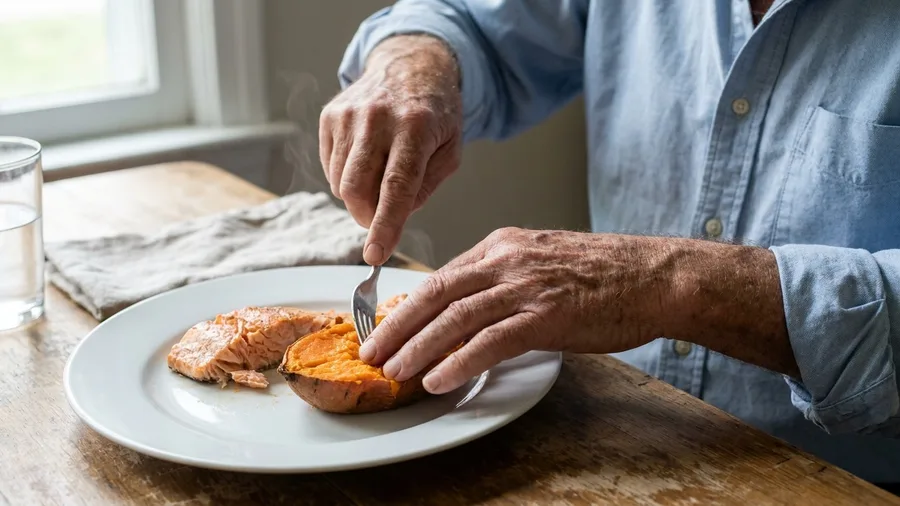
The soft orange half on the plate beside the fish is one medium sweet potato, and it is what makes the 5:30 meal read as dinner instead of a piece of protein on a dish.
Roasted whole or cut into wedges, it comes out sweet and yielding, soft enough to mash with a fork and easy to chew in a way that crusty bread and al dente rice are not. For anyone whose teeth set limits, that texture is the argument for it.
The prep shortcut is a microwave first, six or eight minutes until it gives, then a finish in a hot oven for the edges to caramelize. Roast a tray of them at once and reheat through the week; dinner assembly becomes a plate, a reheat, and a fork.
One medium potato, not a platter of them, is the portion the example day uses, and it does the job of rounding out the meal with a soft starch. Cost is a few cents to a dollar a pound depending on the week, so the item barely registers on the grocery list.
It suits the reader who wants an easy-to-chew starch that needs no sauce, no seasoning, and no attention once it is in the oven. With it, dinner is complete: a tender centerpiece, a soft sweet side, and nothing left to figure out.
Frequently Asked Questions
How much does this day of food actually cost per week?
About $55 to $65 at a mid-range US supermarket for all nine foods, based on the portions in the example day. Frozen berries instead of fresh and canned beans instead of dried keep it at the low end. Salmon is the item that moves the total most, and canned or pouched salmon brings it down further.
Can this pattern work if dairy is a problem?
Yes, and dairy is the first limit to check. Lactose-free plain yogurt sits in exactly the same spot in the breakfast bowl. If yogurt is out entirely, the breakfast still works with the oats and berries, though it loses its main protein, so plan a protein for later in the morning.
What if eggs or nuts are off the table?
Adjust the specific item, not the day. If eggs are limited, the lunch protein shifts elsewhere and the greens and beans stay. If nuts are out, use nut butter or ground seeds, or move the snack to yogurt. A single food being unavailable does not break the pattern.
Is chewing difficulty a reason to stop eating these foods?
No — it is a reason to change the texture. Cook oats looser, choose tender leaves, rinse and mash beans slightly, use ground nuts or nut butter, and keep the sweet potato soft. The nine foods are all softenable except the nuts, which have the easiest workaround of the group.
Does the order of the day matter, or just the foods?
The order is doing real work. Breakfast at 7:30, lunch at 12:30, a snack at 3 and dinner at 5:30 spreads protein and volume across the day instead of loading it all into one evening meal. Keeping the times roughly fixed is what makes the plate copyable.
Assemble One Default Day, Then Add the Berries and Yogurt
30, 1/2 cup rolled oats with 1 cup berries and 1/2 cup plain Greek yogurt. At 12:30, 2 cups mixed leafy greens with 1/2 cup beans and 1 hard-boiled egg. At 3, 1 ounce of mixed nuts. At 5:30, 3 ounces baked salmon and one medium sweet potato. Water with each meal, portions cooked or ready-to-eat unless noted. If you want the rest of the day mapped out the same way, the hour-by-hour rhythm of energetic people shows how the anchors fit together.
If you copy one thing, copy the breakfast. Keep the oats you already eat and add the berries and yogurt to them, the fruit straight from the container and the yogurt cold on top. It asks for no cooking and about a minute, and with frozen berries and canned beans the week still lands near $55 to $65.
A dairy limit means swapping the yogurt. A nut limit means swapping the nuts. An egg limit your clinician has set means swapping the egg, while greens and beans carry the lunch. The other eight foods stay exactly where they are. The plate is nine small low-friction defaults, not an overhaul, and the first swap at 7:30 is the way into the rest of the day.
Copy the 7:30 Bowl First
Tomorrow morning, put oats, a cup of berries and half a cup of plain Greek yogurt in one bowl. That is item one of nine, done before 8 a.m.