

The cost of getting this wrong is about $34 on a Tuesday night, plus the twenty minutes you spend scrolling instead of eating. That is the real price of a decision problem, not a food problem. At 58, cooking for one, you hit 6 p.m. hungry and tired, and the question of dinner has become an order-out trigger. The belief that eating well takes recipes or discipline is what keeps the cycle going. But the failure is not cooking skill. It is the number of decisions: what to cook, whether the broccoli is still good, which pan, how much, and whether the wash-up is worth it. Each open option costs energy, and at 6 p.m. you have none to spare.
The fix is not more discipline. It is fewer decisions. Five fixed dinners you never rotate beyond, a palm of protein at each meal, one standing grocery cart, and a shelf in the fridge at eye level that you can see. That makes the decent choice the shortest path in the room.
No recipes to follow, nothing to count, no daily decision. By the end of this, you will have tonight's five dinners written down and the weekly order placed. And if you add only two more things, add the palm of protein at breakfast and the front-of-fridge shelf. Both cost nothing and take no time.
Quick Tips Before You Start
Decide Before Hunger
Pick the week's five dinners on Sunday afternoon, when you are full and bored rather than hungry and desperate.
Build the Cart Once
Assemble the standing grocery order one time from the rotation, then reorder it without opening the recipe sites.
Freeze, Don't Thaw
Frozen vegetables go straight from the bag to the pan. Thawing adds a step and buys you nothing.
Plate It, Always
Serve onto a plate before you sit down. Containers at the table are what refill themselves.
Only One Shelf
Nothing new goes on the front-of-fridge shelf until it is empty. That is the whole system.
1. A Five-Dinner Rotation You Never Rethink
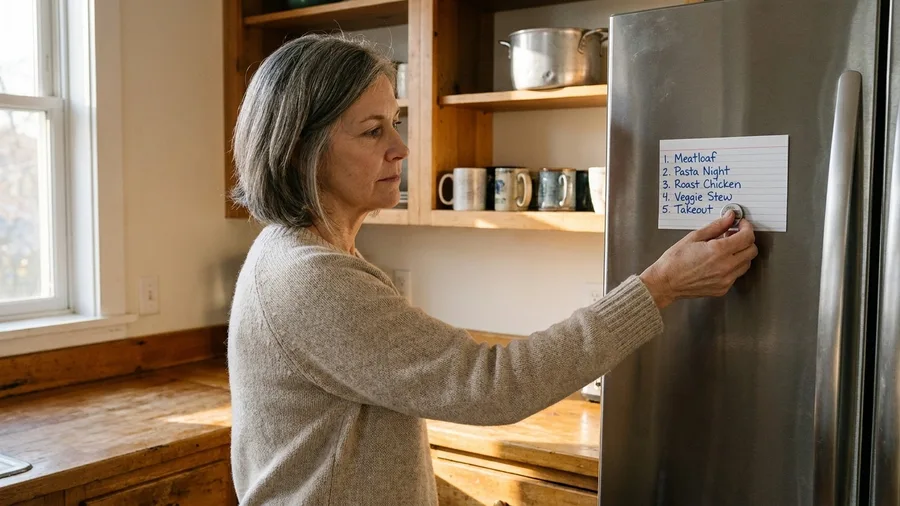
Nobody who orders out at 6 p.m. has forgotten how to cook. They have run out of decisions.
The failure happens before the stove is even involved. By late afternoon, hunger and a day's worth of small choices have used up whatever patience you had, and every open option in the fridge starts charging rent. Standing in the kitchen with the door open, you are not weighing nutrition. You are spending energy you no longer have on a question that should already be settled.
So settle it on Sunday, or on a Tuesday morning, or any time that is not 6 p.m.
Five dinners, named and fixed. Sheet-pan chicken thighs with frozen broccoli. Canned black-bean chili. Rotisserie chicken over a bagged salad. Eggs, toast and steam-bag green beans. Frozen salmon with microwave rice and peas. Write them where you will see them, and stop editing the list.
Every one of them lands at 20 minutes of active work or less, and each uses one pan or one pot. That is the ceiling that makes the rotation survivable on a Wednesday when the couch is winning.
The variety comes from the rotation itself, not from new recipes. A rotation repeats. That is the whole point of the word. The mistake most people make is treating weeknight dinner as a creative act, which turns every evening into a small audition you can fail.
With five dinners fixed, Tuesday already has an answer before hunger shows up. The week is carried by the list, not by willpower, and the daily decision that sent you to the takeout app simply stops existing.
💡 Tip: If a night does not happen, the rotation rolls – it does not extend. Skip Tuesday's meal and Wednesday still means Wednesday's meal, or the list turns into a backlog and you stop trusting it.
2. A Palm of Protein at Every Meal
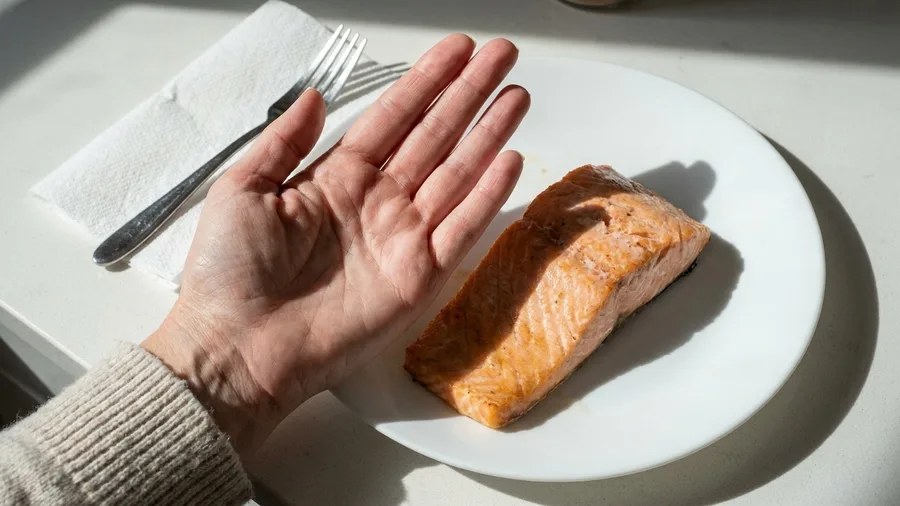
Five dinners can be settled on paper and still go sideways at the plate, because the part nobody budgets for is how much protein actually lands there.
The fix is already attached to your arm. Lay a palm-sized piece of chicken, fish or tofu next to your fingers and you are looking at roughly 30 grams – close enough that the difference stops mattering. A single 5.3-ounce cup of Greek yogurt carries about 15 grams, so two of those in a day already covers half the ground.
Start with breakfast and dinner.
Those are the two meals that quietly go missing protein. Lunch tends to take care of itself, a sandwich or leftovers, but mornings collapse into coffee and toast and evenings collapse into whatever is fastest. Anchor the two ends and the middle needs no supervision.
What makes the hand work as a tool is that it never gets left in a drawer. A phone app stops being useful the moment you sit down at a restaurant table, and a kitchen scale stays home. Your palm comes with you, whether you are standing at the counter or ordering off a menu you have never seen.
Pair the protein with whatever carbohydrate is already in the fridge – the rice from Sunday, the potatoes, the bread going slightly stale – and the meal is done. Protein is the only number in play here.
That is the whole point of the hand. Nothing gets weighed, nothing gets logged, nothing gets counted, and after a few weeks the palm check happens before you have consciously decided to do it. The measuring problem dissolves because there is no measuring. The default does the work. The same holds for staying curious: read how curious habits past retirement become second nature too.
⚠️ COMMON MISTAKE
The One-Big-Dinner Trap
Saving your protein for a large evening meal feels efficient and works against you. The body handles a palm at breakfast, a palm at dinner better than a single oversized portion at night. Spread it across two meals before you worry about anything else.
3. The Rotisserie Chicken That Covers Three Dinners
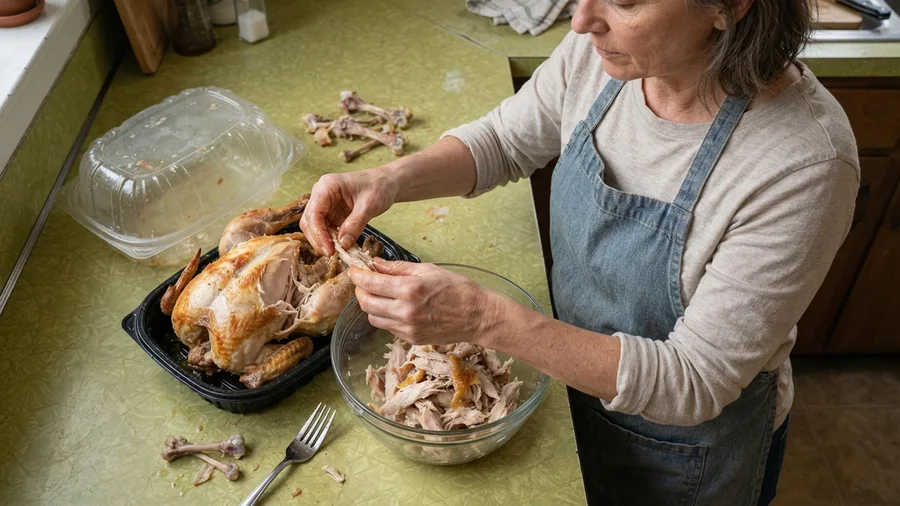
The fastest protein default for one person is already cooked and costs less than you would guess. A store rotisserie chicken runs about $6.99 and yields roughly 3 cups of pulled meat, which is three dinners for a single household. That is the cheapest way to skip cooking on the nights you least want to.
Night one, slice it and eat it with steam-bag vegetables. Night two, pull it over a bagged salad. Night three, stir it into the bean chili.
Pull the meat off the bone the night you bring it home, while it is still warm and gives up easily. Ten minutes with your hands and a fork, containers into the fridge, and it keeps about four days.
The trap is the deli case. The sides cost more than the chicken itself, and they turn a budget shortcut into a $20 dinner. Buy the bird alone. The bird alone is the whole point.
The Weeknight Pantry, Priced
4. Sheet Pan, Parchment, One Dish to Wash
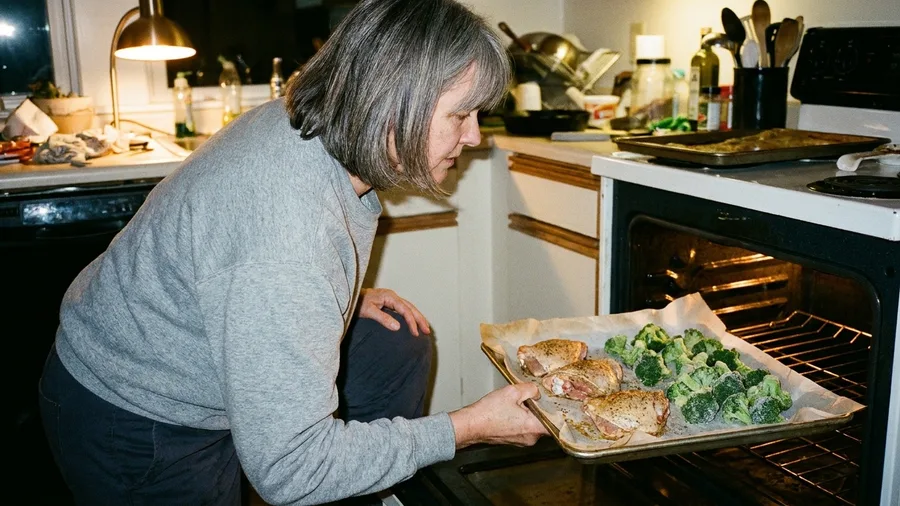
A cooked bird solves the protein question, but a pan and a pot and a board still leave a sink full of washing-up, and that sink is what actually pushes people toward the takeout menu.
Cleanup loses more weeknight dinners than cooking does.
Lay a sheet of parchment or foil across the pan before anything touches it. Whatever goes on top, whether it is chicken thighs with the skin on or a fillet of fish, leaves its fat and its juices on the paper, not on the metal underneath, and the pan goes back in the cupboard with a wipe rather than a soak.
Everything goes on at once. Protein on one half, frozen vegetables on the other, 425°F, 20 to 25 minutes, and then you open the oven and it is done. No flipping halfway. No stirring. No checking on a simmer.
Straight from the bag, still frozen, with the frost on it. Thawing first is an extra step that buys nothing; the oven handles the ice in the same 20 minutes it handles the chicken.
Your knife, your board and the lined pan. That is the whole wash-up.
The default is doing its quiet work here: when the end of the meal no longer involves a stack of dishes, the question of whether to cook stops being a negotiation. The parchment costs a few cents and it is the cheapest fix in the kitchen for the habit you are trying to break.
💡 Tip: Line the pan before you preheat the oven. Doing it after is the moment the parchment gets skipped, and a bare pan of chicken thighs is an hour of scrubbing.
5. Frozen Steam Bags Do the Vegetable
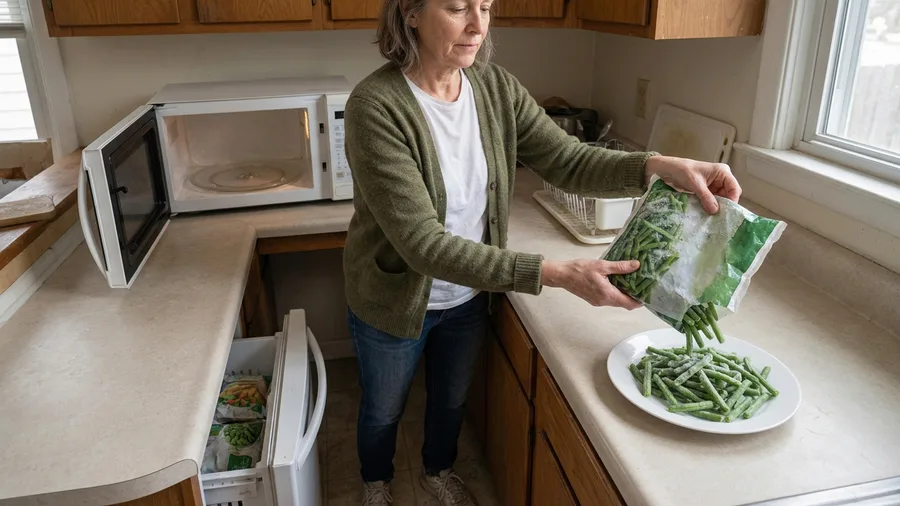
The vegetable already rides along on the sheet pan, but there is an even smaller way to put green on the plate, and it costs $2.29 a bag and four to five minutes in the microwave.
Frozen steam bags are the whole method. From the freezer to the microwave to the plate, no chopping, no pot, nothing to watch, and no colander to rinse. Each bag gives two servings, which is one dinner and one lunch for a single household.
The microwave is the one appliance on the counter you already trust, and this is what it is genuinely good at. You tear a corner, press a button, and walk away.
Keep three different kinds in the freezer at once. Green beans one night, broccoli another, a mix of peas and carrots on the third, and the plate stops looking like the same dinner wearing a different hat. Three bags in the drawer is the entire supply.
There is a faintly apologetic tone people take about frozen vegetables, and it is misplaced. They are picked and frozen close to the field at their peak, often within hours of harvest, which is more than can be said for a fresh head of broccoli that has spent a week in a truck and a cold aisle. The nutrients hold up. What you lose is texture, and a four-minute steam keeps most of that.
The nightly question of what green thing goes with this dinner is one you no longer have to answer. You open the drawer and pick one.
6. Bagged Salad Kit Plus One Add-In
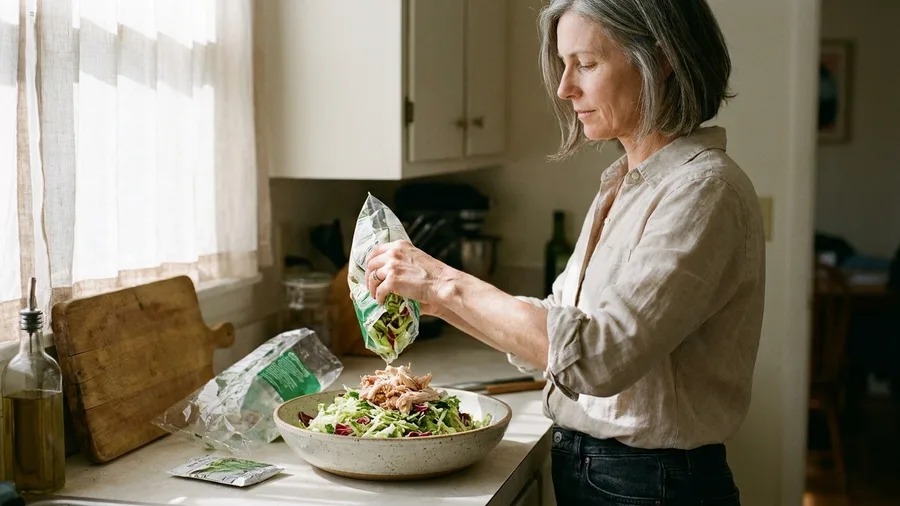
A bagged salad kit is a side dish pretending to be a meal, and the gap between those two things is one item.
At $3.99 it feeds one person as a dinner and two as a side, and it comes with the dressing, the crunch and the little packet of seeds already in the bag.
What it does not come with is a reason to feel fed an hour later.
Whatever protein is already handled is what turns the kit into dinner: a palm of chicken pulled off a bird, half a can of beans rinsed and warmed, or two boiled eggs sliced cold over the leaves. That is the whole difference between a side dish and dinner, and it costs about a dollar of food.
Dress it in the bowl it will be eaten from. Toss and serve in one vessel, and the wash-up is a fork and a bowl – which matters more than it sounds when the sink is what makes a person reach for the phone instead.
The kit has a two-day window after it comes home. Past that, the leaves go slimy, the dressing packet gets tossed untouched, and the idea loses your trust for a month – a slimy salad is how a good default dies.
So buy it for the week it will be eaten, not as a maybe. Two kits in the crisper, both eaten inside their window, is a rotation; four that rot is a guilt shelf.
The trap is specific: salad night turns into a bowl of leaves and a hunger that arrives at nine with a box of crackers. The kit plus a palm of protein closes that gap without adding a pan, a step or a decision at 6 p.m. It is the same move as a frozen vegetable bag that needs nothing chopped – the base is already done, and a single add-in carries the meal.
The Bean Default – At a Glance
💰 Cost
$1.29 a can
🍽️ Yield
Half a can, four meals
⏱️ Time
60 seconds in the microwave
📦 Keep In Stock
Four cans at all times
🥄 Best Add-In
Spoon of salsa or olive oil
Why It Works
Fiber and protein together slow the meal down, which is what stops the second dinner an hour later.
7. Half a Can of Beans as the Default Side
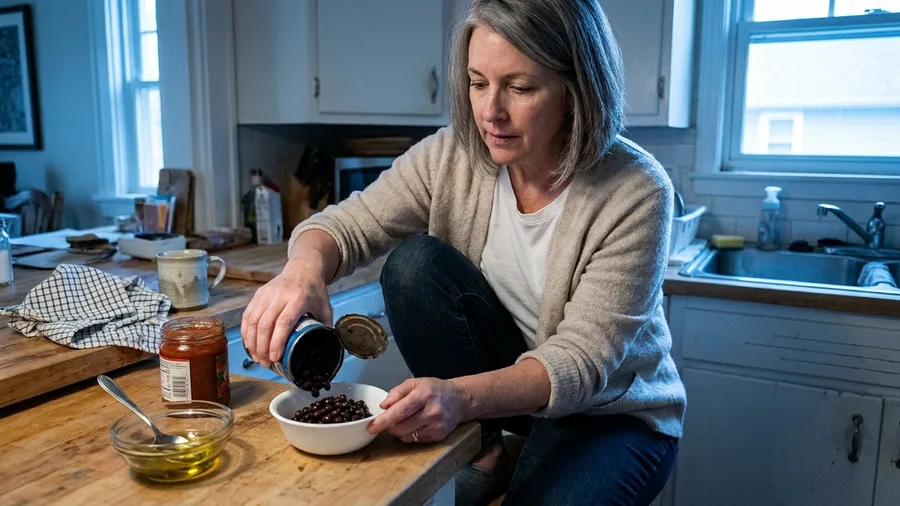
The cheapest add-in for a bagged salad is also the side that rescues any plate: half a can of beans, drained and rinsed, at $1.29 a can. That works out to four meals from one can, which is why four cans live in the cupboard at all times.
The other half keeps in a covered bowl in the fridge for tomorrow. No soaking, no overnight anything, no pot to scrub.
Rinse them in a strainer under the tap until the foam runs clear, then 60 seconds in the microwave with a spoon of salsa stirred in or a splash of olive oil. Cold beans taste like the can; sixty seconds and a little fat and acid and they taste like a side.
They go under fried eggs, next to chicken thighs, over microwave rice, and into the salad kit with the dressing. The same half-can shows up on four different plates in a week and nobody gets bored, because the plate around it keeps changing.
There is a specific kind of hungry that arrives about an hour after a light dinner, and it does not negotiate. That is the hour when the phone comes out and the delivery app opens, not because anyone is weak but because the meal in front of them had nothing in it that holds.
A bean side is fiber and protein at a cost low enough that using half a can and forgetting the rest is not a tragedy. The point is not thrift. The point is that the meal with nothing in it is the one that becomes takeout, and the fix takes ninety seconds.
8. The Sunday 90-Minute Batch-and-Portion
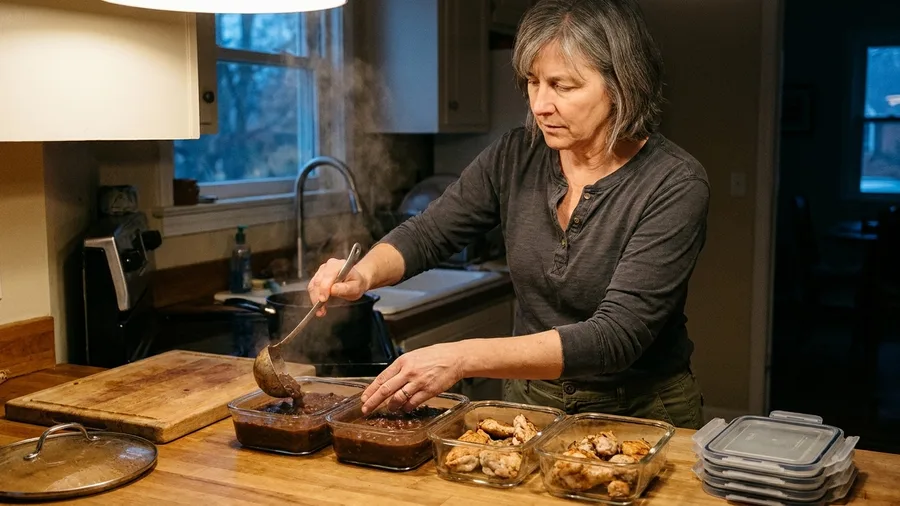
A single pot of beans will carry a plate, but four weeknights call for food that is already made. That is what 90 minutes on Sunday afternoon buys. One session at the counter, and Monday through Thursday at 6 p.m. ask only that a container come out of the fridge and go into the microwave.
The common mistake is trying to build a whole menu in one afternoon. You do not need to prep a week of different meals to get a week of different meals. The trick is to cook two large things, four portions each, and let them do their work. A tray of chicken thighs and a pot of black-bean chili fill eight containers between them, and that is your weeknight supply. If you want a gentler starting menu, a beginner Mediterranean week lays out simple meals from breakfast to dinner.
💡 Tip: Eat the batch within four days. Past that, portions go in the freezer rather than into the fridge to be discovered next Saturday.
💡 PRO TIP
Cook Two Things, Not Seven
Batch cooking fails when it turns into a restaurant prep list. Two dishes that you will genuinely eat four times beats seven dishes that make the fridge look busy. The chili and the chicken thighs share an oven and a counter, and neither needs a recipe in front of you.
9. A Front-of-Fridge Shelf You Can See
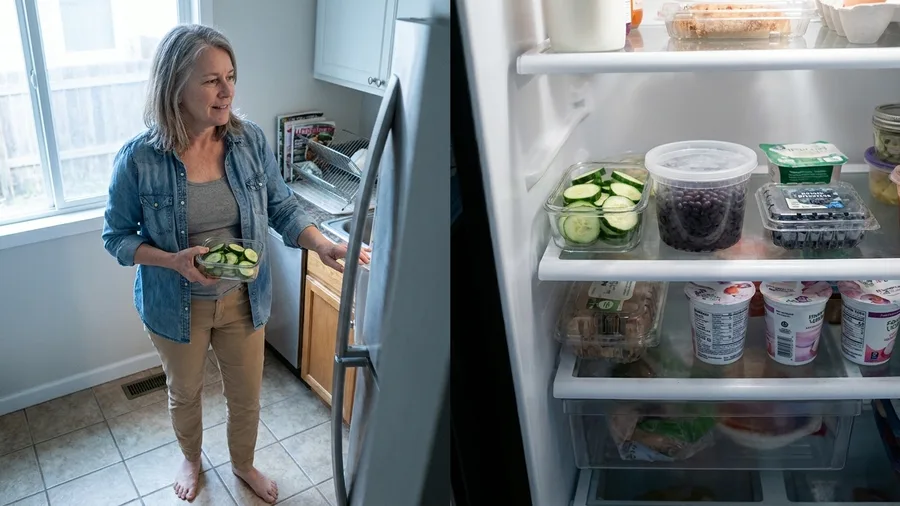
A container of chili on the middle shelf you walk past every time you open the door might as well not exist. The gap between a stocked fridge and a good dinner is not space but sight. Food you can see from the handle gets eaten; food pushed to the back becomes a science experiment.
But a cucumber on the counter is still a project. Nobody reaches for a whole cuke when they are hungry and tired at 6 p.m. Slice the thing on the day it comes home, and it turns into a snack you grab without thought. That single step is the difference between produce that gets eaten and produce that turns to slime in the drawer.
The middle shelf, front edge, eye level is the one real estate in your kitchen that matters most. That is where the cut vegetables, yogurt cups, berries, and bean containers go. The cheese, the butter, the things you want to reach for less often are banished to the drawer and the back of the top shelf. Your hand reaches for the nearest thing, so make the nearest thing the thing you want.
The other half of a good default is a hard stop at capacity. It is one shelf, not a reorganization of the entire fridge, and nothing new goes on it until it is empty. That rule keeps the good stuff from migrating to the back, prevents the pileup that sends half of it to the bin, and means you never again pull out a bag of something that used to be salad. Every time you open the door, the choice is already made for you.
Front of the Shelf vs. Back of the Drawer
What Goes Front and Center
- Portion into 2-cup containers so a meal is one grab
- Greek yogurt: check the 5.3-oz cup reads 15 g protein
- Berries in a single layer, not a deep pile that hides the soft ones
- Beans: strain and store half a can ($1.29 can = two meals)
- Cut vegetables only if you'll eat them within four days
What Goes Out of the Way
- Cheese in the drawer, not the door – the door is the warmest spot
- Treats on the top shelf where you need a stool
- Grains in opaque jars only if the label faces out
- Anything you'd graze on standing up – it goes in the freezer
- Uncut produce stays in the drawer, but set a phone reminder to cut it
10. One Standing Grocery Order, Repeated
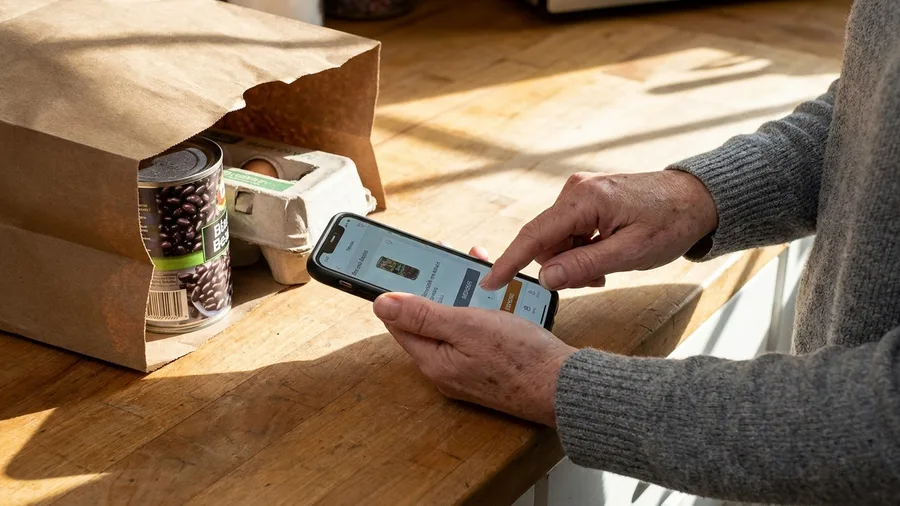
The visible shelf stays stocked because one order comes in every week whether anyone is in the mood to shop or not. The cart is built once, from the dinners already in the rotation, and after that it is simply reordered.
Twenty-two items, about $85 a week, and a $9.95 delivery fee. That is the whole system.
Build it the first time by walking the rotation: chicken thighs, a rotisserie bird, canned black beans, frozen salmon, microwave rice, peas, broccoli, steam-bag green beans, the salad kit, eggs, yogurt, berries, oats, the acid bottles. It will feel like a long list. It is not: it is the same list for as long as the dinners stay the same.
After that the order is a tap, not a task. Reorder the standing cart, then edit only at the edges: swap the fruit for whatever looks good, add one thing worth trying that week. The center of the cart never moves, which is precisely what keeps the fridge stocked without a decision.
Delivery is doing real work, not just saving a trip. No aisles means no walking past the chips at eye level on the endcap. No hunger means no shopping on the appetite of the moment.
💡 Tip: Set the delivery window for a day you are actually home and free. A missed delivery window means you cook nothing that week and order out four times.
The Week in Numbers
What the defaults cost and buy over seven days
One planned takeout night is part of the budget, not a hole in it.
11. A No-Cook Breakfast With Three Parts

Breakfast is the meal that quietly disappears first. Not because mornings are hard, but because at 6:40 a.m. there is no decision already made, and an unmade decision defaults to coffee and a handful of crackers.
The fix takes about 90 seconds and one bowl. You build it from three parts: a protein, a fruit and a fiber.
A single-serve Greek yogurt cup, the 5.3-ounce size, lands about 15 grams of protein on its own. Frozen berries go straight in from the bag and thaw against the yogurt while you find a spoon. A spoon of oats or a slice of toast covers the fiber.
No stove, no pan, nothing to watch. It holds you until lunch, which is the whole point: the mid-morning raid on the cupboard is a symptom of a breakfast that was never built.
Two variants keep the same bowl from going stale by Thursday. Cottage cheese with a sliced peach when they are in season. Eggs boiled on Sunday, eaten cold on Wednesday with whatever fruit is in the fridge.
There is one habit that matters more than the ingredients. Sit down with it.
Standing at the counter is how the second breakfast happens – the toast while the first one is still going, the handful of something on the way to the sink. A bowl at a table has a beginning and an end. The assembled bowl is the default; the table is what keeps it from becoming two meals.
12. Acid, Herbs and Heat Instead of Salt
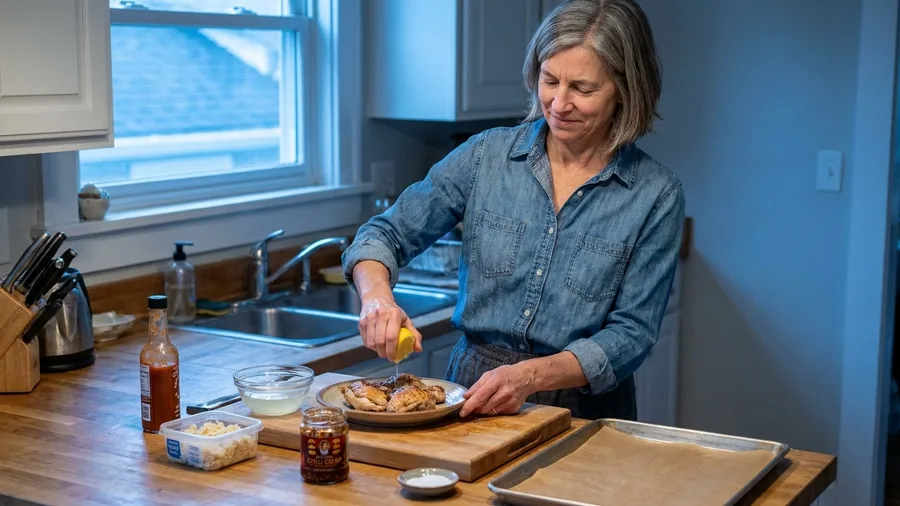
A default meal still has to taste like something. The mistake most people make is reaching for the salt shaker when the real problem is that the food has no acid and no heat.
Salt sensitivity fades with age, so the taste for it climbs without anyone noticing. You salt a little more each year and the plate still reads flat. Sour and heat, on the other hand, still register clearly.
The fix is placement, not willpower. Lemon juice, red wine vinegar and a bottle of hot sauce live on the counter, not in the cupboard – because a bottle you have to open a cabinet to reach is one you stop reaching for.
Acid goes in at the end, off the heat. Squeezed over the sheet pan as it comes out of the oven, it stays bright. Added at the start, it cooks away into nothing.
There is a short shelf of flavor that does the work of a whole spice rack: frozen chopped garlic and ginger, plus a jar of chili crisp. Three items, no measuring, no recipe.
Salt comes last and lightly. This is not a salt ban – the plate should still taste seasoned. It is a swap: acid and heat take over the job salt was doing alone, and the shaker becomes a finish rather than a crutch.
13. A Standing Takeout Order That Still Counts
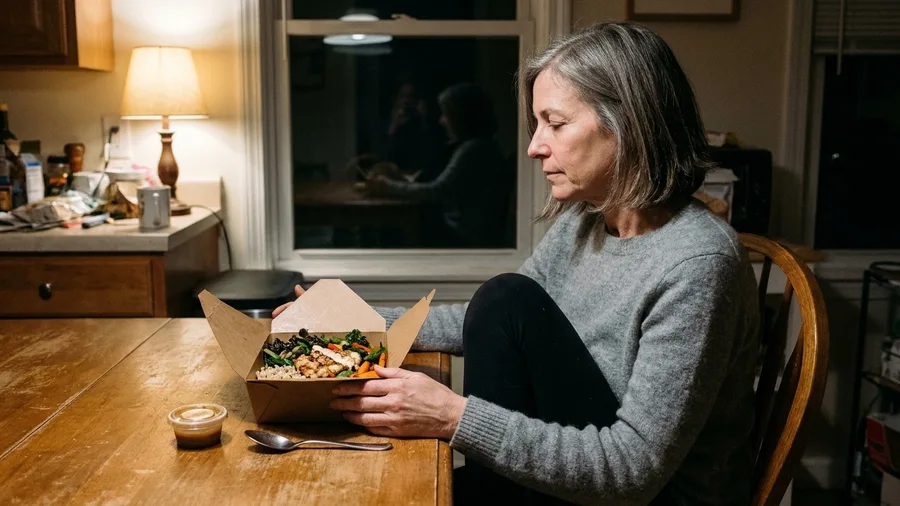
A saved order does the same work as a bottle of vinegar on the counter: it decides for you, one step ahead of the moment your judgment is weakest.
For takeout, the deciding has to happen on a full stomach, on a weekday afternoon, not at 6:40 with the app already open and the photos scrolling past.
Pick the place and the exact build now, then save it to favorites so the tab opens on the answer instead of the menu.
The order that pulls its weight costs $16: a grain bowl with protein doubled and the vegetables added, no upcharge dodging.
For a household of one, that lands within a dollar or three of cooking a single night, which is why it can hold a fixed slot without bleeding the week.
Hungry ordering is what turns a bowl into a fried platter and a side of something and a drink you did not plan on, so the saved order is not about virtue; it is about not asking a tired brain to choose.
Ask for the sauce on the side. Half of it goes unused, and the second half is flavor for tomorrow's rice.
One planned night a week, on the calendar like any other dinner, is part of the rotation rather than a crack in it.
The spiral starts when takeout is a rescue, called in a bad hour and followed by a second rescue two nights later; a night you chose in advance has no spiral to start.
Sit down with it, put it on a plate if the box bothers you, and let the week carry on.
🗓️ Your First Week, In Order
Pick the Five
Write the five dinners on an index card and stick it on the fridge.
Build the Cart
Assemble the 22-item grocery order once and save it for repeat delivery.
Clear One Shelf
Make the middle front shelf eye-level and put cut vegetables in clear containers.
Batch on Sunday
Cook two dishes, 90 minutes, portion into containers and freeze half.
Anchor Breakfast
Set three parts in the bowl – protein, fruit, fiber – before the week starts.
Save the Takeout Order
Pick the bowl, save it in the app, and put it on a fixed night.
14. The One-Plate Rule for Eating Alone
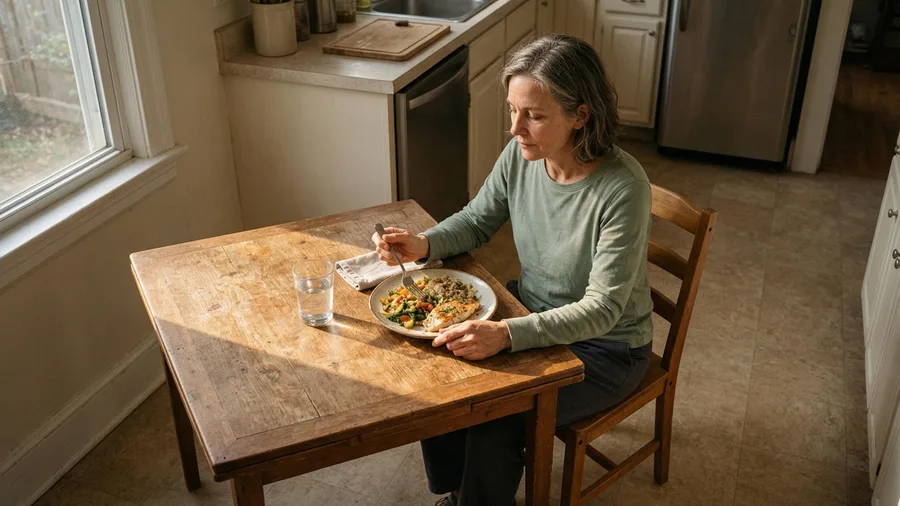
Takeout has a receipt and a clock. Eating at home alone has neither, which is how the last and quietest break in the defaults happens – at the counter, with the container still open.
The rule is a plate, a table, and no container on the table, and it is about the counter, not restriction.
Standing at the counter has no beginning and no end. You take a forkful, then another, and there is no moment where the meal is served or finished, so the meal keeps quietly continuing while the news plays.
So serve it. One plate, set down at an actual table, the container back in the fridge before you sit.
Portion the leftovers into containers before you eat, not after. Then the second helping is a decision you already made when you were not hungry, and the answer is sitting sealed in the fridge rather than in a pot within arm's reach.
One screen, or none. A plate in front of the news is how the plate gets refilled without anyone noticing, and the plate is the whole point: it gives dinner a start and an end, which is what turns one dinner back into one dinner.
💡 Tip: Put the serving bowl on the counter, not the table. On the table it refills itself; on the counter it needs a decision.
Frequently Asked Questions
Does this really work if I live alone and hate leftovers?
The five-dinner rotation is built for one person with leftovers, which is what makes it cheap. If you genuinely dislike reheating, cook the full sheet pan and eat the second half cold the next day over greens, or push the extra portions into the freezer on Sunday night rather than the fridge.
Do I need any special equipment for the sheet pan dinners?
One rimmed sheet pan and a roll of parchment paper cover four of the five dinners. Everything else in the rotation is a pot, a microwave or a bowl. If you buy one thing, make it a second sheet pan so the Sunday batch can run both dishes at once.
Is the $9.95 delivery fee worth it for one person?
It buys the removal of the single largest source of unplanned food in your week. If the fee bothers you, collect the order yourself at a fixed time with the app list open – the point is the fixed list, not the delivery method. The standing cart is what matters.
How much protein is enough at 58 without tracking anything?
A palm of chicken, fish or tofu at two meals a day is the working rule most people can hold without an app. If you have kidney disease, are on a medically restricted diet, or take medication that interacts with protein intake, that number belongs to your doctor, not to this list.
What if I get bored of the same five dinners by week three?
Boredom is a sign the rotation is working, not failing. Change one of the five rather than adding a sixth – swap the chili for a bean soup, or the salmon for a frozen fish fillet. One change at a time keeps the week from collapsing back into decisions.
Can I still eat out or order in on other nights?
Yes, once it is planned and saved, not improvised. The bowl with double protein and extra vegetables is designed to be an ordinary part of the week. The thing that breaks the system is not the food – it is standing in the doorway deciding.
Tonight: Five Lines on a Card
The rotation carries the week. Not willpower, and not the recipe you were saving. Tonight, name your five dinners on a card and place the standing order. That is the smallest possible start, and it is not cooking. Twenty minutes of admin and the week is largely decided before it begins.
Return to that 6 p.m. moment. You stand in front of the open fridge, but now Tuesday is already decided, and the same 22-item cart is on its way. If you add only two entries, choose the palm of protein at breakfast and the front-of-fridge shelf. Both cost nothing and take no time, and together they close the gaps where good intentions leak.
Eating well after 50 is not a project or a new recipe. It is a set of defaults you stop noticing, like the five dinners on the card and the cart that arrives without a decision. The 6 p.m. open fridge no longer has a hold on you. Tonight, write the five lines and place the order.
Do One Thing Before You Close This Tab
Open the fridge and clear the middle shelf at eye level. Then write the five dinners down. That is the entire setup, and it takes less time than a delivery order.