
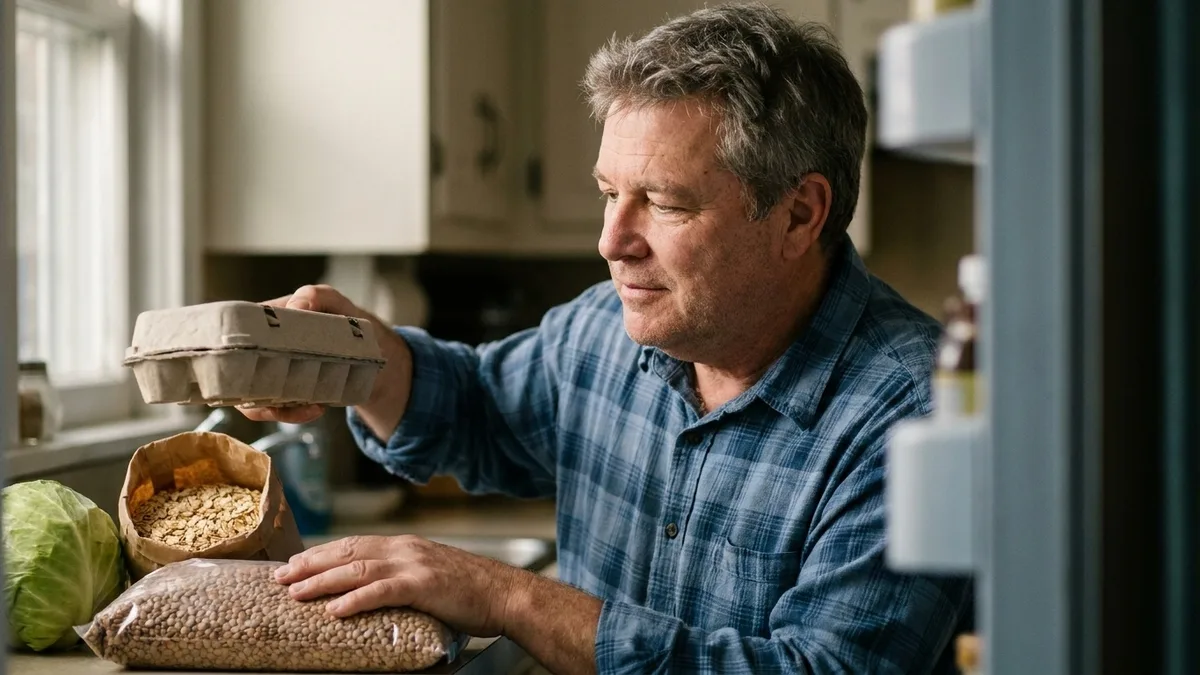
A cart rolls past the egg case and stops, and the hand hovering over a $2 bag of lentils is the same hand that put a $2.50 canister of oats back last week.
That pause is the whole decision. Twelve eggs at $3-$4, a pound of lentils at $2, oats at $2.50, and the same $50 cart becomes a week of dinners or a week of snacks depending on which packages land in it.
What counts is not the smallest tag but the lowest cost per serving and the fewest meals lost to the bin. A $1-$2 cabbage that holds three weeks beats a $5 tub of pre-cut anything that dies by Thursday.
Typical servings from the right staples run $0.40-$0.90, and egg, tuna, or chicken plates $1.00-$1.50. Fifteen items hit those numbers, each with its cooking time and its watch-out.
Buy the store brands, read the unit price, and let five staples you will actually cook this week anchor a starter basket of $45-$55 for one person or $90-$110 for four.
Quick Tips Before You Start
Compare unit price
The shelf tag lists price per ounce or per pound — use that number, not the sticker price, to compare store brand against name brand.
Check dates on perishables
Yogurt and eggs are the only items here that spoil fast; buy only what you can eat before the date printed on the tub or carton.
Freeze half the chicken
A 4-5 lb bird is a lot for one person — roast half, freeze the rest in portions the day you bring it home.
Skip the 3-pound onion bag
Loose onions by the piece cost the same per pound and won't go soft in the bin before you get through them.
Buy plain, sweeten at home
Flavored oats, yogurt and peanut butter cost more per ounce and carry added sugar — the plain versions do the same job.
1. Eggs: Cheap Protein for Any Meal
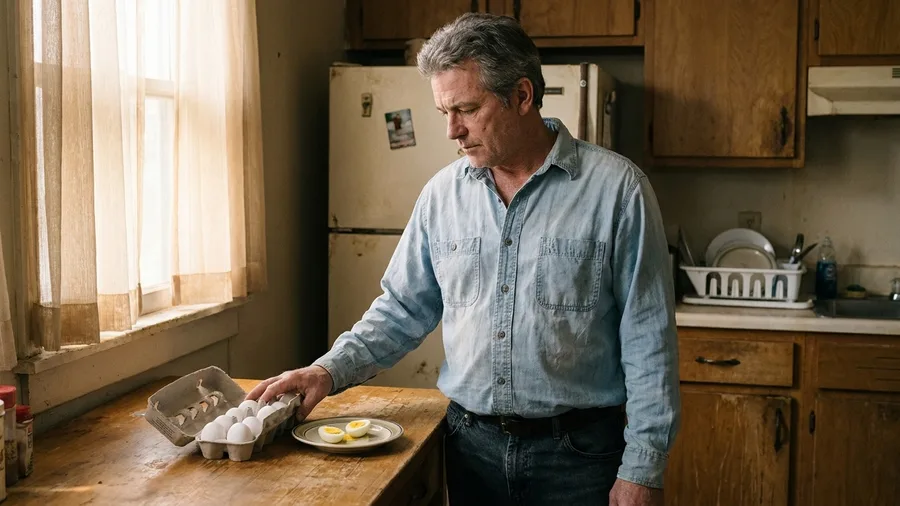
Soaking, no advance plan, no second ingredient to buy. Eggs are the protein that asks nothing of you before dinner, and ten minutes is the whole distance from fridge shelf to plate.
A dozen runs $3-$4, and two of them crack out to somewhere between 50 and 67 cents. Put that next to the rest of your cart and it is the floor of the $0.40-$0.90 serving band, not the middle of it.
The date on the carton is more forgiving than most shoppers assume. Refrigerated eggs keep 3-5 weeks, so a dozen picked up on sale is not a countdown you have to win.
Four jobs, one carton. Boil a batch on Sunday and they are breakfast through Wednesday; scramble them on a night the plan collapsed; fry one hard beside cold rice from the back of the fridge; or beat six into a frittata with the half-wilted spinach and the last of the onion.
The frittata is where eggs quietly save money, because it takes kitchen staples worth a second look that were two days from the bin and makes them dinner instead of garbage.
Watch-out at the shelf: the free-range and omega-3 cartons often sit near double the plain dozen. Do the unit-price math per dozen once, and remember that in a frittata nobody can tell which hen laid it.
💡 Tip: Boil a half-dozen on Sunday and keep them in the shell in the fridge — they hold a week and turn into breakfast, a salad topping, or a quick snack.
| Staple | Typical US price | Best cheap use | Watch-out |
|---|---|---|---|
| Eggs | $3-$4/dozen | Any meal, 10 minutes | Free-range can be double |
| Dried beans | $1.50-$2/lb | 4-5 meals from one bag | Needs overnight soak + 40-50 min |
| Lentils | $1.50-$2/lb | Soup, dal, rice bowls | Needs salt, fat and onion |
| Rolled oats | $2.50-$3.50/42-oz | Month of breakfasts | Flavored packets cost more |
| Brown rice | $2-$3/2-lb | Batch cook for the week | Takes 20-25 min |
| Canned tuna | $1-$1.50/5-oz | No-cook protein meals | Water-packed, watch sodium |
| Peanut butter | $2.50-$3.50/16-oz | Makes plain food filling | No-stir adds sugar and oil |
| Plain yogurt | $4-$5/32-oz | Base for oats, dips, marinades | Only perishable item |
| Frozen peas | $1.50-$2/12-oz | Vegetable that gets eaten | Freezer burn in crowded freezer |
| Cabbage | $1-$2/head | Slaw, stir-fry, soup | Outer leaves go to stock |
| Onions | $1-$1.50/lb | Starts every pot | Keep away from potatoes |
| Carrots | $1.50-$2/2-lb | Roast, grate, soup | Limp ones still work |
| Sweet potatoes | $1-$1.50/lb | Filling side or full meal | Store dry, never in fridge |
| Whole chicken | $1.50-$2/lb | 4 dinners + stock | Oven time 60-75 min |
| Pasta | $1-$1.50/lb | Fallback dinner, 8-10 min | Least filling alone |
2. Dried Beans That Stretch a Pot
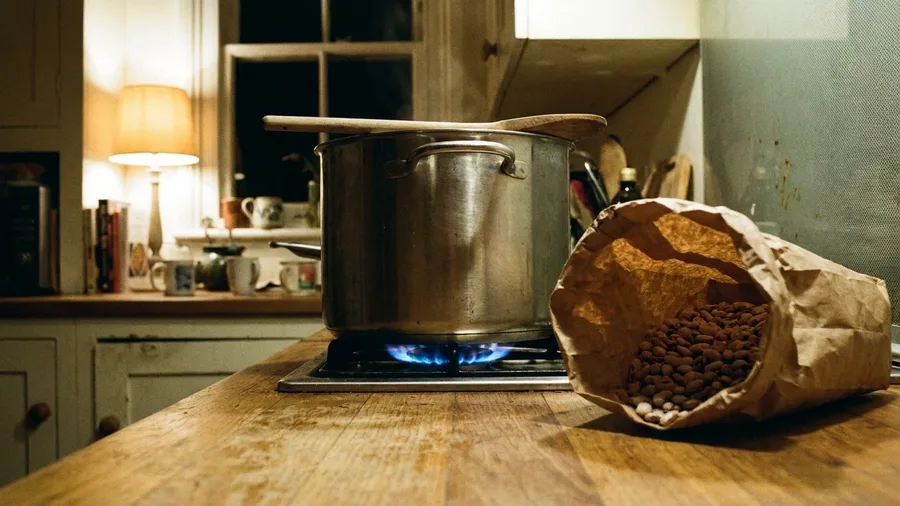
Nothing on the shelf converts a small bill into a full week of food like a one-pound bag of dried beans at $1.50-$2. It is a coffee's worth of money, and it comes home as four or five meals.
That yield is not free. You pay for it in forethought: an overnight soak, then 40-50 minutes on the burner, which pushes beans into a Saturday or a work-from-home afternoon and out of the 6 p.m. window entirely.
You are trading a night of planning for a whole week of cheap protein, and the arithmetic is lopsided in your favor.
One pot fans out fast. Chili on Monday, soup on Tuesday, rice bowls on Wednesday, burritos on Thursday, and half of it into the freezer for the stretch when nothing got made.
The soak is the one thing that keeps beans off a Tuesday.
Canned beans cost more per serving and skip both the soak and the simmer, which is exactly why one can belongs in the cupboard. It is insurance, and the night the overnight soak never happened is the night you collect.
3. Lentils: Fast Beans Without Soaking
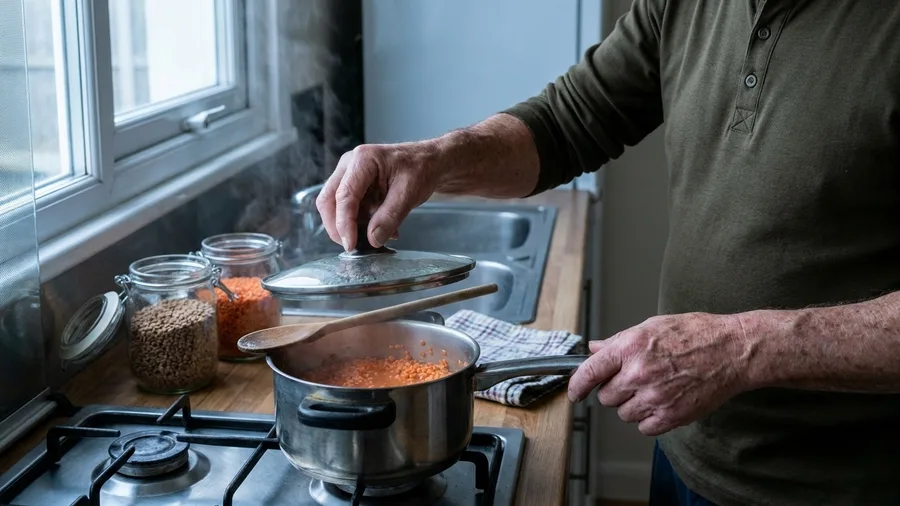
The reason beans need a night's notice is the soak, and lentils simply do not. They land in the same $1.50-$2 per pound band, in the same aisle, and go from dry to done in 20-25 minutes on the stovetop.
That is the difference between a Tuesday dinner and a change of plans.
Two kinds, two different jobs. Red lentils fall apart as they cook, which makes them a thickener for soup, dal, and pasta sauce. Brown lentils hold their shape, so they carry a salad or sit beside rice without turning to mush.
The timing works out almost too neatly: rice takes 20-25 minutes, lentils take 20-25 minutes, so both pots go on at once and come off together without you watching either one.
One honest caveat. A pot of lentils has no flavor of its own, so plan on salt, a fat of some kind, and an onion. Skip those and the cheapest pot on the list tastes like the cheapest pot on the list.
💡 Tip: Cook a big pot of brown lentils on Sunday, keep half plain for salads, and simmer the other half with tomato and cumin for a quick dinner.
4. Rolled Oats for Breakfast and Baking
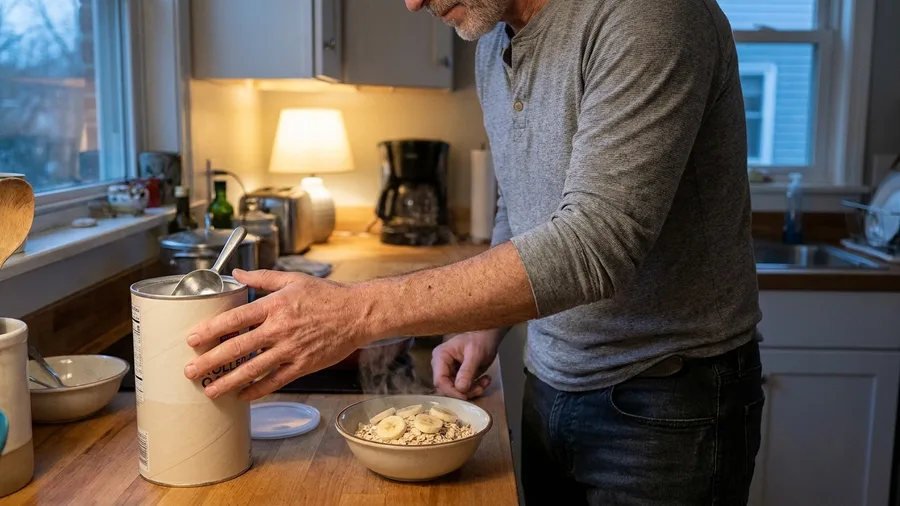
Rolled oats ask almost nothing of a kitchen: no burner babysitting, no soak, no chopping, just a pot of water coming to a simmer and 10-15 minutes of stirring. That is why the canister earns a place right after the beans and lentils. Those need a pot you stand over. This one needs a bowl and a few minutes before coffee.
A 42-ounce canister of plain rolled oats runs $2.50 to $3.50 at most stores. Scoop out a standard half-cup serving and you get roughly a month of breakfasts from that one package. Per bowl, before you add anything to it, you are sitting inside the $0.40-$0.90 serving band that runs through this whole list.
The canister does more than oatmeal. Overnight oats layered with yogurt and fruit in a jar, granola baked from oats plus honey and a little oil, and – the one most people forget – oats as the binder that stretches a pound of ground meat into a fuller meatloaf or a batch of patties. Same box, three nights of table use.
Buy the plain store-brand oats. The flavored packets are mostly sugar and salt by weight, and you pay more per ounce for both. Sweetening a plain bowl at home with your own honey, jam or brown sugar is cheaper per serving, and you decide how much goes in. Pick up the canister that is priced per ounce lowest on the shelf, not the one with the picture of strawberries.
Watch the quantity before you buy the biggest bag on offer. The canister keeps for months in a cool, dry cupboard, so it will not spoil – but if the household eats oatmeal once a month, a 42-ounce can far outpaces the appetite and sits half-used until the next cleanout.
💡 PRO TIP
The two-number test for any staple
Before a cheap item earns a permanent spot in your cart, check two things: what one serving costs, and how many meals it delivers before spoiling. A $2 bag of lentils wins on both. A $2 bag of spinach that wilts in four days wins on neither.
5. Brown Rice That Anchors a Week
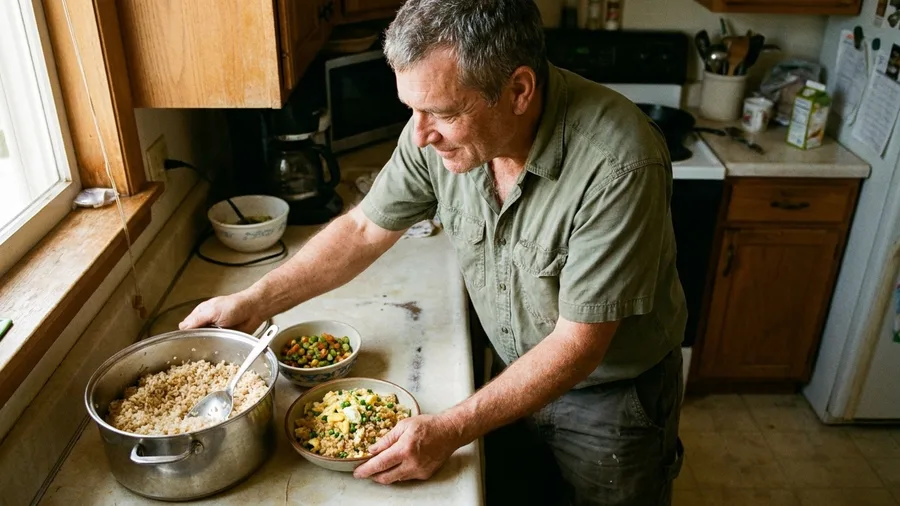
Oatmeal covers the morning, then dinner needs something underneath the beans, eggs, or tuna. Brown rice is that base – $2 to $3 for a 2-pound bag, 20-25 minutes on the stovetop, and one batch cooked ahead covers several days in the fridge.
The multiplier is what cold rice becomes. Fried rice with eggs and a handful of frozen peas, a bowl with beans and a spoon of yogurt, a burrito with lentils and a pinch of cheese. Cook it once, and five meals start with a scoop straight from the container.
The timing is what makes this bag worth buying. Rice runs 20-25 minutes. Lentils run 20-25 minutes. Dried beans run 40-50 minutes after a soak. Start the longest pot first and everything lands on the counter at the same time, which is the difference between a plan that gets cooked and one that gets ordered out.
Stored airtight in the cupboard, brown rice holds 1-2 years, so the 2-pound bag gets replaced rarely and never spoils mid-week. The one long-term caution: brown rice carries more oil in the bran than white, so it turns rancid sooner than white rice – buy the smaller bag if you cook rice only occasionally, and smell it before you cook if the bag has been open a long time.
Judge the bag by unit price per pound, not by the size of the package. The 2-pound bag at $2-$3 is the workhorse. Larger bags can save a little more per pound, but only if the rice gets eaten before the oil in the bran starts to turn.
💡 Tip: Cook a double batch and freeze half in 2-cup portions — it reheats in the microwave in 3 minutes and saves a weeknight.
The cheap-staples numbers that matter
6. Canned Tuna for No-Cook Protein
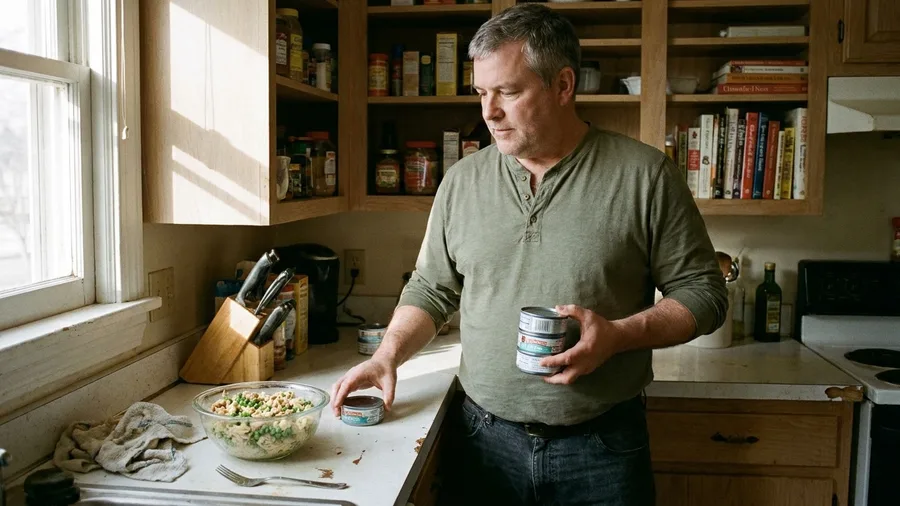
Rice and beans settle the dinner question. The remaining gap is protein that needs no cooking at all, and that is what a can of tuna answers: $1 to $1.50 for a 5-ounce can that sits shelf-stable until the date stamped on the lid. The can bought in March covers the empty-fridge night in June.
A can plus pasta or rice makes a meal in the $1.00-$1.50 band – the same range that covers egg and chicken dinners, so the per-serving math lines up with the rest of the list. That number is what the two-number test is really about: not the tag on the can, but the meal it delivers.
Four uses carry a week of nights. Tuna with pasta and frozen peas, tuna over a bowl of cold rice, tuna mixed into a pot of beans, and tuna on salad with a yogurt dressing whisked in at the last minute. Each one is a full meal from pantry and fridge without turning on the stove for long.
Watch the packing. Water-packed over oil-packed for both price and control – the oil adds cost and calories you did not choose, and water-packed lets you add your own olive oil at the finish. Sodium varies widely between brands, so compare the labels rather than grabbing the cheapest can on the shelf.
And count honestly: a 5-ounce can is two servings, not one. A whole can eaten in a sitting makes the meal cost $1.00-$1.50 for one person, not two. Two cans feed a household of four once the pasta and peas are in the pot with it.
7. Peanut Butter That Makes Cheap Food Filling
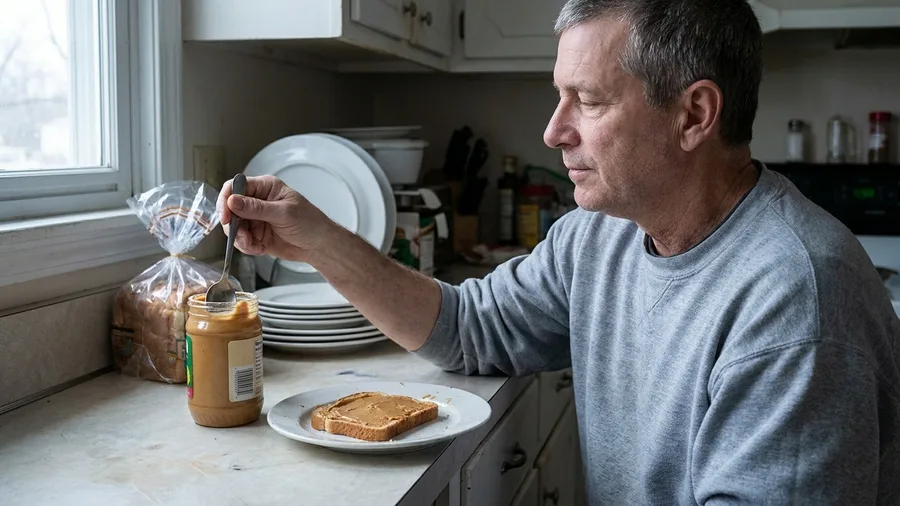
A jar of peanut butter needs no can opener, no fridge and no heat. It is protein and fat that keeps in the cupboard at room temperature and turns a slice of bread or a bowl of plain oats into something that holds until dinner.
Expect $2.50 to $3.50 for a 16-ounce jar, and a single serving still lands well inside the $0.40-$0.90 band the rest of this basket runs on. A spoonful of it adds fat and protein to plain food without adding a second purchase.
It also spreads wider than a sandwich. Stirred into hot oats, it takes the place of brown sugar and keeps you fuller. Whisk it with a little soy and vinegar while the pasta water boils and it becomes a noodle sauce with no cooking of its own. Thin it with water or a spoon of plain yogurt for a dressing, or blend it into a smoothie.
One label check separates two products that share a shelf. Plain store-brand peanut butter lists peanuts and salt. The no-stir jars across the aisle often add sugar and palm oil, and they usually carry the higher price per ounce for the trouble.
Then watch the serving size. A 16-ounce jar gives you roughly a week of sandwiches; kept open on the counter, it empties in a week of spoonfuls, and the cost per meal quietly climbs.
8. Plain Yogurt as a Cheap Base
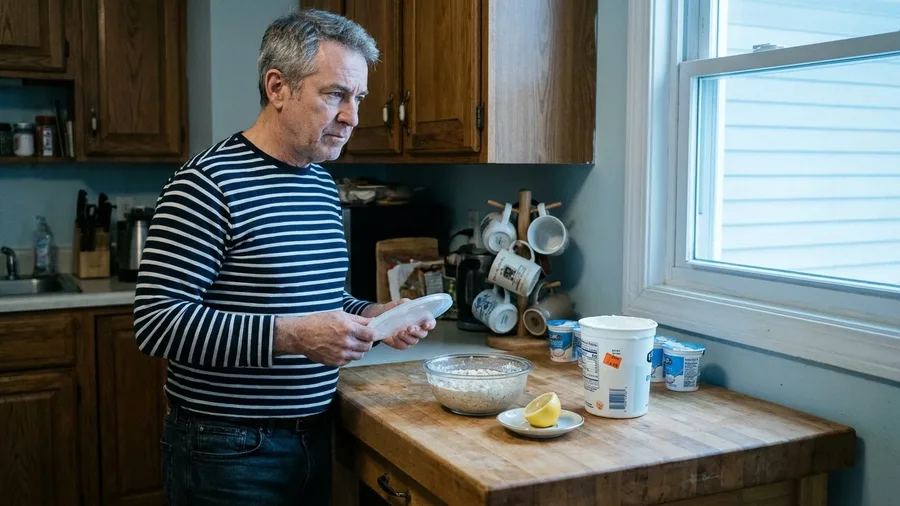
Plain yogurt answers a different question than a jar of peanut butter does: not which staple lasts longest on a shelf, but which one still earns its price in the last week before the date stamp. A 32-ounce tub runs $4-$5, and the number that decides the purchase is printed in small type under the price.
Unit price per ounce is the whole argument. Set the tub against the row of single cups nearby and the cups run higher ounce for ounce nearly every time, sometimes by half again, because you are paying for the plastic and the portioning rather than for the yogurt itself.
What the tub is actually for is stretching other cheap food into something you want to eat twice. A few spoonfuls loosen a bowl of overnight oats enough to swallow cold, and a scoop whisked with crushed garlic, lemon juice and a pinch of salt turns into a dip for carrot sticks or a sauce for roasted sweet potato.
Blended with a spoon of peanut butter and a splash of milk, it makes a smoothie thick enough to count as breakfast, and stirred with lemon and oil it becomes a marinade that tenderizes chicken thighs before they hit the oven tray.
Buy the plain tub, not the vanilla or fruit-on-the-bottom version. Flavored tubs put sugar in a package that costs more per ounce, and the jam or honey already sitting in the cupboard can do that job for a fraction of the price and let you decide how much goes in.
This is the one item on the shelf that is running against a clock the moment you open it, so a second tub at a discount is only money saved if its date clears the week you will finish it. Skip the BOGO if the second one expires before Friday.
9. Frozen Peas That Beat Fresh Waste
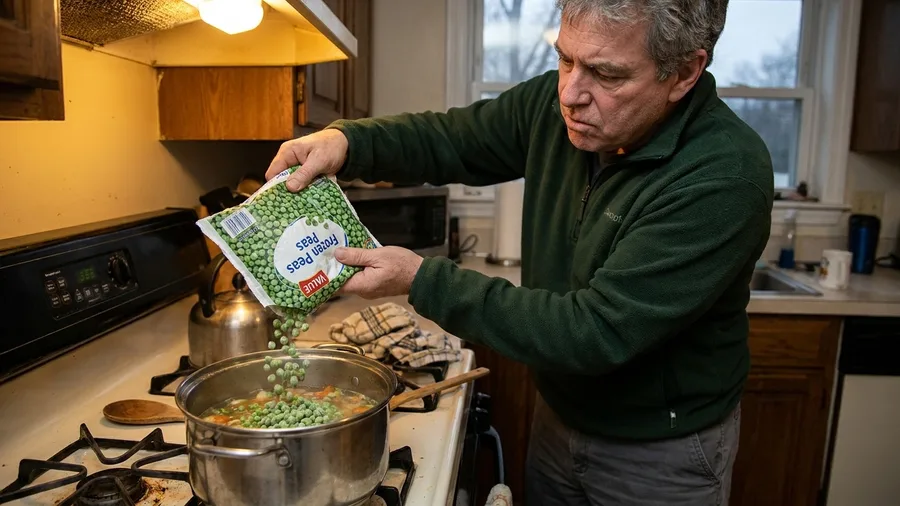
A bag of frozen peas keeps 10-12 months in the freezer, which makes it the vegetable with the longest usable life of anything in the produce aisle. Fresh greens bought for the same $1.50-$2 often give you five days before they go limp in the crisper drawer.
That gap is the entire reason a 12-ounce bag is worth the freezer space. The bag bought in the dead of winter is still perfectly good the following autumn, and nothing in it has to be trimmed, washed, or thrown out by Thursday night.
They go into the pot frozen solid. A handful dropped into rice in its last two minutes, into pasta water right after the noodles, into a pot of soup off the heat, or into scrambled eggs just as they set takes the place of a vegetable that would otherwise be missing from the plate.
For a single cook, this is the difference between a dinner with greens in it and a dinner that skips them. The bag does not care whether you use a cup tonight or nothing for three weeks, and it never turns slimy while you decide.
Frozen peas can still get freezer burn, though, so press the air out of the bag and fold it over on itself before it goes back. Use them within the printed date rather than trusting the cold to hold forever.
And if the freezer already holds three half-empty bags that nobody finished, a bigger bag at a lower unit price is a false saving. Buy the size you will actually empty before it frosts over.
💡 Tip: Toss a handful of frozen peas into the pasta water for the last two minutes — it adds a vegetable to dinner with zero extra steps.
Cabbage and Carrots: What You Get From One Bag
Cabbage head
- Costs $1-$2 per head
- Keeps several weeks in the fridge
- Raw and cooked from the same head
- Outer leaves and core make stock
Carrot bag (2 lb)
- Costs $1.50-$2 per bag
- Keeps several weeks in the crisper
- Roasts, grates or dices into any pot
- Adds sweetness without sugar
10. Cabbage That Lasts and Stretches
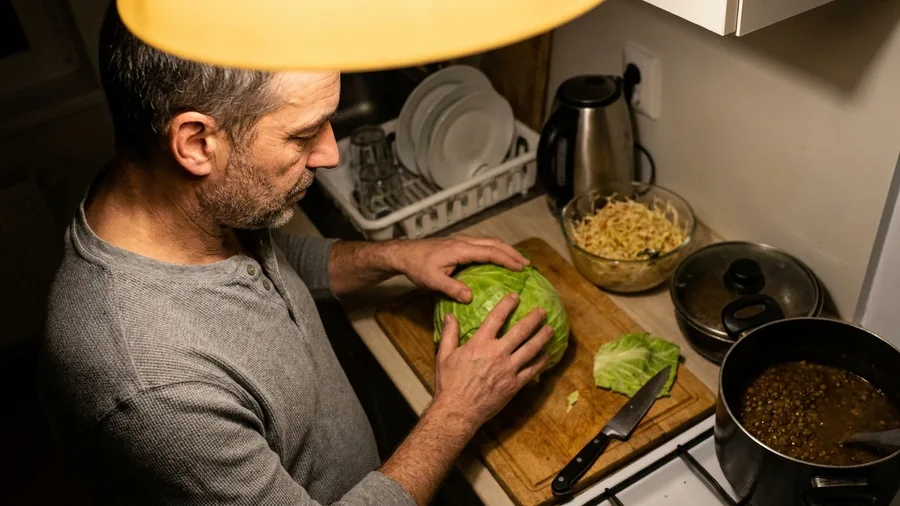
A head of cabbage runs $1-$2 and holds in the crisper for several weeks, which is why it ends up in more meals than the spinach bag beside it ever does.
Frozen peas stay edible for months in the freezer, and cabbage is the fresh vegetable with the same kind of patience. The spinach bought for the same $2 is a race against Thursday; a cabbage waits, and the only thing it asks is a cool drawer.
Raw and cooked come from the same head. Shredded with vinegar and oil it is slaw; sliced thin it is a salad with whatever dressing is in the door; cut into wedges and roasted it edges a sheet pan; stirred into soup it quietly becomes the bulk.
The quantity is what makes it useful to a small kitchen. One head shreds into slaw for a week of lunches and still leaves enough to fill a pot, and that pot is how half a pound of beans or a cup of dried lentils reaches four plates instead of two.
Outer leaves and the core do not go in the bin. They go into the stock pot, especially the pot that gets started after a whole chicken has been roasted and picked, and they give that stock body it would not have without them.
11. Onions for Cheap Flavor in Everything
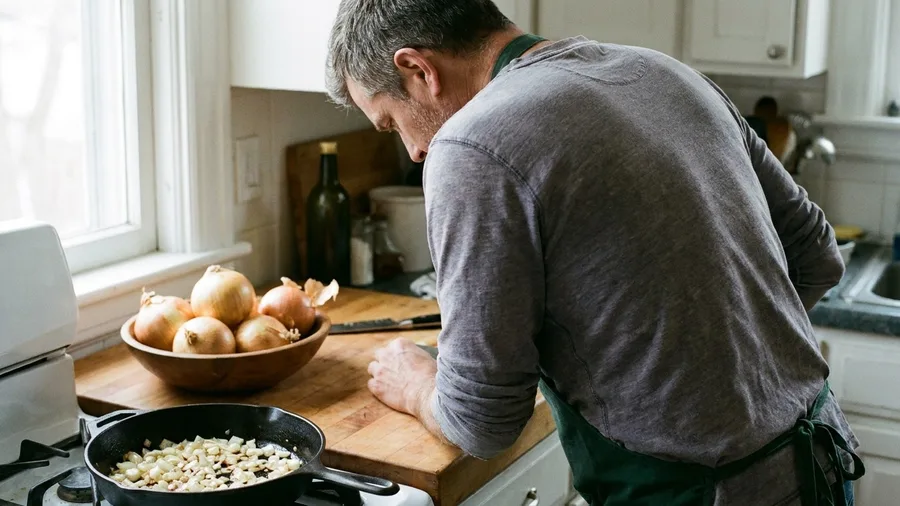
Onions cost $1-$1.50 a pound, so a single onion is pennies, and it is the cheapest thing in the store that changes the taste of a pot.
Cabbage and carrots make a meal big. Onions make it smell like something is cooking, and that aroma is what separates a bowl of beans and rice from a bowl of beans and rice you want to eat. No other penny ingredient does that much work.
They start nearly every pot a cheap kitchen runs: the soup, the beans, the rice, the pan of eggs, the tray the chicken roasts on. Dice one and the pan has a base before anything else goes in.
Keep them cool, dry and dark, and keep them away from the potatoes. Together they make each other sprout, and a bag of onions that sprouted in the pantry is money spent on nothing.
Loose by the piece beats the 3-pound bag for a one-person kitchen. A month later the bag is soft necks and a bin-cleaning job, while three onions bought individually cost the same and get used before they go.
Lentils at a Glance
⏱️ Cook Time
20-25 minutes, no soak
💰 Cost
$1.50-$2 per pound
🥣 Best For
Soup, dal, rice bowls
🧊 Storage
1-2 years airtight
⚠️ Skip If
You dislike soft texture — try brown lentils
Why It Works
Red lentils break down and thicken; brown lentils hold their shape — two jobs from one bag.
12. Carrots That Add Bulk and Sweetness
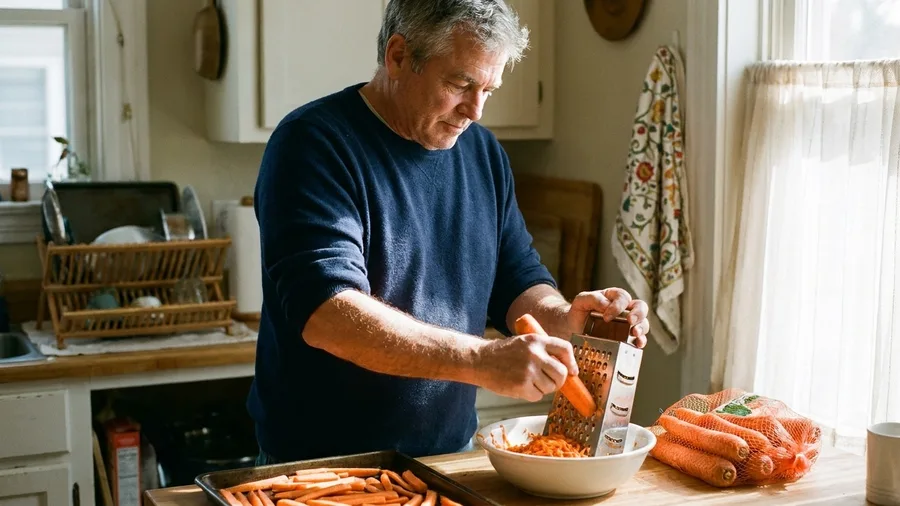
A 2-pound bag of carrots costs $1.50-$2 and holds in the crisper for weeks, which is longer than any bunch of greens bought for the same money will last.
Onions give a pot its flavor. Carrots give it body and sweetness, and unlike a bag of leafy greens they are still firm when you reach for them a couple of weeks after the trip.
Three jobs from one bag: roasted on the tray beside a chicken, grated into slaw with the cabbage, diced into soup with lentils. The same vegetable, three textures, one purchase.
The sweetness is free. Carrots dropped into a tomato pasta sauce or a bean pot round off the acidity of the tomatoes and the sharpness of the beans without a spoonful of sugar added at the end.
Limp carrots still keep their place. They go into stock, or they get grated into muffins with oats and a little pantry sugar, which is a better end than the bin.
13. Sweet Potatoes for Filling Sides
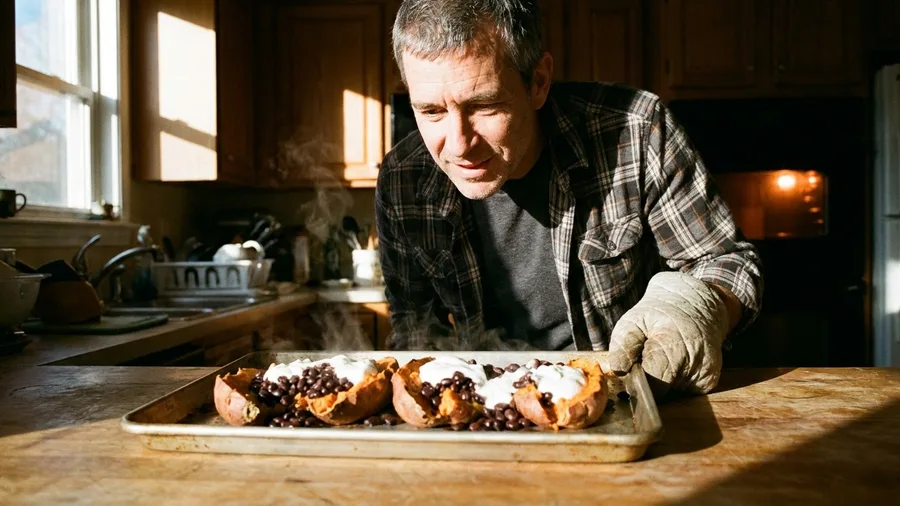
Carrots stretch a soup or fill out a roasting tray. Sweet potatoes go one step further and become the side that eats like the main event, and the work of getting them there is mostly oven time you were already spending.
$1 to $1.50 a pound, and the timing is the tell: 40 to 50 minutes baked whole, 25 to 30 minutes cubed and roasted. That makes them the longest-timed vegetable on this list, so they go into the oven first and everything else gets built around them.
A whole baked one, split and topped with beans, a fried egg or a plain spoon of yogurt, is a full meal for $0.40 to $0.90. That is the number that matters here. It is not a side dish pretending to be dinner; it clears the same cost-per-serving bar as a bowl of oats.
Cut into cubes, they share a sheet pan with the carrots and the onion while a 4 to 5 pound chicken runs its 60 to 75 minutes. One oven, one hour, and the plates come out full on the night the big purchase gets cooked.
Buy firm, unbruised roots with no soft spots at the ends. Store them dry and cool but never in the fridge. Cold turns the flesh hard and oddly sweet, and a good sweet potato roasted at 425 degrees should caramelize at the edges, not taste like it came out of a chill cabinet.
💡 Tip: Bake a few at once on Sunday — they reheat well and turn into a fast dinner with beans or an egg on top.
Cheap Staples: Common Mistakes and Fixes
14. Whole Chicken for Multiple Meals
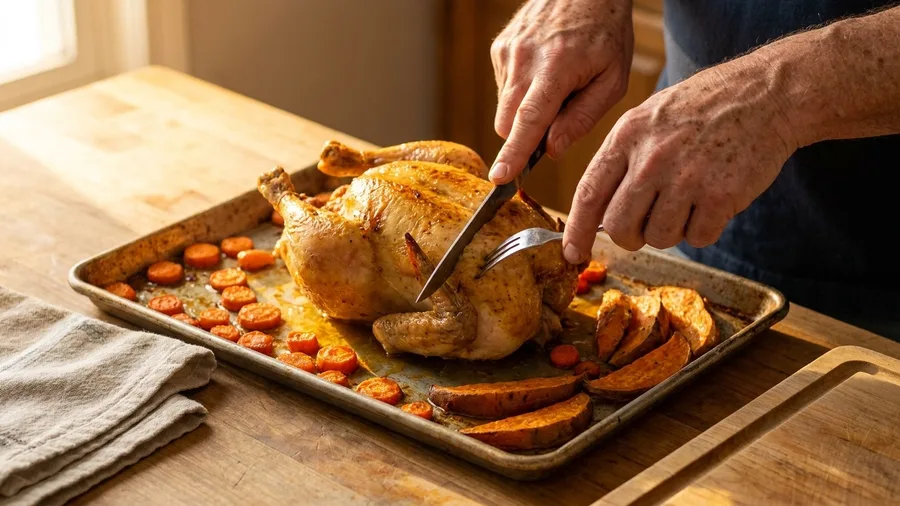
Roasted roots and a big pot of beans will cover a table, but nothing on the shelf turns one payment into several nights of meat plus a pot of stock. The whole bird does, and it is the largest single line on this list.
Priced per pound, a whole chicken runs $1.50-$2, and the cut pieces sitting a shelf over usually run higher for the same meat pulled off the same carcass. A 4-5 pound bird is the size to look for. That is four people at the table and meat left over when the plates are cleared.
The oven does the work: 60-75 minutes at heat, and the bird comes out with the skin pulling tight and the juices running clear at the thigh. Night one is carved chicken on a plate, the tray already crowded with carrot coins and sweet potato wedges from the produce you bought.
Night two needs no recipe, just a knife: strip the picked meat into a bowl of rice, or toss it through pasta, or lay it over greens with a spoon of dressing. Keep going with the fingers until the bird is clean, because that meat is meals you already paid for.
Then the frame goes into the stock pot whole, covered with water, along with the onion ends, the carrot peels and the outer cabbage leaves you trimmed earlier and bagged instead of binned. It simmers unattended, and the stock costs nothing beyond the heat.
The lower per-pound price is paid in oven time, which is the honest trade: an hour when you have it, and not when you do not. Cutting the bird into parts or spatchcocking it pulls that 60-75 minutes down to under an hour, which is a different weeknight.
🍗 A Week of Dinners From One Chicken
Roast the bird
375°F, breast up, on a tray with room for the roots. Pull when the thigh reads 175°F, not 165°F.
Night one: carved chicken
Carve only what you will eat. Cutting the whole breast now dries the leftovers that go into night two.
Pick the meat
Cool the bird 15 minutes, then pick it warm while it still gives. Cold chicken fights the fingers and you leave meat behind.
Night two: rice bowls
Reheat picked meat in the rice pot's last minute, not the microwave, or it toughens. Two cups cooked rice stretches the last cup of meat to four bowls.
Simmer the stock
Barely a bubble, lid ajar. A hard boil clouds it and the fat never lifts off clean. Cool, then skim the fat cap before you freeze.
Freeze what you won't use
Freeze stock in ice cube trays, then bag the cubes. Each one seasons a single bowl; a quart bag is a pot of soup you did not shop for.
15. Store-Brand Pasta as a Cheap Blanket
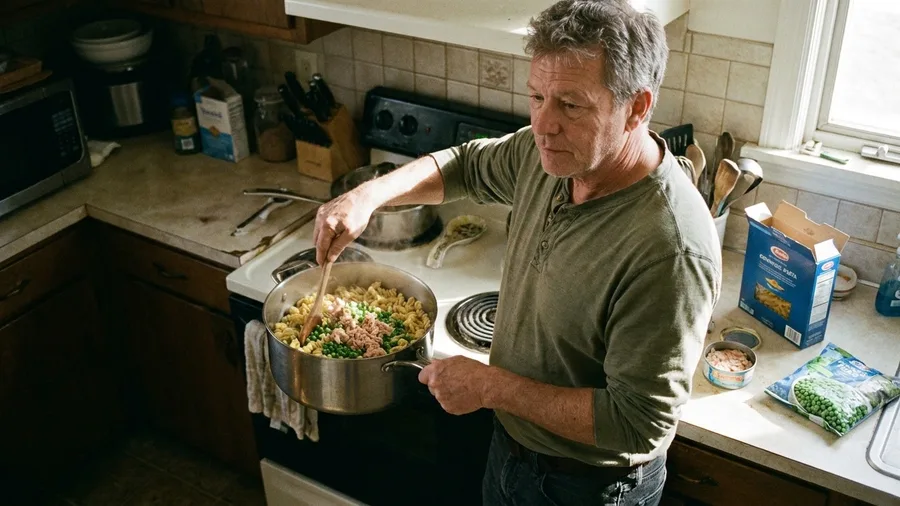
The chicken is the biggest bill on this list. The plain box at the bottom of the pasta aisle is the smallest, and it is the one that still makes dinner on a night when none of the rest got started.
One pound of store-brand shapes costs $1-$1.50, and those shapes are tender in 8-10 minutes of boiling water. Only eggs come together faster, which is why this is the fallback rather than a project.
What you stir in follows what is already there: a can of tuna and a handful of frozen peas, or beans softened with a chopped onion in a hot pan, or a jar of tomato sauce with a spoon of plain yogurt pulled through at the end for body. The pound is the base, not the dish.
A $3 specialty cut on the top shelf cooks in the same water in the same minutes as the $1 box. The shape is not the meal. The difference in price buys a two-pound bag of carrots and a can of tuna, which is dinner.
The watch-out is the pot itself: pasta alone is the cheapest meal you can make and the least filling, and a serving only lands in the $0.40-$0.90 band if beans, tuna, egg or peas go in with it. The noodles are a blanket for what is in the kitchen, not the whole meal.
Frequently Asked Questions
How much does a week of these staples cost?
A basket of all fifteen items runs about $45-$55 for one person and $90-$110 for a household of four, using typical US supermarket prices. Store brands usually land at the low end of each range.
Which staples last the longest?
Dried beans and brown rice keep 1-2 years airtight in the cupboard. Frozen peas hold 10-12 months in the freezer. Cabbage and carrots last several weeks in the fridge. Eggs hold 3-5 weeks refrigerated.
Is it cheaper to buy dried beans or canned?
Dried beans at $1.50-$2 per pound give four to five meals and cost less per serving. Canned beans cost more but skip the overnight soak and the 40-50 minutes of simmering — one can in the cupboard is worth keeping as backup.
What is the cheapest protein on this list?
Eggs. At $3-$4 per dozen, a two-egg serving lands around 50-67 cents, the low end of the $0.40-$0.90 typical single-serving band. Dried beans and lentils are close behind on cost per serving.
How do I keep produce from spoiling before I use it?
Buy cabbage, carrots and onions, which keep for weeks. Skip the 3-pound onion bag if you cook for one. Store sweet potatoes dry and never in the fridge, and keep onions away from potatoes so neither sprouts.
Can I freeze the whole chicken after roasting?
Yes. Pull the meat off the bones, portion it, and freeze what you won't eat within 3 days. The bones go into a pot with onion, carrot and cabbage leaves for stock, which also freezes well.
Before You Close the Tab, Add Three Staples
The repeat buys are the ones that pass both tests together: cheapest per serving and still edible at the end of the week. Built only from these fifteen, a basket prices at $45 to $55 for one person and $90 to $110 for a household of four.
For one, start with eggs, lentils, oats, brown rice, frozen peas, onions, carrots, peanut butter and store-brand pasta. For four, add dried beans, the 4 to 5 pound chicken, cabbage, sweet potatoes, a 32-ounce yogurt tub and a couple of tuna cans.
Back at the shelf, the decision is never the price on the tag. It is the unit price underneath it, the same test this whole list has been running. Buy the store brands and compare unit price on the five staples you will actually use this week. Five items, one trip, and the rest of the list follows.
Start with the five you'll cook this week
Pick the staples from this list you will actually use in the next seven days, compare unit prices on the store-brand versions, and build your basket from there.