
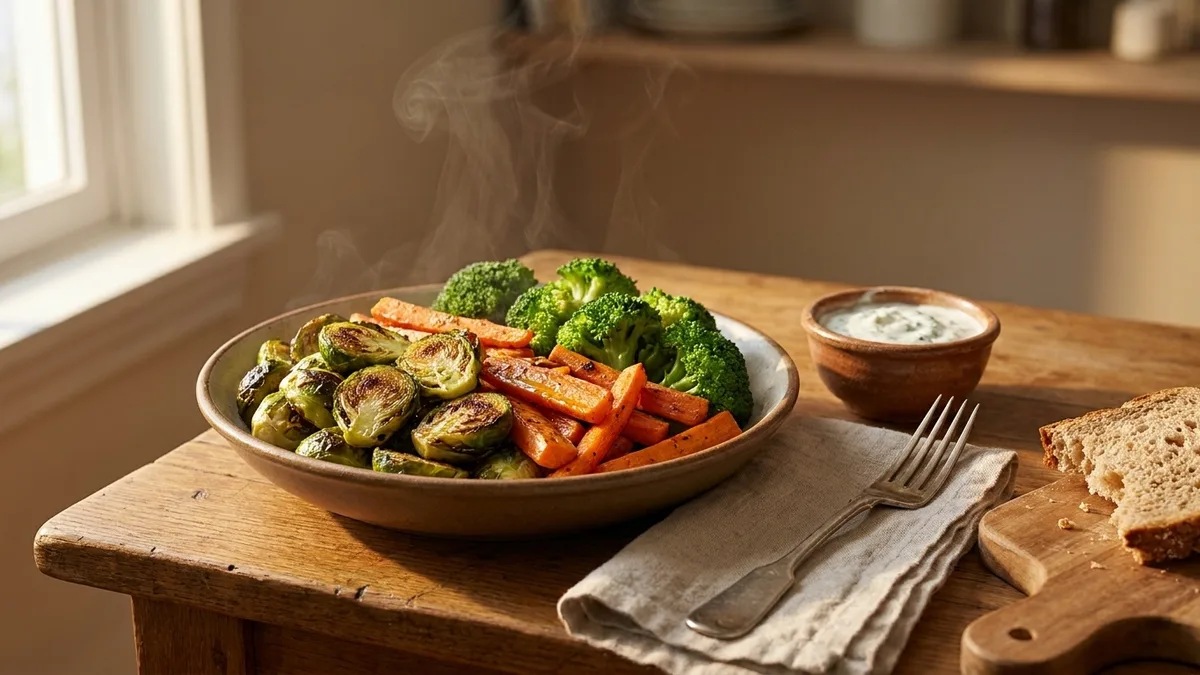
The honest timeline is shorter than the lecture you are bracing for: one shopping trip and about two minutes at the stove. The hard part was never the cooking.
Better eating after 60 gets framed as a fresh-produce overhaul, but a $1.99 ten-ounce box of frozen spinach sits in the freezer for months while a bag of fresh greens can wilt before anyone gets to it.
So the useful question is not which vegetable is most virtuous. It is which barrier it removes: washing and chopping, tough chewing, or a plan that spoils by Tuesday. Texture belongs on that list too, and steaming, roasting until soft, mashing, and choosing frozen or canned versions make chewing easier without costing flavor.
What follows is a short list built to fit the routine already in place, with servings that look like 1 cup raw leafy greens or 1/2 cup cooked vegetables on the plate, not a prescription. Pick one vegetable and one first step this week. If you take a blood thinner, the greens and beets on this list are worth a question for your clinician before they become a daily habit.
Quick Tips Before You Start
Frozen is not a compromise
Frozen spinach, asparagus, and pepper strips are picked and frozen at peak ripeness, so they often hold more nutrients than tired fresh produce in January.
Know what a serving looks like
One cup raw leafy greens or half a cup cooked vegetables is about the size of your cupped hand—use that as your visual anchor, not a scale.
Buy pre-cut when it means you will actually cook
Pre-sliced mushrooms and bagged shredded cabbage cost a little more, but if the knife work is what stops you, the convenience is worth the dollar.
Check your medication list
Leafy greens and beets are high in vitamin K. If you take a blood thinner, ask your clinician about consistent intake rather than cutting these out completely.
1. Frozen Chopped Spinach for Soup
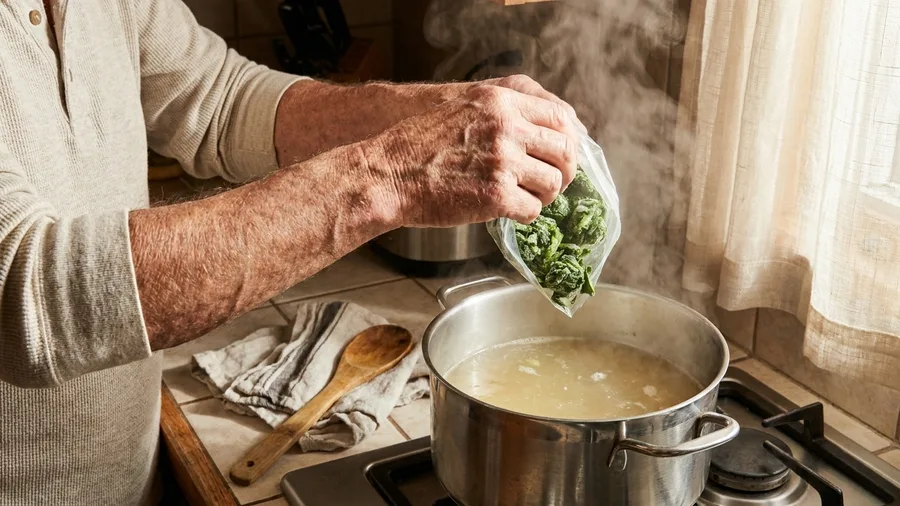
The cheapest leafy green is also the one you cannot waste. A 10-oz box of frozen chopped spinach runs about $1.99, and it sits in the freezer for months without turning on you.
That is the whole argument. Fresh greens are a deadline; this is a supply.
There is no washing and no chopping. A handful goes into soup, scrambled eggs, or pasta straight from frozen during the last two minutes of cooking, and sauteed spinach is done in 2 minutes.
Texture is where frozen spinach quietly wins for anyone past 60 who finds raw greens tough to chew. It is already soft, and a serving is 1/2 cup cooked, roughly the size of half a tennis ball on the plate.
You get the benefit of greens without buying a bag, watching it wilt, and throwing half of it away. Finish it with lemon and a drizzle of olive oil and it tastes like something you meant to make.
One caveat worth a phone call: leafy greens are high in vitamin K, so if you take a blood thinner, ask your clinician before making them a daily habit.
💡 Tip: Leafy greens are high in vitamin K. If you take a blood thinner, ask your clinician about keeping your intake steady rather than skipping greens altogether.
| Vegetable | Typical US price | Serving | Easiest cooking method | Best for |
|---|---|---|---|---|
| Frozen chopped spinach | $1.99 / 10 oz | 1/2 cup cooked | Stir into soup frozen | No-prep greens |
| Baby kale | $2.29 / bunch | 1 cup raw | Massage with oil and lemon | Raw salads |
| Steam-in-bag broccoli | $2.49 / lb | 1/2 cup cooked | Microwave 4–5 min | Five-minute side |
| Brussels sprouts | $3.99 / lb | 1/2 cup cooked | Roast halved at 400°F, 20–25 min | Soft centers, crisp edges |
| Sweet potato | $1.29 / lb | 1 cup cooked | Microwave 5–7 min | Hot lunch |
| Carrots | $1.49 / lb whole; $2.99 / lb pre-cut | 1 cup raw | Raw with dip or steam 3–4 min | Crunchy snacking |
| Pre-cooked beets | $2.99 / bunch raw; $3.49 / 8 oz cooked | 1/2 cup cooked | Slice from pack into salad | Zero-cook color |
| Bell peppers | $1.50 each; $2.99 / 12 oz frozen | 1/2 cup cooked | Saute strips 3 min | Breakfast vegetables |
| Canned diced tomatoes | $1.29 / 15 oz; $1.49 no-salt-added | 1/2 cup cooked | Simmer into sauce or eggs | Pantry backup |
| Sliced mushrooms | $3.49 / 8 oz | 1/2 cup cooked | Saute 5 min | Savory flavor |
| Cabbage | $1.19 / lb; $2.49 / 10 oz shredded | 1 cup raw | Toss with vinegar and oil | Make-ahead crunch |
| Frozen asparagus | $4.99 / lb fresh; $2.99 / 12 oz frozen | 1/2 cup cooked | Roast from frozen at 425°F, 12–15 min | Off-season greens |
2. Baby Kale That Tenderizes Fast
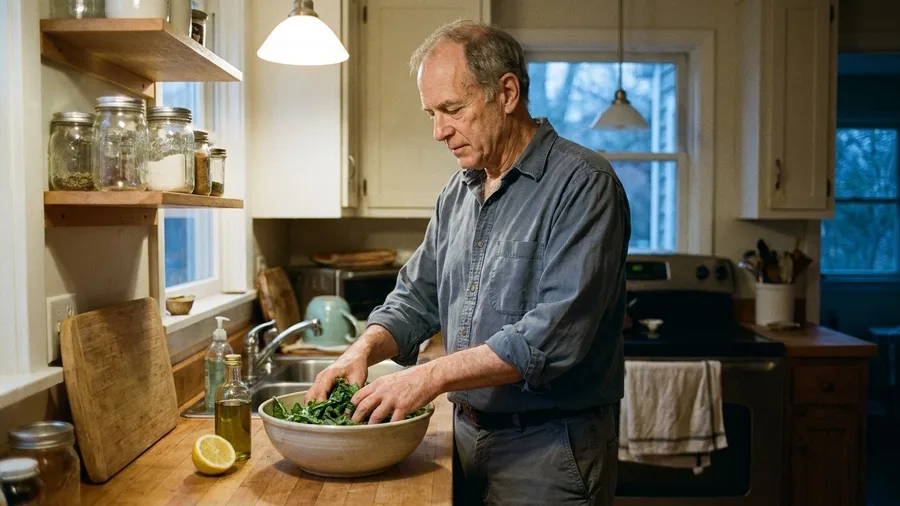
A raw salad green can be tender enough to eat without cooking, as long as you buy the right one and spend a minute on it. Baby kale is that green. It costs about $2.29 a bunch or bag, and a serving is 1 cup raw.
Curly kale is the reason people think kale is a chore. If chewing is any kind of issue, skip it and reach for the baby leaves, which are milder and softer than mature kale.
Here is the step that changes the texture. Drizzle the leaves with olive oil and lemon, then massage them for 1 minute until they soften and shrink in your hands, and a warm dressing will wilt them even faster.
What you end up with is a raw salad green softer than cabbage or mature kale, without a stove involved.
As with any leafy green, the vitamin K content is high, so if you take a blood thinner, ask your clinician rather than guessing at a limit.
3. Steam-in-Bag Broccoli Florets
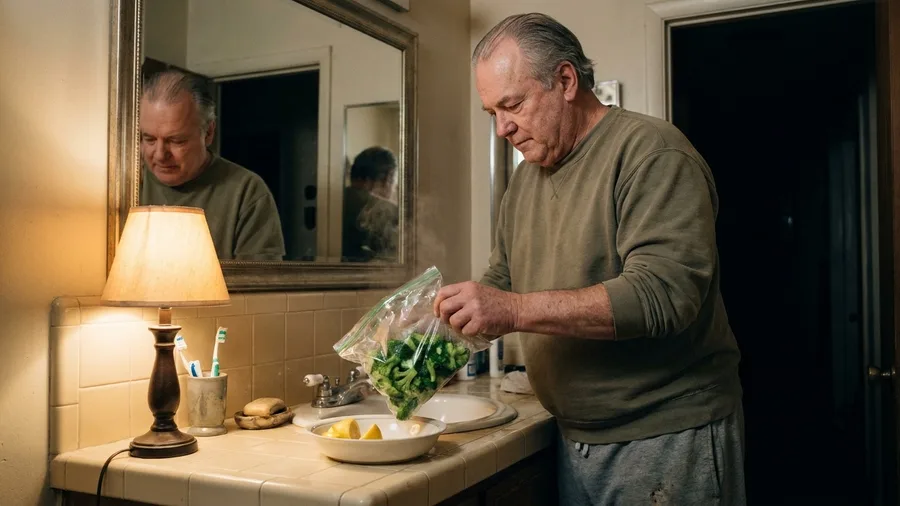
A green vegetable does not need a pot, a colander, or a stove. Steam-in-bag broccoli florets answer the next obstacle after softening raw greens by hand: getting something hot and green onto the plate without standing over a burner.
The bag runs $2.49 a pound, and a serving is 1/2 cup cooked – about the size of a closed fist, or four or five florets on the plate.
The whole bag goes in the microwave as it is, straight from the store, for 4 to 5 minutes. Then open a corner and check one floret with a fork; if it still resists, give it another 30 seconds and check again.
Nothing needs draining or watching, and there is no pot to scrub afterward. The bag does the work while you set the table or pull something else out of the fridge.
Flavor comes after: a squeeze of lemon and a pinch of salt, or a glug of olive oil and a shower of parmesan tossed through while the florets are still hot enough to melt it.
This suits the low-effort cook who wants a green vegetable on the plate in under five minutes – the nights when dinner is a rotisserie chicken and nothing else green is happening.
💡 Tip: Microwave times vary by wattage. Start with four minutes, then add 30-second bursts until the thickest stem piece pierces easily with a fork.
Steam-in-Bag Broccoli — At a Glance
🦵 Best for
Sore hands, weak grip, no pot to lift
⚠️ Watch the clock
Past 5 1/2 minutes it goes olive-drab and sulfurous
🚫 Skip if
Bag puffs up hard or smells off before cooking
💰 Cheaper route
Loose crowns at $2.49/lb, steam 4-5 min yourself
🍗 Pairs with
Rotisserie chicken, canned tuna, leftover rice
The one cue
Pierce the film once before it goes in, or the bag can balloon and split.
4. Roasted Brussels Sprouts, Halved
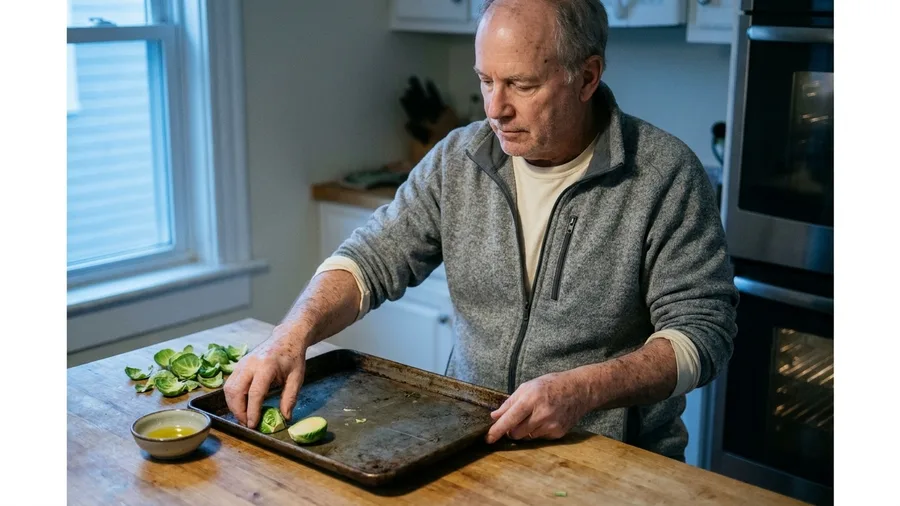
Brussels sprouts earn their bad reputation honestly. Boil them and you get soft, sulfurous, waterlogged little cabbages that nobody wants twice.
Roasted, they come out tender in the middle with crisp, browned edges.
The catch most people miss is the cut. Halve each sprout lengthwise, toss the halves with oil and salt, and lay them flat-side down on the sheet pan at 400°F for 20 to 25 minutes. That flat face is doing the work: the centers steam gently as the cut side caramelizes, so the middle goes soft while the outside crisps. Skip the cut and you get sprouts that are charred on the leaves and hard at the core.
At $3.99 a pound, a 1/2-cup cooked serving costs well under a dollar.
This is the entry for anyone who has only ever had them boiled. The flavor is sweeter and nuttier than the boiled version, and garlic and parmesan stirred in at the end make a finish simple enough to repeat on a weeknight. If chewing is the concern, roast a few minutes longer until the centers give under a fork.
💡 PRO TIP
The cut-side-down rule
Place Brussels sprouts cut-side down and do not crowd the pan. The flat surface against the hot metal is what gives you the browned, crisp edge that makes them taste roasted rather than steamed. Leave space between them so they brown instead of sweat.
5. Microwave Sweet Potato for Lunch
Side dishes get solved by the oven. A midday meal is a different problem, because it has to hold you until dinner with nothing else on the plate.
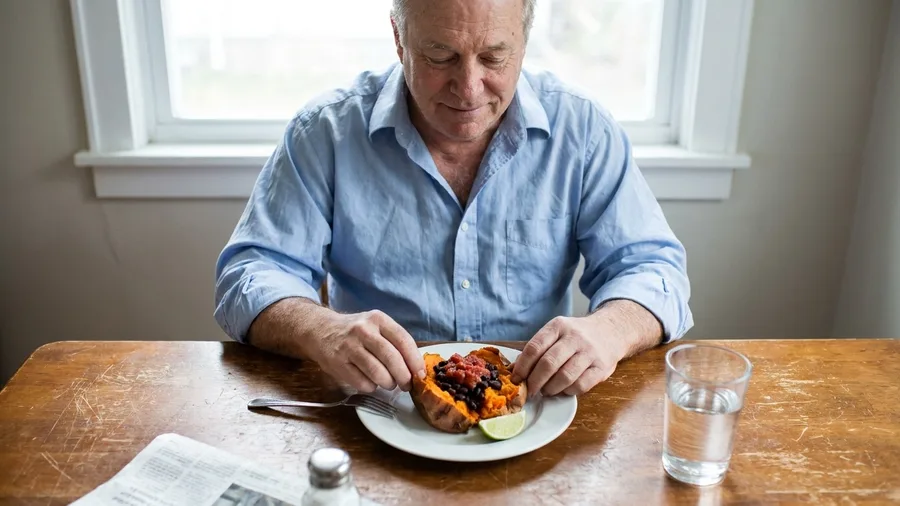
A sweet potato does that. It runs $1.29 a pound at most supermarkets, and one medium potato comes out to roughly 1 cup cooked – enough to be the whole lunch rather than a garnish.
The method is the entire reason it works for a weekday. Pierce the skin a few times with a fork, microwave 5 to 7 minutes, then split it open and top it.
Set the microwave for 5 minutes and test it with a knife; a thicker potato may want the extra 2. No pot, no oven to heat up, no attention required while it cooks.
Black beans and salsa make it savory. Greek yogurt and cinnamon make it creamy and slightly sweet. Butter and salt is the simplest version, and cinnamon with butter splits the difference.
Your teeth meet almost no resistance, which matters if raw or crusty food has gotten harder to manage – the flesh is already soft enough to mash against the roof of your mouth.
This one suits anyone who wants something hot and filling at noon without assembling a meal. It is a lunch, not a side, and it comes out of the microwave ready to eat.
💡 Tip: Microwave times vary by wattage. Start with five minutes, then add 30-second bursts until the potato gives when pressed with a fork.
Fresh vs. Frozen: What to Grab
Worth buying fresh
- Baby kale for raw salads—it massages down in a minute
- Brussels sprouts you plan to roast this week
- Bell peppers for a quick breakfast saute
- Carrots whole, if you will snack on them
Worth buying frozen
- Spinach you will stir into soup or eggs
- Asparagus in winter, when fresh is woody and expensive
- Bell pepper strips when chopping is the barrier
- Broccoli florets in a steam-in-bag
6. Carrot Sticks That Stay Crunchy
The stretch between lunch and dinner is where good intentions usually fail, because it asks for something you can eat with your hands and no heat at all.
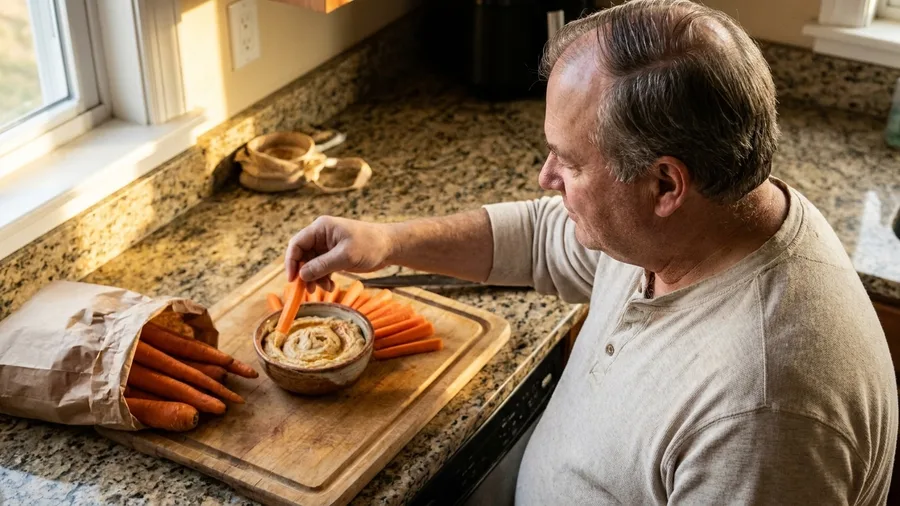
Carrots answer that. A whole pound costs about $1.49 at the supermarket; the pre-cut sticks in the produce case are roughly double, around $2.99 a pound, and you are paying for the knife work you no longer have to do.
The real serving is bigger than people expect – 1 cup raw, which is a generous handful, not three lonely sticks beside a sandwich. Set out hummus and the whole thing needs no cooking from start to finish.
Texture is the one place this vegetable can trip you up. If raw carrots feel like too much work for your jaw, steam the sticks 3 to 4 minutes – just until they bend when you lift one – and they stay sweet but give way easily.
For grazers, and for anyone who reaches for chips mostly because they want the crunch, a bowl of these within arm's reach does the same job with dip already on the plate.
Where the Money and Effort Go
Based on typical US supermarket prices, 2024–25.
7. Pre-Cooked Beets for Salads
Carrot sticks answer the crunchy, no-cook snack. The harder slot to fill is the sweet, soft vegetable that lands on a salad plate without the oven ever coming on, and cooked beets fill it.
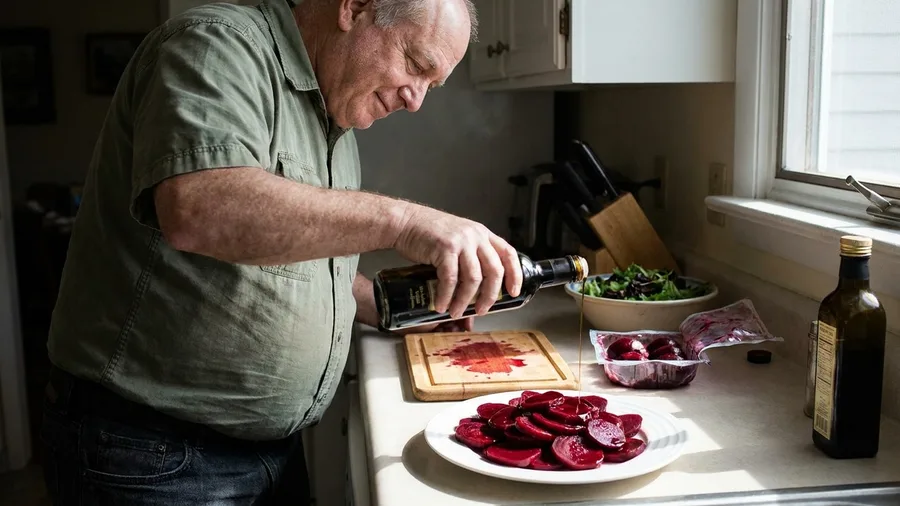
Raw beets run $2.99 a bunch. A cooked 8-oz pack sits at about $3.49, and a serving is 1/2 cup cooked, so one pack covers a few meals.
Slice or cube them straight from the pack, then dress with balsamic and olive oil. The sweet-tart pairing is what makes beets taste like a salad vegetable instead of a side dish.
The catch most beet recipes skip: peeling and roasting them takes close to an hour, and the cutting board comes out stained deep red. The cooked pack removes all three, so the beets get eaten instead of postponed until a free afternoon.
Beets are high in vitamin K, so if a blood thinner is part of the routine, ask a clinician before making them a regular.
What lands on the plate is soft enough to cut with a fork and sweet enough that it needs no selling, which matters on the nights when cooking has to be almost nothing.
8. Bell Pepper Strips for Egg Mornings
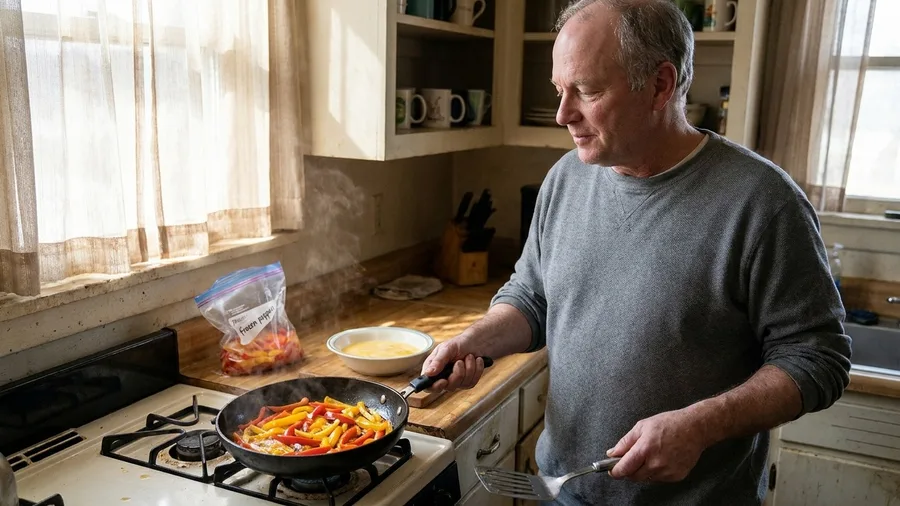
Breakfast is where vegetables quietly disappear. A soft salad vegetable can be bought already cooked, but at 7 a.m. the chopping board is often the thing that stops the whole idea, and peppers sidestep it.
Fresh bell peppers are about $1.50 each; frozen strips are $2.99 for 12 oz, and a serving is 1/2 cup cooked. The frozen bag matters because the strips are already cut and soften in the pan.
Heat a little oil, saute the strips for 3 minutes, then pour the eggs straight in or fold them into rice. Three minutes is the gap between a vegetable at breakfast and no vegetable at all.
Frozen strips go soft fast, so they chew far more easily than raw pepper and give the eggs a sweetness that needs no seasoning beyond salt.
If the chopping is what has been keeping vegetables off the morning plate, the bag in the freezer removes it, and breakfast stops being the meal that gets skipped.
💡 Tip: Frozen pepper strips can go straight into the pan. Do not thaw them first or they release water and steam instead of browning.
🥕 A Week of Vegetables in Four Steps
Shop the freezer
Add frozen spinach, frozen asparagus, and steam-in-bag broccoli to the cart.
Buy one fresh bunch
Choose baby kale or Brussels sprouts for the first three days of the week.
Prep one thing
Massage the kale or halve the Brussels sprouts the day you bring them home.
Cook from the pantry
Use canned tomatoes, pre-cooked beets, and mushrooms for the back half of the week.
9. Canned Diced Tomatoes for Everything
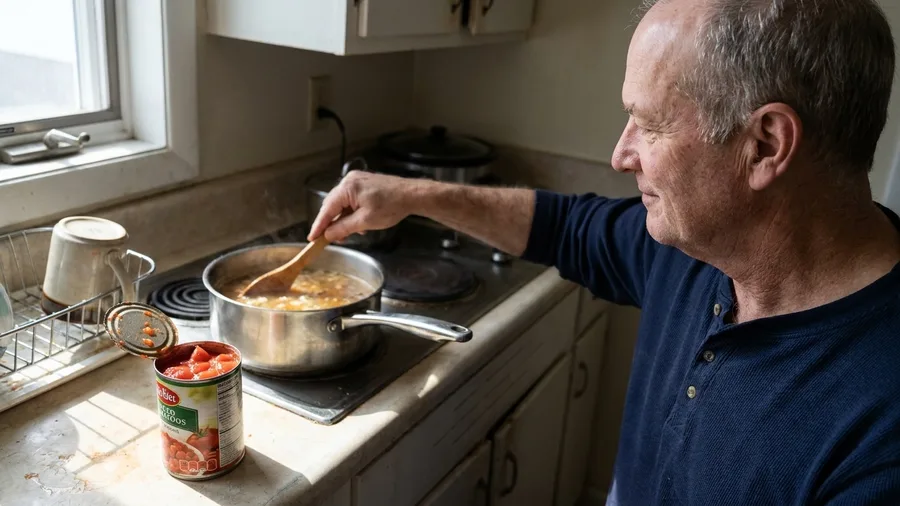
A pepper needs a three-minute saute. What the shelf needs is a vegetable that waits without spoiling, and canned diced tomatoes do exactly that.
A 15-oz can is $1.29, no-salt-added about $1.49, and a serving is 1/2 cup cooked. After opening, the can keeps in the fridge for 3 to 4 days, which fits cooking for one or two far better than a fresh tomato that softens on the counter.
Start a soup with it, simmer a pot of beans, or scramble a spoonful with eggs for a quick sauce. The can is the base rather than the side, so it gets used instead of admired.
That is the real test for a pantry vegetable: not whether it is good for you, but whether it is still there and still good when dinner is being decided at six o'clock.
For a household of one or two, a vegetable that will not spoil before it is used is the one that actually gets eaten.
10. Pre-Sliced Mushrooms for Quick Saute
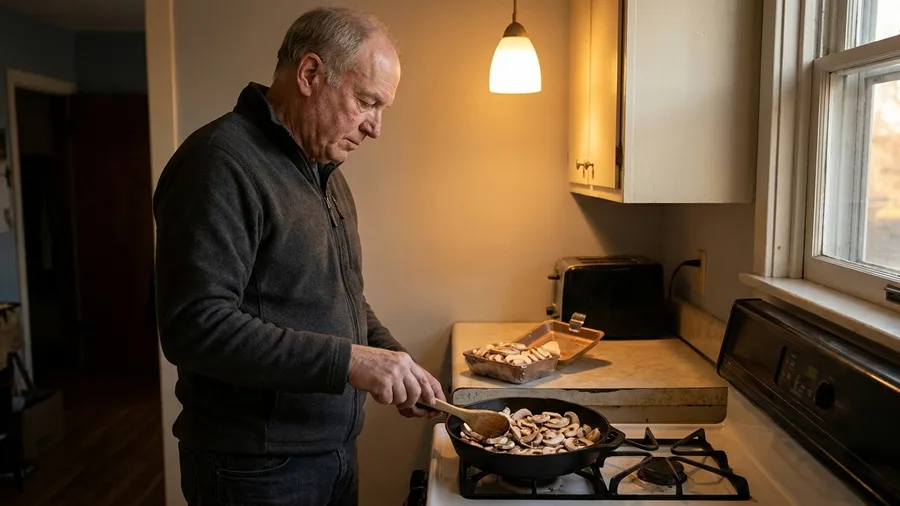
A can of diced tomatoes will carry a soup or a sauce, but it will not give you the deep, meaty savor that makes a dish taste finished. Mushrooms do, and the pre-sliced package means you get there in five minutes without picking up a knife.
An 8-oz package of pre-sliced mushrooms runs about $3.49, and a serving is 1/2 cup cooked. The slices are already uniform, so they brown evenly and there is no pile of stems and trimmings to deal with afterward.
Heat a little oil in a skillet over medium-high, add the mushrooms, and let them sit for 5 minutes until they are browned and softened. Resist the urge to stir constantly; mushrooms release water first and brown once it cooks off.
That browning is where the umami comes from, and it is the reason a small handful of mushrooms can make an omelet, a piece of toast, or a pot of rice taste like it had more in it than it did.
11. Bagged Shredded Cabbage for Slaw
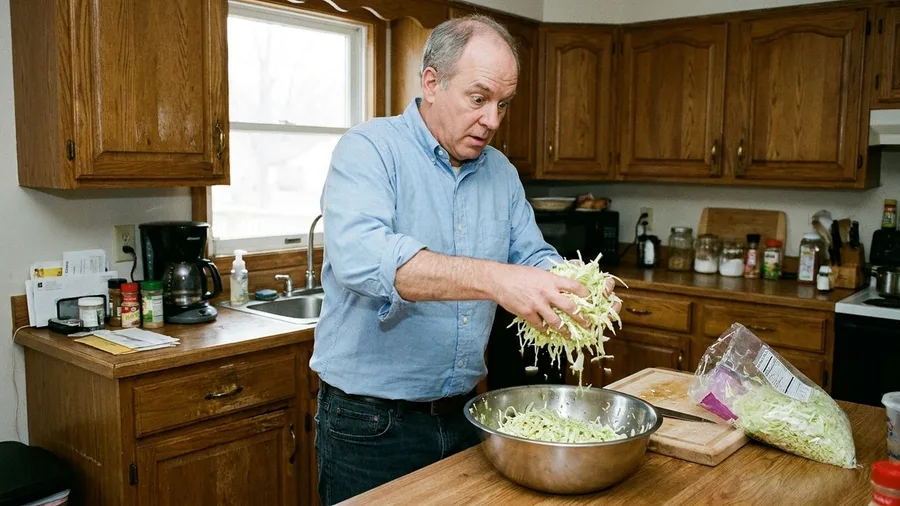
Mushrooms bring soft, savory depth, but some meals need a crunch, and the vegetable that delivers it also needs to survive several days in the fridge. A bag of shredded cabbage does both.
Whole cabbage is $1.19 a pound, and a 10-oz bag of shredded cabbage is about $2.49. The bag costs more per pound because the chopping is already done, and that is the trade most people over 60 are happy to make.
Toss the shreds with vinegar, oil, and salt. The cabbage softens just slightly and keeps its snap, which is the texture that makes slaw work alongside richer food.
The dressed slaw holds 3-4 days in the fridge, so it is a make-ahead vegetable you can pull out for lunch or a side without any last-minute work. That is the whole appeal for someone who wants crunch and does not want to chop.
12. Frozen Asparagus Spears, Roasted
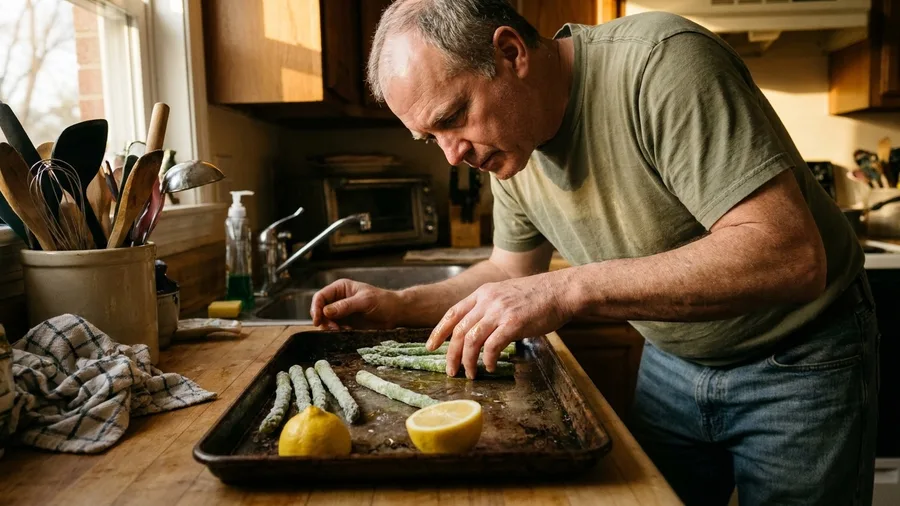
Crunch you can make ahead solves one problem, but the last barrier for a green vegetable is the season and the waste: fresh spears that look good in the store and turn soft in the drawer before you get to them. Frozen asparagus takes both out of the equation.
Fresh asparagus runs about $4.99 a pound when it is in season and good. Frozen is $2.99 for 12 oz, available all year, and a serving is 1/2 cup cooked.
Roast the spears straight from frozen at 425°F for 12-15 minutes, then finish with a squeeze of lemon. No trimming, no tough ends to snap off, no shopping around what is in season.
Frozen spears come out softer than fresh ones, and for anyone who finds the fresh stalks tough to chew, that is a feature rather than a flaw. It is a green vegetable for people who want one without the waste or the season to worry about.
Frequently Asked Questions
Do frozen vegetables lose nutrients compared with fresh?
Frozen vegetables are picked and frozen at peak ripeness, so they often hold similar or higher levels of some vitamins than fresh produce that has spent days in transit and in your fridge. The key is to cook them quickly—steam or roast—rather than boil them for a long time.
How do I know if a vegetable is too tough for me to chew?
Test it before you commit to a whole bag. Steam or roast a small batch until it pierces easily with a fork. If it still resists, cook it longer or choose a frozen or canned version, which is already softer. There is no rule that says a vegetable has to be crisp to count.
Are canned vegetables as good as fresh?
Canned tomatoes and beets are excellent choices because they are stable, affordable, and ready to use. Look for no-salt-added versions when you can, and rinse regular canned vegetables if you are watching sodium. They are not a compromise; they are a different tool.
What if I take a blood thinner?
Leafy greens like spinach, kale, and beets are high in vitamin K, which can interact with blood thinners such as warfarin. The usual guidance is to keep your intake consistent rather than avoid these vegetables. Ask your clinician or pharmacist how to fit them into your diet.
How many vegetables should I aim for each day?
Most general guidance suggests two to three cups of vegetables a day for adults, but the more useful target is to get a vegetable onto the plate at two meals. One cup raw leafy greens or half a cup cooked is a serving, so a handful of spinach in your eggs and a sweet potato at lunch gets you there.
The One Bag to Buy This Week
Start with the box of frozen chopped spinach. At $1.99 for 10 ounces it needs no washing and no chopping, and the single first step this week is a handful straight from frozen into soup or scrambled eggs in the last two minutes of cooking.
That is the same test the list applies from the start: the box in the freezer keeps for months, so nothing wilts and nothing gets thrown out. The first shopping trip that began this list can end with kitchen staples worth a second look, one step further down the aisle.
If a blood thinner is part of the routine, ask a clinician about leafy greens and beets rather than setting a limit alone. Then add one more, a sweet potato for lunch or steam-in-bag broccoli for dinner. One vegetable, one week, no new diet.
Start with the frozen spinach
Add one handful to soup or eggs this week and see how easy it is to keep a green vegetable on the plate. That single box is the habit.