

What do people in their 90s wish they had started earlier? Fourteen people between 90 and 98, living on their own or with part-time help, answered that directly, and what they said settles it.
Most of us assume reaching 90 with your independence intact is genes or luck, and that habit advice is vague comfort for people who already lost the draw. They describe it as the opposite: an accumulation of small decisions, most of them unremarkable at the time.
What they would start earlier is almost stubbornly unglamorous. Muscle kept before the chair got hard to rise from. A standing call on the calendar before the friendship thinned. One drawer a week before the house became a job for someone else.
None of these is bigger than a day you already have. Each has a five-minute version, and the regret they describe is never the size of the change. It is the decade spent not starting it.
By the end, you will have picked one by your own situation: under 60, over 70, or drowning in stuff, started this week on today's most reliable cue.
Quick Tips Before You Start
Five minutes first
Pick the smallest version of a habit and do that for two full weeks before adding a single minute.
Attach it to a cue
Tie the habit to something you already do daily: before coffee, after breakfast, the day after payday.
One, not eleven
Choose a single habit from the list. Attempting all of them at once is how the whole project dies in week three.
Check the joints first
If a knee, hip or heart condition is already complaining, get it looked at before you add load or balance drills.
Two weeks before judging
Give any habit fourteen days at the same cue before you decide whether it works. Most feel pointless on day four.
Start With the Body
Body first, because it is the least recoverable. Muscle, balance and sleep rhythm all erode so gradually through your fifties and sixties that you never notice the loss until a chair, a grocery bag or a stair becomes the test. These four habits came up in nearly every conversation in the group, and they came up in the same order of regret.
None of them needs a gym membership. A chair, a wall, two grocery bags and a pair of shoes by the door cover all of it, which is roughly the point: the barriers people remember were never equipment or money. They were the decade spent waiting for a better moment to begin.
1. Strength Work Buys Independence Later

Ask the people who kept living on their own into their nineties what they would fix first, and the answer is muscle. Not for looks. For the ordinary test they failed without noticing it coming.
It goes quietly. Through your fifties and sixties you lose strength slowly enough that nothing announces it, and then one afternoon a low chair in a waiting room is a problem. Or a bag of groceries turns into a two-trip job. Or the stairs at a friend's house make you look for the railing.
That moment is the discovery. The loss took twenty years; the test takes ten seconds.
The fix in the example is smaller than the fear. Two sessions a week, twenty minutes each, using a chair, a wall and two grocery bags filled with whatever is heavy. No membership, no machine, nothing to buy.
What you are buying is not visible. It is carrying the groceries in one trip, standing up from the couch without pushing off the arms, taking the stairs at the same pace you did five years ago. A little muscle showing is a side effect, and a minor one.
The five-minute version is five chair stands before your morning coffee. Stand, sit, stand again, hands crossed on your chest if you can manage it without the arms. Same cue every day, and two full weeks before you add a single rep. Your legs will let you know the second day; that is normal.
One honest limit: this is the habit that fits worst when your joints are already complaining. If a knee, a hip or a heart condition is in play, get a clinician's view before you add load. That is a week's delay, not a reason to skip the decade.
💡 Tip: Fill the grocery bags 60-40 so you can carry one in each hand and walk a straight line across the kitchen floor.
Two Strength Sessions a Week — At a Glance
⏱️ Session Length
20 minutes
📅 Frequency
Twice weekly, a day apart
🪑 Equipment
Chair, wall, two grocery bags
💪 Targets
Legs, hips, grip, sitting and standing
📈 Noticeable In
4–6 weeks
⚠️ Check First
Active knee, hip or heart trouble
Why It Works
Loading a muscle twice a week signals your body to keep the tissue it already has, which is the whole game after 50.
2. A Daily Walk Beats a Heroic Workout

Gym, no membership, no new pair of shoes to buy first. Walking needs almost nothing to continue once it is routine, and it is the first thing to vanish when it isn't. What the people in their 90s describe is not a heroic mileage habit that ended in an injury, but a routine that quietly stopped being automatic years before it stopped being possible.
The moment it becomes a test is small and unlovely. The two-block errand to the corner shop, once a default, now needs thinking about. The knee you notice on the downhill. The thought of whether you'll need to sit down halfway. None of it arrives with a date on the calendar, which is why the routine disappears without anyone noticing it going.
The dose they describe is a 10-minute walk after a meal, stretched toward 20 or 30 minutes over time. No special gear, no app, no membership, no destination required. The meal is the cue, not motivation, which is why it holds on the days you don't feel like it.
That cue is the part that makes it a habit rather than an occasional decision. The dish goes in the sink, the shoes go on, and the loop happens before your own reluctance gets a vote. In their telling, the walk is the one thing on the whole list you can start before lunch with no preparation at all.
Consistency outruns pace, and it also outruns the number on your phone's step counter. The 10,000-step target is a marketing figure, not a physiological threshold, and chasing it is how people go from zero to five miles in a weekend and quit in week three with sore everything.
A slow 10 minutes, repeated daily, will do more for your mobility than a hard session you abandon. Ten minutes done today, again tomorrow, and again next Monday is the whole method, and it is the one that survives a busy month.
💡 Tip: Walk the same loop in the same direction for two weeks so the route itself becomes the trigger and you stop deciding.
3. Balance Practice Prevents the Fall That Changes Everything

Walking keeps your legs moving, but it trains no balance reflex at all. The event that turns independent living into part-time help almost never happens on a flat loop. It happens on a stair, a curb, a wet bathroom tile.
In the example's account, balance work is aimed at the fall that has not happened yet, not the one already suffered. That timing is the whole point, and it is also why this habit gets skipped more than any other on the list.
Nothing hurts. There is no stiffness, no ache, no morning reminder. So no cue ever forms, and the exercise that would have caught you on the bottom step stays undone until after the fracture.
The dose is five minutes at the kitchen counter. Stand on one foot, hold the counter, hold for a slow count, switch sides. The counter is there because you will wobble, and wobbling while holding something solid is how the reflex gets built.
If a class suits you better than a counter, tai chi is the low-cost option; it is essentially the same work dressed as a room full of people moving slowly. Either way the purpose is confidence on stairs and uneven sidewalks, not standing on one leg for its own sake.
One honest limit: dizziness, a near-miss or a recent fall goes to a professional assessment first. Counter drills are not a substitute for a diagnosis, and the wrong cause left alone is worse than the fall itself.
Five minutes by the sink each morning while the kettle heats. The kettle is the cue. It costs nothing, and it is the difference between a decade of stairs taken without thinking and a decade of someone else carrying the laundry down them.
⚠️ COMMON MISTAKE
Do Not Test Your Balance on Stairs
Counter drills are the safe version precisely because you have something to grab. Practicing one-foot standing at a stair edge or on a step stool converts a five-minute habit into an injury. Keep every balance drill within arm's reach of a solid counter or wall, and never do it in socks on a tile floor.
4. A Fixed Wake Time Outlasts Sleep Supplements

Muscle, walking and balance all improve in the recovery window, not during the effort itself. That puts the night before the workout, and the thing most people in their 90s describe getting wrong for decades was never the mattress or the pill bottle. It was the rhythm.
Ask them about sleep and the story is a slow drift, not a crisis. Bedtimes slid later a few minutes at a time, naps stretched past an hour because the afternoon felt long, and mornings became whatever the body decided rather than something the clock set.
A fixed 7:00 a.m. wake time does more than any supplement aisle. Light is the anchor that sets the body clock, and the alarm is only the enforcement arm.
Ten minutes of daylight within an hour of getting up tells the brain the day has started. That signal, repeated daily, is what makes the evening drowsiness arrive on schedule instead of an hour or two late.
Naps are the variable to trim, not the wake time. If a long afternoon nap makes the night harder, keep it under 30 minutes and leave the 7:00 a.m. alarm where it is.
The five-minute version costs one alarm setting: same wake time for two weeks, weekends included. The weekend is where most attempts die, because Saturday lies to the body about what time it is.
Two weeks of a fixed wake time is not a cure for insomnia, and persistent sleep problems belong with a clinician who can look at causes. The habit here is the floor, not the treatment.
Where the Two Paths Diverge
Keep the Rhythm
- Daylight first, coffee second
- Catch-up sleep taken as a 20-minute early-afternoon nap, not a later alarm
- If a bad night happens, the alarm still goes off at 7:00 the next morning
- Expect 2-3 weeks before evenings feel drowsy on time
- One alarm setting is the whole cost
Chase the Quick Fix
- Phone in hand before feet on floor
- Sleeping until 9:00 on Saturday to repay the week
- A nap long enough to push tonight's bedtime back
- A new pill every few months, same drifting schedule underneath
- Bedtime moves 20 minutes later each week and nobody notices
Keep People and Curiosity Close
The next three habits cost nothing and are the easiest to postpone, because nothing breaks when you do. Friendships and curiosity thin through disuse rather than disaster. Nobody wakes up one morning friendless; they just decline a few invitations in a row, and the invitations slow.
In the group, the people still socially busy into their nineties had almost all built one small structure decades earlier: a standing call, a class, a yes said before hesitation wrote a reason. The structure did the work their willpower never could.
5. Weekly Contact Keeps Friendships From Fading

Friendships thin by the same mechanism as muscle: disuse, not age. The people who keep a wide circle into their 90s did not have more sociable natures. They had contact on the calendar before there was a reason to need it.
In the example, the fade was pure deferral. Weddings, holidays and crises were the only things that got scheduled, so those were the only times the calls happened, and the gaps between them quietly grew from months into years.
The fix is a standing 15-minute weekly call, same day, same time, and the reader makes the call, not the friend. Waiting for an invitation hands the calendar to someone else.
Fifteen minutes is chosen on purpose. It is short enough that nobody has to clean the house or prepare anything, long enough to be a real exchange rather than a check-in, and repeatable every single week without becoming a burden.
A short call beats a long overdue one. Two hours is the version that gets postponed for eight months; 15 minutes fits between errands on a Tuesday.
The five-minute version is one text: a recurring day and time offered to one person. The text is the habit, the call is what follows from it.
Pick the friend who comes to mind first and send it this week. The decade people regret is the one where they meant to call.
💡 Tip: Book the call for a time when you would both otherwise be doing chores — Sunday morning, Thursday after dinner — so it competes with nothing.
6. Learn Skills You Can Use, Not Brain Games
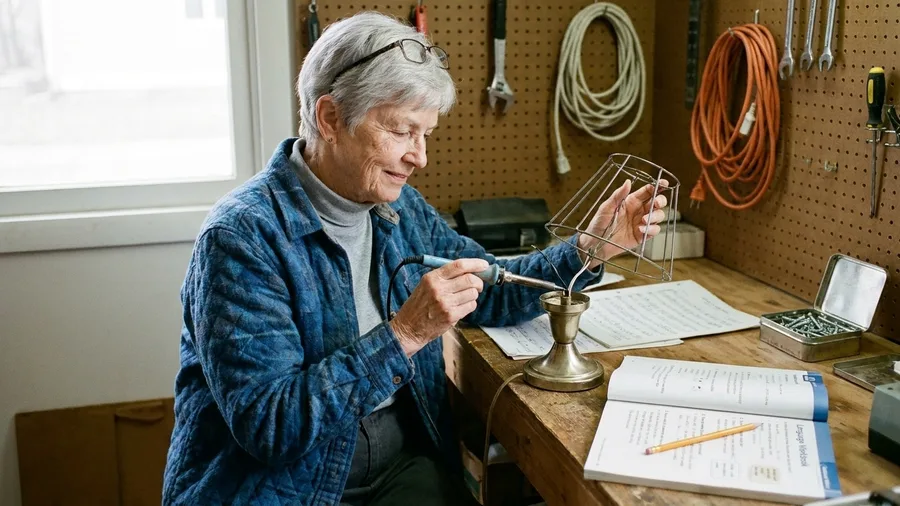
A weekly call needs something in it. Talk that only recycles the past runs thin after a few months, and what kept the people in the example interesting to their friends, and to themselves, was a thing they were currently learning.
What kept curiosity alive was practical, not abstract. A language, an instrument, a craft, a repair skill, always with a use attached. The puzzle books stayed on the shelf.
Practical matters because use is what makes practice stick. Cooking a new cuisine gives the skill a table full of people; repairing a lamp gives it a broken lamp; playing songs for friends gives it an audience of two.
Twenty-minute practice blocks are the dose. Short enough to fit into an ordinary evening, long enough that something registers, and repeated often enough that the hands or the ear begin to remember.
The five-minute version is one class booked or one beginner lesson followed through to the end. One, not a curriculum. A curriculum is the version that gets abandoned in the second week.
What this earns is engagement and pleasure, not a claim about the brain. Treating a weekly lesson as memory insurance is a promise the habit cannot keep.
The reason it belongs in a list about later decades is simpler than that. A person with something new to say is someone friends want to call back.
7. Accept the Awkward Invitation While You Still Can

You can spend a year learning a language and still have nowhere to take it. The room is where a skill turns into company, and the room is what people stop walking into first.
In the example, that is where the regret sits: the invitations went unanswered long before the walking did. The circle had been narrowing for decades, and nobody noticed because each decline felt reasonable at the time.
Refused often enough, an invitation stops arriving. The host assumes the answer and quietly removes you from the list, and the quiet removal is the cost, not the awkward hour.
The monthly version: accept one invitation a month, even if you leave early. Arrive in the first ten minutes, stay about 30, and exit before the tiredness hits. Leaving early is the arrangement, not the failure.
If the party is the problem, the party was never the requirement. Choose a small gathering with one familiar person in it, someone whose name you will not have to search for.
The five-minute version is smaller than that: answer the next invitation with a yes before the hesitation has time to write a reason. That pause is where the excuse gets drafted, so say yes while the message is still open on your screen.
One accepted invitation a month does not restore a lost circle. What it does is keep the door from closing, which is the only part of the circle you still control.
Simplify Money and Things, Then Start Small
Money and possessions can be deferred forever, which is exactly why they usually are. Nothing breaks if you do not open the drawer or set the transfer this month. Then a move or a hospital stay forces both, on someone else's schedule, and the decisions get made by whoever is standing in your kitchen.
The last four habits are about doing those things early enough that they stay ordinary. Then the final entry is the rule underneath all eleven — the one that decides whether any of the others survive contact with a real week.
8. Automate Saving Before Lifestyle Expands

The same pattern shows up in your bank account, where small amounts slip past before anyone makes a decision. Money regret in the example is rarely about the size of the spending; it is about the order of operations, the timing.
In the example, these were people who did move money into savings — after the raise, after the bills, once things settled. By then the raise had been absorbed into ordinary life, and the amount left to move was whatever survived the month.
The figure the example keeps returning to is $50 a week, taken out automatically into a separate account, starting at 55. Not invested, not managed, not touched for the ordinary spending that quietly expands to fill whatever is available.
At 55, $50 a week is about $2,600 a year, and the reason the number matters less than the timing is that the transfer happens before the discretionary decision, not after it.
The five-minute version is one setup session: log in to the account, schedule the transfer for the day after payday, and close the tab. The payday itself is the cue, so the habit runs without willpower in weeks you have none.
One honest boundary: this is not investment advice, and no return or interest rate is assumed here. Anything about tax treatment, or which specific product to put the $50 into, belongs with an official source or your own adviser.
💡 Tip: Name the account something boring and specific, like 'Not For This Month', so the label does the arguing for you.
💡 PRO TIP
The Payday Cue Beats Willpower
Set the transfer for the day after money lands, not the day before. An automatic move that happens before you see the balance works; one that requires you to check the balance first is a decision, and decisions get postponed. Once it runs for three months without you thinking about it, the habit is finished.
9. Downsize Possessions Before Someone Does It for You

Money can be automated in an afternoon. A house full of possessions cannot, which is why the same principle — small, scheduled, repeated — arrives here one drawer at a time instead.
The regret in the example is not about owning things. It is about who cleared them. In several cases the house was emptied by someone else, on someone else's schedule, in the weeks after a move or a hospital stay. Decisions made in a hurry, by people guessing.
One drawer or shelf a week. Fifty-two decisions a year, made calmly, instead of one overwhelming weekend forced by circumstance.
One exception outranks the drawers entirely: paperwork first. Will, tax records and medical files in one place that is known, with at least one other person who knows where it is. That is a single afternoon, and it is the one task that does not wait for a drawer to jam.
The five-minute version is not a clear-out. It is the drawer that sticks every morning — the one costing a small irritation daily. Fixing that one takes minutes and settles the question of whether the method works.
For anything with a story attached, ask the family before donating it. Not after, in a group message announcing what has already gone. The asking is what prevents the argument that otherwise arrives years later, at the worst possible moment.
Nothing here needs to feel like a loss. A drawer a week is a series of small choices made by the person who owns them, which is the whole difference.
One Week of Small Starts
Repeat the same week twice before adding any time to anything.
10. Spend on Daily Comfort, Not Someday

Once the saving runs itself and the closets are finally thinning out, comfort spending stops looking like indulgence. It starts looking like a decision about how your hours get spent.
Count the hours first. The shoes take the standing, the mattress takes the eight hours of the night, the chair takes the two hours of evening reading.
A pair of walking shoes that actually fit properly runs about $150. A decent mattress sits near $1,200, and a chair that holds your back for a long evening of reading about $400.
Those numbers make people flinch, and then they spend the next decade on a sagging mattress complaining about their back. The arithmetic favors the purchase.
The trigger for replacing these things is function, not a birthday or a sale. You swap when the old one quits doing its job.
You feel it as a worn-down sole letting your heel roll, a mattress that dips where you sleep, a chair that leaves your lower back aching after an hour of reading. That ache is the signal, not the calendar.
this week, flip your shoes over and look at the tread, then press down on the mattress at the spot where you sleep. Both checks take five minutes.
What you find settles the question without a spending decision. A sole worn through on one side or a dip your hand sinks into answers it for you.
And this is not a license to upgrade everything you own. Rent, food, and the automatic savings transfer come first, always. Comfort spending sits at the bottom of that list, not the top.
Done in that order, the $150 or the $1,200 is not a treat you have to justify. It is the price of a day that does not hurt, paid once for thousands of days.
🪜 How to Start Any One of These Habits
Pick one
Choose a single habit from the eleven — not two, and never all of them.
Cut it to five minutes
Shrink it until the version you would do on your worst day takes five minutes.
Attach a cue
Bolt it to something that already happens daily: coffee, breakfast, payday, the kettle.
Run fourteen days
Same version, same cue, every day, before you judge whether it works.
Add time, not new habits
Once two weeks are done, extend the duration — five minutes to ten, not one habit to three.
11. Start Smaller Than Feels Impressive and Repeat It
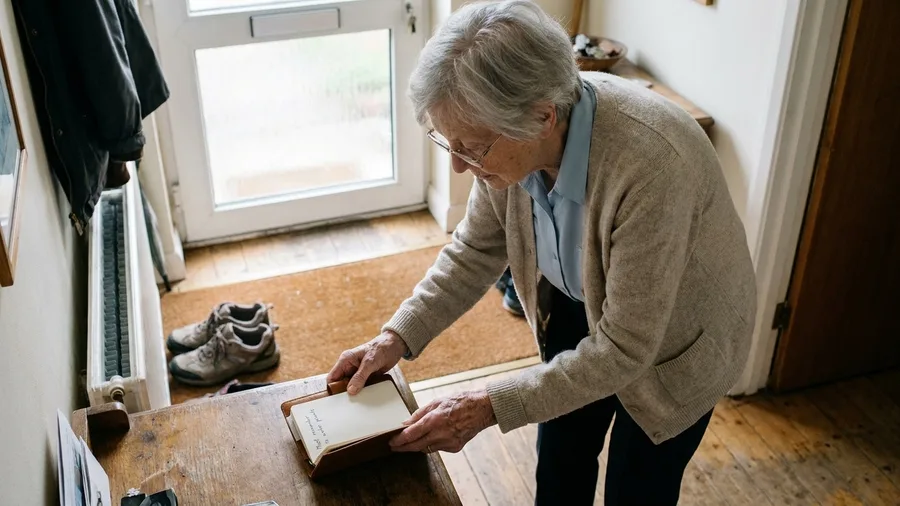
Every habit on this list tends to fall over the same way: someone pictures the finished version, starts it at full size, and by the second Monday the whole plan is sitting in a drawer somewhere with the resistance bands.
The fix is the same every time, and it is smaller than feels respectable. Take a five-minute version of the habit, attach it to a cue you already hit without thinking, and hold it there for two weeks before adding a single minute.
Two weeks matters. It is long enough for the cue and the action to start sticking together, and short enough that you will actually stay on it that long.
The pairings are boring on purpose. Five chair stands before the coffee finishes brewing. The ten-minute loop after breakfast, shoes already by the door. The Sunday call with a friend, same time every week.
Pick one. Not the whole menu, and not the three that sound most appealing. One habit run honestly beats eleven attempted at once, which is the failure mode this advice exists to prevent.
If you are under 60, the two strength sessions a week and the automatic transfer from each paycheck are the ones with the longest runway behind them.
If you are over 70, start at the kitchen counter with five minutes of one-foot stands and lock in the weekly call. Balance and connection are what buy you years of staying put.
If it is the stuff in the house that overwhelms you, then the one drawer a week is your habit, and everything else can wait its turn.
The first move this week is not a plan. It is the five-minute version, done today, on the most reliable cue your day already gives you.
Frequently Asked Questions
What is the single habit people in their 90s said they would start first?
Strength work, almost without exception. The loss is gradual and invisible, and the test arrives suddenly in the form of a chair, a grocery bag or a stair. Two 20-minute sessions a week with a chair and two grocery bags is the version they described, and the payoff they named was independence rather than appearance.
Do any of these habits need special equipment or a gym membership?
None of them. A chair, a wall, two loaded grocery bags, a pair of shoes by the door and your own kitchen counter cover the entire physical list. The remaining habits need a phone, a recurring calendar entry and an automatic bank transfer.
How long before I notice a difference?
It varies by habit. A weekly phone call feels good on day one. A fixed wake time usually settles inside two to three weeks. Walking takes three to four weeks, strength four to six, and balance drills six to eight before you trust your feet on uneven ground.
Can I start all eleven habits at once?
You can, and it usually collapses by week three. Pick one, run the five-minute version for two weeks, then extend the time on that same habit before you add another. The list is a menu, not a plan.
What if I have a joint problem or I have already fallen?
Get it assessed by a clinician or physical therapist before you add load or start balance drills. Strength and balance work adapt well to bad knees and shaky ankles, but the adaptation is specific and a professional should set it for you rather than a list. Counter drills do not replace a diagnosis.
Choose Your Habit by What You Cannot Afford to Lose
Under 60: the two weekly strength sessions and the automatic $50 a week moved to its own account. Both compound, and both are cheaper to build now than to replace at 75. Over 70: the 5 minutes of balance at the kitchen counter and the standing weekly call, because the fall and the shrinking circle are what most narrow a life. If the stuff is what keeps you up, start the one-drawer rule.
Then shrink it to five minutes and attach it to the cue you trust most today. Not a plan to run all eleven. One habit, one cue, two weeks before you change anything.
The fourteen people did not buy that independence in a single decision. They bought it in mornings: chair stands, a loop around the block, a Sunday call. The regret was never the size of the habit, only the decade spent deciding to start.
Pick Your One Habit and Its Cue
Scroll back to the timeline, choose a single habit, and write down the everyday cue you will attach it to. You have already read the hard part — the two weeks start today.