
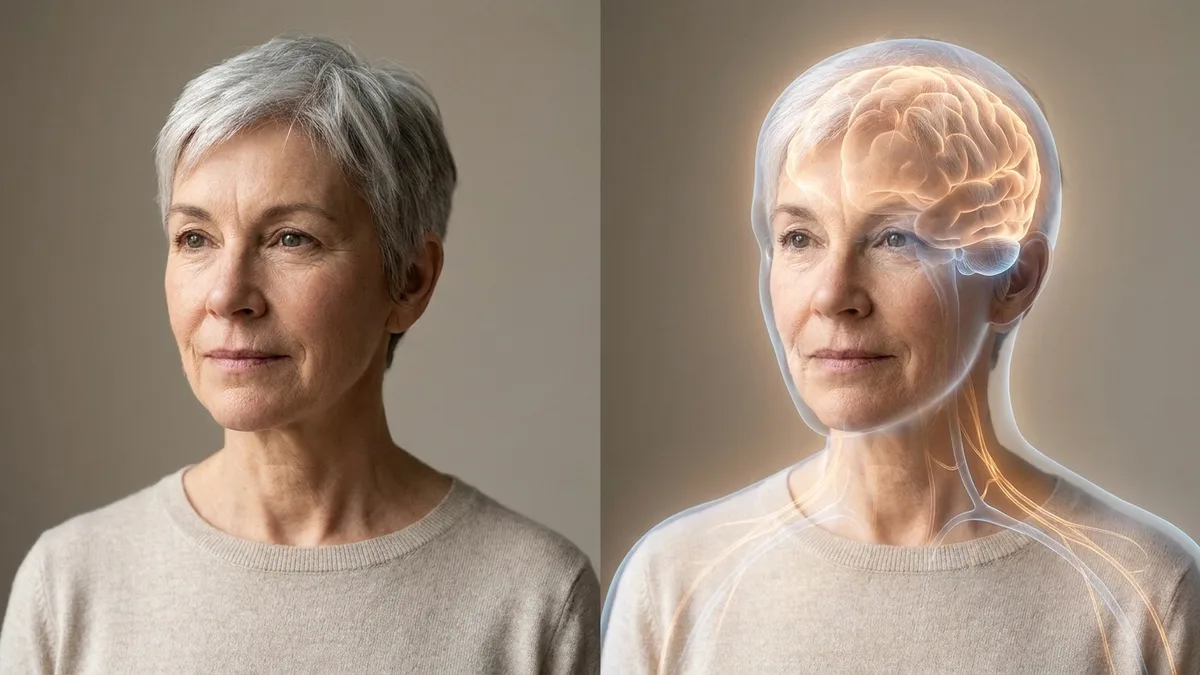
By the end you will know the smallest dose of four free things that still does something, and which one to start today. First fact: a 15-minute loop around the block after lunch changes how the next couple of hours feel, and that is enough to count.
Nine at night. Foggy, a little wired, phone in hand, and you have already run the numbers on the supplement bottle, the app subscription and the gadget. None of them looked worth it. But the free stuff looked too plain to be the answer either.
Look at the actual doses: 15 minutes, a 24-ounce bottle filled three times, 10 minutes of morning sun, one fixed lights-out. That smallness is why they get dismissed, and exactly why they survive a bad Tuesday.
These are not the budget version of the products. They are the version with the evidence behind it. The only real problem is starting four at once, so pick one this week. Order for the rest, plus a seven-day test, below.
One walk after meals, one counted bottle, ten minutes of outdoor light, one fixed bedtime. Each dose is small enough that it will not feel like it counts, and that is the whole reason it goes unused. Start with a single tool, this week.
| Tool | Cost | Daily dose | When | First step |
|---|---|---|---|---|
| Walking | $0 (or $40 shoes) | 15-minute loop, 3 days to start, then 5 | After lunch and after dinner | Shoes by the door, one loop after lunch today |
| Water | $0 (or $30 bottle) | 24-oz bottle filled 3 times + a glass before each meal | Across the day, tied to meals | Fill a bottle and set it where you work |
| Sunlight | $0 | 10 minutes outdoors | Within an hour of waking | Step outside before you check your phone |
| Sleep | $0 (or $12 mask, $40 curtain) | Lights out 10:45, alarm 6:30, phone in kitchen | Every night, weekends included | Set the 6:30 alarm and plug the phone in the kitchen |
1. The 15-Minute Walk After Meals
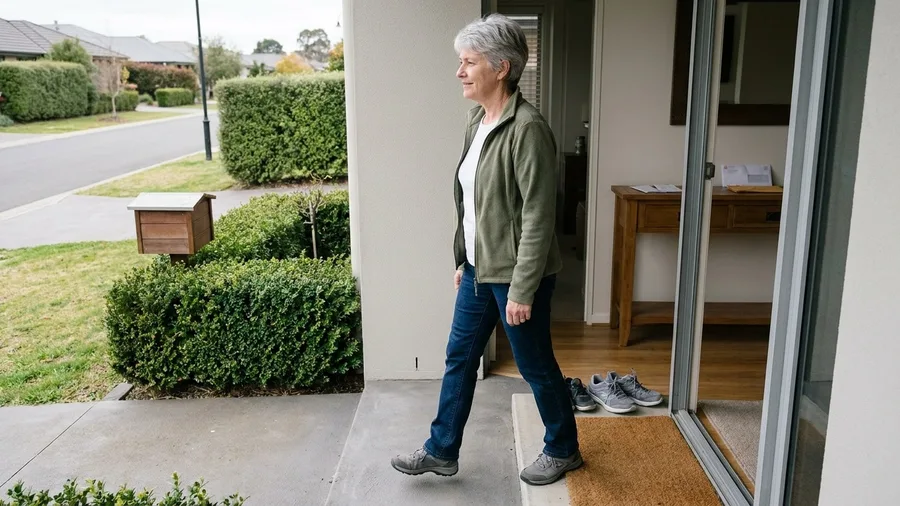
Fifteen minutes around the block, twice on the days you eat lunch and dinner at home, and the timing is the whole trick. Take it after the meal, not before. The same loop walked before you eat is just a short workout in street clothes, and you will judge it as one and find it wanting. Taken after, it lands on the hour you already know: the flat, heavy stretch that arrives around one o'clock, and the wired-but-tired fog after dinner when you cannot settle but cannot do anything either.
That post-meal window is where the walk earns its keep, on energy and on mood, and it does it without a change of clothes or a pace to hold.
Three days a week to start. Add the fourth and fifth once the first three feel automatic, which usually takes two or three weeks rather than two or three days. Twenty-five minutes a day is not a training plan. It is a nudge to the machinery that handles blood sugar and the afternoon slump, and the effect shows up in how the hour after lunch feels, not on a chart.
The weather is not a veto. Rain turns the loop into the stairs in your building, two flights up and down for the same quarter of an hour. Ice turns it into the covered mall, which is full of people doing exactly this at 10am and nobody looks at them twice. The rule is the fifteen minutes and the after-eating timing, not the sidewalk.
the shoes, the kit, the change of clothes, a pace, a step target, a reason to shower afterward.
Your knees are not the problem. The definition is.
The fix is to drop the definition. Shoes by the door so the decision is already made, one loop after lunch today, no pace and no step count attached. If you finish and feel faintly ridiculous about how little you did, that is the sign you did it right.
That is the strange thing about a dose this small: it feels like nothing, so it gets skipped, and it is also the one that still happens on the day the rest of the plan collapses. A bad Tuesday cannot cancel fifteen minutes you never dressed for.
💡 Tip: Put the shoes by the door the night before. The 30 seconds it takes to find them is the most common reason the walk does not happen.
2. A Water Bottle You Refill Three Times
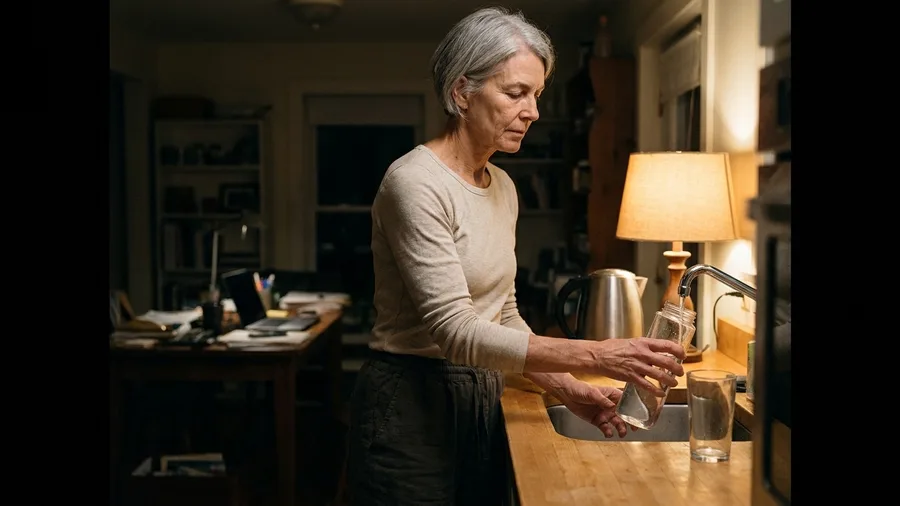
A walk still asks you to decide, in the moment, to go. Water is easier than that, because you can take the decision out of your head and put it in the room. That is the whole method, and it is why this is the one tool here that runs on placement rather than resolve.
The amount is unglamorous. One 24-ounce bottle, refilled three times between waking and bed, plus a glass of tap water before each meal. That is it. Nothing to count beyond three, nothing to log, and the tap water costs nothing at all.
If you want a bottle worth carrying around, plan on about $30. The expensive version in the fridge door does the same job.
Forgetfulness, not thirst, is where this falls apart. Nobody is sitting at their desk consciously deciding not to drink. They are deciding without noticing, because the bottle is in a bag or a cupboard and the thought never arrives.
So make the bottle impossible to miss. On the desk in front of the monitor, not in the drawer. A glass by the kettle for the before-meal one. A refill tied to clearing your plate, so the cue is a thing you already do rather than a notification you swipe away without reading.
Two things wear thirst as a costume, and both get misread at this age. The 3pm slump that sends people to the coffee machine is often mild dehydration, and so is the hunger that shows up an hour after lunch when you ate perfectly well. The coffee counts as liquid but not as water, which is worth knowing if you are tallying cups in your head and arriving at a number that flatters you.
One exception, and it is not a small one: if a doctor has already told you to restrict fluids for your heart or kidneys, this dose is not yours to try without asking first.
It looks too dumb to matter, which is exactly why it gets dismissed. Three refills and a glass before meals is the smallest version of the behavior that still does something, and small things do not feel like treatment.
💡 PRO TIP
Stack the bottle on a meal, not a reminder
Tie each refill to breakfast, lunch and dinner. A bottle in sight plus a meal cue beats any app notification, because the cue is already part of your day.
3. Ten Minutes of Morning Sun on Your Face
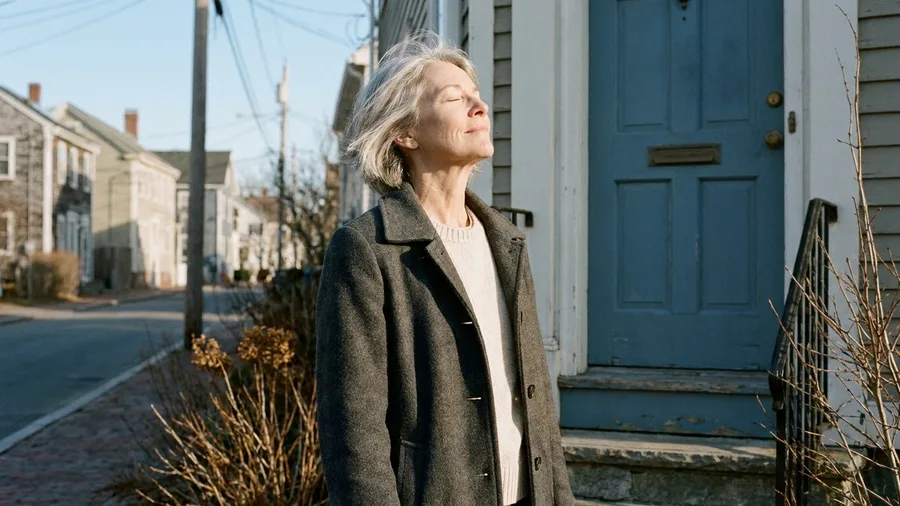
Light is the one of these tools with a deadline attached to the day, because it only works within an hour of waking. Water is a cue you carry with you; this one asks you to leave the room, and to do it early. That timing is the whole point.
The dose is 10 minutes outdoors, face and forearms bare, sunglasses off for that stretch. A stoop, a balcony, one lap of the block. Ten minutes, and you are done.
The mistake is trusting the window. Indoor light, even standing right beside glass at noon, is a small fraction of an ordinary overcast morning outdoors. What your eyes register by the window all day is almost nothing compared to ten minutes of gray sky, and that difference is the difference between daytime alertness and the sleepiness that shows up at two in the morning.
Which makes the excuse obvious: waiting for good weather. Cloud cover still beats any indoor room by a wide margin, and the sun does not need to be out for this to count. In winter, take the same ten minutes at lunch rather than skipping it, when the daylight is at its best even if it is dim.
If you work nights, or the morning stays dark until long after you are up, the ten minutes happen whenever you wake, not not at all. Same dose, shifted to fit the clock you actually live on. A skipped day is the only version that does not count.
Ten minutes, no gear, no purchase. The dose sits so far below what people assume light therapy requires that it gets treated as nothing. That is the one that sets your daytime alertness and your nighttime sleepiness, and it costs a coat.
4. A Fixed Lights-Out Time and a Kitchen Phone
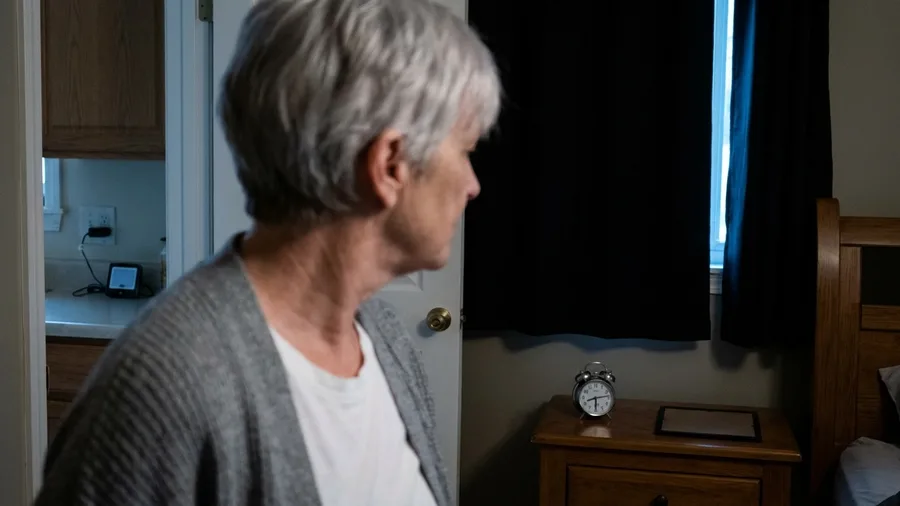
Sunlight in the morning only does its work if there is a regular night for it to attach to. The ten minutes outdoors sets your body clock; a fixed wake time is what the clock locks onto. Get the wake time steady and the light starts paying off in sleepiness at the right hour. Leave it ragged and even a good dose of morning light is setting a clock that keeps getting reset.
So the last tool is the plainest one yet: one lights-out time, one alarm time, seven and a half hours in bed. Lights out at 10:45, alarm at 6:30, phone charging in the kitchen, bedroom near 68°F, a blackout curtain on the window.
That is the whole intervention. No app, no tracking ring, nothing to buy.
The weekend is where this quietly comes apart. Sleeping to 9 on Saturday undoes the pattern you spent five days setting, and Monday morning feels like the first day of a new job. Keep the 6:30 alarm on Saturday. If you are short on sleep, take a short nap in the early afternoon rather than sleeping late in the morning.
The reason a tool this effective gets skipped is almost embarrassing: it is free, so it feels too weak to be the answer. Buying a supplement is more satisfying than setting an alarm. There is a bottle to hold up, a label to read, a thing you did. Nothing on a shelf can be shown off the way a purchase can, and a bedtime cannot be shown off at all.
Start with the smallest version that still counts: fix the wake time and nothing else.
For one week, set the 6:30 alarm, including the weekend, and leave bedtime alone. Let yourself go to bed when you are tired and see whether the fixed morning starts pulling the evening earlier on its own. That one number, held steady for seven days, is often enough to change when sleepiness arrives.
Notice what the tool actually asks for. It is a time and a phone in another room.
No gear, no spend, no protocol to learn. And the thing that makes it easy to dismiss is the same thing that makes it work: nothing about it feels like treatment. There is no ritual, no capsule, no dashboard. Just the same two times, every day, until your body stops needing to be told.
💡 Tip: A $12 sleep mask and a $40 blackout curtain are the only optional spends here. The phone in the kitchen is free and matters more than both.
🗓️ The order to add them, one week at a time
Weeks 1-2 — One walk after lunch
15-minute loop, three days this week, five once it holds. Add the after-dinner lap only after lunch is automatic.
Week 3 — Add the bottle
24 ounces filled three times, plus a glass before each meal. Fill all three at breakfast so the count is a glance, not a chore.
Week 4 — Add morning light
10 minutes within an hour of waking, face and forearms bare, sunglasses off. Overcast counts. A bright window at noon does not.
Week 5 — Fix the wake time
6:30 alarm including Saturday. Keep lights-out at 10:45 as the target, not the rule, for the first week. Break the sequence and restart from the step you dropped.
Frequently Asked Questions
Do I have to do all four at once?
No. Starting all four at once is the reason most attempts die by Thursday. Pick the walk first, because it gives the fastest feedback. Add one tool per week, in the order above.
Does sunlight through a window count?
No. Indoor light, even beside glass at midday, is a small fraction of an ordinary overcast morning outdoors. You need to be outside with your face and forearms bare for ten minutes.
How long before I notice a difference from the walk?
The afternoon energy shift is often noticeable the same day. The mood effect builds over two to three weeks of consistent after-meal walks.
What if I wake up at 5 a.m. for work?
Take the ten minutes of light whenever you wake, even if it is still dark. If it is dark, use the lunch break for outdoor light instead. The dose is ten minutes, not a specific clock time.
Is 72 ounces of water too much or too little?
For most healthy adults, it is a reasonable baseline. If a doctor has told you to restrict fluids, ask before following this dose. The point is the counted bottle, not a precise number.
Do I need a blackout curtain to fix my sleep?
It helps, but it is not the first step. Fix the wake time and move the phone to the kitchen first. Add the curtain and the 68°F bedroom once the wake time is steady.
The four free tools, ranked by what to start this week
all four are free, they stack on each other, and none needs gear. Optional spend across the whole set is a $30 bottle, a $12 sleep mask and $40 shoes, or $0 if the shoes are already in the closet. Starting all four on Monday is the reason most attempts die by Thursday.
Start with the walk. Shoes by the door, one 15-minute loop after lunch today, nothing bought and nothing to learn. Add the bottle second, the ten minutes of morning light third, the fixed lights-out last, one per week so you can tell what is doing what.
At the end of seven days, ask one question about the specific thing the tool was meant to touch: did the post-lunch slump, the 3pm fog, the 2am waking actually change? If yes, keep it. If not, adjust the dose or the timing before you drop it, and never run two new tools in the same week.
Then come back to 9pm. Foggy, wired, phone in hand is what these four small doses were supposed to fix all along, and the expensive part was never the tools. Tonight, put the shoes by the door and decide which one starts tomorrow.
Start with one loop today
Put your shoes by the door and walk for 15 minutes after lunch. That is the whole first step. Then come back to the table above and add the next tool when you are ready.