
How do Japanese families stay slim without dieting? Here is what this settles: the answer lives on the table before anyone sits down, not inside anyone's willpower.
You have already tried the other version. You cut the rice, you measured the chicken, and by Thursday night a second helping had happened before you decided anything. The smaller portion was never the hard part. Looking stingy was.
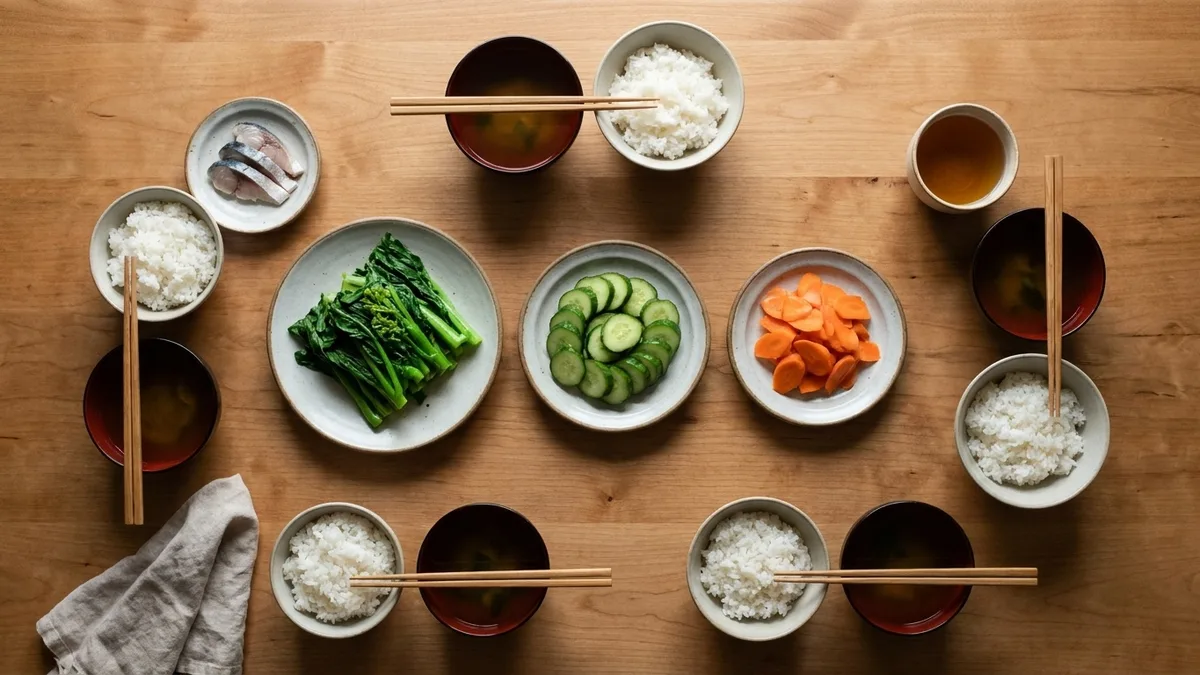
Picture the table instead. Four 4-inch rice bowls, four 6-oz soup bowls, three shared vegetable plates, one 3-oz portion of fish or meat per person, and unsweetened tea within reach. Nothing there reads as a restriction, and the smaller portion becomes the visible normal.
The ten habits below are table defaults, not a diet plan: a small starch bowl, a vegetable-dominant table, soup first, chopsticks, two rounds of serving, unsweetened drinks, a shared pause at 80 percent, no screens, and a closing phrase.
Set out the bowls tonight. Add one habit at a time, and judge each by a single test: does it make the smaller portion look generous and the stopping point easier to see?
Quick Tips Before You Start
Weigh once, then never again
Use a scale for the first three dinners only: 4 oz cooked rice, 3 oz fish or meat, then trust the bowls. Skipping the weigh-in is why portions drift back up within a month.
Serve the vegetables last
Bring the three vegetable plates out with round two, not round one. Arriving after the rice and soup means they get eaten as food, not as the thing you are supposed to finish first.
Barley tea needs brewing ahead
It has to be made and chilled before anyone sits down, or the pitcher gets swapped for juice at 6:40. Keep one 8-oz cup per person at the seat and the refill on the counter, not the table.
Two rounds, not one buffet
The 20-25 minute window only happens if food lands in two deliveries. Setting everything out at once collapses the meal to nine minutes and the stopping cue never appears.
Skip the fruit on a weeknight
The 1/2-cup fruit bowl is a weekend and guest-night habit. On a normal Tuesday it becomes a second dessert, so leave it off the table and the closing phrase does the work.
1. Small Bowls and Shared Plates
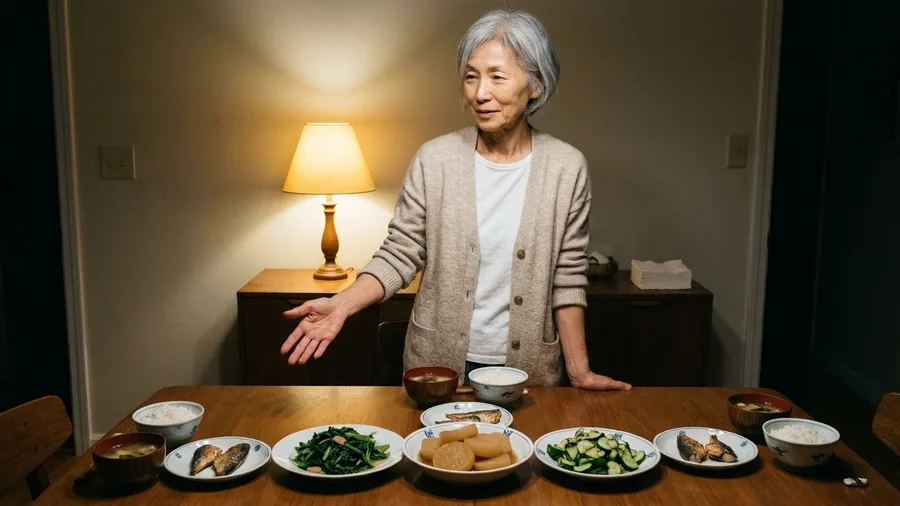
Picture the table before the first bite: four rice bowls, four soup bowls, three vegetable plates. That is seven serving vessels and four eating vessels on a weeknight table.
The rice bowls are four inches across, not the wide soup-plate rim you may already own. The soup bowls hold six ounces. The vegetable plates are meant to be shared, so three of them sit between four people rather than one in front of each. Understanding the ichiju sansai formula makes those three vegetable plates and one soup bowl easy to plan.
Then the protein. Three ounces per person, plated individually in the kitchen, not a large piece of fish or meat laid in the center of the table for people to divide.
That last detail does more work than it looks like. A whole roast set in the middle of the table makes the meat the visual center, and the vegetables look like side dishes that someone politely got through. A 3-ounce portion on each plate makes the meat look like part of a complete plate.
💡 Tip: Measure the bowl rims once. Four inches across the top, six ounces to the brim for soup, and 8-oz cups for tea. Get the sizes right and the portions become automatic.
2. Rice in a Small Bowl, Once
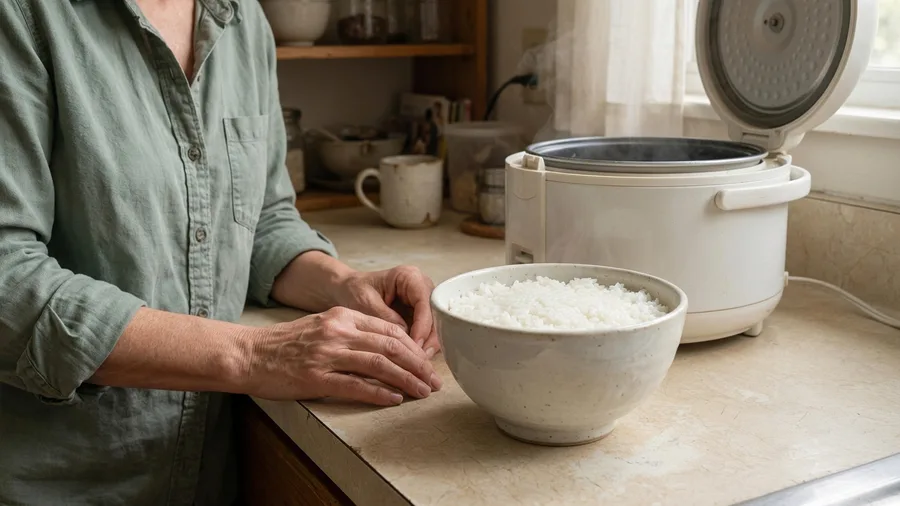
Four ounces of cooked rice per person, into the four-inch bowl, one fill, no packing.
The measurement happens once, at plating, while the rice is still in the cooker and you are standing over it. You do not need a measuring cup each time once you have done it a few times; the bowl itself is the unit. Level the surface with the back of your rice paddle so you can see exactly what a full bowl looks like.
The habit is not about restriction, it is about where the decision gets made. A small bowl of rice set down at the start of the meal takes the portion out of the moment of appetite and puts it back in the kitchen, where you are not hungry and the number is not up for debate.
Then keep the cooker off the table. That single move, ladling rice into bowls at the counter and leaving the cooker there, means the second portion is a walk across the kitchen, not a reach. A refill is fine, but only after the soup and vegetables are finished.
💡 Tip: Cook rice in batches and refrigerate single portions in small lidded containers. A pre-portioned container beats a warm cooker at the table every time.
3. Vegetables Take the Biggest Plate
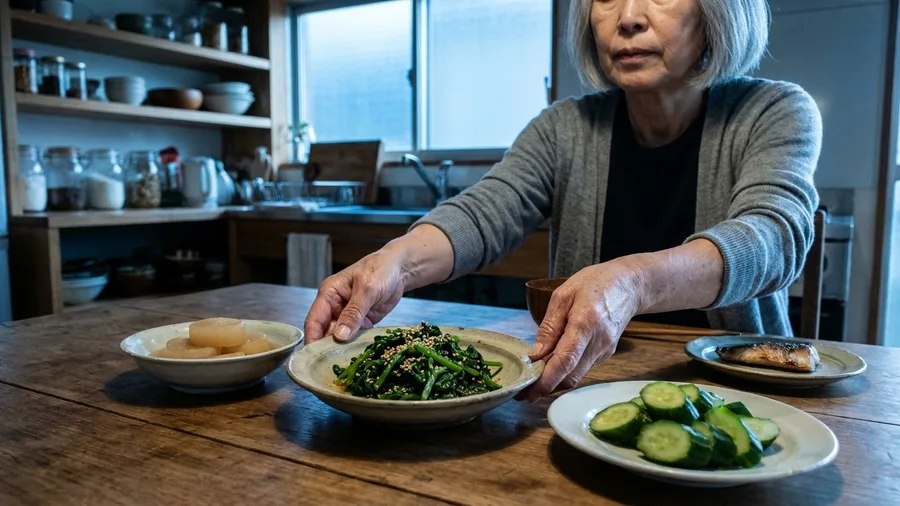
With the rice settled in its small bowl, the largest dish at the table has room to be something that grows, not something that shrinks. Fill that space with vegetables.
The main table carries three shared plates, about one cup per person across all three. Two are cooked: something stir-fried, a braised greens dish, a simmered daikon. The third is raw or pickled: cucumber, cabbage, a few slices of takuan.
Because the beans, greens, and squash take up the most surface area, the whole meal reads as abundance rather than restriction. The 3-ounce fish or meat sits alongside them, not above them, in the same table's hierarchy.
That visual weight is the whole argument. Nobody needs a lecture about eating more vegetables when three plates of them are the first thing your eyes land on and the dish you see most of. When a family passes a plate of greens at a weeknight dinner, passing is already the default.
None of this changes what the meal is. Fish stays at three ounces because the table is doing the persuasion, not the plate.
💡 Tip: Two cooked sides, one pickled. If all three are cooked and soft, the table feels heavy — the crunch keeps it readable.
At a Glance
4. Soup and Vegetables Go First
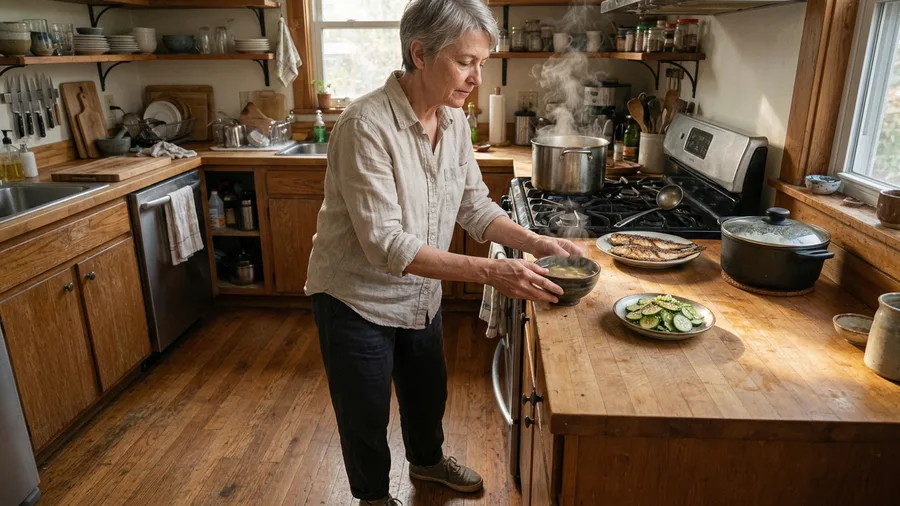
A vegetable-dominant table only works if the vegetables reach the mouth before the rice does. That is the whole job of the first course: it puts food in front of people during the minutes when appetite is loudest, so the fastest food on the table is also the lightest one.
Ladle 6 oz of miso or clear soup into the 6-oz bowls at the counter, not at the table. The same bowl-and-small-dish logic shapes a Japanese breakfast of rice ringed by salty plates. Six ounces is roughly a coffee mug two-thirds full, and it takes a few minutes to eat with a spoon or to sip while it cools.
Set one vegetable side next to it, not a spread. Cucumber salad, quick pickles, a dish of blanched greens with sesame, whatever is already made. One is enough, because its only task is to keep the hands busy while the soup goes down.
The rice and the fish stay in the kitchen until the soup is half gone. Half is the honest marker, and it needs no timer.
That is a rule nobody has to enforce, which is the point.
Here is what it changes. The first five minutes of a hungry dinner are usually decided by what is closest and easiest, and on most tables that is bread, rice, or whatever is already plated. When soup and vegetables hold that window, the pace of the meal comes from the order food arrives in rather than from anyone asking the table to slow down.
No one has to be told to eat more slowly, which is a request that tends to last about ninety seconds before it is ignored.
By the time the rice and the 3-oz portion of fish come out, the sharpest hunger has already eased. People take their rice into a 4-inch bowl because they want some, not because they are still catching up. The pause happens on its own, without a reminder, and nobody at the table had to be the person policing portions.
The catch is prep, not virtue. Soup has to be in the pot and one vegetable has to be done before anyone sits down, and on a tired weeknight that is the step that gets skipped. A batch of miso made on Sunday, or a jar of pickles bought rather than made, is what keeps this habit alive on the nights it matters.
💡 Tip: Make the soup the night before and reheat single portions. The first course only works if it takes no longer than the rice.
⚠️ COMMON MISTAKE
Don't Ask People to Eat Slower
Telling the table to slow down has never once worked. Change the tools instead: chopsticks instead of forks, small bowls instead of wide plates, and soup before rice. The meal gets longer because the mechanics of eating it got slower, not because anyone was instructed to chew more.
5. Chopsticks and Small Tableware
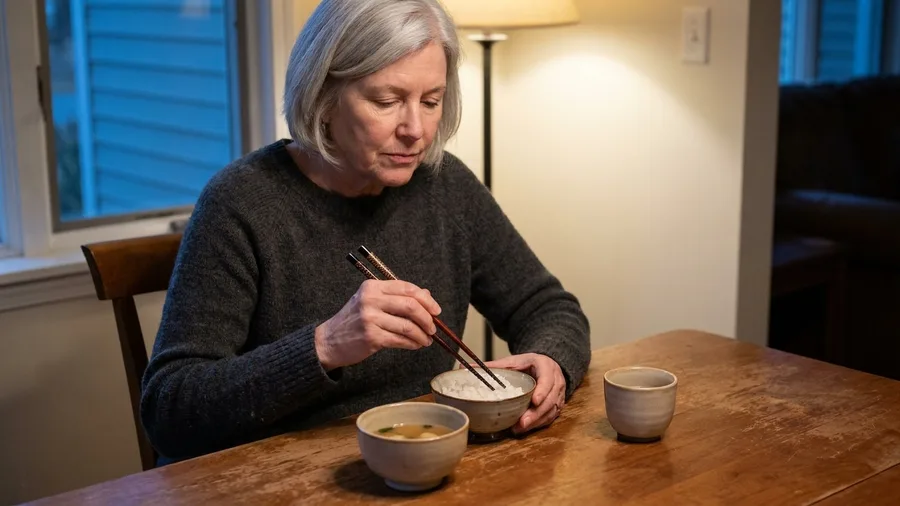
Small bites are easier to arrange than a request to slow down. Put chopsticks at every place instead of forks, and let the tableware do the pacing.
A fork is an efficient tool. It carries a large load and delivers it fast, which is exactly what a hungry person at 7 p.m. wants. Chopsticks move less food per trip and force a set-down between bites. That is not etiquette, it is physics, and it works whether or not anyone is paying attention.
The 4-inch rice bowl and the 6-oz soup bowl are the only dishes needed for the main course. No dinner plates at the seats, no serving spoon sitting in the rice.
Chopsticks and small bowls together produce a meal that runs 20 to 25 minutes. More trips, more pauses, more small decisions about what to pick up next.
That number is the honest target. Twenty to 25 minutes is long enough for fullness signals to arrive, and it happens without anyone announcing a speed limit or watching the clock. The food arrives in small enough units that the meal simply takes the time it takes.
The mistake is treating this as a technique for children. Adults eat faster too, especially after a long day, and the same tool that slows a seven-year-old slows a fifty-year-old. What separates them is the willingness to accept a slightly awkward first week while the hands adjust.
It will be clumsy at first. Anyone who did not grow up with chopsticks will drop food and reach for a fork by the third meal.
Keep going for a week. The mechanics become automatic faster than most people expect, and once they do, the smaller bite stops being a decision and becomes the default setting of the table.
One practical note: choose chopsticks with a little texture at the tip if the first pair slides. Smooth lacquer over slippery noodles is where most beginners give up, and it is a solve-able problem, not a verdict on the method.
💡 Tip: Metal chopsticks are harder to hold than bamboo. For anyone over 60, good bamboo or lacquered chopsticks with a square grip make the whole habit sustainable.
One Big Plate vs. Two Rounds
Loading One Plate
- You decide the whole meal while you are hungriest
- The plate reads as a portion to be finished
- No pause between the first bite and the last
- Seconds happen without a decision
- Usually 15 minutes, start to finish
Eating in Two Rounds
- Soup and vegetables arrive first, in small bowls
- Rice and the 3 oz protein come separately
- A pause falls naturally between rounds
- Seconds become a choice, not a reflex
- Usually 20-25 minutes, start to finish
6. Serve Dinner in Two Rounds
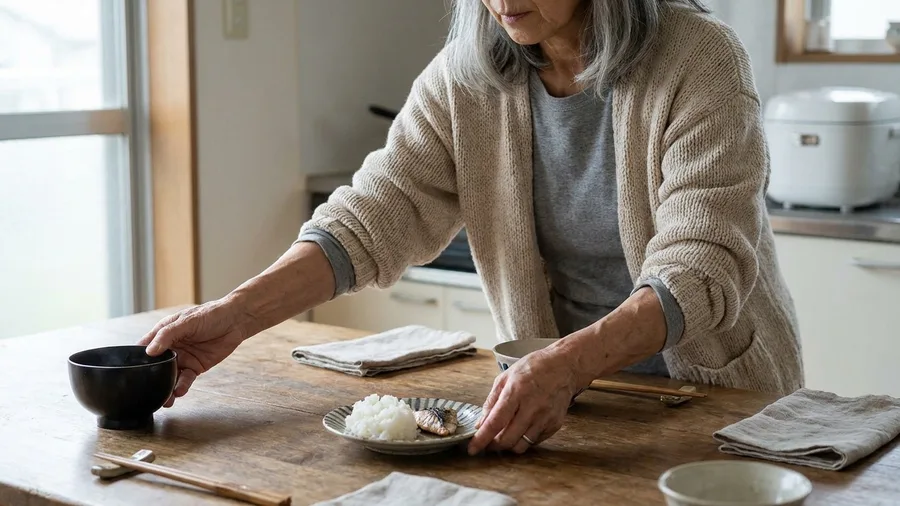
The pace built by small bites and little bowls can be erased in a single loaded plate. Have the food come to the table twice instead of once, and the pause is built in before anyone reaches for more.
Round one is soup and the vegetable sides. Round two is the rice and the 3-oz portion of fish or meat, brought out from the kitchen when the first round is finished.
The rice cooker stays where it cooks. It does not come to the table, and the extra fish stays in the pan on the stove rather than on a platter within reach. What is off the table cannot be reached for without standing up, and standing up is a real barrier at the end of a long day.
That gap between rounds is where the second helping stops being a reflex and becomes a choice.
Think about how a single-plate dinner actually goes. The plate fills once, and the rice sits in the middle of it. When the plate is empty, the body has not caught up with the food, and the easiest next move is a refill from whatever is nearest. Nothing about that moment is a decision. It is a reach.
Two rounds insert a pause in that reach. By the time the rice arrives, the vegetables and soup have been in the stomach for ten minutes, and the appetite that wanted everything at once has softened.
The round-two rice still goes into the 4-inch bowl. The 3-oz portion still goes on the small plate. Nothing about the portion changes; only the order and the timing do.
This is the round where people notice they want less, and that noticing is quiet. Nobody announces it, and nobody needs to.
There is an honest cost. Two rounds mean two trips to the kitchen and one more dish to carry. On a weeknight that feels like a lot. The way to make it survive is to treat round two as a single tray carried out once, not a series of trips, and to keep the first round to whatever is already on the counter.
💡 Tip: Do not clear the dishes into the sink and let people eat standing up. That ends the meal by default and the second round never happens.
7. Unsweetened Tea Is the Default Drink
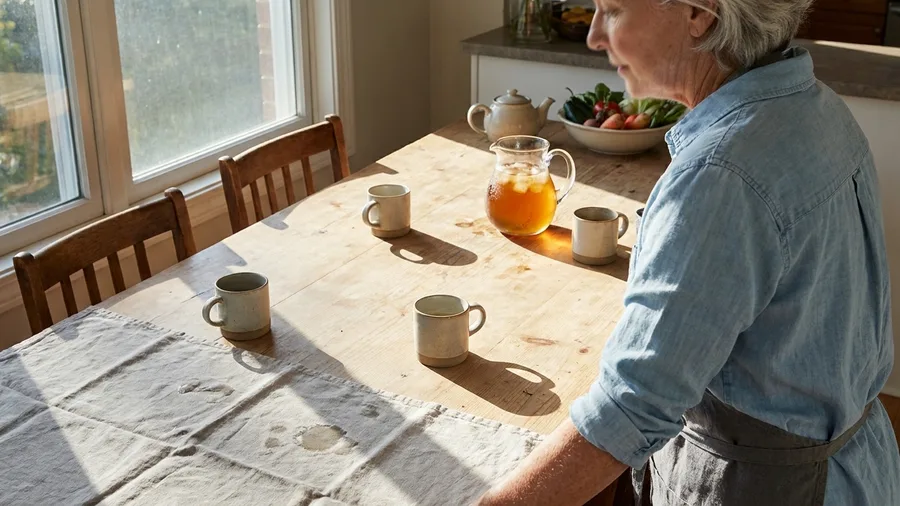
Get that wrong and the break in the meal becomes a refill stop.
The Japanese home answer is deliberately boring. Barley tea or plain water, poured into 8-oz cups, one at each place.
There is no soda in the refrigerator lineup for dinner, no juice carton, no pitcher of sweetened tea. Not hidden, not rationed, simply not made. The absence is the whole mechanism.
Notice what this changes about the reach. When the only thing within arm's length is a teapot or a water pitcher, that is what gets picked up, without a decision being made about it.
Sweetened drinks tend to get chosen in the moment, from what is cold and visible. Move them out of the dinner lineup and the choice disappears before anyone has to resist it.
A refill means tipping the teapot again, not opening a second kind of drink. Same cup, same pour, no small pleasure attached to switching flavors mid-meal.
So the pauses hold as pauses. Nobody fills the gap between rounds with something sweet, and the second round starts on the table's schedule rather than on a craving's.
One practical note for the first week: chill the barley tea in advance. Warm tea does not get refilled, and a pitcher nobody reaches for puts the soda back in play.
💡 Tip: Rinse the teapot with cold water before the leaves go in. It takes four seconds and keeps the second and third pots from tasting bitter.
💡 PRO TIP
The Phrase Works Better Unsaid
Have the cook say the 80-percent phrase once, out loud, before the second round is served. It lands as a suggestion from the table rather than a rule imposed on anyone, which is why teenagers ignore it less than they would ignore a comment about their plate. Keep it light and keep it short.
8. Say the 80-Percent Phrase
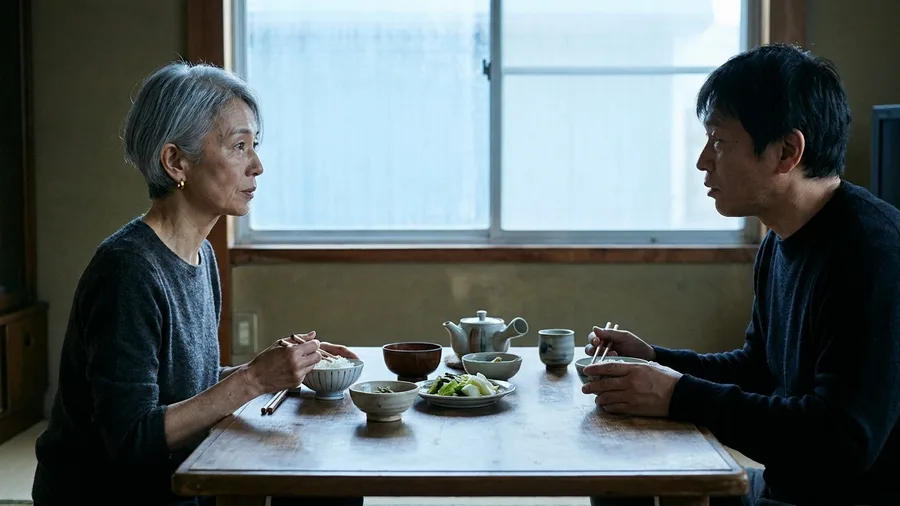
Once the sweetened pitcher is off the table, the next automatic reach is for more rice, and that one needs a cue the whole table shares. This is where the phrase comes in.
Hara hachi bu is often translated as eating until you are eight parts full out of ten. In the home it functions less as a rule than as a signal, said out loud before anyone goes back for seconds.
The exact words matter less than the fact that someone says them and the table hears them. It marks a boundary between the meal as served and the meal as extended.
What follows the phrase is the point: a few minutes of sitting, tea in hand, before anyone decides whether they actually want more. Not a ban on seconds. A gap in front of them.
Those few minutes do quiet work. Appetite lags behind eating by roughly twenty minutes, so the fullness that arrives during the pause is the kind the first helping already earned.
And the extra rice is not sitting in a serving bowl two inches from someone's elbow. It stays in the cooker, off the table, so a second helping is a deliberate trip to the kitchen rather than a reflex.
That is the whole design: a spoken cue creates the pause, and distance from the rice makes stopping the easy option during it.
No calorie counting, no weighing, no negotiation at the table. One phrase, a few minutes, and the decision gets made after the body has caught up instead of before.
💡 Tip: Pick your own words if the Japanese phrase feels borrowed in your house. "Eight out of ten" said aloud works exactly as well as anything else.
9. Phones in the Other Room
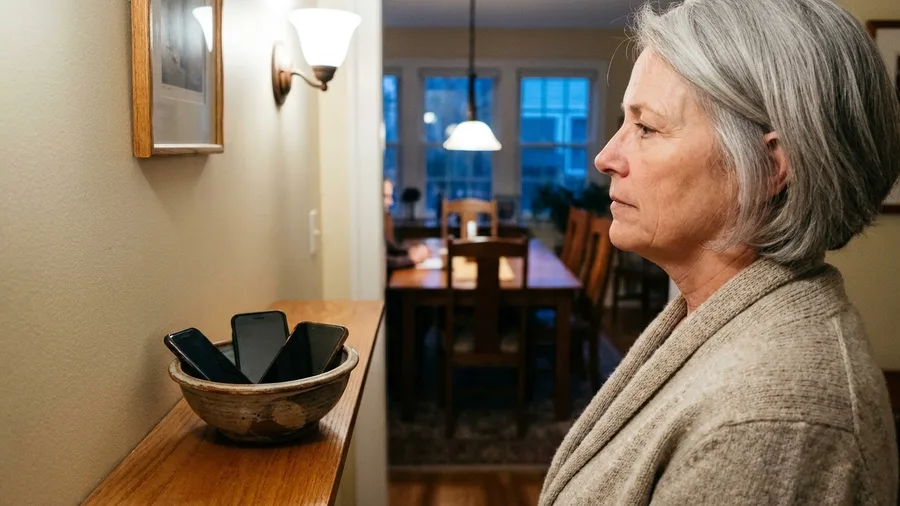
A stopping cue only works if people are still in their chairs when it arrives. Phones and a running television are what pull them out of the meal before the pause can happen.
So the setup happens before the food does. Phones go to another room, not face-down on the table. The TV goes off before the first bowl is set down.
Face-down is not enough. A phone within reach gets picked up during the gap between rounds, and the gap is exactly the moment the meal needs protected.
With screens gone, all four seats stay occupied for the full 20 to 25 minutes, which is roughly what a meal paced by soup, chopsticks, and two rounds takes.
That duration is not a target to hit for its own sake. It is simply how long it takes to notice your own pace and register where fullness lands.
One more arrangement detail that surprises people: plates are cleared after the meal, not during it. Nobody stacks plates mid-meal and signals the end early.
Clearing as you go speeds everyone up and shortens the sitting. Leaving the plates until the closing phrase keeps the table intact and the attention on it.
Attention, in other words, is not summoned by willpower at this table. It is protected by where the phones are and whether the TV is on, decided once, before dinner.
💡 Tip: Put a bowl or basket by the front door for phones. A visible drop zone works better than a rule that leaves the phone in a pocket.
The Numbers Behind One Weeknight Table
10. A Closing Phrase and a Cleared Table
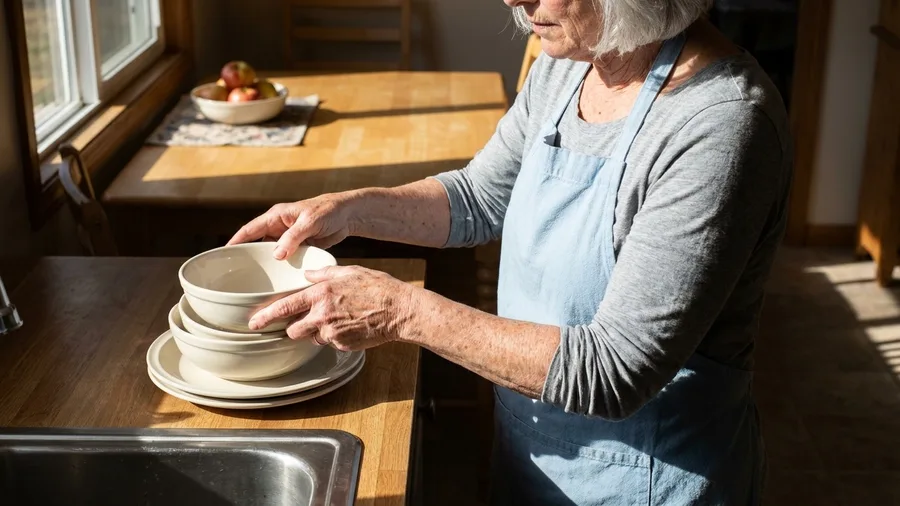
The meal ends with a sentence, not a slow fade. In the same way that a table without screens keeps everyone present to the last bite, one spoken word marks the finish line and tells the body the kitchen has closed.
Say 'gochisousama' after the last bite, out loud, all four seats at the table.
It is the phrase Japanese families use to close a meal, a thank-you to the cook and the food, and its real function at the table is as a stop signal: it names the end of eating so the end does not have to be negotiated bite by bite at the counter.
Then the clearing starts, and this is the part most households skip, because the plates stay put and the picking begins.
Every plate, every serving bowl, and the rice cooker comes off the table once the phrase is said. Not stacked to the side, not left for later, gone, because a serving bowl within arm's reach is an invitation no amount of good intention outlasts. The rice cooker is the big one; it holds a second and third helping in a warm metal pot meant to be dipped into all evening.
Then the kitchen light goes off.
That switch is the physical half of the close. A dark kitchen with clean counters is a room that reads as finished, and grazing needs a lit room and a reason to be standing in it.
Dessert, if there is dessert, is planned, not improvised: a small fruit bowl of about a half cup per person, put out on purpose. That is not a rule against sweets, it is a way to keep the fruit bowl a planned end to the meal rather than a bag of something opened while standing at the counter.
There is a catch worth naming. The first week, the phrase feels awkward to say out loud, and someone will reach for a leftover piece of fish before the bowls leave the table. That is fine.
The phrase and the cleared table are the last of the table defaults, and the most literal one. This is the moment the table stops offering food, and the meal ends with a thank-you and a dark kitchen.
💡 Tip: Say the phrase out loud even when you are alone at the table. It sounds odd the first time and normal by the fifth.
The Closing Habit – At a Glance
🗣️ Spoken Cue
After the last bite, every time
🧽 Table State
Cleared: plates, serving bowls, rice cooker
💡 Room Cue
Kitchen light off
🍊 Dessert
1/2 cup fruit, only if planned
⏱️ Time Cost
About 3 minutes
Why It Works
A spoken ending plus a cleared, darkened table closes the meal before grazing starts.
Frequently Asked Questions
Do I need to buy special Japanese dishes to do this?
No. You need four 4-inch rice bowls and four 6-oz soup bowls, which are cheap at any kitchen store or online. A set of 4-inch ceramic bowls costs very little, and most homes already own small bowls that will do. The size is the point, not the style.
What if my family refuses to put their phones away?
Start with the TV off and phones in a bowl by the door rather than in another room. A visible drop zone is easier to comply with than an invisible rule. The point is to keep all four seats occupied for 20-25 minutes, and you can get there in steps.
Is 4 oz of rice enough for a grown adult?
For most people at a dinner with three vegetable plates, a soup course and a 3-oz protein portion, yes — especially when the bowl limits bites and the meal stretches to 20-25 minutes. If you are very active, recovering from illness, or pregnant, your needs are different. Talk to your doctor or a registered dietitian about your own portions.
Does the hara hachi bu phrase really change anything?
The phrase itself is just words. What changes things is the pause it creates before a second helping, and the fact that the extra rice is off the table so stopping is easy. Together they give you a few minutes for fullness to register, which takes roughly twenty minutes after eating.
Can I do this if I live alone?
Yes, and it may be easier. Set one small rice bowl, one soup bowl and two vegetables plates, still say the closing phrase out loud, and still clear the table and turn off the kitchen light. The number of people changes the plate count, not the habit.
Where do I start if changing the whole table at once feels like too much?
Start with the bowls. Get four 4-inch rice bowls and serve rice in those, and nothing else this week. Once the smaller bowl feels normal, which takes about two weeks, add the vegetables and the two-round order.
Four Bowls Tonight, the Rest One at a Time
The verdict is plain: these are table defaults, not a diet. Small bowls and shared plates make portions look generous, soup and chopsticks stretch the meal past twenty minutes, two rounds and the 80-percent phrase delay seconds, and the closing phrase shuts the kitchen down.
If you have spent years cutting foods out, the change is seeing the same smaller portion read as a complete plate, because three shared vegetable plates and four 4-inch bowls are already in front of everyone.
Start with four 4-inch rice bowls and three vegetable plates tonight, then say gochisousama when the last bite is finished and turn off the kitchen light. Layer in the soup course, the chopsticks, the two rounds and the tea over the next month.
Come back to tonight's table. The bowls are already set, the plates are already shared, and the second helping that used to arrive before you decided is simply not within reach.
Count the Plates on Your Table Tonight
Before you serve, count what is visible: rice bowls, vegetable plates, and what is sitting within arm's reach of every seat. Start with the count, then add one habit from this list per week.