

Cutting calories, the conventional wisdom goes, means quietly writing off the foods that make a Tuesday bearable. The afternoon soda, the creamy yogurt, the chips on movie night, the cheese on the sandwich, the muffin with Saturday coffee. That assumption is why most calorie cuts fall apart in about nine days.
But the calories and the pleasure were never attached to the same thing. The swaps below are matched on the sensory job — carbonation, creaminess, crunch, coating, warmth — not on willpower. A 12-ounce cola is 140 calories and almost none of that is the cold can and the bubbles you were actually after; sparkling water with lime gives you both at zero, and your afternoon still has its ritual.
Each saving here is per stated serving in this illustrative US example, not population data, and ranges from 40 to 225 calories. Saving hundreds a day is not a restricted menu. It is a stack of small, familiar moves that fit cues you already have, which matters more with every birthday because appetite signaling and muscle-preserving protein needs both shift after 50.
Start with two that slot into this week, add a third once they feel automatic, then treat the rest as a menu to build three to five stacked swaps that clear several hundred calories without a diet-food feel.
Quick Tips Before You Start
Pick Two, Not Fifteen
Choose the two swaps that already fit meals you eat this week. Add a third only after the first two feel automatic.
Measure Once, Then Eyeball
Measure the first three servings with a real tablespoon or cup so your eye learns the portion.
Season the Replacement
Salt, acid and spice carry flavor that fat used to carry. A squeeze of lime or a pinch of smoked paprika does more than you think.
Same Slot, Same Cue
Put the swap where the original lived. The 3 p.m. fizzy drink becomes the 3 p.m. fizzy drink, not a glass of tap water at a different time.
Give It a Week
Your palate adjusts to less sweetness and less fat in about seven to ten days. Judge the swap at day ten, not day one.
1. Cola for Sparkling Water With Lime

The afternoon can, cracked open at 3 p.m., is a habit built around more than thirst. The cold metal, the hiss, the bubbles, the pause it forces in the day — the 140 calories in a 12-ounce cola come attached to all of it.
Swap the cola for 12 ounces of sparkling water with a squeezed lime wedge and that number drops to zero. A 140-calorie saving per drink, daily, for anyone who reaches for the same can every afternoon.
The lime is doing real work here. Aroma hits before the first sip, so the drink registers as flavored rather than as plain water in a fancy can — which is the reason most soda substitutions get abandoned by the second day.
Keep it cold, keep it in the same glass, keep the can if that's the cue. The fizz survives the swap, and so does the pause. That's what lets this one become automatic instead of becoming a single-day experiment you quietly quit.
💡 Tip: Serve it over crushed ice in the same glass you used for cola. Temperature and fizz carry more of the experience than sweetness does.
| Swap | Typical portion | Before (calories) | After (calories) | Calories saved | Best for |
|---|---|---|---|---|---|
| Cola for sparkling water + lime | 12 oz | 140 | 0 | 140 | Daily soda habit |
| Flavored yogurt for plain Greek + berries | 6 oz + 1/2 cup | 220 | 150 | 70 | Breakfast, snack |
| Granola for toasted oats + cinnamon | 1/2 cup | 240 | 150 | 90 | Yogurt topping, cereal |
| Mayonnaise for Greek yogurt | 2 tbsp | 180 | 30 | 150 | Tuna or chicken salad |
| Chips for air-popped popcorn | 1 oz / 3 cups | 160 | 90 | 70 | Movie night, desk snack |
| Ranch for balsamic vinaigrette | 2 tbsp | 140 | 70 | 70 | Green salads, grain bowls |
| All-rice for half rice, half cauliflower | 1 cup | 200 | 110 | 90 | Burrito bowls, stir-fries |
| Oil saute for broth saute | 2 tbsp / 1/4 cup | 240 | 15 | 225 | Onions, mushrooms, greens |
| Full-fat cheese for thin-sliced sharp | 1 oz / 1/2 oz | 110 | 55 | 55 | Sandwiches, omelets |
| Sour cream for Greek yogurt | 2 tbsp | 60 | 20 | 40 | Taco topping |
| Orange juice for a whole orange | 12 oz / 1 fruit | 165 | 60 | 105 | Breakfast juice habit |
| Breaded chicken for grilled chicken | 4 oz | 280 | 190 | 90 | Sandwiches, dinner plates |
| Coffee-shop muffin for English muffin + PB | 1 muffin | 400 | 260 | 140 | Morning coffee run |
| Alfredo for marinara | 1/2 cup | 220 | 80 | 140 | Weeknight pasta |
| Sweet cocktail for wine spritzer | 8 oz | 250 | 100 | 150 | Happy hour, toasts |
2. Plain Greek Yogurt With Berries
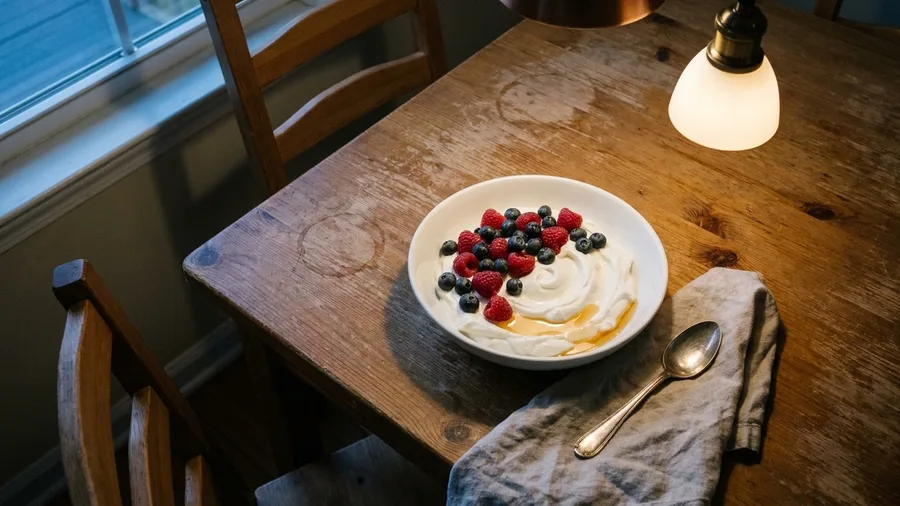
Preserving a ritual at zero calories is the easy version; creaminess is harder, because the mouth notices when a bowl goes thin. A 6-ounce cup of flavored fruit yogurt delivers creamy sweetness in a single serving — and 220 calories with it.
The fix keeps the bowl. Six ounces of plain Greek yogurt is 120 calories; half a cup of berries adds about 30. That's 150 total, a 70-calorie saving, with the portion, the spoon, and the sit-down intact.
Berries aren't decoration. They bring the sweetness and the texture that made the flavored cup appealing, and a teaspoon of honey stirred in is fine if the first week tastes too austere — it costs little and buys repeatability.
Your test is simple: does the bowl still read as creamy and sweet, or as punishment? If it reads as dessert at breakfast or as the 3 p.m. snack you actually look forward to, the swap sticks. If not, the honey goes in.
⚠️ COMMON MISTAKE
Do Not Swap Into a Bigger Bowl
People trade full-fat yogurt for nonfat and then serve themselves twice as much because it feels lighter. Use the 6-ounce cup or weigh it once. The swap saves calories only if the portion stays the same.
3. Toasted Oats for Granola

A creamy bowl needs something to crunch against, and granola is usually the culprit hiding in plain sight — half a cup runs about 240 calories, more than the yogurt underneath it.
Half a cup of rolled oats toasted with cinnamon comes in around 150. That's 90 calories saved per serving while the topping job stays filled.
Toast the oats dry in a skillet for 3 to 4 minutes, stirring, until they smell nutty and turn a shade darker. That step is the whole trick — raw oats taste like packing material, toasted oats taste like the topping you were buying.
Spread them over the yogurt, or eat them as cereal with cold milk, or keep a jar at your desk for the afternoon handful. The swap holds as long as the crunch and the warm spice come through, which is exactly what granola was giving you in the first place.
💡 Tip: A teaspoon of maple syrup tossed in with the oats while they toast adds about 17 calories and gets you closer to granola's flavor than any sugar-free version will.
🍳 Building Dinner the Broth-and-Grill Way
Honest serving sizes
Measure 2 tablespoons of oil once so your eye learns what the recipe actually calls for.
Get the pan hot
Heat a nonstick pan before any liquid goes in so vegetables brown instead of boil.
Splash, do not pour
Add broth one or two tablespoons at a time whenever the pan looks dry.
Marinate the chicken
Twenty minutes in yogurt, lemon and garlic keeps grilled chicken juicy without breading.
Sear, then rest
Grill or sear the chicken over medium-high heat, then let it rest five minutes before slicing.
Plate the same dish
Serve it in the same bowl with the same sides so the dinner still reads as familiar.
4. Greek Yogurt for Mayonnaise
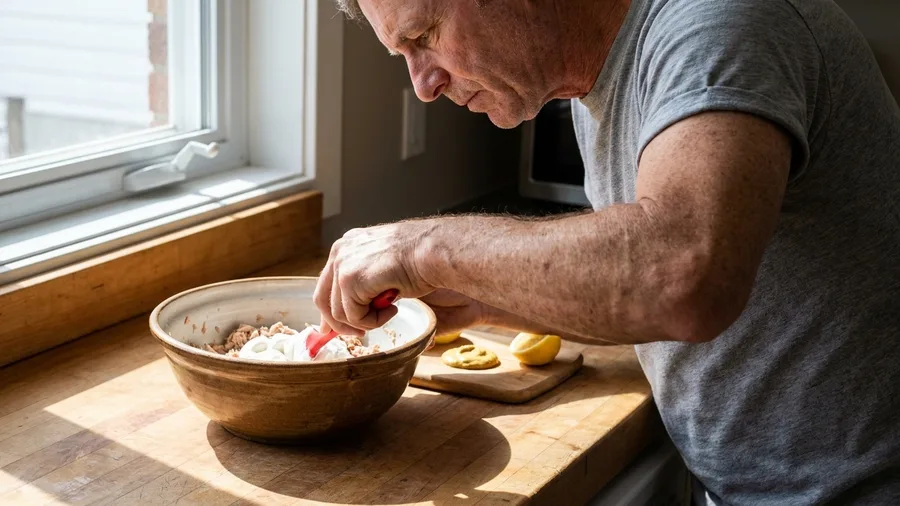
Texture is where most calorie cuts fail, and it fails just as often on the sandwich as it does on the breakfast bowl.
Mayonnaise earns its 180 calories in 2 tablespoons by doing a specific job: it carries tang and body, so tuna salad tastes rich instead of dry and a turkey sandwich does not scrape across the roof of your mouth. Take it away with nothing in its place and the bread feels chalky, the tuna tastes flat, and you are back at the jar by Thursday.
Two tablespoons of plain Greek yogurt run about 30 calories, so the swap trims roughly 150 per sandwich or scoop of salad.
The fat is what goes, not the creaminess. Greek yogurt is thick enough to coat the way mayonnaise does, and it brings a mild tang of its own, which is why it holds up in tuna, chicken, or egg salad where the other flavors are doing real work. It is not a fry oil and it will not behave like one in a hot pan, so keep it to cold mixtures.
Plain is the operative word. Stir in a spoon of Dijon, a squeeze of lemon, or a splash of pickle juice from the jar, and the dressing reads as seasoned rather than as diet food with a tang. If you want same-aisle swaps for other staples, what dietitians buy instead after fifty walks through them shelf by shelf.
The test is simple: if the salad tastes creamy and sharp, you will make it again next week without thinking, and 150 calories come off the total each time. If it tastes thin, add more mustard before you add the yogurt back.
5. Air-Popped Popcorn for Potato Chips

Once the creamy spreads are settled, the crunch is the next cue that has to survive contact with a calorie cut.
Chips in an ounce bag or a bowl beside the couch are 160 calories, and almost none of that is doing anything your body needs. What you are actually chasing is the snap, the salt, and the fact that your hands are busy through a movie or a long afternoon at the desk. That is why a celery stick never satisfies the same itch.
Three cups of air-popped popcorn come in around 90 calories, which saves about 70 over an ounce of chips, and it is still a pile you eat one piece at a time.
Popcorn goes stale and dusty if you leave it plain, so spray it lightly with oil, toss it with salt or smoked paprika, and it tastes seasoned instead of airy. Smoked paprika is what gives it some of the depth a chip gets from frying. Pop it yourself and you are in control of what goes on it.
The swap works because it meets the same moment: the bowl is on the couch, the hand goes to the mouth, the salt hits. Movie night and the desk drawer both run on that loop.
If the crunch and the salt are there, the swap gets repeated. If the popcorn tastes like packing material, it does not, so season it properly and the 70-calorie saving stays with you.
6. Balsamic Vinaigrette for Ranch
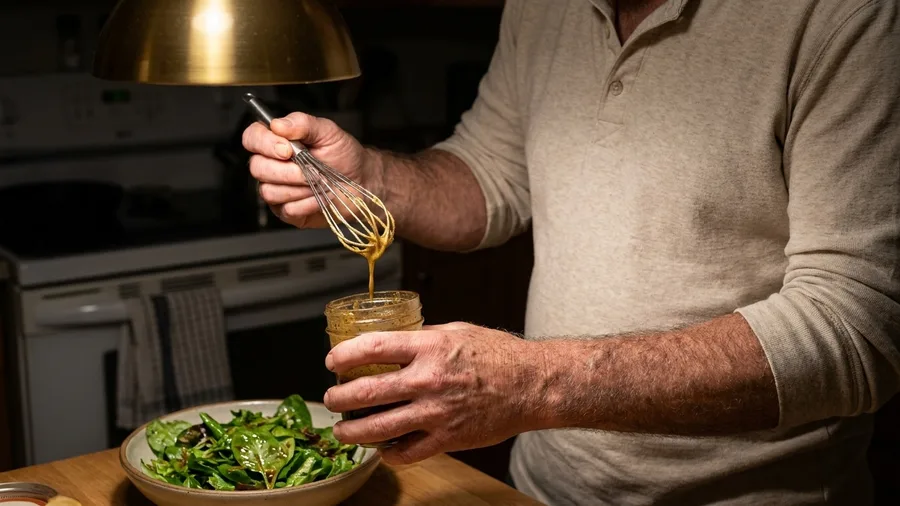
Crunch moves easily from the snack bowl to the salad bowl, and the dressing is where most of the calories and most of the sensory job actually sit.
Ranch does its work as a thick, creamy coat that clings to every leaf and makes a bowl of greens feel substantial. Two tablespoons carry about 140 calories, and on a large salad you may be pouring more than that without measuring.
Two tablespoons of balsamic vinaigrette are around 70 calories, so the swap saves roughly 70 per serving.
The trap is thin, watery dressing that pools at the bottom of the bowl and leaves the lettuce tasting plain. Whisk balsamic vinegar with olive oil, a spoon of mustard, and a pinch of salt, and the mustard emulsifies the mixture into something thick enough to cling. A dressing that coats the leaves the way ranch does feels like a proper salad.
Green salads and grain bowls take it best, since sharp vinegar cuts through the starch of rice or farro in a way that ranch just sits on top of.
The test is whether it clings and tastes sharp rather than watery. Meet that and the 70 calories come off the salad without the greens feeling like penance.
💡 Tip: Toss the salad for a full 20 seconds with tongs. Evenly distributed dressing makes a smaller amount taste like more.
7. Half Rice, Half Cauliflower Rice

Rice earns its place at dinner because of texture, not flavor. It is the grain you chew against the sauce, the thing that makes a burrito bowl a bowl instead of a salad. Which is why the all-or-nothing version of cutting back – no rice at all – tends to last about four days before someone orders a full burrito.
One cup of cooked white rice runs about 200 calories. The same cup, half rice and half cauliflower rice, comes in around 110. That is a 90-calorie saving in the exact spot where a dinner habit lives, every weeknight, without a separate decision each time.
The catch is the cauliflower. Raw or rushed, it tastes sulfurous and wet, and it gives the whole bowl away. Sauté the cauliflower rice with garlic first, even for three or four minutes, until the raw edge cooks off and it starts to smell like something you want to eat.
Once that's handled, the swap travels well. It works in burrito bowls, stir-fries, and curry – all dishes where a sauce is doing heavy lifting and the rice is mostly there for body. In a dish where plain rice is the point, skip it that night; the swap is a menu item, not a rule.
The repeatability test here is texture dominance. If the grain still reads as the main event and the cauliflower sits quietly underneath, you will make it again next week. If the bowl feels like rice mixed with vegetables, it becomes a one-time experiment.
Percentagewise, halving the rice cuts the base almost in half while the plate looks the same shape. Most people eat with their eyes first, and a full-looking bowl of grain under a stir-fry reads as dinner, not a diet.
Half-and-Half Rice — At a Glance
❄️ Freeze first
Bag it flat, 3 months
💧 Wet-cauliflower fix
Dry 5 min in a hot pan, no oil
🥶 A faster shortcut
Toss frozen riced cauliflower straight in
⚖️ Portion check
1 cup cooked = 1/2 cup each, raw
🥦 Stand-in switch
Broccoli rice if cauliflower turns you off
The limit
Don't go past half and half. Above that the texture flips and the bowl stops reading as rice at all.
8. Broth Saute for Oil Saute

Swapping what you cook in is a different lever from swapping what you cook. The volume trick works on the food; the method swap works on the pan. And the gap here is bigger than any single ingredient on this list.
Two tablespoons of olive oil in a sauté pan is roughly 240 calories – more than the vegetables themselves. A quarter cup of broth is about 15. That is a 225-calorie difference, and it comes down to one question: do vegetables actually need a pool of fat to cook well?
They need heat, moisture, and contact with the pan. Fat carries flavor and helps browning, but it is not the only way to get a pan going.
The technique matters more than the substitution. Add the broth a splash at a time rather than pouring it in at once. You want the vegetables to steam in a thin layer of moisture and still pick up browned edges, not sit in liquid and boil to mush. Onions, mushrooms, greens, and zucchini all respond well to this – mushrooms especially, since they release water as they cook anyway. When a recipe still calls for oil, matching oil to pan heat keeps the sear without wasting fat.
The repeatability test is tenderness and color. If the onions go soft and translucent and the mushrooms get dark edges where they touched the pan, nothing feels missing. If they come out gray and limp, you used too much broth or not enough heat.
One small note: a teaspoon of oil at the start still helps with sticking and flavor in a cold pan. You can cut the fat without cutting it to zero, and that version is the one most cooks stick with.
💡 Tip: A nonstick or well-seasoned carbon steel pan makes this much easier. Stainless steel will grab and stick without oil.
9. Thin-Sliced Cheese for Full-Fat Slices

Cheese is the one most people refuse to touch, and understandably. A sandwich without cheese is a different sandwich. But cheese is also a portion problem disguised as an all-or-nothing one.
One ounce of full-fat cheese is about 110 calories. Half an ounce, sliced thin, is about 55. That is a 55-calorie saving, which sounds modest next to the pan and the grain – but it is one of the easiest to make automatic, because the change is in the slice, not the decision.
The role cheese plays on a sandwich is melt and sharpness. A sharp cheddar, a sharp provolone, an aged Swiss – these deliver more flavor per square inch than a mild cheese, so half the amount still registers as cheese rather than a rumor of it. Buy the sharp version.
Thin slicing is the whole trick. A deli counter can slice to order, and most supermarkets sell pre-sliced thin varieties. When the melt covers the same surface area as a full slice, the sandwich reads the same.
It works on sandwiches, burgers, and omelets – anywhere the cheese is a layer rather than a block. On a cheese board or in a recipe where cheese is the main event, this is not the swap to reach for.
The repeatability test is coverage. If the cheese spreads across the bread and melts into the edges, you will not miss the extra ounce. If it sits as a small island in the middle, the sandwich feels like it was shorted.
Taco Night: Which Topping Do You Keep?
Keep sour cream, thin it
- 2 tbsp sour cream: 60 calories
- Stir in lime and salt
- Dollop at the table, not in the pan
- Works with black beans and beef
- Familiar taste, no adjustment period
Swap to Greek yogurt
- 2 tbsp Greek yogurt: 20 calories
- Saves 40 per serving
- Add a pinch of salt and lime
- Cold topping only, never in a hot sauce
- Same cooling tang on the taco
10. Greek Yogurt for Sour Cream
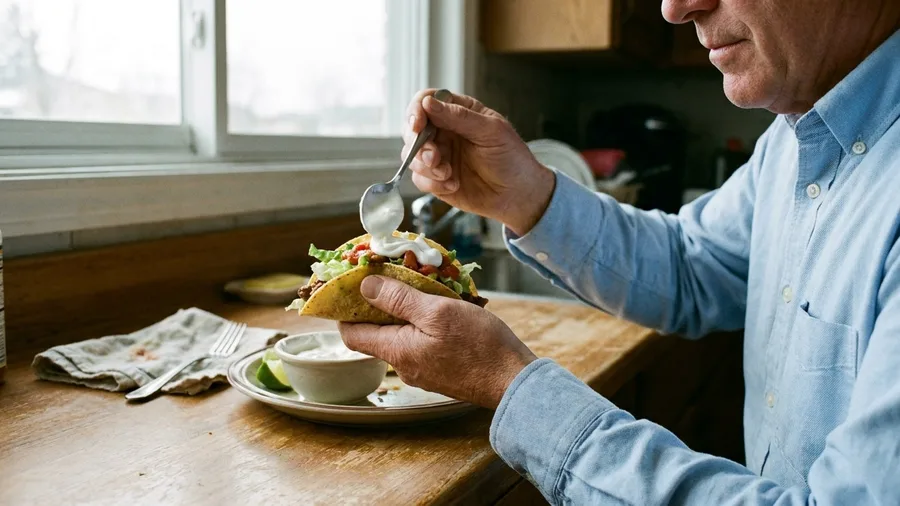
A cold, creamy topping is doing the same job whether it lands on a burger or a taco: it cools the heat, cuts the richness, and gives each bite a tangy edge. Sour cream nails that job on taco night. Two tablespoons run 60 calories, and most people take more than two.
Greek yogurt does the same work for 20 calories per two tablespoons, a saving of 40.
It is not a perfect stand-in straight from the tub. Plain Greek yogurt is sharper and thinner than sour cream, so it reads as a mistake unless you make it taste deliberate.
Stir in a pinch of salt and a squeeze of lime before it goes on the plate. That small step turns it from a substitute into a topping with a point of view, and the cool tang that makes sour cream work on a taco is intact.
Where it belongs matters as much as how you season it. Cold is Greek yogurt's territory: dolloped on tacos, swirled into chili at the table, spooned over a baked potato.
Stirred into a hot pan sauce, it will split and turn grainy, and the texture cue is exactly what you were trying to keep. Keep it off the heat and it holds.
For a weeknight taco routine, that is the whole test. If the cooling tang survives and the plate looks the same, the swap becomes automatic. If it tastes like a compromise, no saving is worth the friction.
11. Whole Orange for Orange Juice
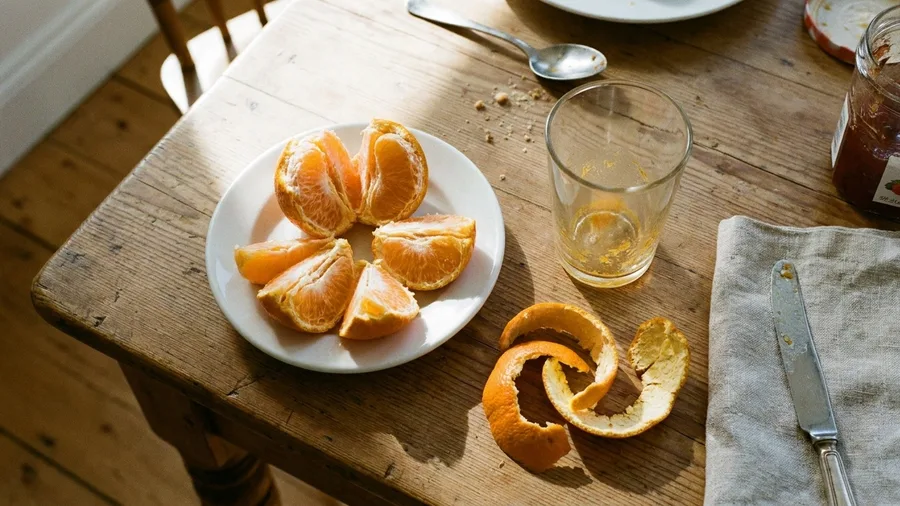
Liquid calories go down fast and leave nothing behind. A 12-ounce glass of orange juice is 165 calories, and it disappears in under a minute without a single chew.
One whole orange is 60 calories, a saving of 105, and it takes several minutes to eat.
The difference is not just the number. The fruit brings fiber and structure, and peeling and segmenting it stretches the moment into something closer to a snack than a drink. That longer cue is why the swap sticks: the habit becomes eating, not gulping.
Breakfast is where this one earns its place. If juice is the first thing you reach for at the counter, put an orange in the same spot. A mid-morning juice run becomes a mid-morning orange, and the ritual holds even as the form changes.
There is a trade-off in convenience. An orange needs hands and a minute, and some mornings that is one demand too many.
On those mornings, a glass of water beside the fruit beats skipping it. The point is to keep the cue alive, not to be rigid about it.
💡 PRO TIP
Juice Habits Are Place Cues
Most people pour juice out of routine rather than desire. Move the carton to the back of the fridge for a week and leave a bowl of oranges at eye level on the counter. The habit follows what you can see.
12. Grilled Chicken for Breaded Chicken

Breaded chicken sells itself on being juicy and seasoned, and the breading is doing the work of keeping it that way. Four ounces run 280 calories, much of it from the coating and the oil it absorbs.
Four ounces of grilled chicken is 190 calories, a saving of 90, and the plate looks nearly the same.
Nearly is the word that matters. Grilled chicken goes dry and bland in a hurry if you just swap it in plain, and a dry cutlet is the reason people abandon this one by Wednesday.
Brine or marinate it first. Twenty minutes in salt water or a lemon-and-oil marinade keeps the meat juicy without the crust, and a good sear gives it the seasoned edge the breading used to supply.
It works in sandwiches, over salads, and on the dinner plate, which is what makes it repeatable. The meal stays familiar. Only the preparation changes.
The test is simple: if the chicken is still moist and seasoned, the swap disappears into the routine. If it is dry, the saving never gets repeated.
💡 Tip: Pound the breast to an even thickness first. Even thickness matters more than any marinade for keeping grilled chicken from drying at the edges.
13. English Muffin With Peanut Butter for a Muffin

The warm, toasty edge matters more than people think. That same logic rebuilds a bakery breakfast once cooking method is on the table.
A coffee-shop muffin does two jobs at once: it is warm from the case, and it comes with the coffee. The role is ritual as much as flavor. The 400 calories go down fast because there is nothing to slow you down between sips.
Swap it for an English muffin with 1 tbsp peanut butter at 260 calories, and the saving is 140. That is a large number for a change that keeps the morning coffee run intact.
Toast the English muffin until the edges go crisp, then add a dusting of cinnamon. The crisp edge and warm spice carry the bakery feel; soft bread alone will not do it.
This suits the desk breakfast or the coffee-shop stop equally well. It stays repeatable when the warm, toasty, sweet cue survives, which is the only test that matters here.
14. Marinara for Alfredo

A creamy pasta coating can be rebuilt smaller, the way a warm breakfast can, without losing the texture people come for.
Alfredo's entire job is body: it clings to penne and coats the tongue. Half a cup runs 220 calories, and most plates get more than that before the pasta is even counted.
The swap is half a cup of marinara at 80 calories, saving 140 per serving. It has to be finished right or it reads thin and watery.
Finish with parmesan and plenty of cracked black pepper. Acid from the tomatoes, herbs, and a hard grating cheese give the sauce enough weight to coat pasta properly.
Best on spaghetti, penne, or any weeknight plate. It holds up when the coating has body and tastes bright rather than plain, which is what makes it a second-Tuesday dinner rather than a one-off.
Where These Swaps Go Wrong
15. Wine Spritzer for a Sweet Cocktail

Bubbles and ritual carry more of a drink than sugar does, and that is where the last swap lives.
A sweet cocktail's real role is a glass in your hand and something festive in it. Eight ounces runs about 250 calories, much of it from the mixer, and it goes down quickly at a happy hour.
Swap it for an 8 oz wine spritzer at 100 calories and the saving is 150. Soda water stretches the wine, keeping the fizz without the syrup.
Pack the glass with ice and add a citrus twist. The cold, the bubbles, and the peel's aroma do the work a sugary mixer was doing.
It suits happy hour or a weekend toast, and it stays repeatable when the social ritual and the fizz remain. Any decision about alcohol belongs with your own doctor, not this list.
Frequently Asked Questions
How many calories can I realistically save in a day with these swaps?
It depends on which ones you use. Stacking a drink swap at 140, a mayonnaise swap at 150, a broth saute at 225 and a pasta sauce swap at 140 clears several hundred calories before you touch a single snack. Two or three swaps a day is a realistic starting point, not all fifteen.
Will these swaps actually keep me full, or will I be hungry an hour later?
The ones that work best for fullness are the protein and fiber swaps: Greek yogurt instead of sour cream or mayonnaise, the whole orange instead of juice, and the popcorn instead of chips because of the volume. Swaps that only remove fat without adding volume, like thinner cheese, are easier to notice. Pair those with a protein at the same meal.
Do I need to buy special diet products for any of this?
No. Everything on this list is a regular grocery item: plain Greek yogurt, rolled oats, an English muffin, sparkling water, broth, a jar of marinara. The only thing worth checking is the yogurt, since plain Greek has roughly double the protein of the thinner flavored kind and holds up better in a bowl.
How long before I stop missing the original versions?
Most people notice sweetness and fat levels differently after about seven to ten days of consistent swaps. The first three days are the hardest, which is why the advice is to pick two swaps and keep everything else the same, rather than overhauling the whole week at once.
What if I have a health condition or take medication?
These are food substitutions, not a treatment plan, and they can be adjusted to most eating patterns. If you manage a condition with your doctor, bring the list to your next visit and ask which swaps fit your situation, particularly around sodium in broth and dressings or alcohol if you are on medication that interacts with it.
Can I use these swaps when cooking for a family who did not sign up for them?
Yes, and you should, as long as the finished dish still looks like the dish. Half rice and half cauliflower rice in a burrito bowl, marinara finished with parmesan on pasta, or grilled chicken marinated in yogurt all pass as normal food. The swaps that get noticed are the ones where the texture was abandoned, like plain cauliflower rice standing in for all of it.
Two Swaps This Week, a Third When They Fade
The verdict is plain: these fifteen are a menu, not a single-day prescription. A swap earns its place only if the taste and texture make it repeatable, and nobody needs to run the whole list at once.
Start with the two that already fit your week. If a cola lands every afternoon, sparkling water with lime takes 140 calories off the strongest habit you have; if sandwiches are lunch, mayonnaise to Greek yogurt takes 150. Run both daily until they feel automatic, then add a third – chips to air-popped popcorn for 70, or the half-rice blend for 90.
The arithmetic stacks quietly: 140 plus 150 plus 70 is 360, and adding the rice blend at 90 and toasted oats at 90 reaches 540. The fizz, the creamy bowl, the crunchy snack, the warm muffin, the drink in hand all stay. The calorie cut is just the byproduct of repeating swaps that taste like food you already eat.
Pick Your Two Tonight
Open the fridge, find the one habit that repeats daily, and check the calorie table above for its swap. That is your first one. Your second is whatever you eat most often after it.