
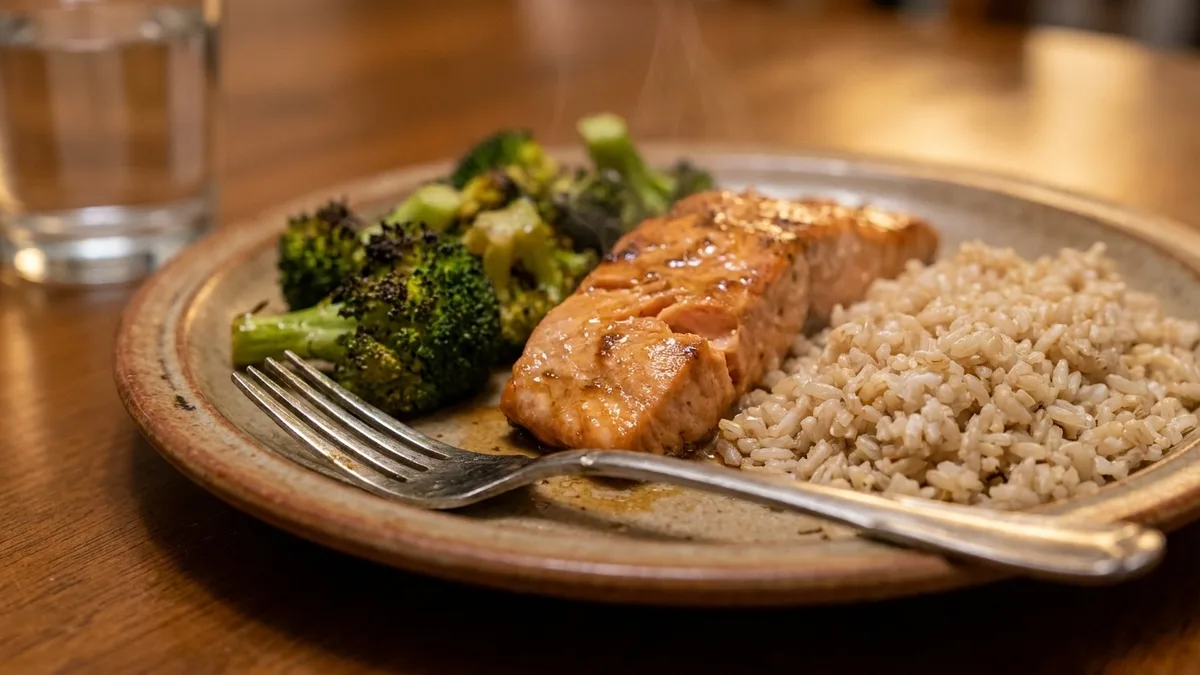
Twenty minutes. That is the stretch most people need before the gut registers that food has arrived, and it is usually longer than the meal itself lasts.
Dinner ends while everyone else is still working through their plate, and the serving spoon is already back in the bowl for seconds before the question of hunger has come up at all. The problem is not speed on its own. Speed skips the pauses where taste and fullness actually register, so the second helping arrives before any decision gets made.
Seven tactics, each with a different pause placed in that chain. None of them costs much: a glass of water, a phone or kitchen timer, a plate carried over from the counter. Each gets seven dinners, one trick at a time, and the count that matters is second helpings, not how slow the meal looked.
Match the trick to the point where dinner tends to run away from you, run it for a week, and let the tally tell you whether the pause caught anything.
Quick Tips Before You Start
Pick Your Pause Point
Start with the tactic aimed at where dinner runs away from you – the first bite, the middle, or the seconds reach.
Log It Same Night
Tally second helpings right after the plate is cleared, not the next morning. Memory smooths the number down.
Split the Glass
8 to 12 ounces total: half before the first bite, half partway through, so the pause has a start and an end.
Set the Checkpoint
Aim for 20 minutes and glance at the clock at 10. That midpoint is where the meal usually ends too early.
Park the Bowls
Plates at the counter, serving bowls left in the kitchen. Seconds then cost a walk instead of a reach.
1. The Fork-Down Pause

The pace of dinner is set in the middle of the meal, in the seconds between a swallow and the next forkful, and that is where the first tactic lands. Instead of trying to eat more slowly in general, you borrow Japanese table habits and give yourself one repeated pause at the exact spot the habit lives.
The mechanics are simple. After each swallow, the fork goes down on the plate, and you take two slow breaths before picking it up again. That is the whole rule.
Those two breaths are not about relaxation for its own sake. They create a gap of a few seconds in which the body has a chance to register what it has already taken in, and fullness is one of the signals that arrives late, well behind the taste of the food. The pause stretches the window just enough that the signal can catch up before a hand reaches for more.
Keep a glass of water within reach and take a sip during the pause if sitting with an idle fork feels awkward. At a family-style table where a silent pause would read as strange, the sip does the same job and gives your hands something to do. Your knees are not the problem here, and neither is your appetite; the fork simply moves on before the message lands.
This suits the person who clears the first half of the plate in a rush and looks up to find everyone else still working. No chew counting is required, which is the point. Counting chews turns dinner into a task within two nights, and most people abandon tasks.
Then you measure it, and you measure it honestly. Run the fork-down pause for seven dinners, one trick at a time, and count second helpings rather than chews or minutes.
The pause has to land at the reach for more, because that is the moment being tested. If the second helping still arrives with the same reflex across seven dinners, the fork-down pause is not the first lever for you, and the honest move is to try a different tactic rather than push harder on this one.
💡 Tip: If two breaths feels too long, start with one. The goal is a gap, not a ritual.
| Trick | What it changes | Effort | Best for |
|---|---|---|---|
| Fork-Down Pause | Puts a gap between swallows | Low | Finishing the first half in a rush |
| Water-First Starter | Adds a pause before the first bite | Low | Sitting down very thirsty |
| Kitchen-Serving Setup | Makes seconds require a walk | Low | Serving bowls within arm's reach |
| Non-Dominant-Hand Switch | Interrupts the hand's autopilot | Medium | Solo or low-stakes dinners |
| First-Three-Bites Slowdown | Slows the opening rush | Low | Starting dinner ravenous |
| Twenty-Minute Timer | Calibrates pace against a baseline | Low | Finishing in five to ten minutes |
| Screen-Free Table | Puts attention back on the plate | Medium | Scrolling or watching while eating |
2. The Water-First Starter
A pause between bites reshapes the middle of a meal, but the opening minutes run on a separate track, driven by thirst, arrival, and the sheer relief of sitting down. The water-first starter tests whether a pause before the first bite changes how the rest of dinner unfolds.
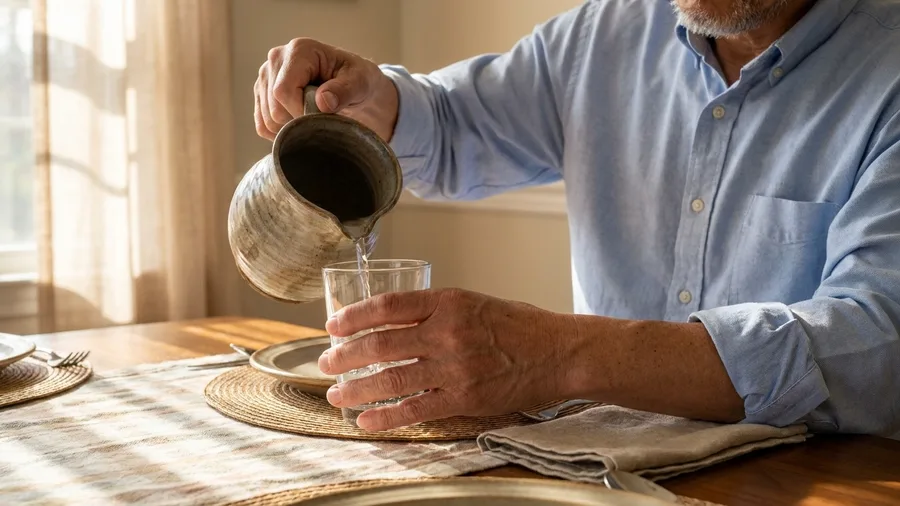
Fill a glass with 8 to 12 ounces of water. Finish half of it before the first bite of food, then sip the rest across the meal as the plate empties. That is the entire setup.
The glass matters more than the water. A bottle gets tilted and set back down in a single motion, while a glass has to be lifted, held, and returned to the table, and each of those small movements is a physical pause built into the meal. The pause is doing the work.
This tactic fits the person who arrives at the table genuinely thirsty, or who eats standing at the counter with one eye on the stove. Both are situations where the first bites happen before anyone has decided to sit down properly.
Be clear about what the water is and is not. It is not an appetite suppressant, and it will not make hunger disappear. It is a pacing cue, a way to insert a deliberate beat before the meal begins. Anyone with fluid limits from a heart or kidney condition should skip this one and ask their doctor what pacing cue makes sense instead.
The seven-dinner test for the water-first starter counts two things: second helpings, and whether you can tell thirst apart from hunger at the start of the meal. Run it for seven dinners, one trick at a time, and keep the count simple.
The tactic earns its place only if that pre-meal pause changes the reach for more. If the second helping still shows up on schedule and the water did nothing but make you need the bathroom, cross it off and move to the next lever.
3. The Kitchen-Serving Setup
Pace the beginning of the meal and the next automatic move arrives a few minutes later, when the fork is still working and the arm reaches sideways without any decision behind it.
The bowls are what make that reach so easy.
Serving dishes within arm's reach turn a second helping into a reflex: no stand-up, no walk, no gap between the thought and the food. The setup below does not ask for more willpower. It puts distance where the reflex used to find nothing.
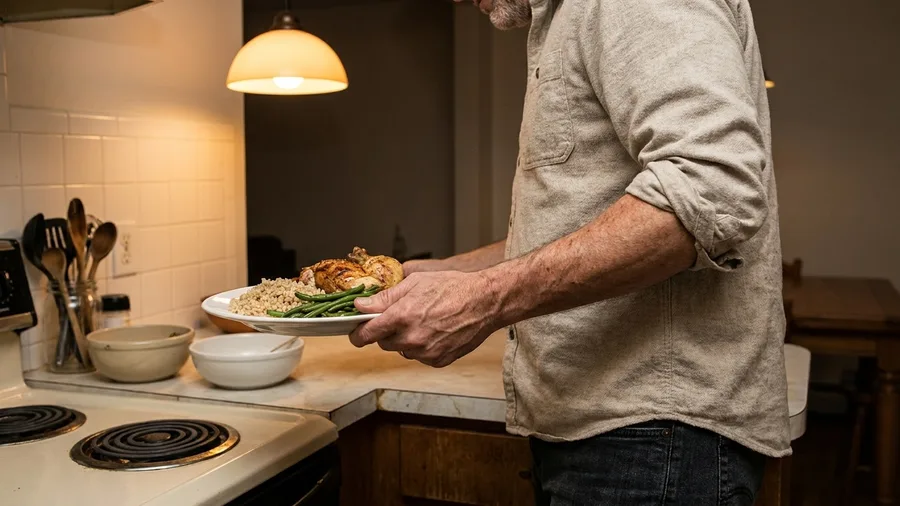
Plate the whole dinner in the kitchen, at the counter, and carry only that plate to the table.
Leave the serving bowls where they are, next to the stove, and pour the water before you sit. The first helping now takes one trip, and the second takes a second trip, ten or so steps each way with an empty plate in your hand.
If picking from the serving dish while you cook or clean up is the habit, pack the leftovers into containers before you sit down. Foil on, lids on, into the fridge, so the food that stays out is the food on your plate.
This suits a household where the bowls sit down with you at the table. If passing dishes is part of how your family eats, keep the passing and swap in a smaller serving spoon, so each scoop is a smaller decision.
The setup changes access, not appetite.
That matters because the walk is not the point. The point is the four or five seconds it buys, standing over the stove with the spoon in reach, long enough for one plain question to surface: am I still hungry?
Sometimes the answer is yes and the spoon goes in. The tactic has not failed. It has turned an automatic refill into an answer.
Run it alone for seven dinners, one trick at a time, and count second helpings on each of the seven nights.
If the number does not move, the reach for more is not coming from where the bowls sit, and the lever to test next is somewhere else in the meal. If it drops, even by one or two helpings across the week, the counter-to-table distance has earned a permanent place in the kitchen.
⚠️ COMMON MISTAKE
Setting up too many rules at once
The most common mistake with dinner pacing is stacking four tactics in one evening, then deciding the whole thing failed when dinner still felt rushed. Run one trick for seven dinners and count one number: second helpings. Anything else is noise.
4. The Non-Dominant-Hand Switch
Taking the bowls off the table removes one trigger. The hand that keeps lifting the fork at its usual clip is the next one to look at.
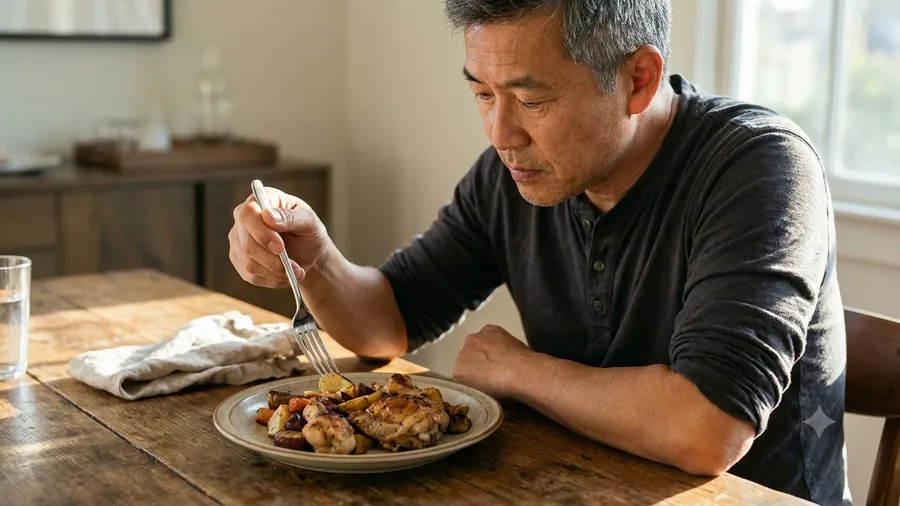
For the first half of the meal, put the fork in the hand you never use for it. Right-handed eaters eat left-handed; lefties do the reverse. Then switch back whenever the awkwardness gets old. The first few bites feel clumsy and slow, and the food lands in slightly the wrong spot, which is the entire point: the clumsiness is the pause, arriving without willpower.
Do the prep before the first bite. Cut the protein and vegetables into smaller pieces than usual while the plate is still full, so the wrong hand only has to lift and aim. Skip that step and the switch turns a dinner into a wrestling match, and most people give up somewhere in the second half.
A plate of pasta and a plate of roast chicken are different problems. Skip the switch at a work dinner or anywhere manners carry weight, and save it for solo dinners or meals with people who will not notice or mind. This tactic suits the table, not the person.
Expect awkward, not calm. Physical therapists who retrain movement after injury use the same lever, the non-dominant side, because a body cannot run an old pattern on an unfamiliar hand. At the table, the switched fork makes one bite in six register as a decision instead of a reflex, and that noticing is the whole return.
Run it for seven dinners, one trick only, and keep two counts: second helpings, and how many times the wrong-hand lift made the next bite feel chosen rather than automatic. If the numbers do not move, this switch is not the lever for this reader, and the next pause is worth a week instead.
💡 Tip: Pre-cut your food before the first bite. It removes the only genuinely frustrating part of the switch.
5. The First-Three-Bites Slowdown
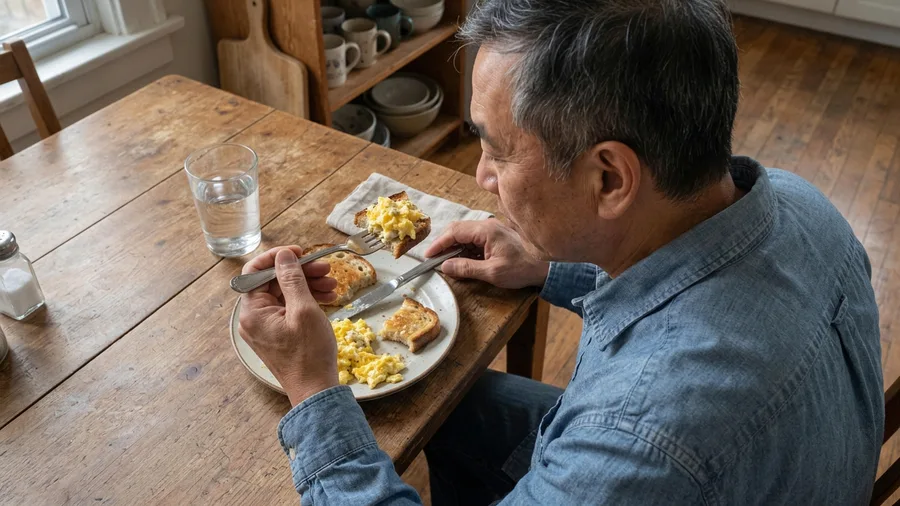
The non-dominant hand interrupts the rhythm of the whole meal, which is useful and tiring in equal measure. The opening minutes are where the rush actually starts, so narrowing the intervention to the first few bites tests whether you need to slow the entire dinner or only its beginning.
Three bites. That is the whole tactic.
For those first three bites, treat the fork like a tasting spoon. Before you swallow, name three things in your head: the temperature, the texture, and whether the salt or spice is where you want it. Set the fork down on the plate between each one.
It suits people who sit down ravenous, the ones whose first four bites are gone before anyone else has picked up a fork. It slows the opening rush without asking for a ritual, a breath count, or anything you have to explain to the person across the table.
One caution. If you have a history of rigid food rules, keep this a sensory game and nothing more, a report on what is on the fork rather than a verdict about whether you are eating the right way. Naming what you taste is different from grading it.
Run it for seven dinners and count second helpings, plus whether the opening slowdown lasts past bite three or dissolves the moment conversation starts. Momentum begins at the front of the meal, so if the first bites do not slow, nothing later in the dinner will.
What Each Tactic Actually Costs You
Prices reflect what a typical household already owns; nothing here needs buying.
6. The Twenty-Minute Dinner Timer
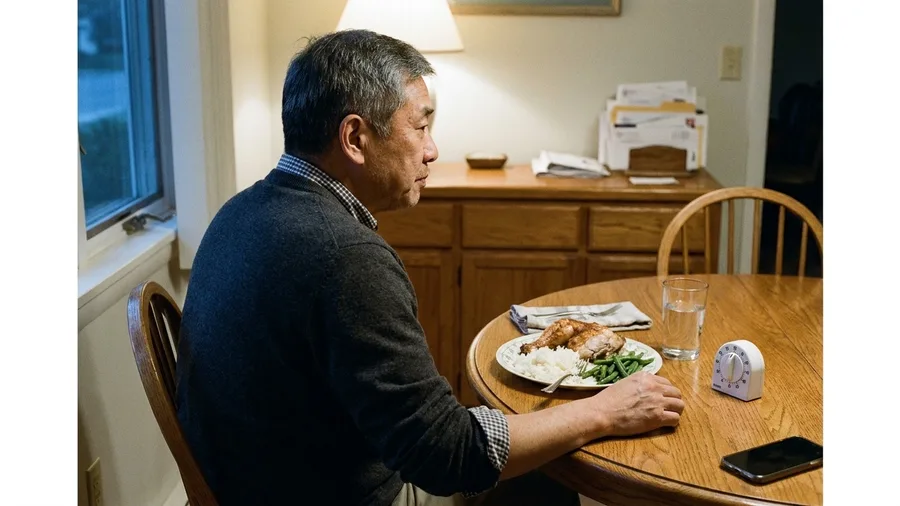
Starting slow clears the opening rush. The harder question is whether the meal then holds its pace or quietly collapses back into five-minute eating by the time the plate is half empty.
No special foods, app, or meditation cushion required. A phone timer or the timer on the oven is enough.
Set the timer for 20 minutes as you sit down, then check one thing at the halfway point: at the 10-minute mark, food should still be on the plate. Not much, and not artfully arranged, just enough that the meal is only half over when the clock says it is. That mid-meal check tells you more than the final number, because most rushed dinners come apart in the first ten minutes, not the last five.
A visual timer or a kitchen clock works as well as a phone. If the phone is the thing that starts the scrolling, lay it face down across the room or leave it in the kitchen and let the oven timer do the job.
There is no universal correct meal length. Compare the 20 minutes against your own baseline, not someone else's. If dinner normally takes seven, 20 is a big stretch, and the honest target is 12 or 15 with food left at the 10-minute check; pushing straight to 20 tends to turn dinner into a performance the reader abandons by the third night. Anyone who finds that a timer makes the meal tense should set it aside rather than add another source of dread to the evening.
Run the timer for seven dinners, one trick at a time, and log two things every night: second helpings, and the reading on the clock at the halfway mark. The timer is a pacing check, not a race or a score to beat. If the 10-minute reading shows an empty plate all seven nights and the second helpings do not drop, the clock has told you something useful: the pace is not where this reader's autopilot lives.
🍽️ Running the Seven-Dinner Test
Pick one trick
Choose the single tactic that matches where your dinner goes fastest.
Set it up before the meal
Glass poured, fork placed, timer set, or serving bowls moved to the counter.
Eat dinner normally
No scoring, no chew counting, no commentary at the table.
Mark the number
Write down how many second helpings you took, even if the answer is zero.
Repeat for seven dinners
Same trick, same tally, no additions until the week is done.
Compare, then decide
If second helpings did not move, this was not your first lever. Try the next trick.
7. The Screen-Free Table
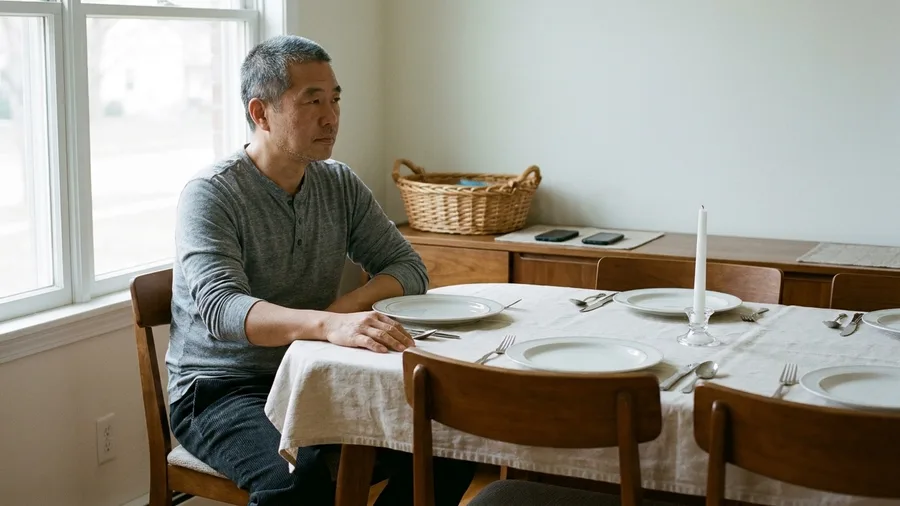
A clock marks the minutes; it cannot make you look at your plate. That is the catch with any pacing cue, and it is why the last pause worth building is the one that takes the screen off the table.
Ask anyone who eats in front of a show and they will tell you the plate is empty before the plot resolves. The reach for more happens while the eyes are somewhere else entirely.
The setup is plain. Phones go in a basket or a drawer, out of arm's reach and off the table surface. If a placemat or an unlit candle helps signal that this is a sit-down meal and not a standing snack, leave it there as a cue.
Living alone changes the shape of it. A record or a podcast playing in the background gives the meal some company without putting anything in front of your eyes, which is the distinction that matters here.
This one suits the person who scrolls or half-watches while eating. In households where the TV is the only shared time together, the honest starting point is one screen-free dinner a week, not a total ban that nobody will keep. Chances are high the first attempt feels strange and a little dull; that dullness is the noticing coming back.
After a week, compare two things: how often you look up from the plate, and whether you can actually recall the taste of what you ate.
Run it the way the others are run: one trick for seven dinners. Count second helpings, and pay attention to attention itself, because cues only work when there is enough of it left at the table to catch them.
What Slowing Down Does and Does Not Do
Worth Expecting
- Fullness signals get a chance to land before the plate is empty
- Second helpings become a decision instead of a reflex
- You notice what the meal actually tasted like
- One tactic per week is enough to see whether it changes anything
Do Not Expect
- Effortless weight loss from a single dinner trick
- A calm, meditative meal every night
- A fix for genuine hunger that has been building since lunch
- Anything measurable in one or two dinners
Frequently Asked Questions
How do I know if I am eating too fast?
Finish a normal dinner and check the clock. If you are done in five to ten minutes while others are still eating, you are eating faster than the pace at which fullness signals tend to register. The twenty-minute timer gives you a comparison against your own baseline rather than a rule from outside.
Should I count chews?
No. Chew counting is tedious enough that most people quit within three dinners. The fork-down pause gets the same result with less bookkeeping: a gap between swallows, not a number to hit.
Will drinking water before dinner actually make me eat less?
Not on its own. Water is a pacing cue in this context, not an appetite suppressant. The benefit comes from the pause it creates before the first bite and from being able to tell thirst from hunger. Anyone with fluid restrictions should skip this tactic.
What if I live alone and hate eating without a screen?
Try music or a podcast instead of a screen. The goal is to break the pattern of eating while watching something rather than the plate. One screen-free dinner a week is a reasonable start, and you can add a second once the first feels normal.
How long before a mindful eating trick becomes a habit?
Give it seven dinners before you judge it. The first two or three will feel forced, and the fourth or fifth is usually where it either clicks or stops feeling worth the effort. If it has not changed your second helpings after a week, move on to another trick.
Should I try more than one of these at once?
Run one trick at a time for seven dinners. Stacking two or three at once feels productive and tells you nothing, because you cannot tell which change moved the number. Add a second only once the first is running without effort.
Pick One Trick for Seven Dinners
Start with the fork-down pause if you eat fastest in the first five minutes. Use the twenty-minute timer with its 10-minute check if you lose track of time entirely. Clear the screens off the table if distraction is the main problem. Pick one, run it for seven dinners, and compare second helpings, not how slow you looked doing it.
A tactic that changes nothing across a week is information, not failure. Move to the next one and keep the tally going.
Either way, you come back to that clean plate ahead of everyone else's, and one clear decision waits there: whether the serving spoon gets picked up. The target was never a slow eater's performance. It was noticing fullness early enough, in the twenty minutes you already have, that seconds become a choice instead of a reflex.
Start with the fork-down pause tonight
Read trick one again, put the fork on the plate after your next swallow, and write down how many second helpings you take for the first of your seven dinners.