Why Am I Not Losing Weight? 7 Hidden Reasons + Simple Fixes
You’re eating less. You’re moving more. You’ve given up your favorite foods and still nothing. The scale will not budge. If you keep asking yourself why am I not losing weight, you are not alone, and you are almost certainly not doing something as wrong as you think.
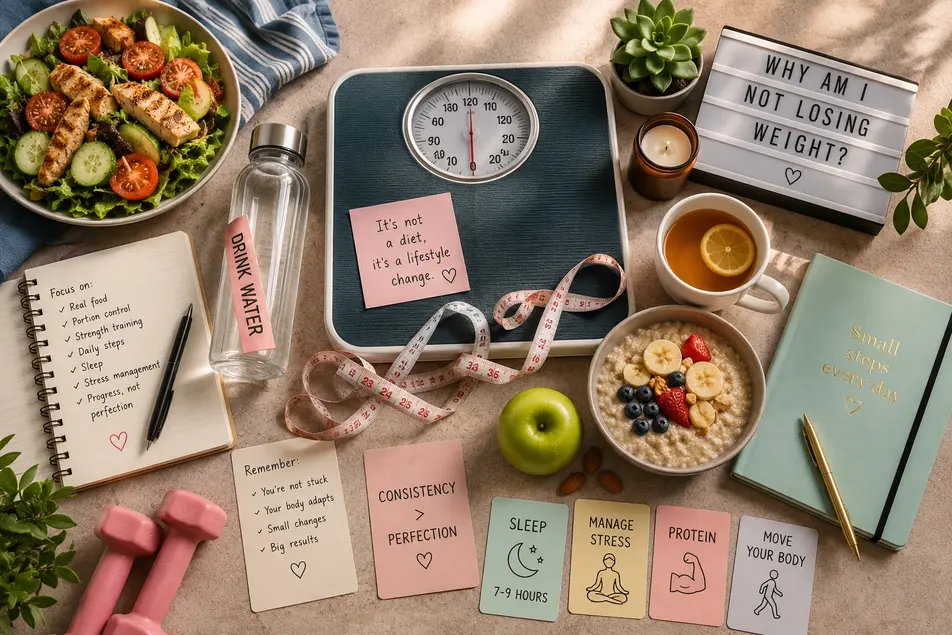
The frustrating truth is that weight loss stalls for very specific, fixable reasons. Most of them have nothing to do with willpower. This guide breaks down the real causes the ones that get skipped in most diet advice and gives you clear, honest steps to move forward.
Why am I not losing weight even when I’m trying?
The most common reasons you are not losing weight include eating more calories than you realize, experiencing water retention from stress or high sodium, hitting a metabolic adaptation plateau, not sleeping enough, or measuring progress only by the scale. Most of these problems have straightforward fixes that do not require a stricter diet or more exercise.
Reason 1: You’re Eating More Than You Think
Hidden Calories Are Real
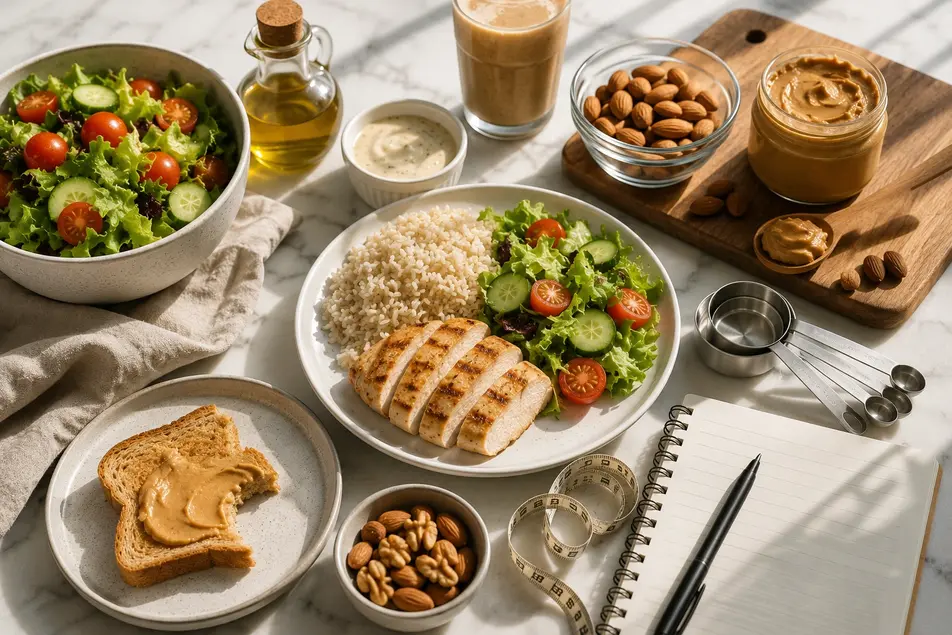
This is the most common reason people are not losing weight despite dieting. Cooking oils, salad dressings, handfuls of nuts, bites while cooking, and drinks all carry calories that most people never count. A single tablespoon of olive oil has roughly 120 calories. These additions stack up fast without triggering any sense of overeating.
Portion Sizes Have Crept Up
Even when eating the right foods, portion sizes often expand gradually without notice. A cup of rice becomes a cup and a half. A serving of peanut butter becomes two heaping spoons. If you have been eating the same way for weeks without results, your portions are the first thing worth checking honestly.
🔍 Try logging every bite for three days including cooking tastes and drinks. Most people are genuinely surprised by what adds up.
The Fix: Measure for One Week
You do not have to track forever. Measuring portions for five to seven days creates a clear picture of your actual intake. After that week, you will have a much more accurate sense of what a real serving size looks like and where the extra calories were hiding. This is the single most effective action for anyone not losing weight in a calorie deficit.
Reason 2: You’ve Hit a Weight Loss Plateau
What a Plateau Actually Is
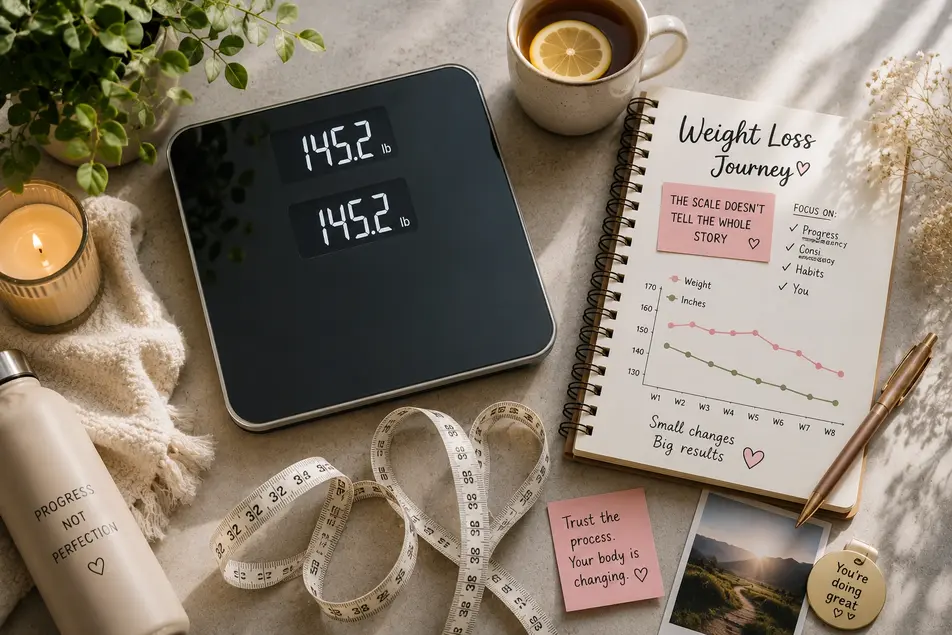
Your body is not broken. When you lose weight, your body adapts. A smaller body needs fewer calories to function, so the same diet that created a deficit three weeks ago may no longer produce one today. This is called metabolic adaptation, and it is the main reason why weight loss slows down after a few weeks even when nothing in your routine has changed.
The Scale Is Lying to You
Weight on a scale measures everything fat, muscle, water, food in your stomach, and more. It is common to lose actual body fat while the scale stays flat because water retention has increased, especially after starting a new workout routine, eating a salty meal, or during certain times of the month for women. Your body composition can be improving while the number stays still.
📏 Measure your waist, hips, and arms every two weeks. Many people who are ‘not losing weight’ are actively losing inches.
How to Break a Weight Loss Plateau?
The most effective approaches are: reduce daily calories by a small amount (100–150 fewer), add or change your exercise routine, increase protein intake to preserve muscle, or take a planned diet break of one to two weeks at maintenance calories. A diet break can reset hunger hormones and help the body respond to a deficit again.
How to Break a Weight Loss Plateau?
The most effective approaches are reduce daily calories by a small amount (100–150 fewer), add or change your exercise routine, increase protein intake to preserve muscle, or take a planned diet break of one to two weeks at maintenance calories. A diet break can reset hunger hormones and help the body respond to a deficit again.
Reason 3: Stress and Sleep Are Working Against You

Cortisol and Weight Gain
Chronic stress raises cortisol a hormone that encourages your body to store fat, particularly around the midsection. This is not a theory. It is a well-documented physiological response. Stress and weight gain are directly linked, and no amount of dieting fully counters an elevated cortisol environment, especially when that stress is ongoing and unmanaged.
Sleep Is a Weight Loss Tool
Poor sleep disrupts ghrelin and leptin the hormones that control hunger and fullness. One night of bad sleep can increase next-day appetite meaningfully. Over weeks, this creates a quiet calorie surplus that explains why weight loss is slow despite your best efforts. Sleep and weight loss are more connected than most people realize when they are struggling to lose weight.
💤 Aim for 7–9 hours of quality sleep. This alone can restart progress for people stuck at a plateau.
The Fix That Most Guides Skip
Stress reduction is not soft advice it is a physiological requirement for fat loss to work efficiently. Daily walks, consistent sleep times, reducing caffeine after 2pm, and setting boundaries around work hours are not optional extras. For many people, managing stress is the one missing piece after they have already addressed diet and exercise.
Reason 4: Your Exercise Routine Has Stopped Challenging You

The Adaptation Problem
When you start a new workout, your body works hard to complete it. Over weeks, it becomes more efficient. The same walk or the same workout burns fewer calories than it did when it was new. This is a good sign of fitness progress but it means your routine needs to evolve if you want to keep seeing changes.
Exercise Mistakes That Stall Progress
Doing only cardio without any strength training is a common pattern for people who are not losing weight even though they exercise. Cardio burns calories during the session. Strength training builds muscle that increases your resting metabolism meaning you burn more calories even at rest. Both matter, and relying exclusively on one is a known weight loss problem.
💪 Add two days of bodyweight or resistance training per week. Squats, lunges, and push-ups at home count — no gym membership required.
More Exercise Is Not Always the Answer
Adding excessive exercise without eating enough protein can cause muscle breakdown, which lowers your metabolic rate further. The answer is not always more it is smarter. Varying workout intensity, adding strength training, and getting enough protein to support recovery are more effective than simply doing more of the same.
Reason 5: Water Retention Is Masking Your Progress

Why the Scale Goes Up When You’re Doing Everything Right
Water retention is one of the most misunderstood weight loss problems. Your body can hold 2–5 pounds of extra water in response to high sodium intake, starting a new exercise program, hormonal changes, stress, or even simply eating more carbohydrates than usual. This is not fat. It is water — and it is temporary.
Carbohydrates and Water Weight
For every gram of glycogen your muscles store, your body holds approximately 3 grams of water alongside it. This means eating a higher-carb day can make the scale read 2–3 pounds heavier the next morning without any actual fat gain. This confuses many people into thinking their diet is failing when it is working perfectly.
The Fix: Look at Trends, Not Daily Numbers
Weigh yourself at the same time each morning after using the bathroom, then average the numbers across a week. A weekly average smooths out daily water fluctuations and gives a far more accurate picture of actual fat loss progress. The day-to-day number is mostly noise. The weekly trend is the signal.
Reason 6: Emotional Eating and Unconscious Habits

What Emotional Eating Actually Looks Like
Emotional eating does not always look like eating an entire cake after a bad day. More often it looks like reaching for a snack when bored, finishing food on a plate just because it is there, snacking while watching TV without really tasting anything, or eating slightly more at every meal when stressed. These patterns can add hundreds of calories weekly without registering as overeating.
Identifying Your Triggers
Before reaching for food outside of scheduled meals, pause for 90 seconds and ask: am I physically hungry, or is something else driving this? Hunger after a real meal does not appear instantly. If you just ate and feel an urge to snack, it is almost certainly a habit or emotional trigger rather than true physical need. Recognizing this is the first step to changing it.
📓 Keep a two-day food and mood log. Note what you ate AND how you felt before eating. Patterns become very obvious, very quickly.
Building Consistency Over Perfection
Consistency in weight loss matters far more than having perfect days. One emotional eating episode does not erase a week of progress. The problem is when those episodes become the norm rather than the occasional exception. Building awareness is what turns occasional slips into truly rare events.
Reason 7: You’re Not Eating Enough Protein
Why Protein Is the Most Important Macro for Fat Loss
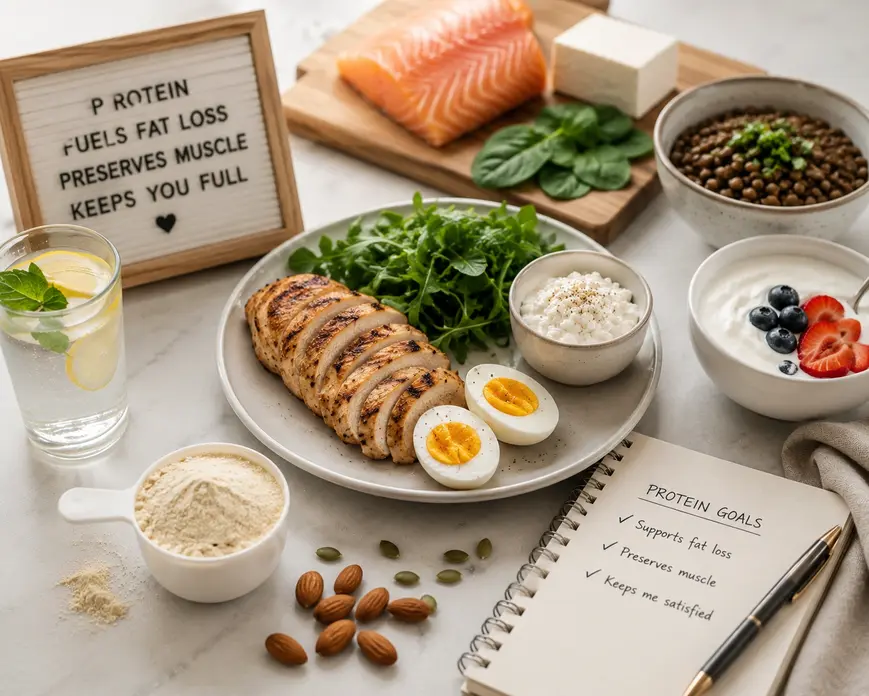
Protein does three things that directly support weight loss: it keeps you full longer, it requires more calories to digest than carbohydrates or fats, and it preserves muscle mass while you are in a calorie deficit. Losing muscle lowers your resting metabolism — making future fat loss harder. Protein intake is not optional for sustainable fat loss.
How Much Is Enough
A commonly used guideline for people trying to lose fat while preserving muscle is 0.7–1 gram of protein per pound of body weight daily. This is higher than most standard dietary recommendations and meaningfully higher than what most people eating a typical Western diet actually consume. Closing this gap can restart stalled progress on its own.
🥚 Add a protein source to every meal: eggs, chicken, Greek yogurt, cottage cheese, lentils, or tofu. Aim for 25–35g per meal.
The Muscle Loss Problem
When you cut calories without sufficient protein, your body may break down muscle for energy. This is one of the most common weight loss mistakes. Less muscle means a lower metabolic rate, which means your calorie deficit shrinks — and you stop losing weight. This is why crash diets often lead to short-term results followed by rapid weight regain.
📊 Why Am I Not Losing Weight: Quick Reference Table
A scannable breakdown of each reason, how common it is, and the fastest fix:
| Reason | How Common | Detectable In | Fastest Fix |
| Eating more than you think | Very common | 3–5 days | Track food for one week |
| Weight loss plateau / metabolic adaptation | Common after 4–8 weeks | 2 weeks no change | Adjust calories or take diet break |
| Poor sleep & high stress | Very common | Ongoing | 7–9 hrs sleep, stress management |
| Exercise routine no longer challenging | Common after 6–8 weeks | Plateaued energy burn | Add strength training |
| Water retention masking fat loss | Very common | Day-to-day scale jumps | Track weekly average weight |
| Emotional eating & habit snacking | Common | Food & mood log | Identify triggers, add 90-sec pause |
| Not eating enough protein | Common | Persistent hunger | 0.7–1g protein per lb body weight |
| Why am I not losing weight overall | Multiple reasons stacking | Varies | Address 1–2 reasons per week |
Author Words:
If you are still asking why am I not losing weight, the answer is almost always one of the seven reasons above and each one has a specific, manageable fix. You do not need to address all of them at once. Pick the one that sounds most like your situation, make that single change for two weeks, and watch what happens.
Fat loss is not linear. The scale lies on short time frames. Progress shows up in energy, measurements, clothing fit, and weekly weight averages long before it shows up as a steady downward number on the scale.
Disclaimer
The information in this article about why am I not losing weight is for general educational purposes only and does not constitute medical advice. Weight loss results vary significantly based on individual health status, medications, hormones, and other factors. If you have a medical condition, thyroid disorder, PCOS, or other health concern affecting your weight, consult a qualified healthcare provider before making changes to your diet or exercise routine.
FAQ’s
1. Why am I not losing weight even though I exercise?
Exercise alone rarely creates enough of a calorie deficit without dietary awareness. More importantly, starting a new workout often causes temporary water retention in muscles which can mask real fat loss on the scale. Check your food intake and measure body parts, not just weight, to get an accurate picture of progress.
2. Why am I not losing weight in a calorie deficit?
The most likely explanations are: your calorie estimates are off (apps and labels have a margin of error), your maintenance calories have dropped due to metabolic adaptation, or water retention is hiding fat loss. Try eating at the lower end of your target range and weigh yourself as a weekly average rather than daily for a clearer read.
3. Why does the scale not move but I look slimmer?
This happens when you are losing fat but retaining water, or when strength training is building muscle at a similar rate to fat being lost. Body composition is changing even when weight stays flat. Tape measurements and how your clothes fit are more reliable progress markers than the scale number alone.
4. How do I break a weight loss plateau?
The most reliable approaches slightly reduce daily calories (100–150 less), add a new type of movement like strength training, increase daily protein, improve sleep quality, or take a one to two-week diet break at maintenance. Often the plateau breaks when stress goes down or sleep improves not when you restrict more aggressively.
5. How long does a weight loss plateau last?
A true plateau where no progress is happening after making genuine adjustments typically lasts two to four weeks before the body adapts again. If the scale has not moved in two weeks and nothing has changed in your routine, that is the signal to make a small, deliberate adjustment rather than giving up or drastically cutting more.