
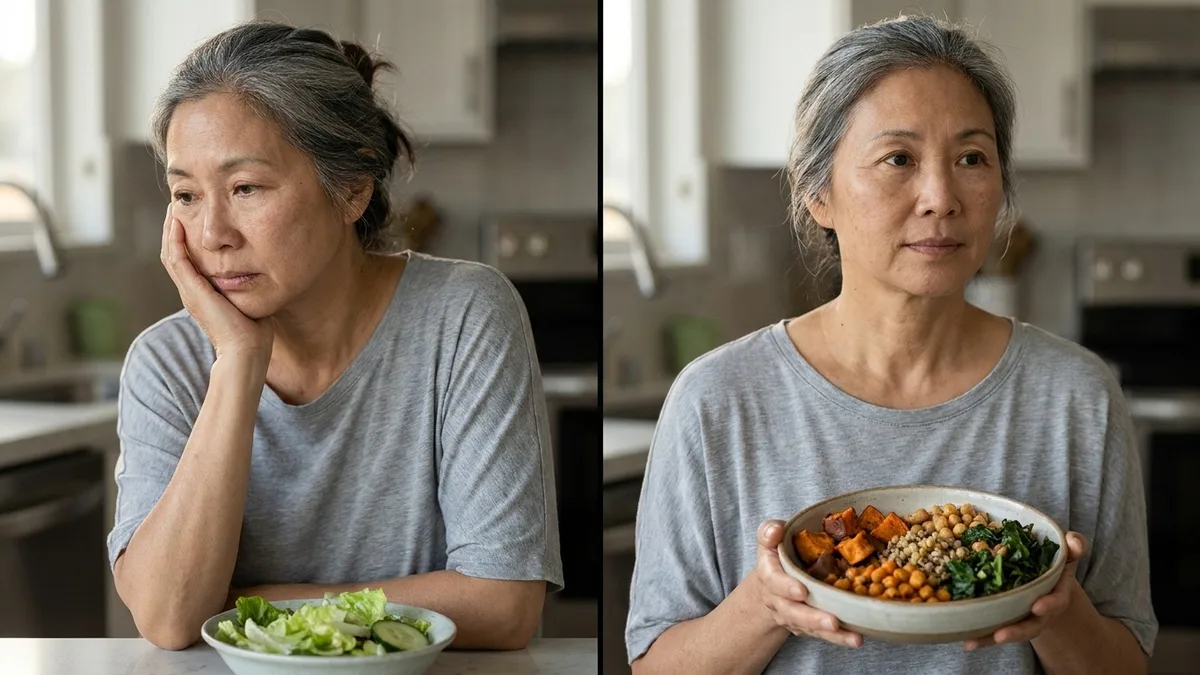
The salad that leaves you hungry an hour later is usually not too small. It is too light on the four things that actually flip the fullness switch, and none of them is the number of leaves in the bowl.
Picture the 3 p.m. snack drawer after a lunch of leaves, cucumber and a thin dressing. Nothing was wrong with the vegetables. The bowl was built like a side dish, so hunger came back on schedule, and it always will.
The problem is the build, not salad as a category. A bowl under 25 g of protein, under 8 g of fiber, low in fat, low in volume and soft enough to finish without chewing was never going to hold anyone past two o'clock. The cereal bowl it gets eaten from does not help either.
Main-course scale looks like this: 3 to 4 cups of vegetables and leaves, 25 to 40 g of protein, 8 to 14 g of fiber, 550 to 700 calories including 2 tbsp of dressing. Cost per serving lands between $3.25 and $6.50, active time between 12 and 25 minutes, and each of the twelve bowls prints those numbers so the week can choose for you. Four use a warm element, eight are built cold, and all twelve want a wide, shallow 1.5 to 2 quart bowl.
Each one names the lever that makes it last, whether protein, fiber, fat, volume or chew. Pick a cold default for office days and a warm one for home, start with whichever bowl matches this week, and cook a pot of grains plus a tray of chickpeas and sweet potato on Sunday. If nothing else changes, protein past 25 g is the fix for 3 p.m.
Quick Tips Before You Start
Use a wide shallow bowl
A 1.5- to 2-quart wide bowl makes the same food look bigger and slows your eating, which is half the fullness trick.
Keep leaves and dressing separate
Cooked components keep 4 days refrigerated; combine dressing only at serving so nothing turns to mush.
Check protein first
If a bowl lands under 25 grams, add a boiled egg, extra feta or a handful of edamame before you eat it.
Warm bowls need warm plates
Four of these twelve use a warm element; the other eight are built to eat cold, so don't force heat where it doesn't belong.
Know your cost band
Most bowls cost $3.25 to $6.50 a serving at a typical US supermarket; the cheapest are lentil and chickpea, the priciest is steak.
1. Warm Chicken, White Bean and Arugula Bowl
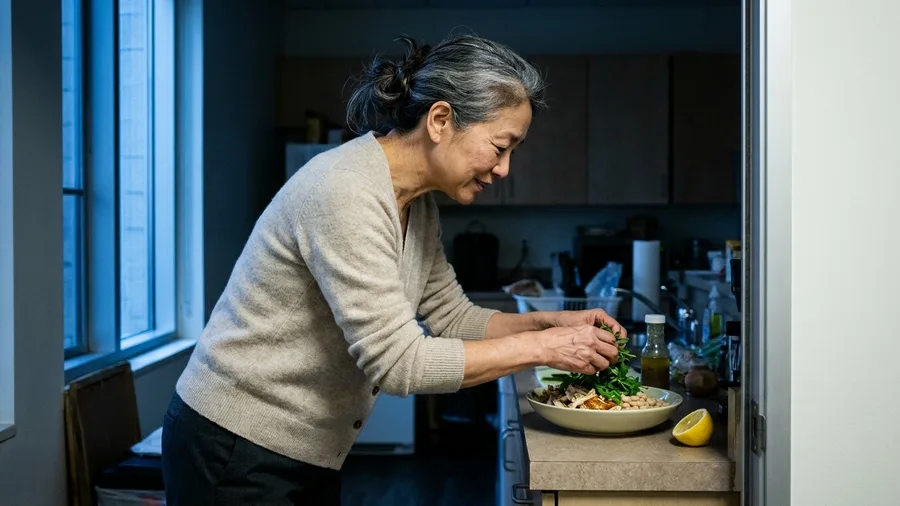
Speed is the first thing that goes when lunch gets busy, and a shredded chicken bowl beats the drive-thru on both counts. Rotisserie chicken is already cooked, so fifteen minutes of active work is all this asks. It clears 35 g of protein and 12 g of fiber for about $4.75 a serving.
Warm 2 cups of pulled rotisserie chicken with 1 cup of white beans in a pan with olive oil and a squeeze of lemon. You want them hot through and a little glossy, not dry.
Fold the arugula in off the heat. It wilts just enough to soften and holds its pepper, which is what keeps the bowl from tasting flat at a desk.
Chicken and beans together give the bowl warm mass and something to chew, and that combination is why it lasts. Finish with 2 tablespoons of olive oil and lemon dressing and eat it out of a wide, shallow 1.5 to 2 quart bowl so the heat spreads instead of steaming the greens.
The lever here is protein at 35 g, well past the 25 g mark, plus 12 g of fiber and warm volume doing steady work together. That is a lot of staying power for a quarter of an hour.
This is the lunch to pick on a day with no workout after work. The heat and the weight of it sit well when the afternoon is desk-bound, and nothing about it asks you to think ahead.
💡 Tip: Shred the chicken while the pan heats; it takes two minutes and saves you from a cold-center bowl.
| Salad | Protein (g) | Fiber (g) | Active time | Cost per serving | Best for |
|---|---|---|---|---|---|
| Warm Chicken, White Bean and Arugula | 35 | 12 | 15 min | $4.75 | Desk lunch, no workout after |
| Steak, Sweet Potato and Blue Cheese | 34 | 9 | 20 min | $6.50 | Proper hunger, physical afternoon |
| Salmon, Farro and Cucumber Ribbon | 30 | 8 | 20 min | $6.25 | Packed the night before |
| Crispy Chickpea and Tahini Chopped | 15 (21 with egg) | 14 | 20 min | $3.25 | Meatless weekdays, keyboard lunch |
| Egg, Smoked Salmon and Rye Panzanella | 28 | 8 | 12 min | $5.50 | Skipped breakfast, weekend lunch |
| Lentil, Feta and Roasted Carrot | 18 | 14 | 25 min | $3.25 | Tight grocery week, cold weather |
| Shredded Pork and Cabbage Slaw | 32 | 10 | 15 min | $4.50 | Leftover pork, crunch lovers |
| Tofu, Edamame and Soba Noodle | 28 | 9 | 20 min | $4.75 | Vegan, tofu skeptics |
| Grilled Shrimp, Corn and Black Bean | 34 | 12 | 12 min | $6.00 | Hot weather, maximum volume |
| Turkey, Apple and Sharp Cheddar Chop | 30 | 8 | 15 min | $5.25 | Confirmed salad haters |
| Warm Baked Potato with Yogurt-Chive | 20 | 7 | 25 min | $3.50 | Comfort food, cold days |
| Mushroom, Barley and Walnut Warm | 20 | 12 | 20 min | $4.25 | Meatless but substantial |
2. Steak, Sweet Potato and Blue Cheese Salad
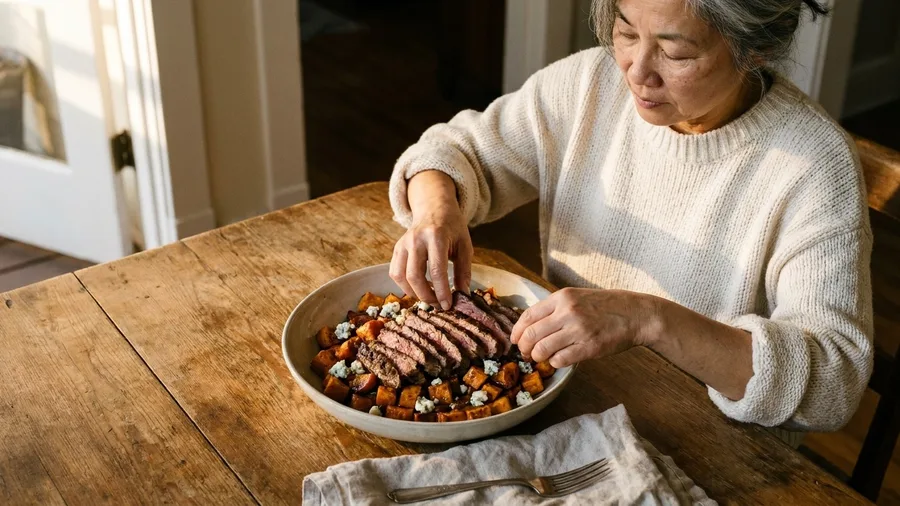
Speed is not the same problem as appetite. Some days lunch has to be the biggest meal on the calendar, and this bowl is the heaviest of the twelve at roughly 640 calories.
Sear 4 ounces of sliced flank steak, and roast 1.5 cups of sweet potato cubes for 20 minutes at 425 F until the edges caramelize. Both jobs can run at the same time, so the active work stays near 20 minutes.
Dress the potatoes while they are still warm with red wine vinegar and olive oil. The heat softens the cheese, and 2 tablespoons of blue cheese melts into a dressing that coats everything instead of sitting in a lump.
Steak brings the protein, cheese brings the fat, and sweet potato brings slow starch and volume, so three levers are pulling at once. The chunkier pieces also slow you down, which is a real part of why it holds.
It costs about $6.50 a serving, the priciest on the list, and the calories already count the 2 tablespoons of dressing. That is the trade: the most money and the biggest number for the lunch that has to carry a physical afternoon.
Eat this at 1 p.m. before a day of errands, yard work or a long walk, not before a meeting. Heavy is the point here, not a flaw to fix.
How Heavy Each Bowl Lands
Where the twelve sit on a light-to-substantial scale, so you can match the bowl to your afternoon.
- Chickpea and tahini chopped: Lightest of the set; add an egg if lunch has to last.
- Warm baked potato with yogurt-chive: Comforting and voluminous but only 20 g protein.
- Mushroom, barley and walnut: Chewy and substantial; a poached egg crosses 25 g.
- Salmon, farro and cucumber ribbon: Cold make-ahead that still eats like a meal.
- Steak, sweet potato and blue cheese: The heaviest bowl; built for a physical afternoon.
3. Salmon, Farro and Cucumber Ribbon Bowl
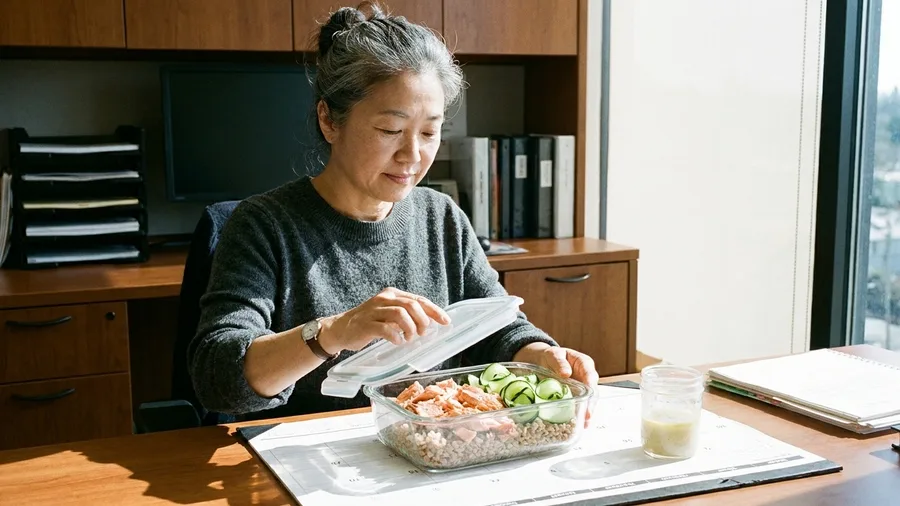
A heavy lunch solves true hunger, but it is not something you assemble before bed and eat cold at a desk. This bowl is built for exactly that: cold, layered, and put together the night before.
Cook 4 ounces of salmon and cool it completely. One cup of cooked farro also needs to be fully cold, not warm from the pot, or the whole container goes soft by morning. Cucumber ribbons and a yogurt-dill dressing finish it.
Layering is the whole trick. Keep the farro at the bottom, cucumber ribbons on top, and the dressing in its own small jar. Dressed and mixed, it holds 2 days; kept separate, the cooked components keep 4 days refrigerated.
Active time runs about 20 minutes if the farro is already cooked, and it costs $6.25 a serving. The 1.5 to 2 quart wide shallow bowl matters here too, since a deep container compresses the layers on the commute.
The lever is protein at 30 g, the chew of cold farro, and dairy fat from the yogurt, which is why a desk lunch at 10 p.m. assembly still holds until dinner. Salmon and cold grain are a filling combination that a lettuce bowl never manages.
💡 Tip: Cool the farro on a sheet pan, not in a container — it chills in 15 minutes instead of an hour and doesn't clump.
Why Your Salad Wore Off by 3 p.m.
4. Crispy Chickpea and Tahini Chopped Salad
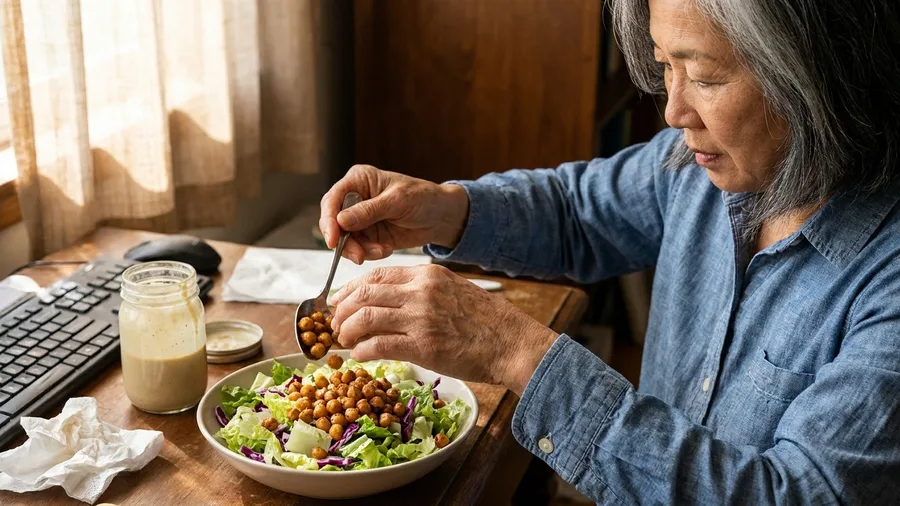
A vegetarian lunch can hold you, and this is the bowl that proves it without a single animal protein doing the heavy lifting.
The build: 1.5 cups of chickpeas, drained, dried, tossed with cumin and roasted 20 minutes at 425°F until the skins crackle. Chopped romaine and red cabbage underneath, and 2 tbsp of tahini whisked with lemon and enough water to pour.
That lands at 15 g protein, 14 g fiber and $3.25 a serving, which makes it the cheapest bowl in the set.
The fiber number is what you feel, but the crunch is what makes it work. Roasted chickpeas and shredded cabbage take real chewing, and a bowl that takes fifteen minutes to eat sends a different message to your body than one you finish in six.
Tahini covers the fat, and fat is what carries cumin and lemon past plain.
Fifteen grams of protein is under the 25 g mark, so if you want this to hold to dinner, boil an egg. For more ways to build protein into the start of the day, try these non-egg breakfast ideas. One egg takes it to about 21 g for 30 cents; a second crosses 25 g for another 30 cents.
This is the meatless weekday bowl for anyone who eats lunch at a keyboard and needs one hand free. Make it Sunday, keep the cabbage and dressing separate, and assemble at your desk.
⚠️ COMMON MISTAKE
The dressing is not the problem
People trying to eat lighter often skip dressing entirely and then wonder why the bowl doesn't hold them. Two tablespoons of oil-based dressing is 200 calories and it is the fat that carries flavor and slows stomach emptying. Use the 2 tablespoons the recipe calls for; if you want to cut calories, cut the cheese, not the fat that makes the vegetables worth eating.
5. Egg, Smoked Salmon and Rye Panzanella
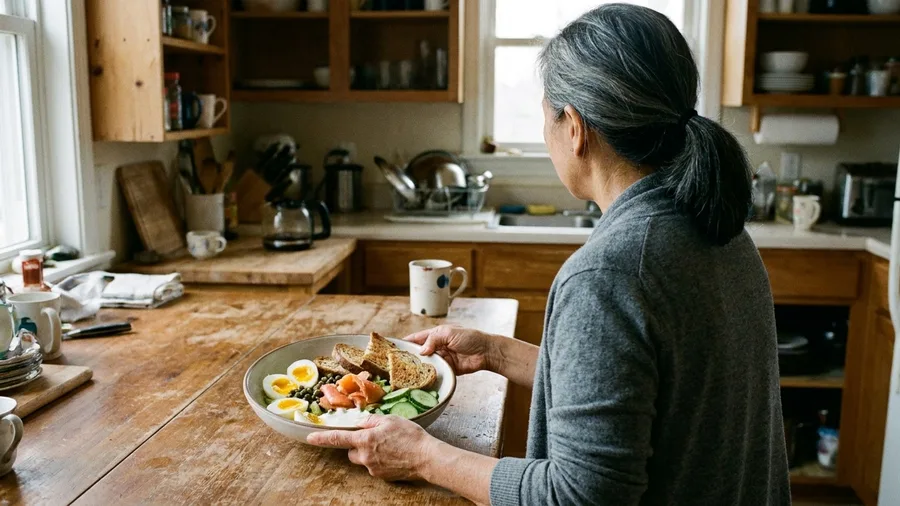
Coffee at 7 a.m., nothing since, and now it is past noon and the stomach is loud: this is the bowl for that morning, where the meal has to carry two jobs at once.
Two jammy eggs, 2 oz smoked salmon, torn toasted rye, capers, cucumber and a yogurt dressing come in at 28 g protein, $5.50 and 12 minutes of active work: eggs and salmon are the protein, the yogurt brings dairy fat, and the chewy toasted rye slows the whole thing down.
That chew is the lever doing more work than it gets credit for, because bread with structure keeps you biting instead of swallowing.
The trade-off is salt: capers and smoked salmon both carry it, so if you are watching sodium, halve both and squeeze in extra lemon instead.
It suits a slow weekend lunch and the coffee-only morning, and the 2 tbsp of dressing are already counted in the total.
A crunchy meatless bowl answers the weekday; this one answers the day the weekday never got fed at dawn.
6. Lentil, Feta and Roasted Carrot Bowl
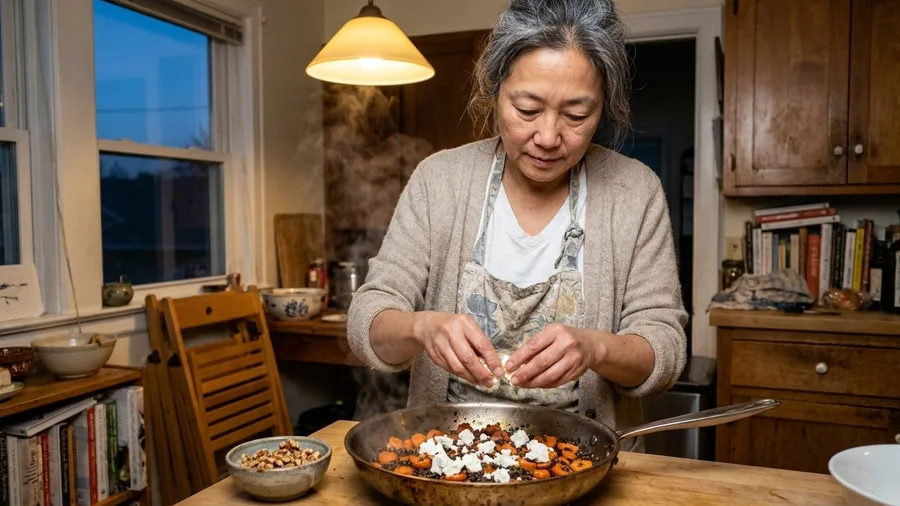
Not every week allows $5.50 a lunch: some weeks the budget decides, and this is the bowl that keeps you full without asking for much.
Carrots roasted with cumin, a cup of cooked lentils, 1.5 oz feta, lemon and olive oil run $3.25 at a typical supermarket and take 25 minutes active: it is the highest-fiber bowl in this set at 14 g, tied with the crunchiest.
A small handful of walnuts scattered over the top adds the fat that makes lentils taste like something other than health food, and feta brings the salt and more fat.
Warm carrots and lentils hit the spot on a cold weekday when a chilled bowl feels like a chore.
The one gap: as written the bowl comes in at 18 g protein, below the 25 g line, and a boiled egg or a little extra feta pushes it back over.
Cheapest and highest-fiber together, and the lever is that 14 g of fiber plus warm volume plus the feta and walnut fat, not the protein alone.
💡 Tip: Use French green lentils if you can — they hold their shape when warmed and don't turn to paste.
Crispy Chickpea Bowl — At a Glance
⏱️ Active time
20 minutes
💰 Cost per serving
$3.25
🥚 Cheapest protein add
1 egg = 21 g, 2 eggs = 25 g+
🌾 Fiber
14 g before any egg
🥬 Volume
Chopped romaine + red cabbage
Why it holds
Fiber and crunch do the work; two eggs for 60 cents covers the protein gap.
7. Shredded Pork and Cabbage Slaw with Lime Crema
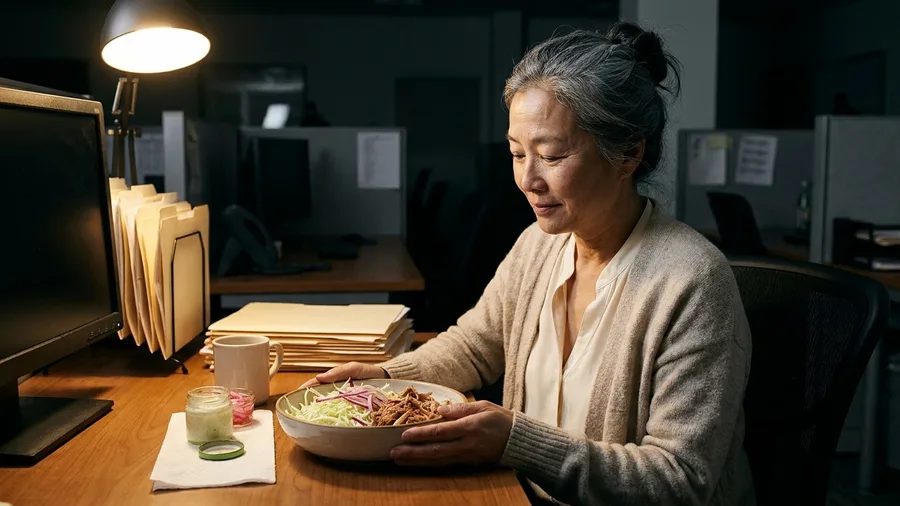
The pork from Tuesday's tacos is sitting in the fridge in a container you keep meaning to deal with. Four ounces of it, warmed through in a skillet, is the whole protein half of this bowl.
That is 32 grams of protein and $4.50 a serving, and if the meat is already cooked, the active work is 15 minutes. Shred it with two forks, get it hot in a dry pan so the edges crisp a little, and leave it alone while you build the rest.
Three cups of shredded cabbage and thin-sliced red onion is more slaw than it sounds like. Pile it into a wide shallow 1.5- to 2-quart bowl and it comes nearly to the rim, which is exactly the point.
Cabbage gives you the crunch and the volume in one ingredient. This is the bowl for the person who has always liked salad for the snap and the salt more than for the leaves, and who would rather chew through a mound of slaw than push lettuce around a plate.
Two tablespoons of lime crema made from Greek yogurt cuts the pork fat with acid and adds a little dairy fat of its own. The pickled onions do the same job sharper.
dress the slaw at serving, never before. Cabbage in lime and yogurt collapses inside an hour, and a lunch assembled at 10 p.m. for a 1 p.m. desk will be soup by the time you open it. Pack the slaw dry, the crema in a small jar, the pork in its own container.
The lever doing the staying power is protein, backed by crunch and volume. Thirty-two grams clears the 25-gram line with room to spare, and the chewing keeps the meal from ending in eight minutes flat. The day after a pork dinner, this is a deliberate lunch instead of a scavenged one.
8. Tofu, Edamame and Soba Noodle Salad
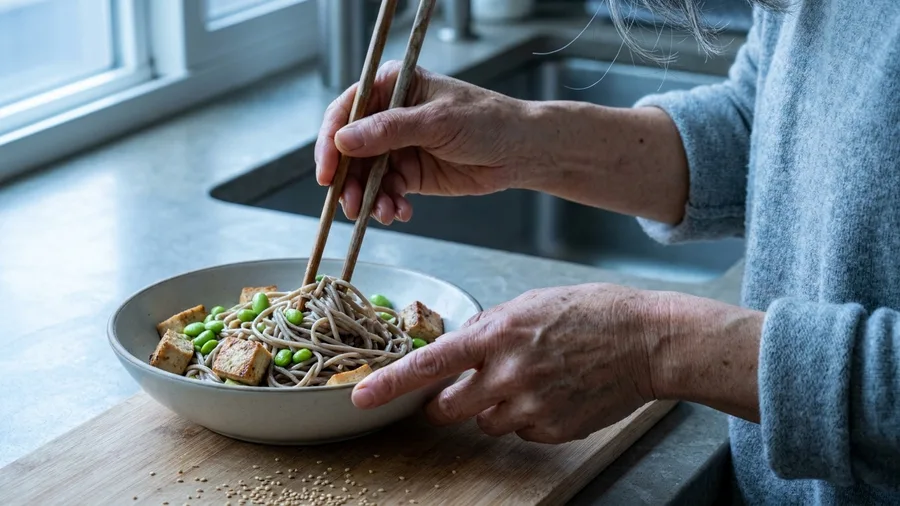
The vegan bowl has to clear a higher bar than the meat ones, because the old tofu salad — cold cubes, raw broccoli, a puddle of dressing — is why people stopped ordering it. This one starts with 6 ounces of firm tofu, pressed 15 minutes and seared hard.
Pressing matters more than it sounds. Fifteen minutes under a weighted plate drives out the water that would otherwise steam the tofu instead of browning it. In a hot pan with a little oil, undisturbed, the cubes build a crust that holds up cold the next day.
Add half a cup of shelled edamame and 1 cup of cooked soba noodles, and you get 28 grams of protein for $4.75, in 20 minutes of active work plus the pressing time. The edamame does the protein doubling. The soba does the thing tofu salad never does: it reads as a meal, not a side dish someone forgot to cook.
Soba has a chew that keeps working after the bowl is cold, which is why this one eats better the next day. Make it at night, pack it dressed in a 1.5- to 2-quart wide shallow container, and the office lunch is already solved.
Two tablespoons of sesame-ginger dressing carries the fat and the flavor. Sesame oil and ginger are assertive enough to stand up to the tofu, which is otherwise neutral by design.
For the tofu skeptic, the test is texture. Seared hard and eaten cold with noodles, the cubes give resistance rather than the soft, watery bite that made the old version a disappointment. If the first attempt tastes flat, the pan was not hot enough, not the tofu.
The lever here is protein at 28 grams, plus noodle volume and chew, plus fat from the sesame. Meatless, and still past the 25-gram mark that keeps lunch from wearing off by mid-afternoon.
Cold Make-Ahead vs. Warm 20-Minute Bowls
Cold make-ahead
- Pack the night before; components keep 4 days refrigerated
- Salmon-farro, tofu-soba and chickpea bowls travel well
- Keep dressing separate and combine at serving
- Best for office days and desk lunches
Warm 20-minute
- Chicken-bean, steak-sweet potato, lentil-carrot, mushroom-barley
- Best eaten the day they are made
- Warm volume feels more filling on cold days
- Best for days you are home at lunchtime
9. Grilled Shrimp, Corn and Black Bean Salad
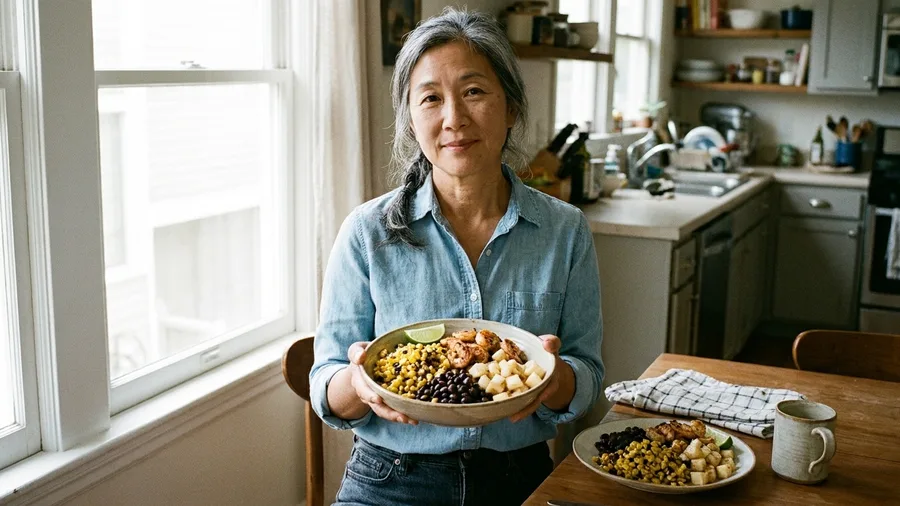
Plant protein solved, this bowl goes after a different prize: the largest plate of food you can eat inside the calorie range. Five ounces of shrimp, a cup of black beans, a charred ear of corn, and jicama or cucumber for water volume — that is 34 grams of protein and 12 grams of fiber for $6.00 and 12 minutes of active work.
The volume comes from water. Jicama and cucumber are mostly water, so they take up bowl space and chewing time without adding much to the total. That is the trick behind a genuinely large lunch that stays light and sweet rather than heavy.
No grill needed. A dry skillet over high heat chars the corn in a few minutes, turning it sweet and smoky. Shrimp cook in about two minutes a side and tell you when they are done by curling and turning opaque. The beans add fiber and a meaty chew between the sweet corn and the cold crunch.
A lime-cumin vinaigrette, 2 tablespoons, ties the sweet corn and the shellfish together and counts inside the calorie range.
This is the hot-weather bowl, and the one for anyone who finds lettuce-only salad pointless — a whole ear of corn, a cup of beans, and five ounces of shrimp take real time to eat. The lever is 34 grams of protein, water volume, and fiber doing the staying power together, in a bowl that reads as generous rather than virtuous.
10. Turkey, Apple and Sharp Cheddar Chop
Some people do not want a salad. They want a sandwich, and they have ordered the salad twice this month and regretted it both times.
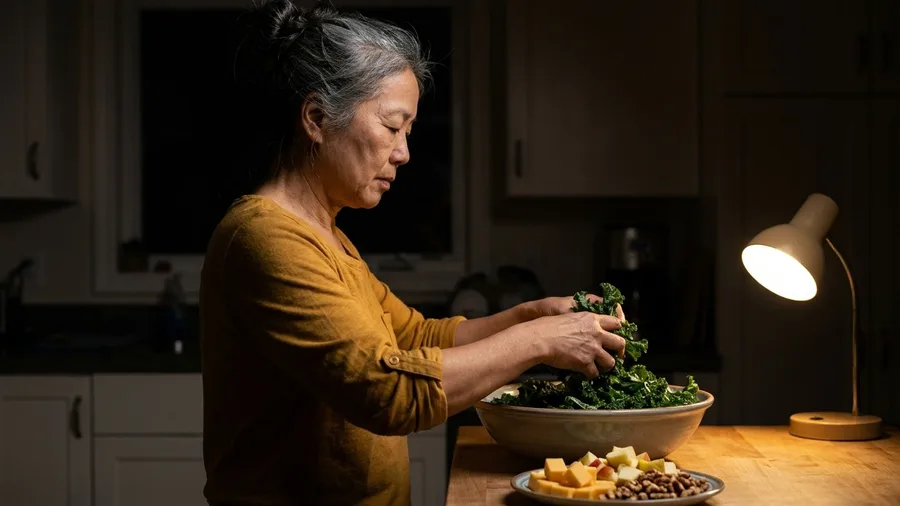
So build the sandwich and put it in a bowl. Four ounces of roast turkey, half an apple diced small, an ounce and a half of sharp cheddar cut into cubes rather than shreds, a small handful of walnuts, and a mustard-cider vinaigrette over kale that has been massaged with oil until it stops fighting back.
Thirty grams of protein, about $5.25 a serving, fifteen minutes of active work.
The cheese and the walnuts are not garnish, they are the mechanism. Cut both to save calories and you remove the fat that makes the bowl register as a meal, which is exactly how a turkey salad ends up tasting like penance.
The apple does quiet work too. Its sweetness against the bitterness of raw kale is why people who swear they hate leaves finish this bowl without noticing they ate three cups of them.
And the textures are deliberately chunky: cubed cheese, diced apple, torn turkey, whole walnuts. A fork has to slow down and pick a target, and a lunch that takes fifteen minutes to eat tells your body more than one that takes six.
That is the lever here, 30 grams of protein carried on fat and chew, and it is the bowl to pack for a partner who thinks salad is a side dish with delusions.
11. Warm Baked Potato Salad with Yogurt-Chive Dressing
A salad that tastes like a sandwich is one route to comfort. This one takes the other route entirely, straight through a plate of warm potatoes.
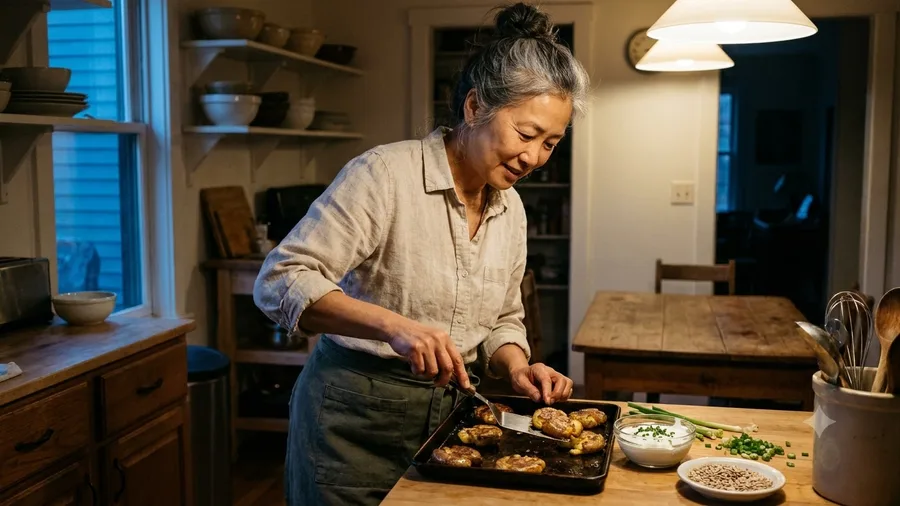
Ten ounces of baby potatoes, boiled until a knife slides in, then smashed flat and roasted until the edges go crisp and brown. Half a cup of Greek yogurt stirred with chives and a little lemon for the dressing, two tablespoons of crumbled bacon or sunflower seeds, and a scatter of sliced scallion.
Twenty grams of protein, $3.50 a serving, 25 minutes of active time.
The potatoes are doing the volume work, and they are doing it slowly. Ten ounces of roasted potato is a genuinely large bowl that takes a while to get through, and the crisp smashed edges give your teeth something to work on.
The yogurt carries the fat and the tang, which is why this does not read as diet food the way a fat-free potato salad does.
Be honest about the timing: this is best warm, the day it is made. It does not survive a night in the fridge well, so it is not a Sunday-prep bowl. Make it on a cold day when lunch is the treat, not the fuel stop.
Twenty grams of protein as written sits just under the mark. A boiled egg or another slice of bacon crumbled over the top pushes it past 25, and that is the version that holds until dinner.
💡 Tip: Smash the potatoes while they are hot so the yogurt dressing soaks into the cracks instead of sitting on top.
Where the Money Goes
Cost per serving at a typical US supermarket, from cheapest to priciest.
All twelve land between $3.25 and $6.50 a serving.
12. Mushroom, Barley and Walnut Warm Salad
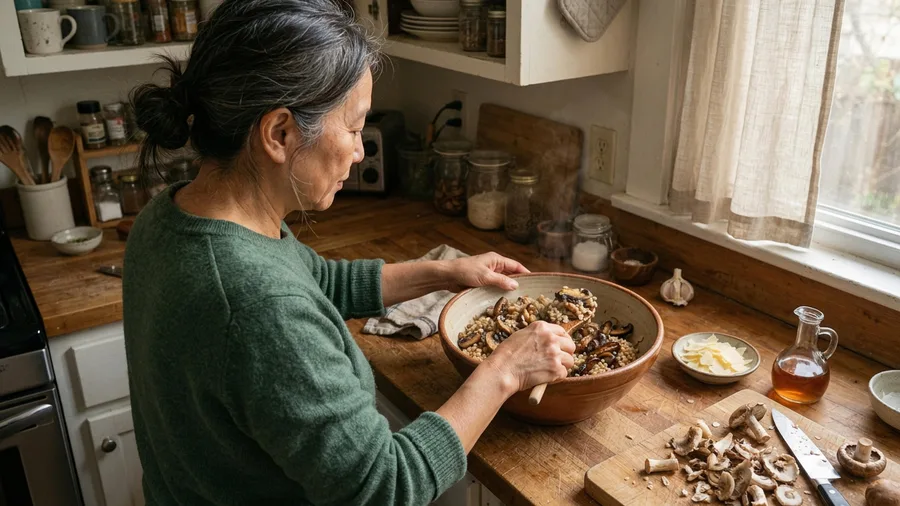
Comfort food on a cold day and a meatless lunch do not have to be two different meals, but most meatless bowls fail on texture. They are soft, and soft food is finished in seven minutes.
This one is built entirely around chew. Eight ounces of mixed mushrooms seared hard in a pan you do not crowd, so they brown instead of steaming. A cup of cooked barley, which is springy in a way rice is not. A quarter cup of toasted walnuts for crunch, an ounce and a half of Parmesan for salt and fat, and sherry vinegar to cut the richness.
Twenty grams of protein, 12 grams of fiber, $4.25 a serving, 20 minutes of active work.
Barley, mushrooms and walnuts all resist the fork, and that heaviness is the point. Nothing here tastes like a substitution for meat, which is why it works for people cutting meat who still want a lunch with weight to it.
Mushrooms also give you a season. When they are good at the market, this bowl is at its best.
The protein number is the one thing to watch. Twenty grams as written is under the mark, so poach an egg and set it on top, which adds about six grams and makes this a full dinner portion that crosses 25.
Frequently Asked Questions
How much protein does a filling salad actually need?
Aim for 25 to 40 grams per bowl. Under 25 grams, most people are hungry again within two hours. If a recipe lands short, a boiled egg adds about 6 grams for 30 cents, and an extra half ounce of feta or a handful of edamame closes the gap.
What is the cheapest bowl on the list?
The crispy chickpea and tahini chopped salad and the lentil, feta and roasted carrot bowl both come in at about $3.25 a serving. The steak, sweet potato and blue cheese bowl is the priciest at $6.50. The other nine run between $3.50 and $6.25.
Can I make these the night before?
Eight of the twelve are built to eat cold and pack well: salmon-farro, tofu-soba, chickpea, lentil, pork slaw, shrimp-corn, turkey-apple and the egg-smoked salmon bowl. Cooked components keep 4 days refrigerated. Keep leaves and dressing separate and combine at serving.
Why does a big salad leave me hungry an hour later?
Usually because it is light on protein, fiber or fat, not because it is too small. A bowl of leaves with a light vinaigrette might be 300 calories and 5 grams of protein. Add beans, grains, cheese or an egg and the same bowl holds you for hours.
Do I need a grill for the shrimp and corn bowl?
No. A dry skillet chars the corn in about five minutes, and the shrimp cook in two minutes a side in the same pan. You get the char without lighting a grill or cleaning an extra grate.
Two Bowls This Week, One Prep Session Sunday
Make two bowls this week. Pack the salmon, farro and cucumber ribbon bowl the night before for office days, and on nights you are home, the mushroom, barley and walnut warm salad goes together in about 20 minutes, with a poached egg on top to cross 25 grams. If you cook only once, start with the warm chicken, white bean and arugula bowl: 15 minutes, 35 grams of protein.
The one prep job that makes all twelve easier is a Sunday session: a pot of grains and a tray of roasted chickpeas and sweet potato. Cooked components keep 4 days refrigerated, and leaves and dressing stay separate until you eat.
If nothing else changes, push protein past 25 grams. The chicken bowl hits 35, the salmon 30, the mushroom bowl 26 with the egg. That is why the hand stops reaching into the snack drawer at 3 p.m. It was never about virtue. The bowl was underbuilt, and the fix is a wide shallow bowl with a named lever, protein first.
Build Your First Bowl Tonight
Pick one bowl from the list, check the protein number, and add an egg if it lands under 25 grams. That is the whole fix.