
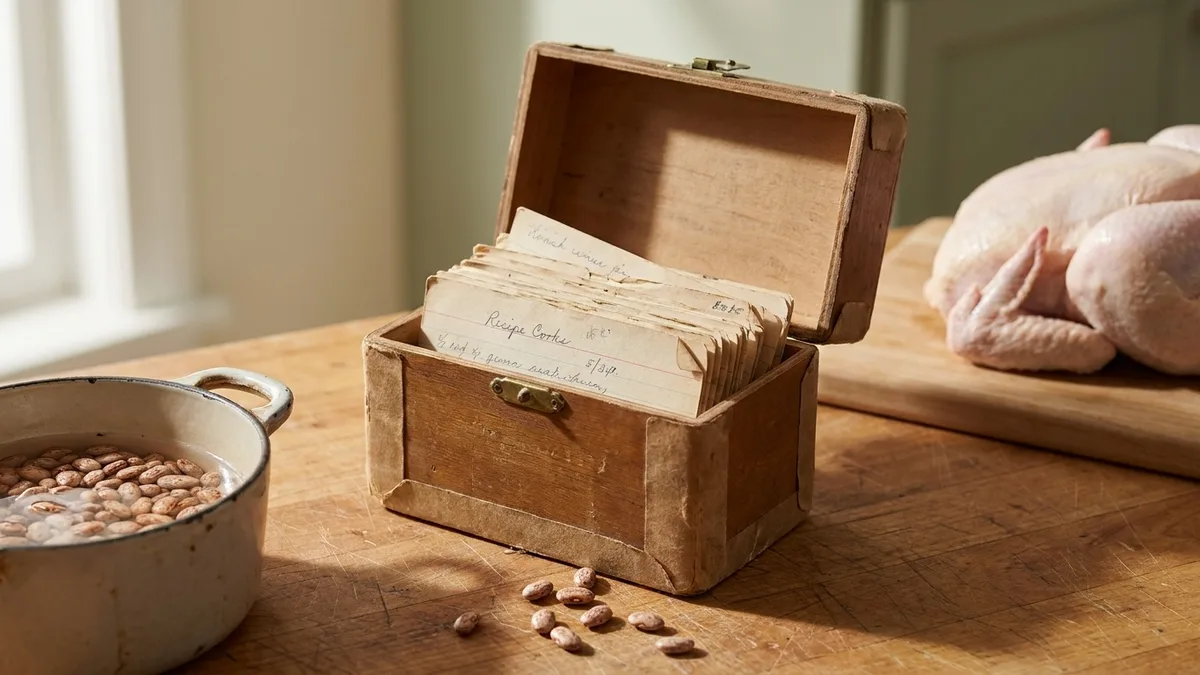
Forty-six dollars. That is what the first full run through my grandmother's eleven dishes cost at a Dayton, Ohio supermarket, and at six servings a dish it worked out to $1.10 to $2.40 a plate.
From October through February I cooked that recipe box twice through. I am 38, an editor here in Dayton, and the household was two people, so every dish made six servings, got eaten twice and went into the freezer in single portions, with leftovers kept four days in the fridge. I wrote down supermarket cost, stove time, what my family ate again and what I would not repeat.
I went in believing her food was probably remembered better than it was. Then the numbers came back: $46 for the first rotation, $1.10 to $2.40 a serving. So the test stopped being nostalgia and became cost, time and repeatability.
What actually made the dishes work was that each one removed a decision I would otherwise make at 6 p.m. with the fridge open. Dried beans need 90 minutes of simmering but only about 10 minutes of attention. Canned salmon patties are 20 minutes start to finish. One base of onion, garlic, bay, salt and a splash of vinegar went into 9 of the 11.
By the end you will know which single weekend to start with, which dishes to delay or skip if you cook for one or hate leftovers, and the first two things to put in your cart: dried pinto beans and a 4 to 5 pound chicken. Reviving eleven whole-food dishes is worth doing not because memory flatters them, but because they take the same-day decisions out of dinner. You start with one Sunday pot and a bird in the same oven.
Quick Tips Before You Start
Soak before you shop
Start pintos the night before; unsoaked they run 2 hours and still cook uneven. A quick boil-and-rest covers it if you forget.
Chop the base Sunday
Dice onion and garlic once into a lidded container and nine dishes stop needing prep on a weeknight. It keeps 4 days.
Order the block right
Chicken into the oven first, then start stock from the carcass, then beans on the back burner. The bird comes out before the beans go on.
Cool before you freeze
Spread portions shallow and chill uncovered 30 minutes first. Sealed hot, they steam, ice up and taste flat on reheat.
Do not buy ahead
The four pans are the whole kit. Skip a slow cooker, a second sheet pan and any bean-specific pot — the Dutch oven does that job.
1. A Pot of Pinto Beans From Dried
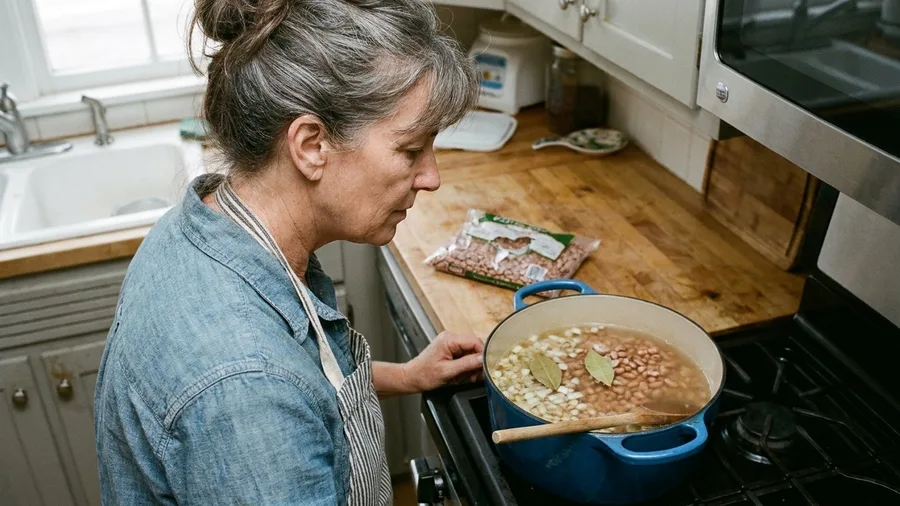
One pot of pintos is the dish that props up the other ten, and it costs about $1.10 a serving.
You buy a one-pound bag of dried pinto beans, soak them overnight or not, and put them in the Dutch oven with a chopped onion and two bay leaves. They simmer for about 90 minutes, but the actual work is closer to ten minutes of attention: a stir when you walk past, a check on the water. The wait does the rest. Your only other job is a splash of vinegar at the end, which sharpens the pot in a way salt alone cannot.
That gap between 90 minutes of simmering and 10 minutes of attention is the whole lesson. A pot going on the stove at 2 p.m. is not asking you to be in the kitchen; it is asking you to have decided at 2 p.m. The decision is what moves. At 6 p.m. there is nothing left to negotiate, only beans already warm.
And the waiting shows up in the bowl. Beans cooked slow go creamy at the center, and the onion and bay have had time to sink in, so patience isn't a virtue you're supposed to admire. It's a flavor you can taste.
That pot keeps four days in the refrigerator, and it freezes in single portions without losing much. Six servings came out of one bag, which meant Tuesday's dinner and two lunches were already settled before the week had a chance to go sideways.
The cost is the plainest part. At roughly a dollar-ten a serving, this is the cheapest anchor in my rotation by a wide margin, and it taught me to cook on a schedule instead of deciding, hungry and tired, at six in the evening.
I ran mine in a Sunday block: beans in the Dutch oven, the chicken on a sheet pan in the same oven, the carcass going to stock afterward. Two and a half hours, one afternoon, a week's worth of decisions gone.
This is a weekend job that pays out on Tuesday. If tonight's dinner has to be on the table in twenty minutes, the bean pot will not get you there, and that's the honest catch.
💡 Tip: Salt the beans at the start, not the end. The old warning about tough skins comes from acid, not salt — add the vinegar only after the beans are soft.
💡 PRO TIP
The Sunday Block
The 2.5-hour window is not a cooking marathon. Put the chicken on the sheet pan, the beans in the Dutch oven, and the carcass into a stock pot after dinner — the oven and the afternoon are already paid for. The beans are the part that needs the Dutch oven and almost no watching.
2. Stovetop Oats With Butter and Salt
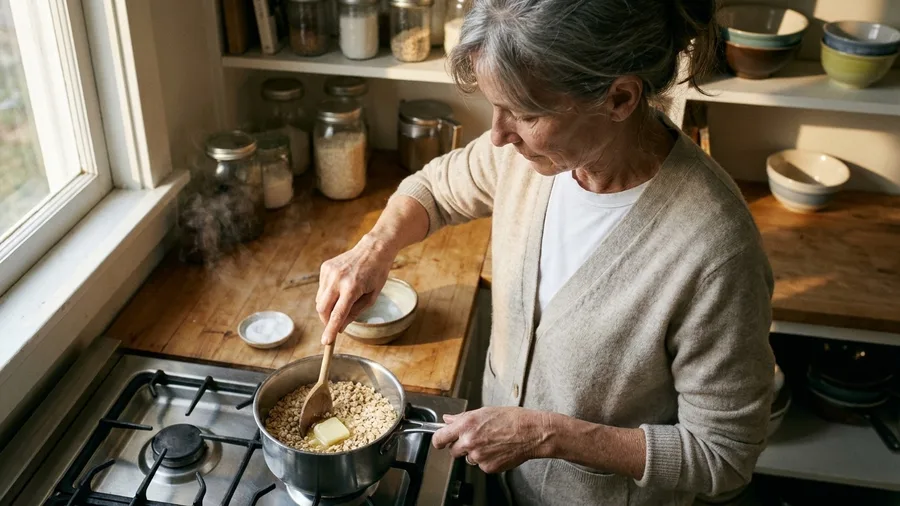
A pot on Sunday anchors the week, but the smallest ritual happens long before any 6 p.m. decision: five minutes at the stove with oats, a pinch of salt and a knob of butter at the end. Steel-cut or rolled, water or milk, it makes exactly as much as you will eat, which means no leftover problem and nothing to negotiate with yourself about tomorrow.
It costs about 40 cents a serving, but the money was never the point for me.
The point was the fixed spot on a workday morning. Same pot, same bowl, same five minutes, and a day that started predictably before it started at all. The quiet daily habits I used to open in the car had no such cue, and I never noticed how much I was negotiating with myself until the oats replaced it.
There is a mechanism here, not just a habit. A warm breakfast you chew signals fullness over a longer stretch than one you drink, so the 10 a.m. return to the kitchen got quieter.
The catch is the same one that sinks every ritual. It only works if it is not a scramble. If mornings in your house are already at capacity, this is the dish to skip without guilt.
3. Sunday Roast Chicken, Then Stock
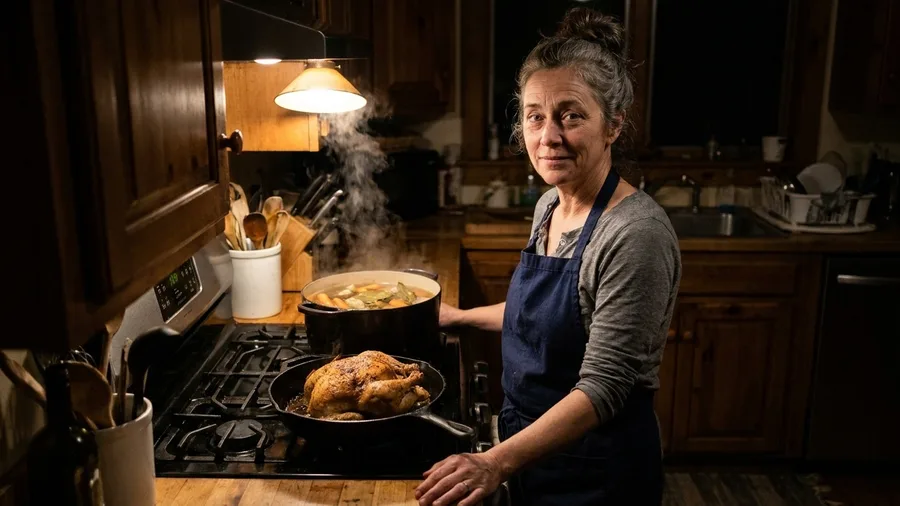
A fixed morning point holds the day steady, but dinner is the meal that breaks the week, and one bird is where you start to fix it.
A 4-5 lb chicken, salted and left to sit while the oven comes to 425°F, roasts in about 70 minutes. That gives you Sunday dinner and enough meat for two more lunches. Then the carcass goes into the Dutch oven with onion, carrot and bay, and simmers two hours into stock.
That chain did more for my confidence than any single recipe. Roast, then stock, then soup: each step is visible, each one has a use, and the thrift stops feeling like a cutback and starts feeling like a skill.
The stock is where the arithmetic turns. Once the meat is off, the bones cost you nothing more, and the simmer turns carton stock into something with body that you made from scraps.
Across the roast, the stock and the soup the stock becomes, the bird came to about $2.20 a serving, which is not the cheapest dish in my box but is the one that did the most work.
One sheet pan and the Dutch oven covered the whole Sunday: chicken in the oven, beans already simmering, the stock going on once the bird cooled. The oven was hot, the afternoon already spent, so the other two jobs cost only waiting.
A 10-inch cast-iron skillet, a 5-quart Dutch oven, a 2-quart baking dish and one sheet pan carried me through the entire winter. That's the whole kit, and the chicken chain asked for only two of the four.
What it does not fit: a household that will not eat the same bird twice in three days. Before the chicken goes in, know what you want from it. Sandwiches for Monday lunch, soup from the stock on Tuesday. Plan those two meals first and the bird earns its place.
Get them right and you are not eating leftovers three nights running, you are eating two meals you planned. The bird is the same; the thinking is where the practice lives.
What I Got Wrong First
4. Chicken and Rice in One Pot
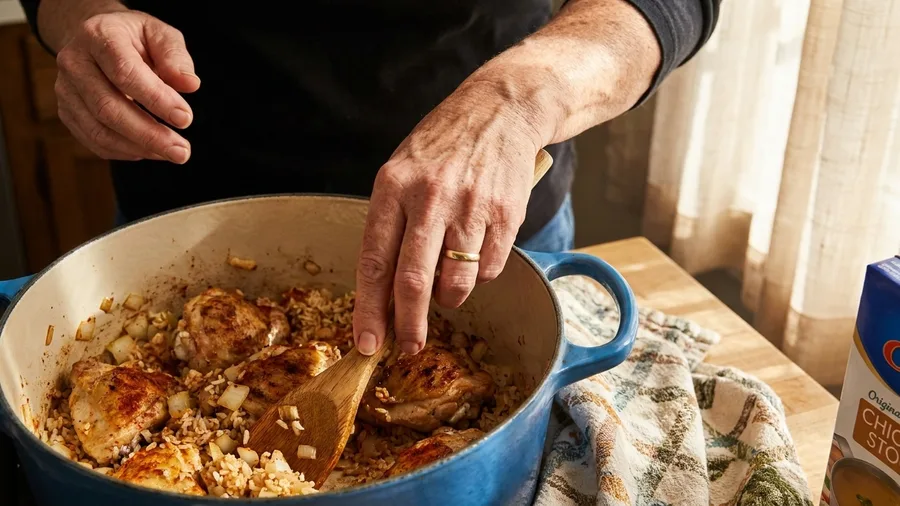
The bird and its stock solve two problems and leave one: by Tuesday you still want dinner from a single pot, with nothing to time against anything else. Chicken and rice is that fallback.
Six thighs, rice, onion, garlic, a spoon of paprika, stock. Forty minutes in the Dutch oven, and most of those minutes belong to the stove, not to you.
It came out at about $1.80 a serving across six servings. You brown the thighs, pull them, soften the onion, add rice and stock, put the chicken back on top, lid on. Then you leave the room.
The part I did not expect is how much better it was on Wednesday than on Monday. It reheats better than it photographs. The rice soaks up everything the thighs gave off, so the second night is more concentrated than the first.
That is why my family asked for it again and why I stopped expecting crisp skin from a weeknight. Skin left in a covered pot goes soft. If crunch is the point for you, roast the thighs uncovered instead and accept a second pan.
Fewer pans and fewer choices are the whole load off your back. Takeout wins on nights when cooking is fine and deciding is not. One pot, one cleanup, one decision, and no vegetable side to negotiate with yourself at 6 p.m.
It is soft and savory by design. Not for anyone who wants separate components on the plate, or who will read a lid-softened thigh as a compromise rather than the trade it is.
💡 Tip: Brown the thighs skin-side down for four minutes before adding the rice. You lose the crisp, but you gain a fond that makes the whole pot taste deeper.
5. Split Pea Soup With a Ham Hock
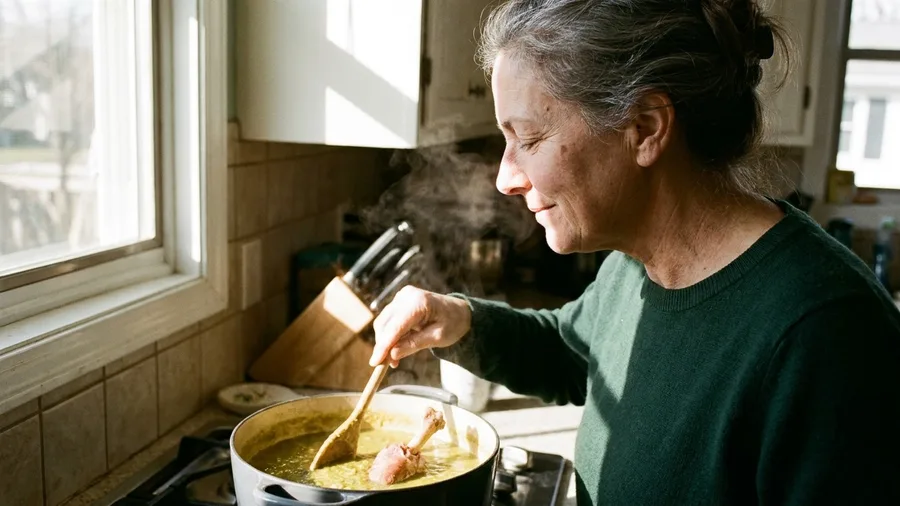
The chicken and rice came together in forty minutes and the pan was in the sink before the news started. Split pea soup runs the other way on purpose.
You put a pound of dried split peas in the Dutch oven with a smoked ham hock, a chopped onion, a carrot or two and a bay leaf, cover it with water, and then you do almost nothing for an hour and a quarter to an hour and a half. I stirred mine twice, mostly to check nothing had stuck. Six servings came out at about $1.40 each, which is the second-cheapest bowl in the whole rotation.
What you notice first is the smell, and it reaches the front door.
Somewhere around the forty-minute mark the house stops smelling like a house and starts smelling like dinner. That is not decoration. A long, low simmer keeps releasing aroma compounds into the room for an hour, and the appetite that builds while you wait is part of the meal rather than something that happens after it. My family started asking when dinner was while the peas were still hard in the middle of the pot. That was the cheapest anticipation I bought all winter, and it cost nothing but time I was spending anyway.
Then the pot has to be dealt with, because it gets thicker overnight.
What Freezes and What Does Not
Freezes Well
- Beans — in single portions
- Split pea soup — label the night you make it
- Meatloaf — freeze one loaf raw
- Bread pudding — reheat covered
Eat Fresh
- Cornbread — goes crumbly and dry
- Braised greens — turn to mush
- Baked apples — texture collapses
6. Skillet Cornbread From Cornmeal
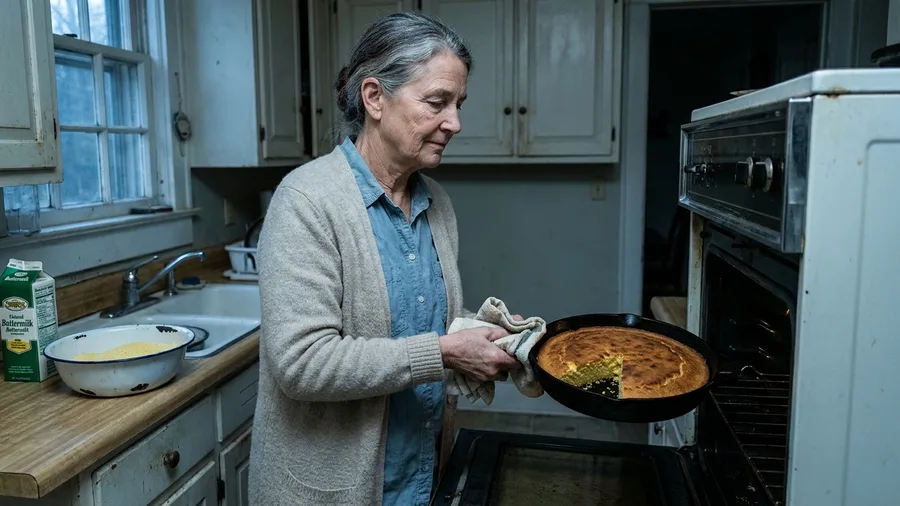
A hot cast-iron skillet and a short list build kitchen confidence faster than anything else I cooked. Cornbread was the first dish I would hand a beginner, and I mean that literally: if someone had asked me at Thanksgiving where to start, this is the pan I would have put in their hands.
The list is short. You measure a cup and a half of cornmeal, add buttermilk or plain milk, one egg, a spoon of bacon fat or butter melted in the skillet, and salt.
The sugar is your business.
Whether it goes in is a family argument, not a recipe step, so I will not settle it here; my grandmother put in a spoonful and I put in a spoonful, and I know households where that would be grounds for a conversation. Get the skillet into a 425°F oven while it heats, pour the batter into the hot fat, and it is done in twenty to twenty-five minutes. Eight wedges at roughly 35 cents each, half an hour from bowl to board.
What you get for that is a crust that shatters against a soft middle, and that contrast is the whole trick. It is a big, clear result from five ingredients, which is why it teaches more than a more complicated recipe would. The skillet itself becomes the thing people remember and the thing I never washed properly all winter, only wiped and set back on the stove.
It does not freeze. I tried a batch, and the wedges came back dry and crumbly, so from then on cornbread was eaten fresh the night it was made, usually with soup or greens and whatever butter was left out. Not for anyone expecting cake, either; this is savory and lean and it wants something wet beside it.
Twenty-five minutes, one pan, eight wedges: the shortest path from a cold kitchen to the smell of something baked.
Was This Dish Worth the Winter?
7. Braised Greens With Smoked Turkey
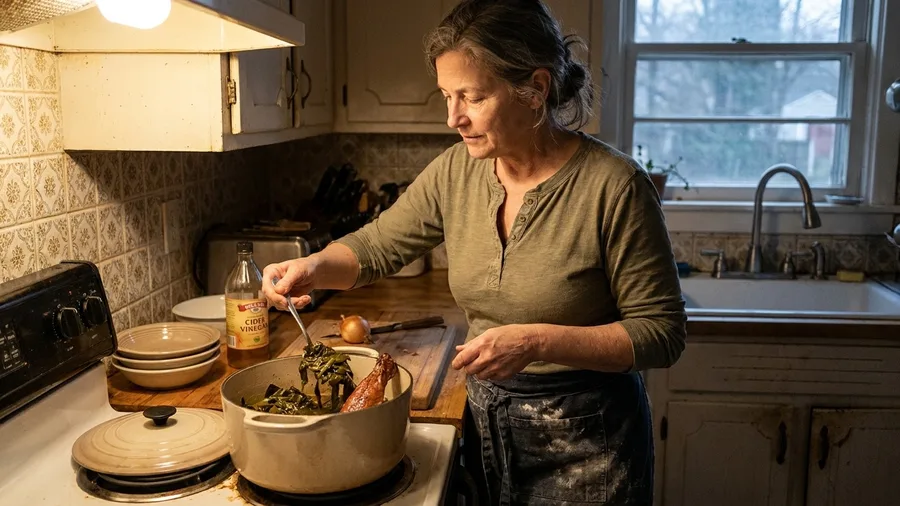
Cornbread is soft and agreeable from the first bite; greens are the opposite case, a food that has to be taught to the tongue. I know this from the inside, because as a kid I pushed a heap of collards to the rim of the plate and swore off the vegetable for years.
Collards or mustard greens, a smoked turkey wing, onion and vinegar, braised 45 to 60 minutes at a bare simmer with the lid on. That made 4 servings at about $1.25 each.
The pot liquor is the whole argument.
Serve the greens in their broth, ideally with a wedge of skillet cornbread to soak it up, and the smoke, salt and slow water do the work of explaining the greens to you. The collards soften and hold their shape, the bitterness backs off to something you can taste without flinching, and the broth is what you'll spoon from the bowl.
Bitterness is the taste people acquire, not inherit; almost nobody loves it at first bite. Researchers describe it as a learned preference, and it is built the way all tolerance is built, through repeated, unremarkable small exposures rather than one dramatic plate. That means the plate in front of a skeptic should be small.
What actually changed my mind was a half batch served with no commentary. I ate a second serving the next night and a third the night after, and by the second full rotation of the recipe box I was the one asking for greens.
A half batch, because the greens did not freeze. I tried, and the pot liquor wept and the leaves came out gray, so the practical size for a two-person kitchen is half of the four-serving recipe, eaten inside four days. That is also the right size for a household that will not try anything twice: if no one wants it cold, one small batch doesn't waste much.
⚠️ COMMON MISTAKE
Do Not Drain the Pot Liquor
The broth left in the greens pot is the most flavorful thing in the dish and the reason to serve it with cornbread. Ladle the greens with a little liquid, not dry. If you are watching sodium, use a smoked turkey wing instead of a ham hock and add salt at the end.
8. Canned Salmon Patties
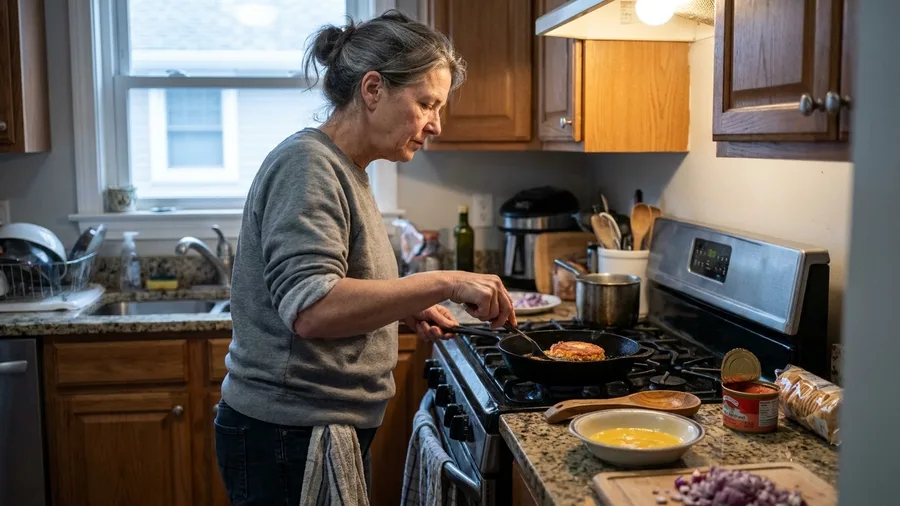
The greens demand that you keep offering a difficult food; the pantry dish asks nothing of the sort, because its only requirement is that you already own the ingredients. Some nights that is the entire question, not what to cook but whether the house contains anything cookable at all.
Canned salmon patties answer that question with two 14.75-ounce cans of salmon, an egg, crushed crackers, chopped onion and salt. You shape 8 patties and fry them about 3 minutes a side, start to finish in 20 minutes.
At roughly $1.10 a patty, this was the cheapest plate of the rotation and the fastest cook I found all winter.
Confidence, not willpower, is what gets dinner on the table on a bad night. A meal you can make from what is already in the cupboard removes the friction right before the point where people give up and order in. The reason is not virtue. It is that the tin, the egg, the cracker sleeve and the onion are there, and the pan was already hot.
On the worst night of the week, a Wednesday I remember with no affection, I had done no shopping. The tin opened, the crackers crushed, the skillet warmed, and dinner landed on the table before a delivery could have arrived. The night's problem was solved before the delivery app finished loading.
One caveat. I would not repeat bone-in cans for a household that objects to bones and skin, because the picking takes longer than the frying. Buy boneless, or choose a different pantry dish, and the whole thing stays a 20-minute job.
9. Meatloaf Bound With Oats
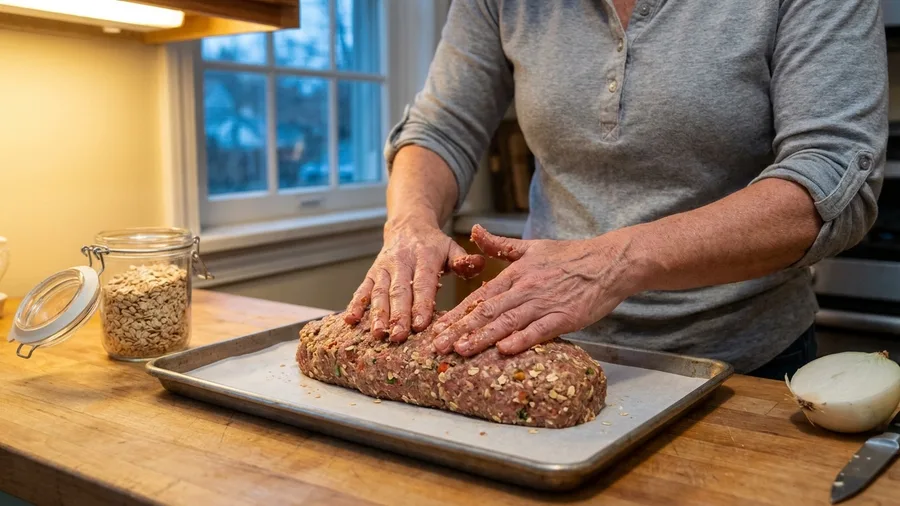
The pantry plate solved a bad night without shopping; the meatloaf solves a different problem, which is cooking when the ingredient you thought you had is not in the cupboard.
The recipe is 2 pounds of ground beef, 1 cup of rolled oats, an onion, an egg, milk, salt and pepper, baked at 350 degrees for about an hour. Six servings at about $2.40 each, which makes it the priciest plate in the rotation, and worth knowing that going in.
The oats were the lesson. I had no breadcrumbs the first time I made it, so I used what was in the canister, and the loaf held anyway.
A forgiving template builds the tolerance for improvisation that keeps people cooking after the shine of a new recipe wears off. The meatloaf is the first dish where I stopped reading the page and started tasting the bowl. A mixture that holds together with a hand is not fragile; the milk and egg bind it, the oats absorb the fat that would otherwise run, and the loaf either holds or it doesn't, which is a fast and honest teacher.
The leftovers made the best sandwich of the winter, thick slices pressed between bread with a little mustard. The loaf itself froze well, too, so a whole one became three future dinners.
One adjustment. If you cook for one, split the mix into two small loaf pans and freeze one raw before baking. Then a missing ingredient stopped being a reason to quit and became the first step of a new version of the dish.
10. Bread Pudding From Stale Loaves
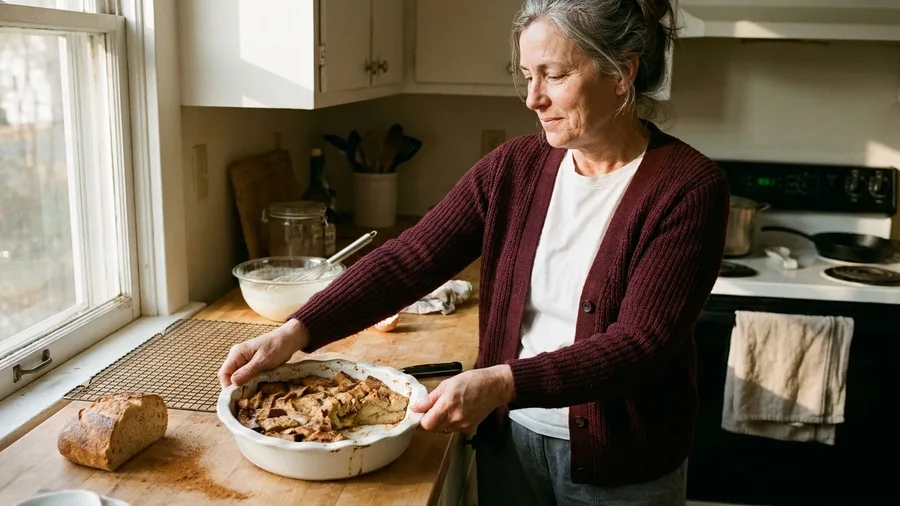
The same forgiveness that lets a meatloaf stretch to fit what is in the cupboard works at the other end of the loaf, too.
The heel going hard on the counter, the two slices nobody will put in a lunchbox, the end of the bakery loaf I overbought on Saturday: those were a dessert waiting for a reason. I tore them into a 2-quart baking dish, roughly 6 cups once torn, and poured over them a custard of 2 cups of milk, 3 eggs, a few spoons of sugar and a dusting of cinnamon, then dotted the top with butter.
It baked at 350°F for 45 minutes, until the custard set and the top edges went dark and crisp.
6 servings at about 70 cents each.
What it asks is time, not skill: an hour when I was going to be home anyway. That mattered more than I expected. The dish kept the oven on after the real cooking was done, and it turned the end of a loaf into something the family asked about instead of something I scraped into the bin on Thursday.
That scrap of relief, small as it is, is what makes the dish repeatable. None of the winter's waste ever felt like a moral failure exactly, but it nagged, and bread pudding answered the nag with a warm dish rather than a resolution.
The bread does not need to be fresh, and it does not need to be uniform: torn pieces with some crust left on give a better texture than neat cubes, because the ragged edges crisp while the middles soak.
It froze fine in single portions and loosened up on reheating with a splash of milk; the 2-quart baking dish, one of the four pieces of equipment I used all winter, earned its shelf space partly on this.
One honest caveat: this is not health food and I will not pretend otherwise. It is sugar, milk, eggs and bread, a once-a-week dish for a household that does not count those things closely; if you are avoiding dessert or watching calories, this is not the one to talk yourself into.
What it gives back is a Saturday night that ends with the whole house smelling of cinnamon, and a use for the loaf that would otherwise have gone stale on the counter. That is the trade: an hour of oven time for a dessert, a smell and a smaller bin.
11. Baked Apples With Oats and Butter
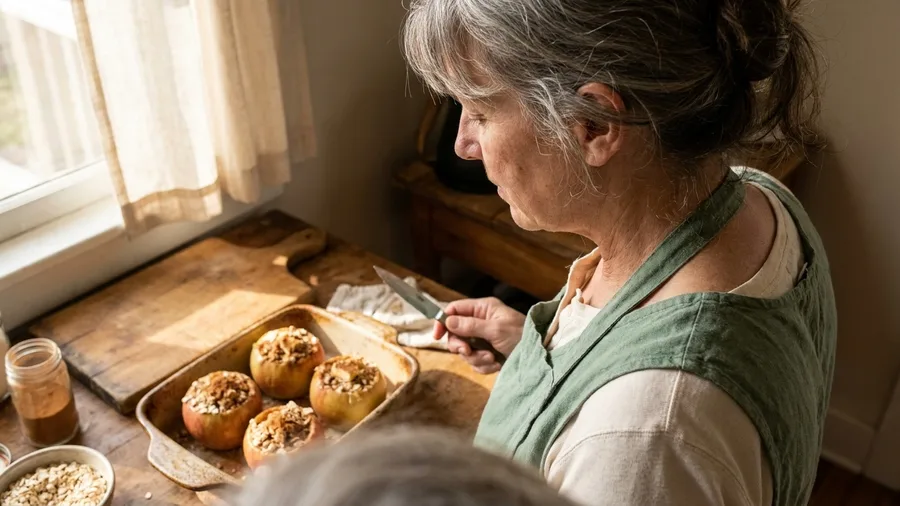
The rescue dishes need time in the oven; this one barely needs time at all before the oven takes over.
I cored 4 apples, set them in the 2-quart dish, and filled the hollows with a spoonful each of rolled oats, brown sugar, butter and a shake of cinnamon. The whole assembly was 8 minutes from the drawer to the rack, and then 35 to 40 minutes at 350°F while I did something else.
4 servings at about 95 cents each.
The smell is the real return. Somewhere around the 20-minute mark the kitchen began to smell like the house was having a planned evening, and the truth was that I had spent 8 minutes on it.
That discrepancy between effort and effect is exactly what makes a dish repeatable on an ordinary Tuesday. A dessert that demands precision, tempering, or a clean bowl for whipping has to earn its place against the calendar; this one asks for a paring knife and the oven, and the payoff is disproportionate to the work.
Baked apples do not freeze well, so the batch is what you eat fresh, which also keeps it a small, contained decision rather than a production. Four apples, one dish, one sitting.
Skip this one if you need a dessert that impresses guests; it is a family-Tuesday dish, warm and homey rather than plated and finished. It is also not, despite the oats and fruit, a health food. It is a dessert for a household that wants a small one without a project.
What the reader gets back is the easiest kind of yes: a warm smell in the house for under a dollar a serving, and a dessert that does not need a special trip or a clean kitchen to happen.
🕒 The First Sunday, Start to Finish
9:00 a.m. — Beans on
Rinse a pound of pinto beans, add onion, bay and water, and bring to a simmer.
9:30 a.m. — Chicken in
Salt a 4–5 lb bird and put it on the sheet pan at 425°F for about 70 minutes.
10:45 a.m. — Chicken out
Rest the bird, then pick the carcass and start the stock with onion, carrot and bay.
11:30 a.m. — Beans checked
Stir the beans once, add salt, and leave them to simmer while the stock works.
1:00 p.m. — Stock strained
Strain the stock, cool it, and portion the beans into single containers.
Frequently Asked Questions
How long do the leftovers actually keep?
Four days refrigerated for everything in the rotation. Beans, pea soup, meatloaf and bread pudding froze well; cornbread, greens and baked apples did not, so eat those fresh. Label the freezer containers with the date you made them.
What if I cook for one?
Halve the pea soup and the meatloaf, and freeze the meatloaf raw in two small loaf pans. The bean pot and the chicken are still worth making — the beans freeze in single portions, and the chicken becomes sandwiches and stock. Skip the baked apples as an everyday dish.
Do I need special equipment?
No. A 10-inch cast-iron skillet, a 5-quart Dutch oven, a 2-quart baking dish and one sheet pan handled the whole winter. If you buy one thing, make it the Dutch oven — the beans and the one-pot chicken and rice both depend on it.
Is this actually cheaper than takeout?
The first full rotation cost $46 and made six servings per dish, so $1.10 to $2.40 a serving. That is well under a delivery order, but the bigger savings is the decision you do not make at 6 p.m. The beans and the salmon patties were the cheapest plates; the meatloaf was the priciest at $2.40 a serving.
What if my family won't eat greens or beans?
Start with a half batch and no commentary, and serve the greens with cornbread and pot liquor. Bitterness is an acquired taste, and repeated small servings do more than encouragement. If a dish fails twice, move on — the rotation has eleven options, and you only need four or five that work.
Buy the Beans and the Chicken This Week
Start with the dried pinto beans on a Sunday, and put the 4 to 5 pound chicken in the oven inside the same 2.5-hour block. The oven is hot and the afternoon is already spent, so the second dish costs you almost nothing extra. Then add the oats and the canned salmon patties in week one, because they are the fastest proof that the system works.
Leave the split pea soup, braised greens, meatloaf, bread pudding and baked apples until later. They are the second-layer dishes, and the greens in particular need several servings before they make sense to a tongue that has not been taught them. If you cook for one and hate leftovers, skip the pea soup and the meatloaf outright. If you will eat leftovers, halve the soup or freeze six labeled portions, and split the meatloaf into two small pans, freezing one raw. If dessert is not your habit, skip the bread pudding and the apples.
What I found in that Dayton kitchen was never really my grandmother's remembered taste. It was the decision taken off 6 p.m. So do not overhaul the week. Buy the beans and the chicken, and put them in the same Sunday afternoon. Forty-six dollars bought me eleven dishes and a calmer Tuesday; your first pot costs about $1.10 a serving, and it starts the same way mine did, with a bag of dried pintos and a whole bird.
Start With One Pot
Put a pound of pinto beans on the stove this Sunday and see what Tuesday feels like. That is the whole experiment.