

Most people expect to overhaul a kitchen in a weekend. What actually changes a shelf takes about a month, because the size and the catch decide far more than the shopping trip does.
After 60, cooking for one or two, the familiar staples start to look like waste. A 42-oz canister of rolled oats at $4, a 32-oz tub of plain Greek yogurt at $5, a 16.9-oz tin of olive oil at $12 – those sizes were built for a family you are no longer feeding.
The turn is simpler than it sounds. The same staples get used when they are visible, open without a fight, and are pleasant enough to reach for again, so the package and the catch decide more than any novelty on the shelf.
This is not a diet and not a bulk-buy list. It is 13 familiar items that earn shelf space only if the repeatability test and the catch both fit your kitchen. Pick three that suit cooking for one, low energy, a small appetite, or a fixed budget, and know which to skip or take to your clinician.
Quick Tips Before You Start
Front and Center
Move the staple you want to use to eye level in the cupboard or fridge. If you cannot see it, you will not reach for it.
Decant into Clear
Transfer oats, nuts, and pasta into clear jars with easy-open lids. The visual cue is half the battle.
Buy Smaller
For one- or two-person kitchens, buy the smaller size even if the unit price is higher. Waste costs more than the savings.
Test the Open
Before you commit, open the package once at the store if you can. If it takes two hands and a knife, it will sit.
Freeze the Extra
Nuts, broth, lemon zest, and even cooked grains freeze well. Portion them before they go stale.
1. Rolled Oats for Low-Effort Breakfasts
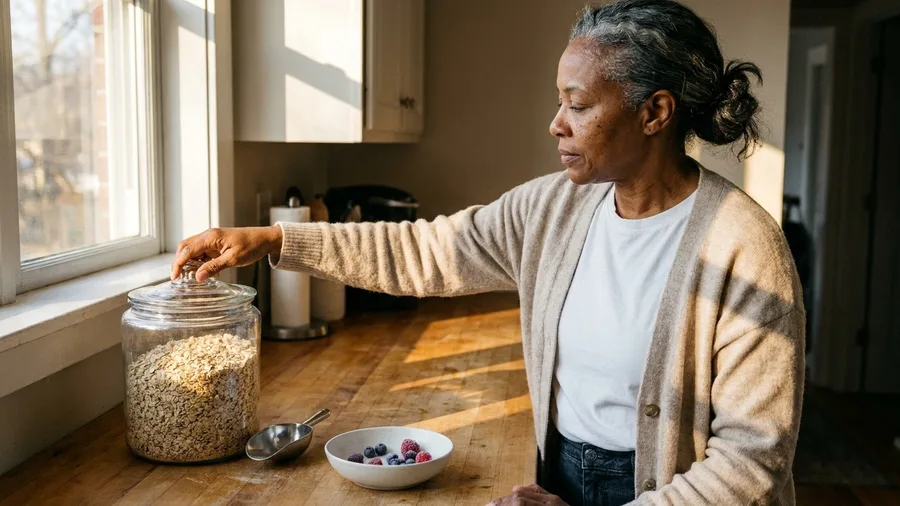
Some mornings you want breakfast to require one decision, not five. A 42-oz canister of rolled oats runs about $4 and holds a month of them.
Compared with the boxed instant packets, you pay a fraction per serving and get something that also goes into a meatloaf or a crumble. The packet wins on nothing but a flavor sachet you could add yourself.
The two-minute version: half a cup of oats and a full cup of milk or water in a bowl that can take the microwave. Run it two minutes, stir, and it thickens as it cools.
While it sits, drop in half a cup of frozen berries, or stir a spoonful of yogurt through for body. The oats go soft, the berries thaw into warm streaks, and cleanup is one bowl and one spoon.
Skip the flavored instant packets. The sugar is already in the powder, and you have no say in how much.
If you want sweetness, add it at the table by the spoonful, so you are the one deciding where it stops.
This one suits a person who wants the same reliable bowl most mornings and does not mind two minutes at the counter. Where a prescribed diet limits oats or added sugar, that call belongs to your clinician, not to a general shelf rule.
The real test is placement. A canister you can see on the counter and pop open without wrestling a lid gets used; one at the back of a low cabinet quietly expires.
💡 Tip: Portion oats into a small jar with a scoop so you do not have to measure from a big canister when you are half awake.
The Repeatability Test
How familiar staples score on the three things that make them easy to use again
2. Canned Beans for No-Recipe Meals

The test carries straight from the morning bowl to the pantry shelf: a no-recipe meal asks the same question, whether the base is visible enough and easy enough to reach that it gets opened on a night when energy is low and planning feels like too much.
A 15-oz can of beans at about $1.50 is that base. It becomes toast, soup, or a side without a recipe in your head, and it sits there for months until the night you need it.
No-salt-added is the first label you should reach for. If only regular is on the shelf, rinsing the beans in a colander cuts a meaningful share of the sodium, which matters more after 60 as blood pressure tends to drift upward and the same can carries a bigger load than it used to.
Five-minute uses, none of which need a recipe: mash the beans with olive oil and spread them on toast; drop them into low-sodium broth with frozen vegetables; or toss them with pasta and whatever vegetables are in the freezer.
Two cans at eye level make beans the first thing your hand finds on a low-energy night, and that visibility is the repeatability test in its plainest form: what you can see is what you cook.
This suits a small household where a can is roughly a meal or two. If a clinician has set a sodium limit for you, the can you choose and whether you rinse it follow that limit rather than a general rule about beans.
| Staple | Typical US size and price | Fast use | Watch-out |
|---|---|---|---|
| Rolled oats | 42 oz canister, $4 | Microwave 1/2 cup with water, 2 min | Flavored packets add sugar |
| Canned beans | 15 oz can, $1.50 | Mash on toast with olive oil | Rinse to cut sodium |
| Plain Greek yogurt | 32 oz tub, $5 | 1/2 cup with berries and oats | Sweetened cups hide sugar |
| Frozen berries | 12 oz bag, $4 | Thaw 1/2 cup, 30 sec | Buy plain, not syrup-packed |
| Olive oil | 16.9 oz tin, $12 | Drizzle on vegetables or beans | Jug goes stale before use |
| Eggs | Dozen, $4 | Hard-boil six at a time | Check carton date |
| Canned fish | 5 oz can, $2 | Flake into pasta with vegetables | Choose water-packed, lower sodium |
| Whole-grain pasta | 16 oz box, $2 | Boil half the box, 8 min | Jarred sauce can be high sodium |
| Unsalted nuts | 12 oz bag, $7 | Portion into small jars | Texture may be hard if chewing is an issue |
| Low-sodium broth | 32 oz carton, $3 | Use instead of water for rice or soup | Compare sodium on label |
| Cottage cheese | 16 oz tub, $5 | Blend into eggs or sauce | Check added sugar and sodium |
| Frozen vegetables | 12 oz bag, $2.50 | Steam 3–4 min in microwave | Avoid kits with sauce |
| Lemons | 3 for $2 | Zest or juice on fish or vegetables | Citrus may be restricted for some |
3. Plain Greek Yogurt, Not Sweetened Cups

The 32-oz tub of plain Greek goes for about $5.
The single sweetened cups cost more per serving, and the sugar is in the cup before you get a say. Read the added-sugar line on both labels and the difference is plain.
Buy plain, then sweeten at the bowl. A half cup with frozen berries and a spoon of oats gives you the same breakfast the flavored cup promises, at a third of the sugar and a lower cost.
It also works where sour cream would: a dollop on a baked potato, or stirred into a sauce at the end.
Spoon it into a small bowl rather than eating from the tub. The portion stays visible, the tub lasts the week in the cold part of the fridge, and you are not guessing at how much went in.
If dairy is not part of your diet, skip this one without guilt.
The tub earns its shelf by opening easily and sitting where you can see it. A fresh item you have to dig for is the one that turns up sour behind the milk.
💡 Tip: Stir a spoonful of jam or honey into plain yogurt at the table. You get the sweetness without the cup's added sugar.
⚠️ COMMON MISTAKE
The Bigger Size Is Not Always the Better Buy
A club-store jug of olive oil or a five-pound bag of nuts feels economical, but if it goes stale before you finish it, you have wasted more than you saved. For one- or two-person kitchens, the smaller size is often the cheaper choice per use.
4. Frozen Berries for Smaller Households

Fresh berries are a race against the calendar. A pint of raspberries bought on a Tuesday can be furred by Friday, and the money goes in the bin with them – one of the simple resets to try before a one- and two-person kitchen stops buying fruit at all.
A 12-oz bag of frozen berries at about $4 wins the same test the yogurt needed: something on hand that will still be there when the mood arrives. It sits in the freezer for months, and you use it by the handful rather than by the pint.
Berry topping is what makes plain yogurt a habit instead of a chore. Berries answer that year-round, at a dollar or two a week per person, without a second shopping trip.
Read the bag before it goes in the cart. Plain frozen berries, nothing syrup-packed or sugar-sweetened – the ingredients line is the whole difference between a fruit and a dessert.
A half cup thaws in about 30 seconds in the microwave, or overnight in the refrigerator if you think ahead the night before. Stir them into oats, spoon them over yogurt, or drop a few into a glass of cold water to give it some taste.
The bag fails the moment air gets in. Twist it closed or move the berries to a lidded container, and freezer burn stays away long enough to finish the bag.
It is not a stand-in for fresh fruit when texture is the point – thawed berries go soft and release juice. What it is good at is flavor and color on a gray morning, from a freezer shelf at eye level, in a portion small enough that you will do it again tomorrow.
5. Olive Oil in a Small Tin
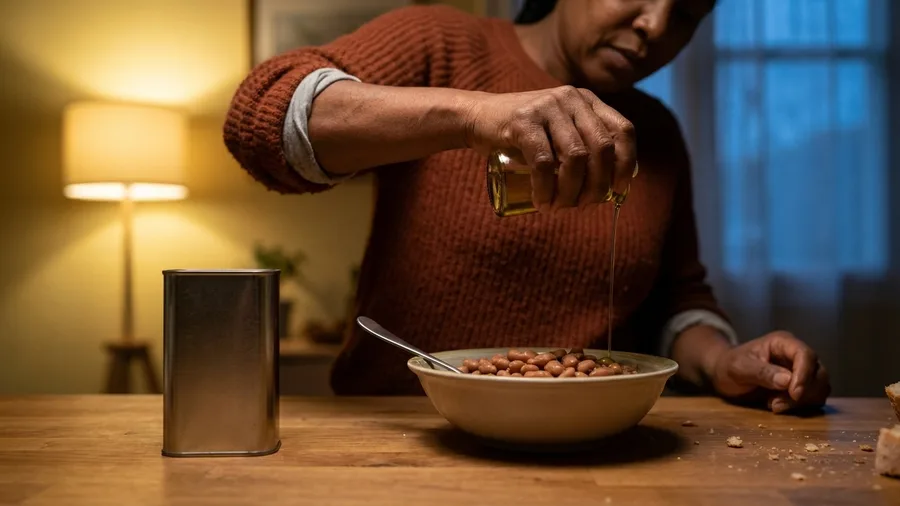
A spoonful of oil at a time is a hard way to get through a club-store jug. The oil goes stale long before the jug is empty, and every drizzle starts to taste flat and slightly waxy – a quiet defeat that makes the whole bottle feel like a mistake.
The 16.9-oz tin at about $12 is the right scale for one or two people. It is enough for finishing plates and for light cooking, and it empties in the few months before the oil turns.
Size is not the only thing that decides whether oil earns cabinet space. Freshness is the other half – a stale fat makes every dish taste tired, and the tin is small enough that the last spoonful is still good.
Skip the heavy jug on the bottom shelf. A small tin lifts easily, opens without a fight, and pours one-handed – which matters on the days the wrists and shoulders are not cooperating.
Keep it in a cool, dark cabinet away from the stove, and check the best-by date on the bottom. If an open tin has sat for longer than you can remember, pour a little into a spoon and smell it; fresh oil smells green and peppery, stale oil smells like old peanuts.
Use it to finish rather than to fry. A drizzle over roasted vegetables, a spoonful over canned beans, a quick toss with pasta and lemon – a single spoonful makes a plain plate taste intentional.
The tin fits a kitchen where small portions are the whole point. Pass on the oversized jug that will turn before it is used – and pass on the tin too, if it will sit open for a year on the shelf.
💡 Tip: Keep the tin on the counter next to the salt and pepper. If it is in a cabinet behind pots, you will not use it.
The Label Check: What to Buy vs. What to Skip
Buy This
- Plain rolled oats, not flavored packets
- No-salt-added canned beans and low-sodium broth
- Plain Greek yogurt in a 32-oz tub
- Plain frozen berries and plain frozen vegetables
- Water-packed canned fish
Skip That
- Instant oatmeal with added sugar
- Regular canned beans if you are watching sodium
- Single sweetened yogurt cups
- Syrup-packed berries and sauced vegetable kits
- Oil-packed or high-sodium canned fish if you are limiting salt
6. Eggs for a Quick Protein Plate

A protein that needs no defrosting, no marinade, and no plan is the next barrier on a low-energy day. Eggs fill that slot in a way few other foods do – a dozen for about $4, portioned by the egg rather than the pound.
Check the carton date in the store, then keep them cold at home; they hold for weeks. One egg is one portion, which makes a smaller appetite less of a puzzle.
Hard-boil six at once and leave the shells on in a bowl in the fridge. That bowl is the whole system – a meal within reach on a day when even boiling water feels like a decision.
Serve them with frozen vegetables and toast, or scramble them with a spoon of cottage cheese for a softer, creamier texture if dry eggs are hard to swallow.
Eggs need a stove or a microwave, not a full kitchen setup. If a prescribed diet has set a limit on eggs, or a clinician has flagged cholesterol concerns, that limit comes from them rather than any general rule.
A carton at eye level and a bowl of boiled eggs in the shell turn the fridge into something you can rely on. The protein is visible, the portion is fixed, and the repeat comes without planning.
Eggs — At a Glance
💰 Cost
About $4 per dozen
⏱️ Cook Time
10 minutes to hard-boil
🧊 Storage
Refrigerate; use by carton date
🍳 Best For
Quick protein when you do not want to plan
⚠️ Watch-out
If eggs are restricted, follow your clinician's limit
Why It Works
Boiling six at once makes the protein visible and ready, so you reach for it before you reach for the phone.
7. Canned Fish for Pantry Dinners

The pantry protein earns its place on the nights when pulling out a pan and waiting on the stove is more than the evening can hold. A 5-oz can of tuna or salmon runs about $2, sits on the shelf for months, and opens into a meal without a plan or a recipe.
One can is one or two meals. That is the whole portion, and it is the right one.
The label is where the catch lives. Water-packed and lower-sodium versions tend to fit better for most older eaters, because canned fish can carry a surprising salt load, and that is the one variable you can actually choose at the shelf rather than adjust later.
Flake it into whole-grain pasta with a handful of frozen vegetables. Or skip the stove entirely and mix it with plain yogurt and a squeeze of lemon for a sandwich filling that holds up in the fridge for a day or two. Rinse the can before it goes in the recycling; a quick swirl takes the smell out of the bin.
This is the staple for a low-energy night, when the can is the whole plan. The one thing worth flagging: if canned fish becomes a near-daily habit, fish frequency is a question for your clinician rather than a rule this list can set.
The repeatability test here is almost too easy to pass. A stack of cans at eye level opens without planning, keeps for months, and asks nothing of you but a can opener.
8. Whole-Grain Pasta in Half-Box Meals

A can of fish becomes a hot dinner the moment it meets pasta, and that makes the box on the shelf worth a second look. The question is portion size: a 16-oz box is a family amount, and half of it is the real unit for a one- or two-person kitchen.
At about $2 a box, whole-grain pasta is one of the cheapest staples on this list. Cook half and pour the rest into a sealed jar, where you can see exactly how much is left.
Boil that half for 8 minutes, or until it is tender the way you actually like it. Toss it with frozen vegetables, a spoonful of olive oil, and whatever canned fish you have open. That is a full plate from a cold start in about 15 minutes.
Keep the sauce simple. Jarred sauces vary widely in sodium, so read the label or skip it and use broth or a squeeze of lemon instead. The simpler the sauce, the more the pasta is doing the work, which is fine.
The catch is texture, and it is an honest one. Whole-grain pasta has more bite than the white version, and if chewing has become effortful, that extra chew turns a pleasant dinner into a chore. Cook it a few minutes past tender if that helps, or set pasta aside.
A box that opens and pours without a fight, with the leftover half visible in a jar, is what makes the half-box habit stick. You reach for what you can see.
💡 Tip: Salt the water lightly and taste before adding sauce. Jarred sauce is often saltier than you expect.
9. Unsalted Nuts for Portioned Snacks
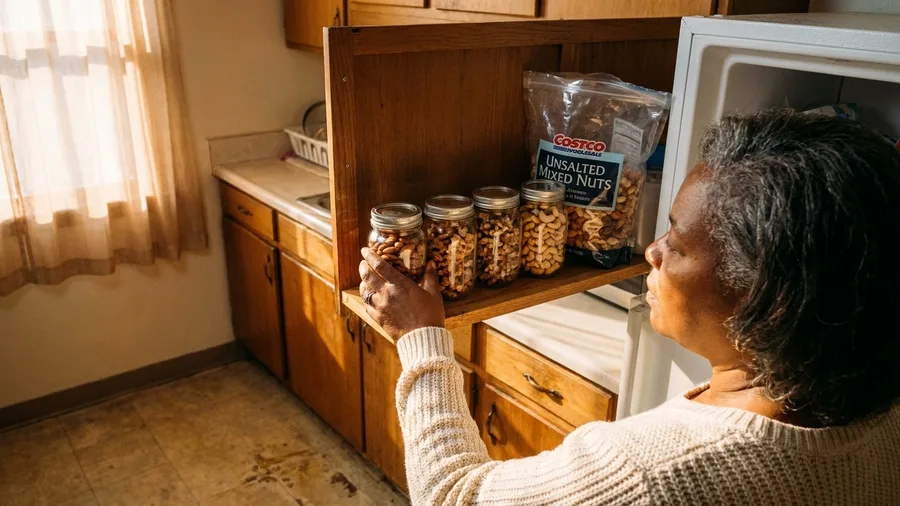
A hot dinner built from half a box of pasta gets the evening handled. The snack shelf asks a harder question, because here the price per bag runs higher and the risk is a bag that goes stale near the back of a cabinet.
A 12-oz bag of unsalted nuts costs about $7, which makes it the one item on the shelf where the money is real and the test is strict.
Buy plain and unsalted. Honey-roasted and candy-coated versions bury salt and sugar in the coating, and on this shelf those coatings are the reason to put the bag back rather than the reason to buy it.
The bag only pays off if a portion is decided before you sit down. Split it once into small bags or jars as soon as it comes home, so a snack is a one-hand grab instead of a bag you keep reopening.
A small jar at eye level does quiet work here: a single portion stays visible, and nobody digs through a large bag for a handful at a time.
Chopped, the same nuts go into yogurt or over oatmeal, which stretches one bag across two kinds of eating.
If the bag will outlast a month, store it in the freezer and take out what you need; nuts turn stale and bitter at room temperature long before they look wrong.
For a reader who wants a snack that keeps on a shelf, this qualifies. If dental work or a swallowing problem makes nuts difficult, skip them – texture, not price, is the catch that decides fit.
Before You Re-Buy: A Five-Minute Shelf Check
-
Clear one shelf at eye level This is where the staples you actually use will live.
-
Check dates on opened packages Toss anything past its best-by or smelling stale.
-
Move the heavy jugs to a lower shelf Lifting a big oil jug is a barrier you do not need.
-
Decant oats, nuts, and pasta into clear jars You eat what you can see.
-
Decide which two staples you will actually repeat this week Buy only those two on the next shop.
10. Low-Sodium Broth for Flavor Base
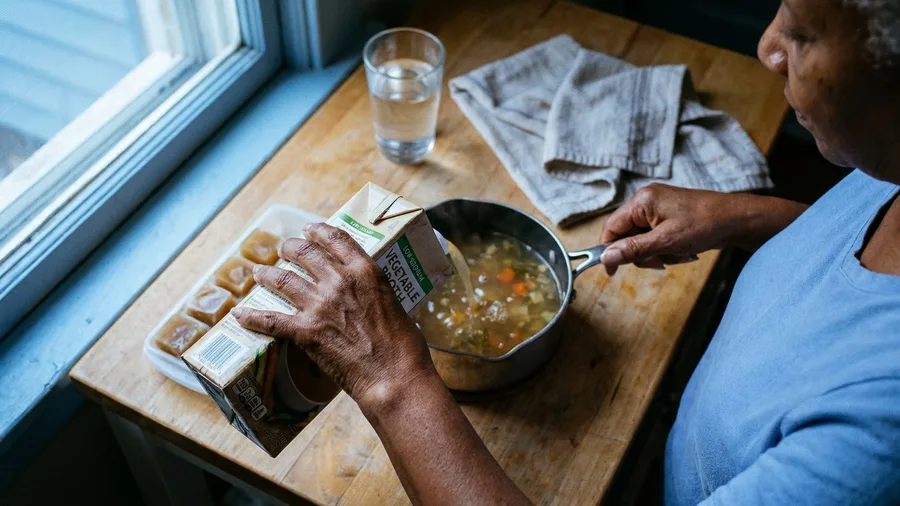
Flavor is the step most small kitchens skip, not because it is hard but because it needs a second move. A carton of low-sodium broth turns that move into a pour. The 32-oz carton runs about $3, and it sits on the same shelf as the beans and the pasta you already reach for.
Read the label before you commit. Broth is one of the saltiest things in the pantry, and the gap between regular and low-sodium is wide enough to matter.
Use it where you would have used water. Rice cooked in broth instead of water tastes like something. So does pasta. A quick soup is beans, frozen vegetables, and a carton poured over them, simmered ten minutes.
The leftover is the catch. Most people cook a half-carton and leave the rest in the door until it turns. Pour the rest into an ice-cube tray and freeze it; two cubes make a cup of rice taste fuller, and nothing gets dumped.
If a clinician has set a sodium limit, that limit picks the carton, not a general rule. Low-sodium is a starting point, not a guarantee.
A carton that opens without a fight and pours cleanly earns the routine. Keep it at eye level where the water would be, and the flavor step stops being extra work.
11. Cottage Cheese Beyond the Container
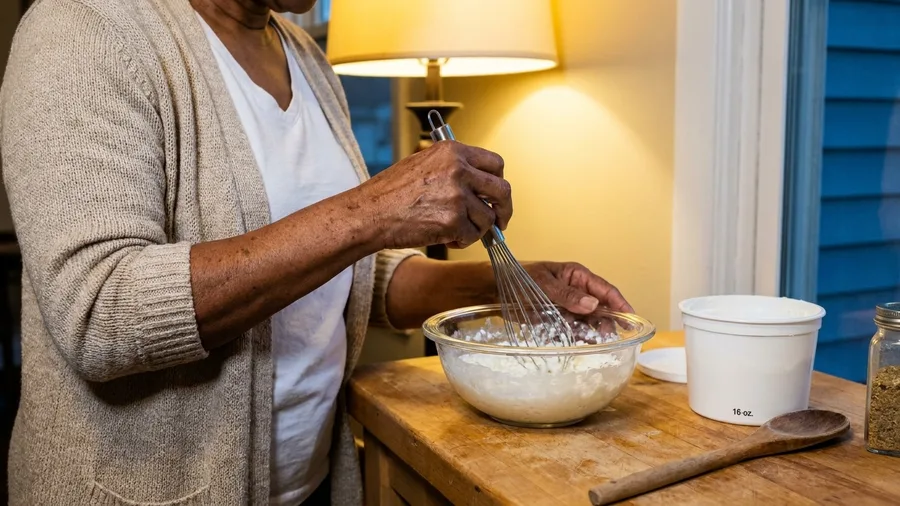
Flavor you can build without leaning on salt is half the battle; the other half is protein you will actually eat. Cottage cheese is where that gets complicated.
The 16-oz tub costs about $5, and the reason it sits unused in a lot of refrigerators is not the price. It is the lumps.
Sodium and added sugar are the two lines to read first on the label. Plain, not flavored or whipped with fruit, because the reader adds the sweetness at the bowl and controls the amount.
A half cup blended into scrambled eggs disappears entirely. The eggs go lighter, the protein stays soft, and nobody at the table can identify what changed.
The same half cup stirred into a pasta sauce thickens it slightly and adds body without the grain of a cream sauce. A blender or an immersion wand does the whole job in under a minute.
Keep the tub in the coldest part of the refrigerator, toward the back, and use it by the date stamped on the lid. Cottage cheese turns sour faster than yogurt, and a tub forgotten behind the milk is money into the bin.
This is a protein for people who want soft food, not chewy food. Anyone whose diet excludes dairy leaves this one on the shelf, and that is a decision already made for them.
Eye level matters here more than for most items. A tub at the front of the shelf, with the blender within arm's reach on the counter, turns a food someone avoided into a two-minute habit.
Push it to the back of a deep shelf and the lumps win by default.
💡 Tip: A stick blender works faster than a countertop blender and leaves one less thing to wash.
12. Frozen Vegetables Without Sauce
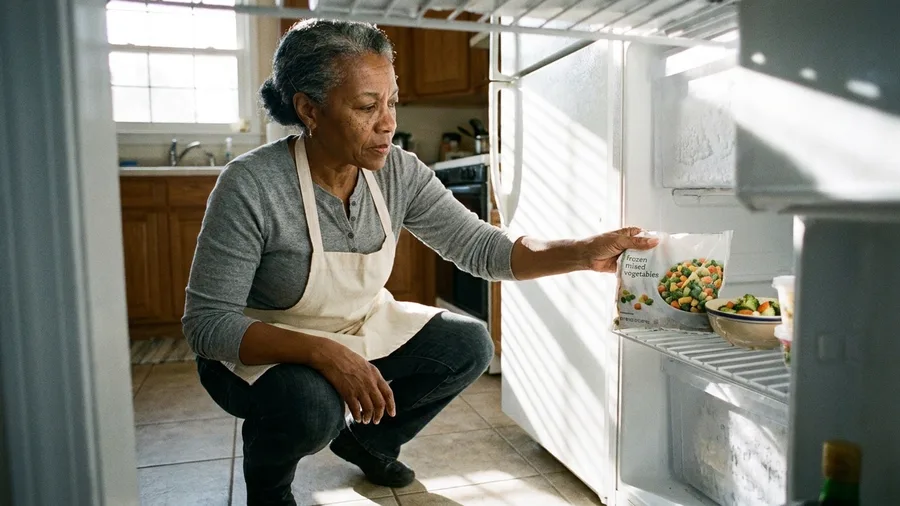
A texture problem does not have to end in avoidance, and neither does a vegetable problem. The freezer is where the second one usually gets solved.
A 12-oz bag of plain frozen vegetables runs about $2.50, and that bag is built for a one- or two-person kitchen. Nothing in it spoils on a Thursday because plans changed.
The wrong buy is the kit: vegetables already tossed in sauce or seasoning, which adds sodium the reader did not choose and takes away the texture decision. Plain bags, then season at the stove.
Three to four minutes in the microwave, covered, until the pieces pierce easily with a fork. Then straight into pasta, soup, or a pan of eggs, no thawing step in between.
Texture decides which bag. Some readers do better with soft-cooked pieces or a mash, and the cut matters as much as the vegetable. A coarser mix that needs chewing can turn a good habit into an avoided one.
Check the label on anything seasoned or sauced regardless. Sodium hides in the sauce far more than in the vegetable.
This suits a small household precisely because the portion is flexible. A handful goes into a pan; the rest waits, sealed, without turning brown.
One plain bag at eye level in the freezer, opened without a fight, does more for vegetable intake than a crisper drawer full of good intentions.
13. Lemons for Aroma and Acid

A bag of plain frozen vegetables gives a small kitchen a full plate without waste. What it cannot do is make that plate taste like anything. Lemons are the last flavor step, the one that decides whether a simple meal gets made again or gets pushed aside as too plain to bother with.
Three lemons cost about $2. That is the whole investment. What they add is smell, sourness, and color at once, and that combination does more for a repeated meal than any seasoning blend on the shelf. The same fish and beans and vegetables taste less flat when a little acid lands on them.
There is a right order to using a lemon, and most people get it backwards. Zest the fruit before you cut it open. Once the peel is gone you cannot get it back, and the zest is where the aroma lives, far more than in the juice.
Then juice it and keep the spent fruit in the refrigerator, where it holds for a few days. Use zest or juice on fish, vegetables, or beans, or just squeeze a wedge into a glass of water. Start with a small squeeze and taste. Acid is easy to add and hard to take back out.
If the lemons are going to sit past their prime, freeze the zest or the juice in ice-cube trays and drop a cube into whatever is cooking. That keeps the staple working instead of failing in the produce drawer, which is the quiet way most good intentions end.
This one suits a reader who wants flavor without heavy salt. If citrus is restricted in your diet, ask your clinician before making it a habit. Otherwise, a lemon in a bowl at eye level is visible every time the counter is cleared, cuts without effort, and gets used before it spoils, which is the same test every shelf item has to pass.
Frequently Asked Questions
How do I decide which staples to buy first?
Pick the two you will actually use this week. Visibility is the best predictor: if you can see it at eye level and open it without a struggle, you will reach for it. Start with one breakfast staple and one pantry base.
Is it worth buying the larger size to save money?
Only if you will finish it before it spoils. For one- or two-person kitchens, smaller sizes often cost less per use because you waste less. Olive oil and nuts are the clearest examples.
What if I have dietary restrictions?
Sodium, dairy, eggs, fish, nuts, and citrus are common restrictions. The label choices in this article follow a general rule; if your clinician has set a limit, that limit decides what you buy.
How long do these staples keep?
Check the date on the package and store accordingly. Nuts and broth freeze well; oats and pasta keep in sealed jars; frozen berries and vegetables keep for months. The freezer is a pantry too.
Can I still use these if I do not enjoy cooking?
Yes. Every use in this article is five to fifteen minutes and uses one or two staples. The point is not cooking more; it is making the small amount you do cook easier to repeat.
The Starter Set That Fits Your Week
Name your situation and buy only three. Cooking for one: rolled oats, canned beans, frozen vegetables. Low energy: canned beans, canned fish, frozen vegetables. Small appetite: plain Greek yogurt, eggs, cottage cheese. Fixed budget: rolled oats, canned beans, whole-grain pasta.
That shelf that looked like waste – the 42-oz oats, the 16.9-oz oil, the 32-oz yogurt – turns into a shortlist the moment size, visibility, and use are matched to one- or two-person cooking.
A staple earns its space only if it gets reached, opened, and used before it spoils. Buy the three that pass that test for your situation, put them at eye level, and leave the rest on the shelf until the catch changes. Tomorrow at 6 p.m., the cupboard you stand in front of is that shortlist, not a museum of good intentions.
Pick Your Three and Clear a Shelf
Choose the starter set that matches your situation, put those three at eye level, and use one of them tonight. The rest of the list can wait.