
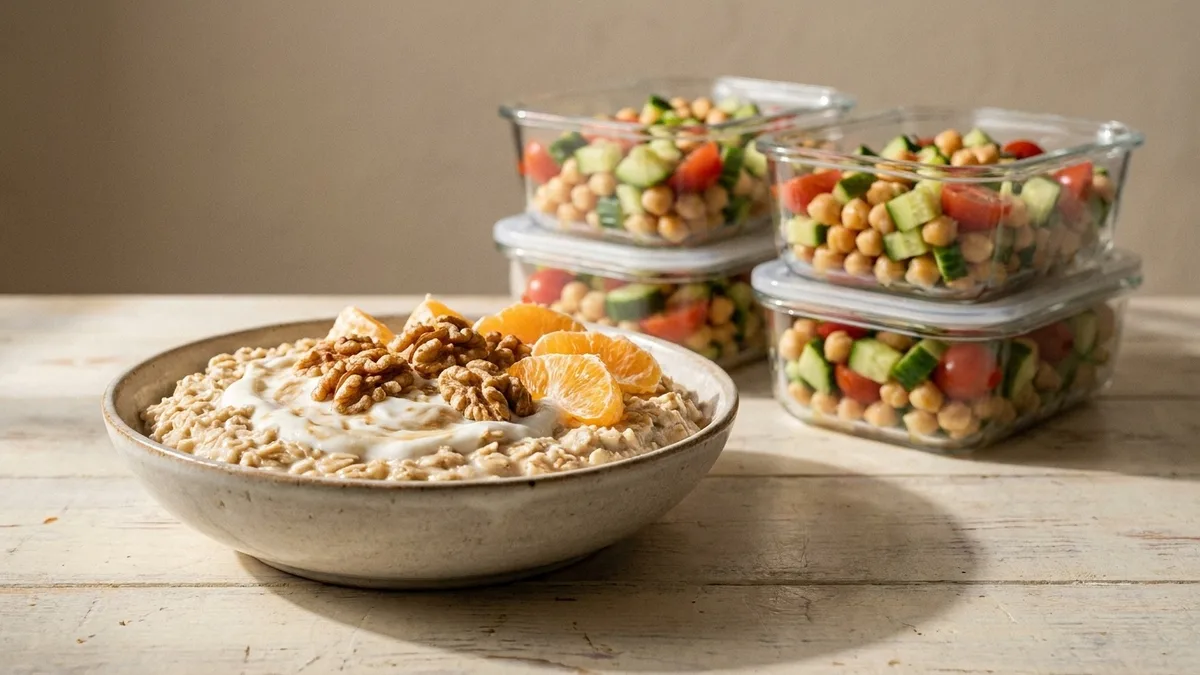
Mediterranean eating gets easier when you cook fewer different meals, not more. Most beginners think the obstacle is knowledge, so they buy a new pantry and print a stack of long recipes. Neither fixes the real problem, which is deciding every single day what to eat.
Now imagine making that call in a supermarket aisle on a Sunday night, or on your phone at the same hour. That is where this week gets settled: fifteen beginner dishes, each under ten ingredients, most under forty minutes, all cooked from one 10-inch skillet, one sheet pan, one 4-quart pot and four lunch containers.
One shop runs about $64 at a mid-range supermarket, including a $16 pantry start that lasts roughly three weeks. Daily time stays modest too: 3 to 6 minutes at breakfast, 10 at lunch, 20 to 40 at dinner, plus one 45-minute Sunday block. Seven breakfasts come from five dishes with two repeats, four lunches plus dinner leftovers follow, and six dinners include two that land back in lunch containers the next day.
That is the whole thesis: one shop, fifteen dishes, a Sunday block, and the week is decided before it starts. Buy the list, cook the three start dishes, and check the Dietary Guidelines for Americans or WHO for health guidance rather than treating a menu as a cure.
Quick Tips Before You Start
Shop once, not daily
Buy everything for the week in one trip; keep the pantry items (olive oil, lentils, tins) for the next three weeks.
Make three jars at once
Overnight oats keep three days in the fridge, so build three jars Sunday night and three mornings are covered.
Cook once, eat four times
The Sunday lentil soup yields four lunch portions; reheat with a splash of water because it thickens in the fridge.
Use the timer, not your eyes
Salmon is done at 12–14 minutes at 425°F; pull it when the center just flakes.
Keep tins on hand
Canned beans and tuna are cheaper than fresh and behave the same in these dishes; the pantry start covers them.
1. Overnight Oats With Yogurt and Walnuts
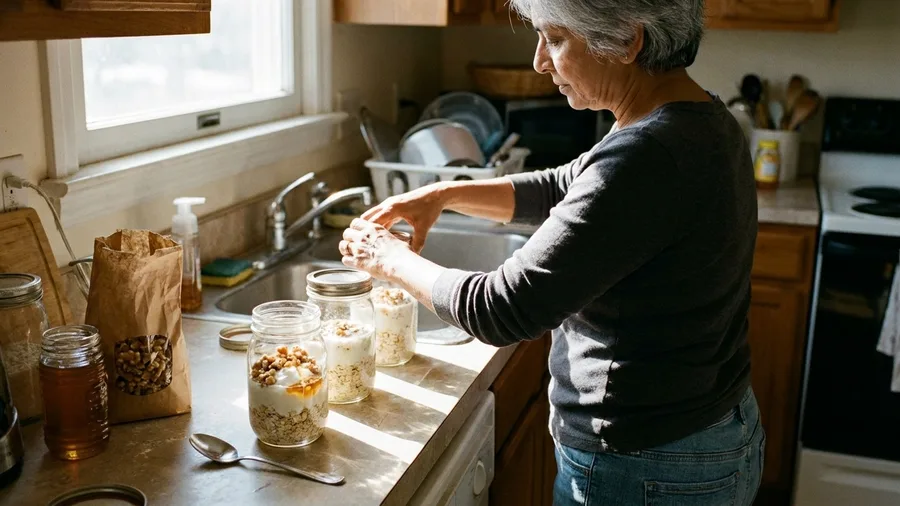
The cheapest breakfast in the week is the one you never cook. You build it the night before, in the three quiet minutes between rinsing the dinner plates and turning off the kitchen light.
Into a lidded jar goes half a cup of rolled oats, three-quarters of a cup of milk or water, half a cup of plain Greek yogurt, a small handful of chopped walnuts, and a teaspoon of honey. Screw the lid on and shake it once. It is finished before your hands are dry.
Make three jars while you are standing there.
The oats soften overnight in the fridge, so by morning there is nothing to assemble and nothing to heat. Three jars in a row covers three weekday mornings, and each one holds its texture for three days before the oats go gluey. The active work is a single pass at the counter, not a daily habit you have to remember.
It costs about $1.30 a portion and dirties no pans. The bowl is the jar.
At 7 a.m. the dish asks you to open the fridge door. Not to decide, not to chop, not to stand at the stove half awake; the yogurt tub and the oats are already bought for the week, and the jar is already full. On a rushed morning you can eat it standing up, or carry it out the door and spoon it at a red light.
💡 Tip: Build three jars on Sunday night; they keep until Wednesday.
| Day | Breakfast | Lunch | Dinner |
|---|---|---|---|
| Sunday | Yogurt, honey, walnuts and orange | Pita with tuna, tomato and olive oil | Lemon chicken with potatoes (cook extra) |
| Monday | Overnight oats (jar made Sunday) | Lemon chicken leftovers | Pasta with tomato, garlic and spinach |
| Tuesday | Boiled eggs with bread and tomato | Sunday lentil soup + side of chickpea salad | Baked salmon with zucchini and bulgur |
| Wednesday | Overnight oats (second jar) | Chickpea, cucumber and tomato salad | One-pot lentil and vegetable stew (freeze leftovers) |
| Thursday | Pita with hummus, cucumber and olives | White bean and tuna salad | Shakshuka with eggs and peppers |
| Friday | Fried egg on toast with tomato | Lentil soup (from freezer or fridge) | Chickpea and spinach stew with cumin |
| Saturday | Overnight oats (third jar) or boiled eggs | Leftover shakshuka or tuna pita | Cook extra lentil stew or repeat lemon chicken |
2. Yogurt, Honey, Walnuts and Orange
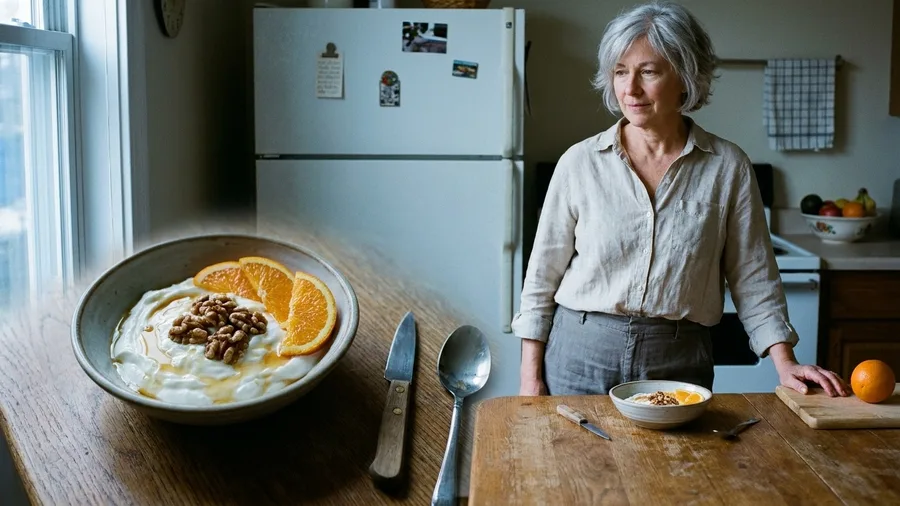
Some mornings refuse even a jar. You did not plan, or you are out of the door in ten minutes and the fridge feels like a riddle. The answer takes two minutes and involves no heat at all.
One cup (200 g) plain Greek yogurt into a bowl. A teaspoon of honey, 10 g walnuts, and one orange sliced over the top. One bowl, one knife, one spoon.
About $2.10 a portion.
Buy the 32-oz tub rather than single cups. The tub runs about $5.50 and covers four breakfasts, which is cheaper per serving and means the yogurt is always in the fridge when a morning falls apart.
Everything here is already in the week's shop: the same yogurt, honey and walnuts the overnight jar uses, plus an orange. Nothing new to buy, nothing to remember.
The only demand is a bowl. On the mornings when even the jar's small planning feels like too much, this is the dish that keeps you eating breakfast instead of skipping it.
💡 Tip: Buy the 32-oz tub, not single cups — it costs $5.50 and covers four breakfasts.
⚠️ COMMON MISTAKE
Don't crowd the pan
When you fry eggs or toast bread, give each piece room. A crowded pan steams instead of browns, and you lose the texture that makes a simple breakfast feel like a meal.
3. Fried Egg on Toast With Tomato
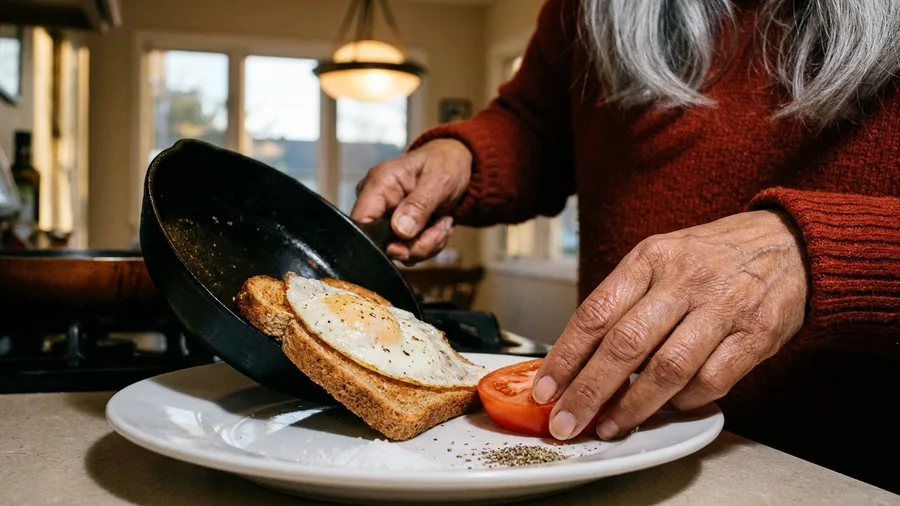
A breakfast you eat cold only works if you are willing to eat it cold, and not everyone is. Some mornings want something warm on a plate, and the good news is that the hot version costs barely more time than the cold one.
One egg goes into a small skillet with a teaspoon of olive oil. While it sets, a slice of whole-wheat bread drops into the toaster and a tomato gets sliced onto the plate. Salt and pepper. Six minutes from cold pan to eaten breakfast.
The skillet is the only thing that needs washing.
For the last two minutes, lay the tomato halves cut-side down in the pan beside the egg. They soften, colour, and pick up the oil and salt, and the whole plate tastes like more than it cost. About $1.10 a portion.
Six minutes and one pan is the entire ask. No separate pot for anything, no oven to preheat, no compromise on a cold jar you did not want. It is the same three-minute decision the night before, moved to the morning, with a flame under it.
4. Pita With Hummus, Cucumber and Olives
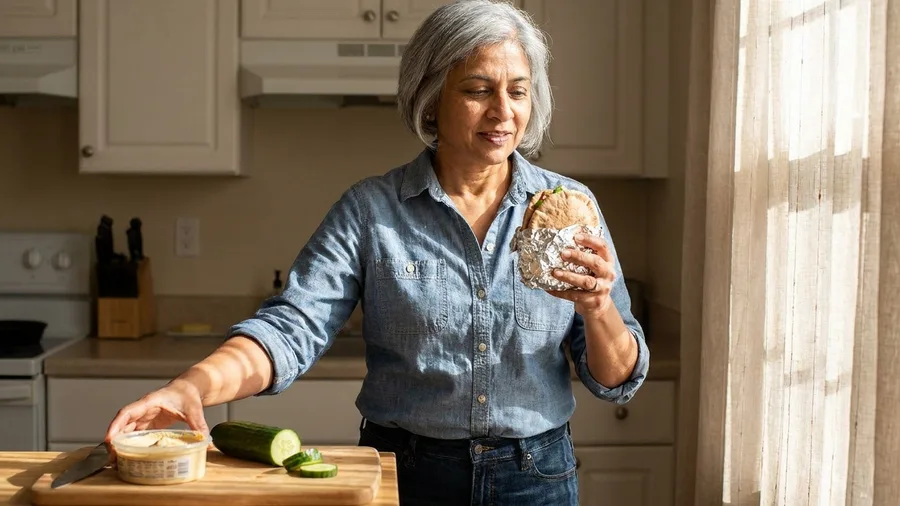
Some mornings there is no plate, no fork, no ten minutes at the stove. The food that works then is food you can hold: half a whole-wheat pita, 3 tbsp hummus spread to the edges, half a cucumber sliced thick, and 6 olives, all wrapped in foil and out the door.
Four minutes to assemble. That is the whole cost, and it is paid at the counter, not at 7 a.m. in traffic.
The thick cucumber slice is not fussiness. Thin coins leak, and a pita that sits damp for two hours turns to paste before you reach it.
About $1.60 a portion. The pita, cucumber and olives were already in the shop for the week, so the dish is a rearrangement of what is in the fridge, not a new purchase.
It holds roughly four hours without a fridge. No microwave queue at noon matters here, because there is nothing to reheat, nothing to keep cold, nothing to remember to grab on the way out.
💡 Tip: Spread the hummus to the edges of the pita to stop it going soggy.
5. Boiled Eggs With Bread and Tomato

Travel breakfast solves the morning you leave early. Hard-cooked eggs solve the other kind of morning: the ordinary Tuesday when nobody wants to cook and nothing has been decided yet. One batch on Sunday does most of that work for you.
Put six eggs in a pot, cover them with cold water, and set it on the burner. From the moment the water reaches a rolling boil, count eight minutes. Then lift them straight into a bowl of cold water, and the shells pull away cleanly in a few big pieces instead of a thousand shards. Six eggs cost about $2.00 and take one pot and eight minutes of mostly waiting.
That wait belongs to the Sunday block, not to Thursday. Once the eggs are peeled, they keep in the fridge for up to five days in a covered container – so five of the week's breakfasts are half assembled before Monday even starts. At seven in the morning the ask is quick: two peeled eggs, one slice of bread, a tomato sliced straight onto the plate, a drizzle of olive oil, salt. About $1.40 a plate, no pan to wash.
The eggs also keep options open. Slice one over Monday's chicken dinner, or quarter it into the shakshuka sauce if the week runs short on time. The same dozen-or-so minutes of prep becomes a topping, a filler, a rescue.
Sunday boils the eggs, the fridge stores them, and the weekday morning just opens the door.
Breakfast at a Glance
⏱️ Morning effort
0–6 minutes
🍳 Pans to wash
0–1
💰 Cost per portion
$1.10–$2.10
📅 Prep ahead
Sunday jars and boiled eggs
🥣 Shared ingredients
Yogurt, eggs, bread, walnuts
Why it works
Every breakfast uses the same yogurt, eggs, bread, walnuts and fruit bought in one shop.
6. Chickpea, Cucumber and Tomato Salad
Breakfast now has four paths: cold, hot, portable, and prepped. Lunch asks a harder question. It leaves the house with you, sits unrefrigerated for hours, and has to look appetizing at noon, not just be technically edible.
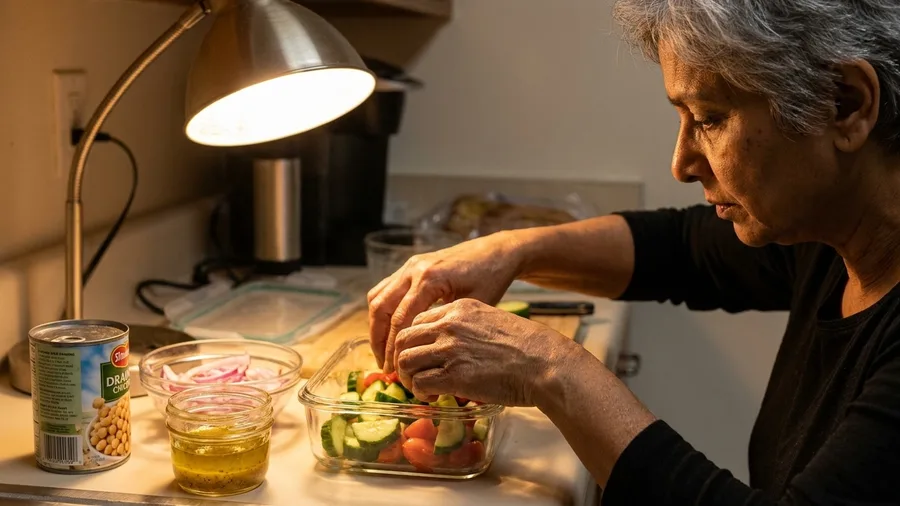
The chickpea salad is built for exactly that. One can of chickpeas, drained and rinsed, plus a cucumber, two tomatoes, a quarter of a red onion finely sliced, two tablespoons of olive oil, the juice of half a lemon, and salt. Ten minutes the night before, and the whole thing costs about $2.30 a serving.
The trick is the dressing. Keep the oil and lemon in a small separate jar and dress the bowl at work, because a salad that marinates overnight turns the chickpeas grainy and the cucumber limp by midday. Packed dry, it holds up two days in a row.
Canned beans, not dried, are the smarter buy here: cheaper by the can and identical in this dish. The same bowl does double duty as a side for the lemon chicken or any other dinner on the plate.
Nothing in it wilts, nothing needs reheating, and there is no microwave decision at 12:15. An earlier breakfast freed up that mental space; this is where it gets spent.
💡 Tip: Pack the dressing separately so the chickpeas stay firm.
7. Pita With Tuna, Tomato and Olive Oil

A container made the night before fails on the day you get home at nine and the fridge is empty of anything you built. Tuna, pita and oil don't require preparation at all.
Five minutes, no cooking, no leftovers to plan around: 1 whole-wheat pita, 1 tin of tuna ($1.30), 1 tomato, 1 tablespoon olive oil, a squeeze of lemon and black pepper. About $2.50 a portion.
Drain the tuna well. Skip it and the pita goes soft by lunchtime, which turns a good sandwich into a sad one that makes you buy something instead.
It holds about four hours in a bag, which is the exact window between a kitchen counter at 7:40 and a desk at noon. Slip it in next to a water bottle and it arrives intact.
The dish asks for five minutes and nothing from the rest of the week's cooking. That is the role it plays: the fallback that keeps one rough morning from turning into a shop trip that undoes the $64 list.
8. Sunday Lentil Soup, Four Portions
A tuna pita covers the day there are no leftovers. The rest of the week needs something sturdier: one pot that fills four containers before Monday even starts.
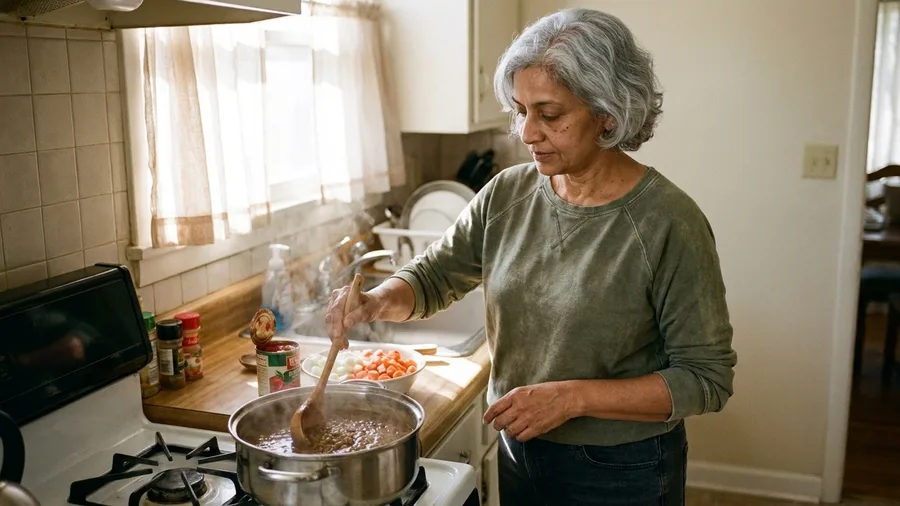
That pot is lentil soup, and it costs under a dollar to make. An onion and two carrots get chopped, a cup of brown lentils goes in dry, a can of tomatoes and a teaspoon of cumin follow, and six cups of water and two tablespoons of olive oil finish it. Thirty-five minutes on a low simmer and it is done. For more whole-food dishes worth reviving from a grandmother's recipe box, see Grandma's Kitchen Was Onto Something.
Lentils do not need soaking and do not need watching. That is why they belong in the first week and not the fifth.
Four portions come out of that pot at about $1.20 each. Frozen in single containers, they keep three months. In the fridge they set firm overnight, so reheat each one with a splash of water and stir.
The soup is the anchor of a 45-minute Sunday block. While it simmers, a pot of bulgur cooks and six eggs boil in a third pot. By the time the soup is cool enough to portion, the week's lunches and grains are already decided.
None of it works without the pantry items, so the shop front-loads them. The $16 start is 500 ml of olive oil at $9, a pound of brown lentils at $2.50, two cans of chickpeas at $2.40, and two tins of tuna at $2.60. That outlay lasts roughly three weeks and covers this soup and several dishes after it.
Thirty-five minutes of cooking on a Sunday takes four weekday lunch decisions off the table. At noon the demand is reheat and eat, not assemble.
Fresh vs. Frozen and Canned
Fresh
- Salmon fillet at the fish counter ($14/lb)
- Beans from the pod, if you can find them
- Tomatoes on the vine for salads
- Spinach in a bunch
Frozen and Canned
- Frozen salmon fillets ($9/lb), thaw overnight
- Canned chickpeas and cannellini beans ($1.20–$1.30)
- Canned tomatoes for sauces and stews
- Frozen spinach for the pasta and stews
9. White Bean and Tuna Salad
The lentil pot covers four lunches. By Thursday or Friday the soup is gone and the crisper drawer is empty, so the last lunch of the week has to come out of the cupboard.
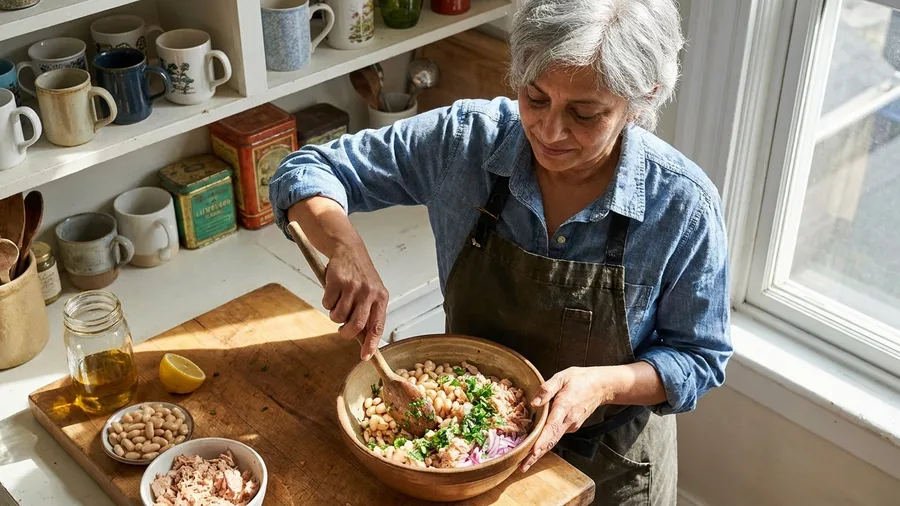
Open a can of cannellini beans and drain them. Add a tin of tuna at about $1.30, a quarter of a red onion sliced as thin as you can manage, parsley if any is left, two tablespoons of olive oil and one of lemon juice. Eight minutes, one bowl, no heat.
The onion is the one thing worth a small pause. Soak the slices in the lemon juice for five minutes before they go in; the acid pulls the raw bite out and leaves them mild.
A portion lands at roughly $2.60. It keeps two days, so it can be made the night before or thrown together at 6 a.m. without either version suffering.
Canned beans cost less than dried here and behave exactly the same once dressed. There is no soaking, no overnight pot, no reason to buy fresh for a dish that gets eaten cold.
This is the lunch that asks for no fresh vegetables and eight minutes. The tins and the lemon carry it, so the week ends without a shop until tomorrow.
Mediterranean Eating: Myth vs. Fact
10. One-Pan Lemon Chicken With Potatoes
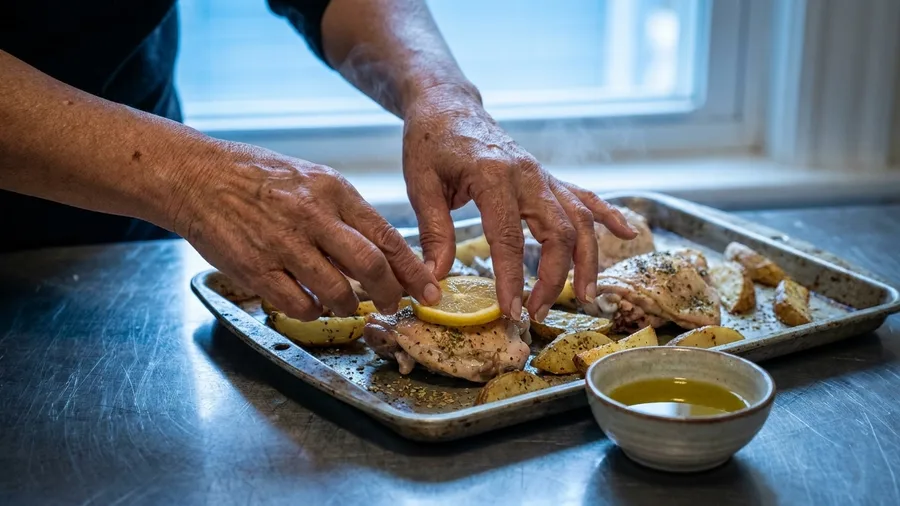
Dinner is the one meal of the week that still needs real cooking after a workday, which is why the plan hands it to a single pan and the oven rather than to you. Two bone-in chicken thighs at about $2.80, three-quarters of a pound of potatoes in wedges, a lemon sliced thin, a teaspoon of dried oregano, two tablespoons of olive oil, salt. That is the whole list.
Set the oven to 425 degrees and give it forty minutes.
Arrange the potatoes underneath the chicken, not beside it, so the fat renders down and seasons them while they crisp. Thighs, not breasts, for exactly this reason: dark meat survives forty minutes in a hot oven without drying into something you have to saw through.
The pan goes in and you walk away. There is no stirring, no second pot, no sauce to watch. That is the ask after work — one pan and oven time, not active cooking.
One thigh and half the potatoes are dinner tonight; the other thigh and the rest go straight into a lunch container before you sit down, so tomorrow's midday meal is already decided. Build the plate to the same template every night: half vegetables, a quarter whole grain at about half a cup cooked, a quarter protein near three ounces, a tablespoon of olive oil.
That leftover portion is the quiet engine of the week. Two dinners land back in lunch containers, which is how a single shop stretches to four lunches plus the leftovers without a second trip to the store.
💡 Tip: Put the potatoes under the chicken so they soak up the lemon and fat.
11. Pasta With Tomato, Garlic and Spinach
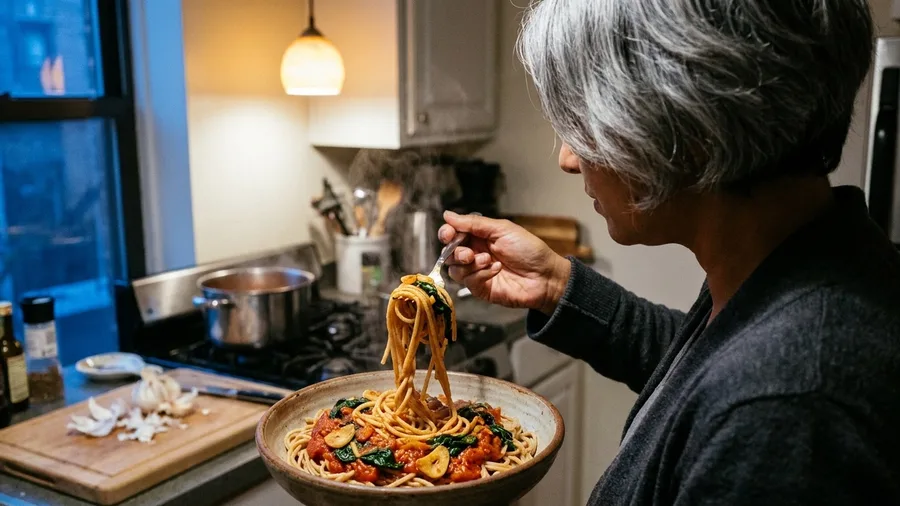
Some nights the oven is asking too much. The pan dinner earned its place, but it also left a dirty sheet tray and a forty-minute wait, and on a Tuesday that can be the difference between cooking and ordering in.
This is the fifteen-minute answer, and it needs one pot.
Three ounces of whole-wheat pasta goes into boiling water. While it boils, two sliced garlic cloves soften in two tablespoons of olive oil in the same pot you will finish the sauce in, or in the skillet if you prefer, and a can of tomatoes or six chopped fresh ones go in with them. The sauce reduces in the time the pasta takes, which means the clock and the pot run together instead of taking turns.
Two handfuls of spinach go in at the very end, off the heat or barely on it. Stir until they just collapse. Leave them longer and they give up their structure and turn to mush, which is a texture problem, not a flavor one.
Total: fifteen minutes, about $2.20 a portion, and the only chopping is garlic. No second pan, no oven, no baking dish to soak.
Five ingredients, and one of them is water.
If the fridge still holds a lemon from the week, a squeeze over the bowl lifts the whole thing, and a spoon of the yogurt from the tub turns it creamier without cream. Neither is required for the dish to work, which is the point: this is the meal that asks for the length of a pasta boil and nothing more.
After a long day, the demand here is patience for a boil, not planning, and that is a low enough price to keep the week from ending in a takeout menu.
Before You Start Cooking
-
Clear one shelf in the fridge for the week's containers. Four lunch containers fit on one shelf.
-
Set out the 10-inch skillet, sheet pan, and 4-quart pot. These three pans cover every dinner.
-
Label four lunch containers with tape and a marker. Monday through Thursday.
-
Thaw frozen salmon in the fridge the night before. It takes about 12 hours.
-
Rinse and drain canned beans before using. This removes the starchy liquid.
-
Preheat the oven to 425°F for sheet-pan dinners. Give it 10 minutes.
12. Baked Salmon With Zucchini and Bulgur
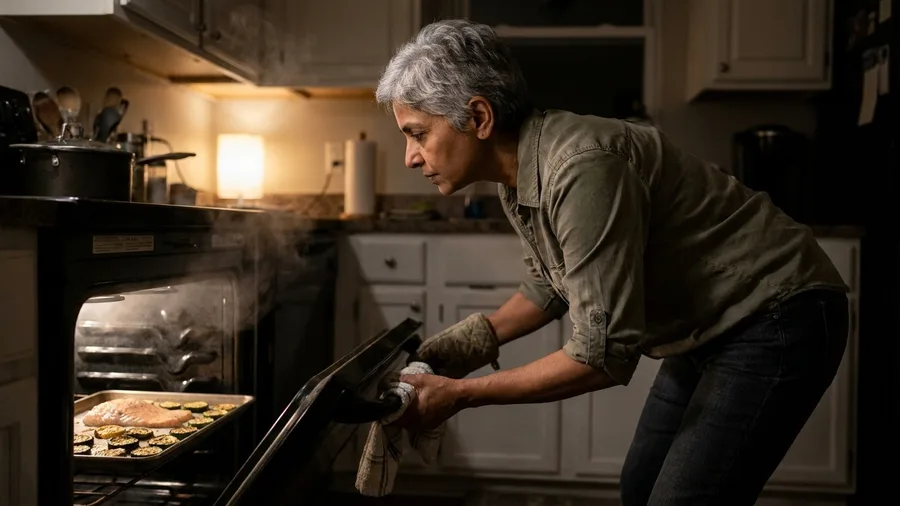
Fish has a reputation for being easy to ruin, and the fix is not more effort — it is a timer and a single sheet pan. One 5-ounce salmon fillet at about $3.50, a zucchini cut into half-moons, a tablespoon of olive oil, lemon, salt. The oven at 425 degrees, twelve to fourteen minutes, and nothing else to manage.
The timing rule matters more than the recipe. Pull the fillet when the center just flakes under a fork and still looks slightly darker than the edges — that faint translucence is the difference between moist and chalky. Wait until it is uniformly pale and you have already lost it. The zucchini goes on the same pan alongside, so the vegetable and the fish finish together.
Frozen fillets work identically here, thawed overnight in the fridge, and they run about $9 a pound against $14 at the fish counter — the same dish for a third less.
The grain is already handled: half a cup of the Sunday bulgur, reheated with a splash of water, means no second pot and no extra decision at seven in the evening. The fish asks only for a timer and one pan.
💡 Tip: Pull the salmon when the center is still slightly darker — it will finish cooking off the heat.
13. One-Pot Lentil and Vegetable Stew
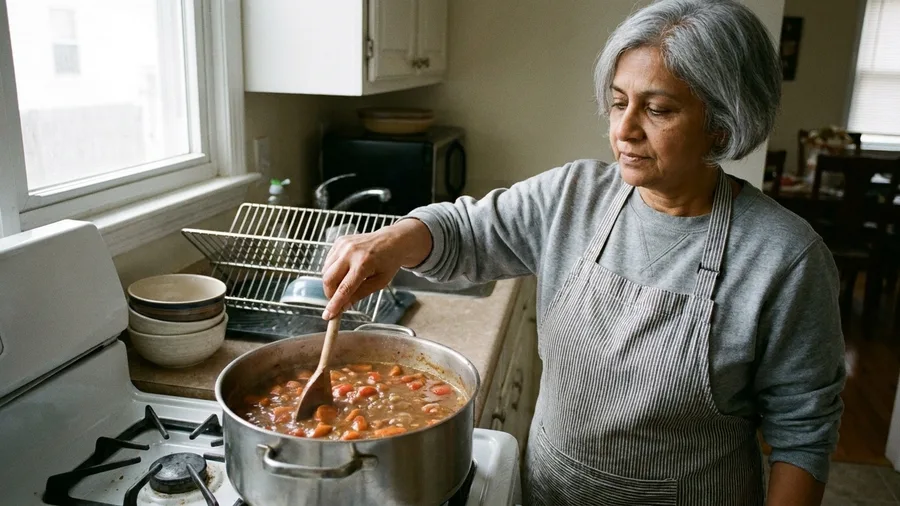
Some nights you want dinner in twenty minutes. Other nights you can give the stove thirty-five and walk away, and that trade buys you three future dinners. This is the pot to make on a Sunday afternoon, or any evening you are home anyway: one 4-quart pot, 1 cup brown lentils, 1 onion chopped, 2 carrots sliced, a can of tomatoes, 4 cups stock or water, 1 tsp cumin, 1 tsp paprika, 2 tbsp olive oil.
Everything goes in together and simmers about 35 minutes, until the lentils are soft but still hold their shape. Stir it once or twice so nothing catches on the bottom.
You get four portions at roughly $1.40 each. Eat one tonight with bread, and freeze the other three in single containers – they keep about three months, and each one is a weeknight dinner you no longer have to think about.
That is two more dinners covered without a second trip to the shop. The freezer is doing the deciding now, not you at 6 p.m. with the fridge door open.
One honest note: the stew thickens as it sits, and a frozen portion comes out closer to a paste than a soup. Loosen it with a splash of water as it reheats and it comes back to the right texture. This is the cheapest kind of cooking there is – dried lentils, an onion, two carrots, a can – and it is the dish that turns a weekend hour into three quiet weeknights.
14. Shakshuka With Eggs and Peppers
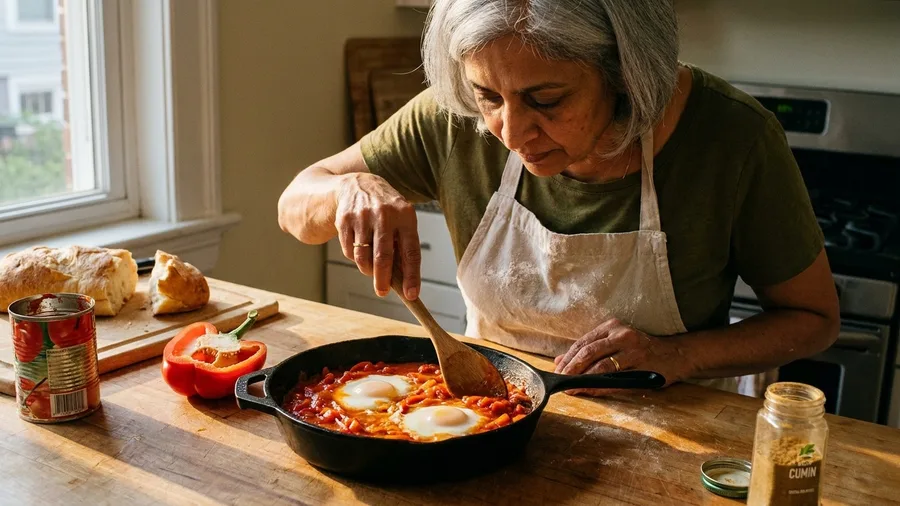
There is a night in every week when a bowl of stew, however good, is not what you want. Shakshuka is the answer, and it costs one skillet and 25 minutes: 1 bell pepper sliced, 1 can tomatoes, 2 eggs, 1 tsp cumin, 1 tsp paprika, 2 tbsp olive oil, and bread for dipping.
Soften the pepper in the oil, add the tomatoes and spices, and let the sauce cook down until it is thick enough to hold a shape. Then make two wells in the sauce with the back of a spoon and crack an egg into each.
Six to eight minutes with a lid on, and the whites set before the yolks do – cover it for the last three minutes and you will not have to guess. About $2.60 a portion.
the eggs and the canned tomatoes are already in the shop. Nothing about this dish requires a restaurant, a reservation, or a decision you have to make on the way home. It asks for one skillet and the length of a simmer, and it lands on the table looking like something you planned.
💡 Tip: Cover the pan for the last three minutes so the whites set before the yolks do.
Three Fixes That Save the Week
15. Chickpea and Spinach Stew With Cumin
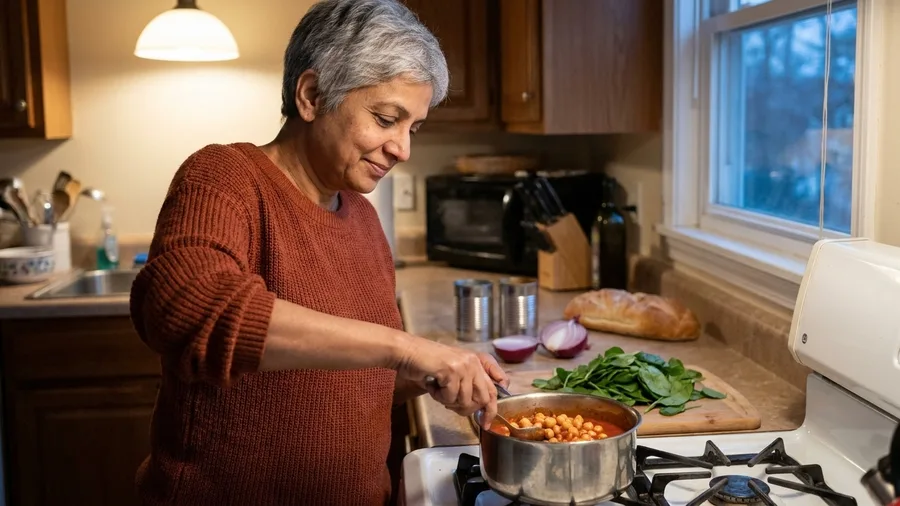
There is one night in this week when the fridge is bare and the store is tomorrow's problem. Shakshuka answers the weekend appetite; this pot answers the fridge that has nothing fresh left in it.
One can of chickpeas, one can of tomatoes, an onion, three handfuls of spinach, a teaspoon of cumin, two tablespoons of olive oil and salt. Twenty minutes from cupboard to bowl, and about $2.10 a portion.
Nothing here needs a shopping trip. The cans have been in the cupboard since the Sunday shop, the onion keeps for weeks, and spinach is the one thing to use up while it is still good.
Start the onion in the oil until it goes soft and sweet, add the cumin and let it bloom for thirty seconds, then the tomatoes and chickpeas. Let it bubble for fifteen minutes while you do something else.
Then the trick that makes it taste richer than it is: press about a third of the chickpeas against the side of the pan with the back of a spoon. They break down and thicken the sauce without a drop of cream.
Stir the spinach through at the end, just until it collapses.
Serve it with bread, or with the last of the bulgur if it is still in the fridge. Either way, a full dinner comes out of what is left in the cupboard – no new list, no trip out, no ordering in.
Twenty minutes and one pot on the last night closes the week the way the plan opened: with a decision already made.
Frequently Asked Questions
Do I need to buy fresh fish for the salmon dinner?
No. Frozen salmon fillets work identically in this recipe and cost about $9/lb versus $14/lb at the fish counter. Thaw them overnight in the fridge and roast at 425°F for 12–14 minutes.
How long does the Sunday prep block take?
About 45 minutes. In that time you can make a pot of lentil soup (35 minutes simmering), a pot of bulgur, and boil six eggs. The soup yields four lunch portions.
Can I use dried beans instead of canned?
Yes, but they take much longer. Canned chickpeas and cannellini beans are cheaper than fresh here and behave the same in these dishes, so for a beginner week, canned is the practical choice.
What if I don't have bulgur?
Use rice, quinoa, or couscous. The plate template calls for a quarter whole grain (½ cup cooked), and any of these will fill that spot.
Is this plan suitable for someone with dietary restrictions?
This is a cooking plan, not a medical one. If you have specific health conditions or dietary needs, check with your doctor or a registered dietitian before starting.
Cook the Oats, Soup, and Lemon Chicken First
If you commit to one week and nothing more, cook these three first: the overnight oats, the Sunday lentil soup, and the one-pan lemon chicken with potatoes. Between them they cover breakfast, the lunch anchor, and a dinner that hands you leftovers for the next day.
The single first action is the 45-minute Sunday block. Put the lentil soup on, cook a pot of bulgur, boil six eggs. That one block fills four lunch containers and decides several breakfasts before the week has started.
For guidance on overall eating patterns, go to the Dietary Guidelines for Americans or the WHO. This plan is about cooking and a $64 shop, not curing anything. Walk out of that Sunday aisle with a short list and an hour on the calendar, and the week is already decided — which is exactly the point: cook less variety, and it holds.
Ready for your Mediterranean week?
Look at the table above and pick your three first dishes: lentil soup, lemon chicken, overnight oats. Then set a 45-minute timer on Sunday and cook.