
Most people assume that keeping a routine through the year takes discipline, mustered fresh every morning and lost by Thursday. It does not. What actually fails is three physical things, and each one can be bought, placed or scheduled once.
Think of the first dark Monday in November. Sunset lands at 4:40pm, the alarm is set for 6:45am, and by the third week the whole evening has slid: dinner at 8:30, the phone until midnight, the same collapse as last year and the year before.
Not willpower. The hour light arrives, the place the wet coat lands, and the timing of the outdoor hour are the things that give way, and all three can be settled in advance.
The kit totals about $170: two smart bulbs, a dawn alarm, a desk lamp, a boot tray and a blackout shade. The seasonal swap takes twenty minutes, twice a year.
wake at 6:45am all seven days, dinner at 7:15, kitchen closed at 8:00. That is the plan, set up in a fortnight and then never mustered again.
Quick Tips Before You Start
Fix the wake first
Set 6:45am for all seven days and treat the evening as the movable part.
Spend once, not monthly
The whole kit is about $170. Buy it in one go so you stop re-buying the same solutions.
Mark the two swap weekends
First hard freeze and first warm week are the only times the entryway contents change.
Two changes max
Trial no more than two new habits at once so you can tell what actually helped.
Protect 10:45pm
Lights-out is a target, not a rule — when it slips, shift the evening, never the morning.
1. The wake time that never moves
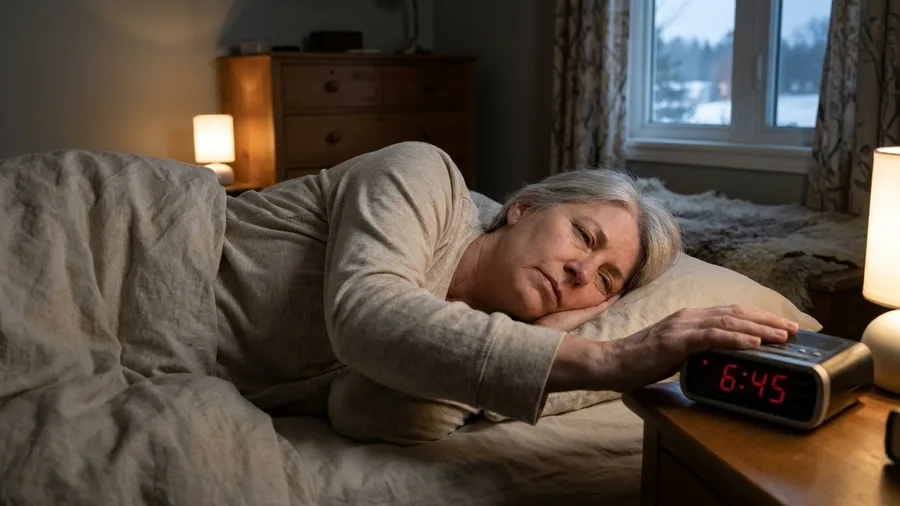
Pick a single time and give it to all seven days – Tuesday, Saturday, the holiday Monday, the morning after a late night. That means 6:45am in July when the room is already bright, and 6:45am on the first Monday in November, when the alarm sounds in total dark and the mattress is the warmest surface in a cold house.
Now put that time against the one it is usually confused with. The lights-out target of 10:45pm, the 7:15 dinner, the kitchen closing at 8:00 – the hour-by-hour daily rhythm of people who stay energetic lets those flex when the evening runs long or a night goes badly. The wake is the one that holds still, because it is the only point the rest of the day can hang from.
Move the wake instead and everything downstream moves with it, reset every morning, and you are back to mustering a routine from scratch.
What week one feels like: the alarm reads 6:45 and something in you says this is the wrong hour, and every reflex argues for nine more minutes. Two things answer that before the argument starts.
A lamp within arm's reach of the bed goes on the moment the alarm goes, so the room changes before the mind has a vote, and the coat and shoes sit waiting by the front door from the night before so the first ten minutes need no choices at all – no searching, no deciding whether to go out, just the two actions already laid out.
Give it a fortnight, then judge it on two weekends rather than the first two days. Two days tell you how one night went; a second Saturday and Sunday tell you whether the wake time now stands on its own without a decision propping it up.
And notice the thing nobody mentions in January: across the whole plan, the wake is the one item with no seasonal edition. December gets 6:45am, June gets 6:45am. It is the one fixed point nothing in the year reaches.
💡 Tip: Set the alarm clock across the room and the phone in a drawer. The first ten minutes decide whether the rest of the day follows.
| Item | Cost | Where it goes | Season it earns its keep |
|---|---|---|---|
| Two smart bulbs | $40 | Living-room lamp and kitchen-counter lamp | December, on at 4:15pm |
| Dawn-simulating alarm | $45 | Bedroom nightstand | Late fall through early spring |
| Bright desk lamp | $35 | Kitchen table | Any dark morning, year-round |
| Boot tray | $20 | Entryway bench | First freeze to first warm week |
| Blackout shade | $30 | Bedroom window | June, for the 8:30pm sunset |
2. Ten minutes of light before the phone

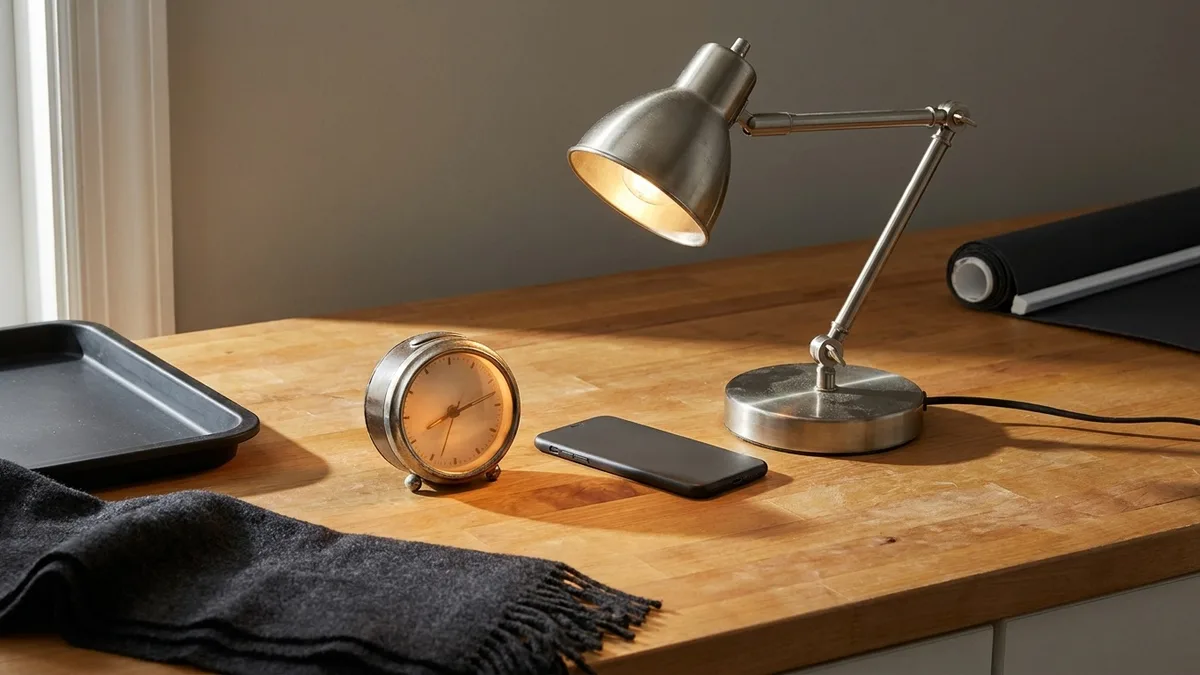
The ten minutes right after the 6:45 alarm are the first place the seasons push back, so set what fills them and let the rest of the morning arrange itself around that block. A bright desk lamp costs about $35 and lives on the kitchen table, which means it is within reach before the kettle goes on and before a phone gets picked up.
Ten minutes, no screen, starting at 6:45. That is the fixed part – not what you look at but that you are looking at something brighter than the room. On a mild morning the doorstep works; so does standing at the window with the mug in your hand. The light source is what moves with the calendar.
45 the sun does not come up for another half hour – sunrise sits around 7:15 – so the lamp is the only version available, and the ten minutes happen under it, not at a dark doorstep. Pull the curtains back at the end and step outside only once there is enough grey in the sky to make out the street. In June the same ten minutes happen on the step, in daylight, and the lamp simply stays off.
This is the smallest demonstration of the whole principle: one slice of the morning held in place all year, its contents swapped twice.
One caution worth stating plainly. A lamp and a doorstep are supports, not treatment. Low mood, poor sleep or a flatness about the days that persists for weeks – or gets worse despite the routine – belongs with a clinician, not with an extra ten minutes by a window.
💡 Tip: Keep the lamp on the same table every day. Moving it is the first step toward not using it.
⚠️ COMMON MISTAKE
Don't wait for the sun to get up first
Most people in dark winters reach for the phone before they reach for the light. Ten minutes of lamp at 6:45 does more for the morning than ten minutes of scrolling, and it costs nothing after the $35 purchase.
3. A dawn alarm instead of the snooze

The lamp in the kitchen requires somebody awake enough at 6:45 to reach for it, and in December that is the exact moment the plan is most exposed. A dawn-simulating alarm removes the need for that decision: it runs about $45 and begins brightening half an hour before the wake, so at 6:15 the room starts to lift and by the time the sound arrives the light has already changed the space around the bed.
The mistake nearly everyone makes is starting at full brightness because it looks satisfying in the first three days. Start at the lowest setting instead and leave it there for the first week. The target is a hint of morning, not a second sunrise across the ceiling – a dramatic start is how these end up unplugged by week two and never plugged back in.
It suits some bedrooms and not others. If someone beside you wakes at the first glow, a softly brightening panel will simply wake them earlier every day, and that trade is not worth making. If you tend to surface already wound up and alert, the dawn ramp can add to the jangle rather than ease it. In both cases the kitchen lamp does the same work, and it does it without involving anybody else in the room.
What the alarm does not do is change the hour. 6:45am is still the fixed point, in December as in June. The dawn ramp only makes that fixed point gentler to reach when the sun is still half an hour from the horizon – the same time, arrived at with a room that is already warm with light, instead of a cold one that has to be talked into it.
4. One hook, one tray, one basket
Coats only pile up where there is nowhere to put them. Once the wake and the morning light are settled, the weather finds the next weak spot in the chain, and it is the front door at 6pm with a wet coat in hand.
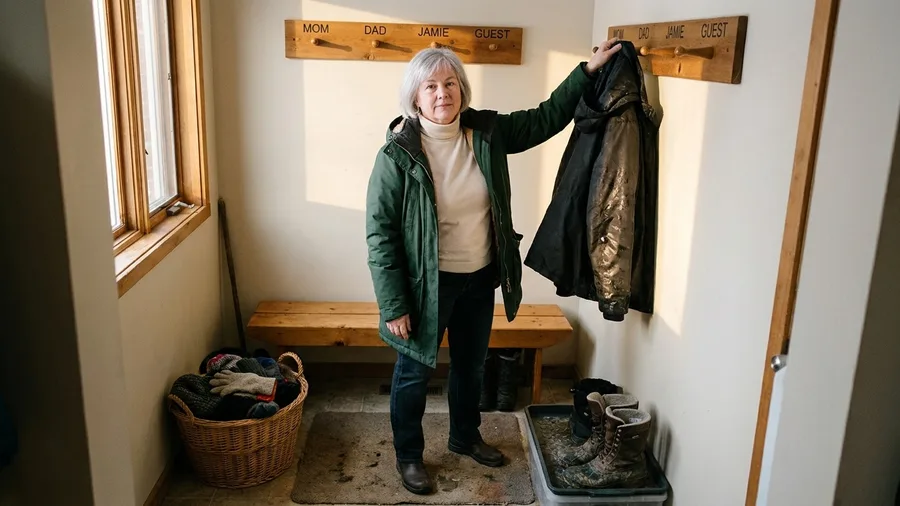
The kit is four objects, and its job is to give every single thing that comes through the door a landing place. A 4-foot bench sits under the hooks; one hook belongs to each person in the house and to nobody else; a $20 tray catches the wet boots; a basket takes the gloves and hats. Coat, boots, gloves, bag, all of it has a home within an arm's length of the sill.
The rule that makes the four objects work is a single line: outerwear never travels past the bench. Not draped on the bedroom chair, not drying over the radiator, not hung on the back of a kitchen stool. Follow that rule and the pile cannot form, because a pile is not clutter, it is what happens when there is no answer to where the coat should go.
Do the reset when the last person is through the door, not the next morning. It takes about 30 seconds: boots onto the tray, coat on the hook, gloves into the basket, done before the kettle goes on. Leave it until morning and the pile has set overnight; by then nobody wants to touch a damp heap in a cold hallway.
This is the option with no electric parts, which makes it the one you can set up the afternoon the forecast turns and it will still be working in March. Same fittings, contents changed at the first warm week. When the tray's wet-weather kit goes into storage, it holds sunscreen and sunglasses instead, and the hooks take lighter jackets. In winter the tray carries salt and gloves; either way nothing moves except what sits in it.
That is the point: the bench, the hook, the tray and the basket stay put all year, and only their contents trade places with the season. The door stops being a daily negotiation and becomes a fixed point.
💡 Tip: Label the hooks with names if you share the entryway. Ownership is what stops the pile from forming.
The kit at a glance
What the setup costs and how long it takes
Prices from a typical US purchase; substitute what you already own.
5. Two bulbs that come on at 4:15

Once the door has a landing place, the next thing the short days take is the afternoon itself. In a northern city the sun is gone by 4:40pm in December, and by 5:00 the living room is dim while the day still feels unfinished.
The fix is two smart bulbs, about $40 for the pair, one in the living-room lamp and one in the kitchen-counter lamp, sitting low rather than overhead. After dusk the ceiling lights stay off; that one decision is the difference between a room that feels lit and a room that feels like an operating theatre at 6pm.
In December you set them to come on at 4:15pm, twenty-five minutes before the sun drops, so the room is already warm when the light goes. From spring onward you reset them for 30 to 45 minutes before sunset, and they follow the year without you touching them again.
Set them once as a schedule and forget them. The part that fails is not the bulb, it is the noticing: at 4:20 on a Tuesday nobody wants to stop what they are doing and decide the room needs light, so the decision itself is what gets automated. The lamp is already glowing before the thought crosses anyone's mind.
The pay-off is the dinner hour. Home at 6:00, chopping by 6:30, the kitchen-counter lamp on over the board while the window outside has gone navy. The light that would have been there in July is now coming from a $40 socket, and the meal still lands on the table at 7:15.
It is the cheapest item in the kit and the one that most changes how the dark weeks feel, because it does not ask anything of you after the first setup.
💡 Tip: Group the two bulbs in one app schedule and rename it 'afternoon'. The name makes it harder to forget what it's for.
6. Blackout at the bedroom window
By June the schedule reverses. Sunset does not come until about 8:30pm and first light arrives around 5:20am, which gives a northern city roughly 15 hours of daylight, and the problem is no longer light that is missing but light that will not leave.
A 10:45 lights-out target sits in the middle of a bright evening. The room is still washed in sky at nine, so the body has no cue that the day is over, and the target slides an hour later without anyone deciding to move it.
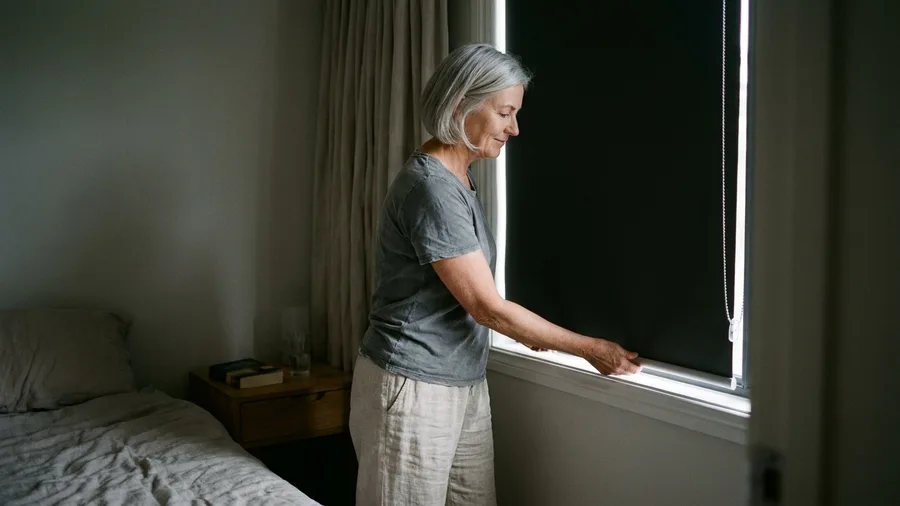
The fix is subtraction, not addition: a $30 blackout shade or a lined curtain on the bedroom window. Fit it wider than the glass and past it top and bottom. A shade cut exactly to the frame leaks a bright outline all the way around, and you have paid $30 to keep out half the light you bought it to block.
Keep the 6:45am wake even when the morning is already glowing at five. The shade is there to protect the evening, not to buy a lie-in; if you sleep in, the wake time loses its anchor and the whole structure above it wobbles.
The winter use is its own return. The same fitting that holds out a June sunrise holds out the streetlight in January, so the bedroom stays dark on both sides of the year. One purchase, two seasons, nothing to swap.
Two bulbs added light at 4:15 in December; one shade now takes light away in June. Same principle, opposite direction, and the 6:45am alarm still sits there holding the middle.
💡 Tip: Measure the window recess, not just the glass. Overhang of 4 inches on each side is what actually blocks early light.
What stays, what moves
Fixed points
- 6:45am wake, seven days a week
- Dinner on the table at 7:15pm
- Kitchen closed at 8:00pm
- Outerwear never past the entryway bench
Seasonal swaps
- Lamp on at 6:45 in winter, window in summer
- Outdoor hour at noon in December, 8pm in June
- Tray holds salt and gloves, then sunscreen
- Bulbs on at 4:15 in winter, before sunset in spring
7. The 16-minute loop before lunch

Lamps, shades and door hooks all work on the inside of a house. The habit that holds through every season is walking, water, sunlight and sleep, and it takes sixteen minutes.
The route is a 0.8-mile loop that starts at your own front door — no gym bag, no trailhead, no deciding where to walk each day, because the deciding is where it falls apart.
Time it before lunch, never after. The after-lunch slot is the one that gets wiped when a meeting overruns, and it gets wiped first because nothing downstream depends on it.
On a 35-degree day, the entryway does the arguing for you. Coat off the hook, hat and gloves out of the basket, shoes on the tray — nobody has to negotiate with the cold when the gear is already standing at attention.
That is the point of the bench and the tray beyond tidiness. They turn a January walk into a non-event instead of a small expedition you talk yourself out of.
Wet day? Pull on a shell and take the same loop, or split it into two six-minute walks to the park. The path bends to the weather; the habit stays put.
The distance is short on purpose. Sixteen minutes is small enough that a bad day does not cancel it, and long enough that the body registers it as something.
The 16-Minute Loop — At a Glance
📏 Distance
0.8 miles, front door to front door
⏱️ Time
About 16 minutes at an easy pace
📅 When
Before lunch, every workday
🧥 Kit needed
Coat, hat, gloves from the entryway
☔ Bad weather
Same loop in a shell, or park walk twice
Why it works
The route needs no decision, so the only obstacle is the weather, and the entryway kit covers that.
8. The December walk at 12:15

In December, the daylight you get to spend is roughly 7:15am to 4:40pm – about nine hours. Leave at 8:20 and get home at 6:00 and every one of those hours lands inside the building.
On the office days that means the only piece of the window not already claimed starts around 12:15. That is the slot, and it is not negotiable the way the rest of the day is.
Walk out from 12:15 to 12:45 at whatever the temperature says – 30F is fine – in the coat, the hat, the gloves, and go around the block by the building. The block is enough. The point of the walk is the daylight, not the distance. You get the same 30 minutes of light across your retina whether you cover a mile or a quarter of one.
The meal is the flexible piece. Eat at your desk before you go, or after you come back. The walk holds its time; the lunch bends around it, because the whole value is the light and the light is not going to wait for your calendar to clear.
One honest exception: if your working day is already spent outdoors, the last thing you need at midday is three more minutes in a cold parking lot. Skip it. This walk only pays back the person whose daylight is otherwise spent under a ceiling. If you work inside, use it; if you work outside, take the warm break instead.
💡 Tip: Put the 12:15 walk in your work calendar as a recurring event. A meeting can't cancel a meeting.
🛠️ Setting up the fixed points, in order
Fix the wake
Set 6:45am for all seven days, then leave it alone for two weekends before judging.
Place the lamp
Put the $35 desk lamp on the kitchen table and switch it on at 6:45 before the phone.
Clear the entryway
Add a bench, one hook per person, a $20 boot tray and a basket for gloves.
Schedule the bulbs
Set the two smart bulbs to come on at 4:15pm in December, or 30 to 45 minutes before sunset.
Fit the shade
Fit the $30 blackout shade wider than the glass, before the first bright June evening.
Book the walk
Put the 0.8-mile loop in the calendar before lunch, and the 12:15 daylight walk in December.
9. The summer walk moved to eight

By June the sun does not set until about 8:30pm, and the same walk that carried you through a 4:40pm December dusk now lands in the wrong part of a long, hot day.
A 12:15 stroll in a coat was the right tool in winter. In summer the pavement is still radiating at noon, so the loop shifts to 8pm — the day is not finished yet, and the ground has given up most of its heat.
The reason is simple: heat plus a day that refuses to end. Let the timing move and the walk keeps happening; treat 12:15 as a rule and the walk quietly dies in the first hot week.
Pull the shades on the west-facing windows from 4pm. A house still hot at eight makes stepping outside feel like an escape rather than a pleasure, and that is how the walk gets skipped.
The 6:45am wake stays exactly where it is. A later walk is not a later morning, and the afternoon still has room to close out with dinner on the table at 7:15 — eat after the loop, or slide it earlier in the week when the heat spikes.
Two things move when the light comes back: the hour you walk and the hour you eat. The fixed wake underneath them is what keeps either from drifting.
10. Dinner on the table at 7:15

A walk that lands at 8:45 leaves the two hours after it undefended unless something else is holding the shape of the night. What holds it is a table time: food down at 7:15, the kitchen shut off at 8:00, the light out around 10:45.
Three clock times, doing a job that has nothing to do with hunger.
Between the plates going down and the lights going out sits two and a half hours, and a span that length with no edges on either end is where a night turns into a sofa and a phone and a decision at 11:40 to go to bed annoyed. The bracket makes the evening shorter than it feels, which is the point.
The meal itself is the piece that moves. In July it is cold – a plate of tomatoes, bread, cheese, whatever needs no oven; in January it is one pot on the stove and leftovers on Tuesday. The 7:15 does not move. A cook who eats at 8:30 because the food was lighter than expected has let the season pick the time.
Then the loose hour between 8:00 and 10:45, which is exactly the stretch that fills with nothing if it is left empty. Put one reason in it to go back out the door, decided on Sunday rather than discovered while standing at the counter at 8:05.
A errand, a short loop, a person. The same one on the same night each week.
Why the whole thing is worth keeping: 10:45 only happens if 8:00 held first. Push dinner to 8:30 and the kitchen closes at 9:15 and the light goes out at midnight – and 6:45 the next morning is paid for by the night before it. Protect the table time and the wake time protects itself.
💡 Tip: Set a kitchen-closed alarm on your phone for 8:00pm. The alarm is easier to obey than your own resolve.
A week of the plan, day by day
The wake time and dinner time repeat every day; only the light and the walk move.
11. One standing call every Wednesday

Once dinner and the lights-out are pinned, the part of the evening with no fixed time in it is the part that quietly empties out in a dark month. Nobody decides to stop seeing people in November. The 5pm sunset decides it, and the calendar just agrees.
What keeps it from emptying is a slot that recurs: Wednesdays at eight, twenty minutes, the same person, already on the calendar as a repeating event. The repeating is the mechanism. A call that has to be arranged each week becomes a call that gets deferred in the third dark week and never quite comes back.
Video or a plain phone call, either one. Twenty minutes on the couch with a cup of tea counts exactly as much as an hour in a restaurant, because the point is the contact, not the format.
Then the rule for the weeks that go sideways, because they will. Skip one and the next one still happens. Never twice in a row.
That single rule is what keeps one bad Wednesday from ending the thing altogether – a series you have to restart is a series you tend not to restart.
If Wednesdays are already full in your house, make it every other week on the same night. Still standing, still recurring, still twenty minutes. The frequency bends; the fact that it is already booked does not.
12. A three-item list on the fridge

Everything above assumes the weather cooperates, and some weeks it will not – ice, wind, a cold rain at 6:40 in the evening. The plan needs a written version for those days, decided while the weather was still fine, not standing in a wet coat at the door trying to invent something.
Three options on an index card stuck to the fridge. The gym at 6:30, the mall loop, the stairs at home. Three and no more, because a list of seven turns a decision back into a menu and a menu is what you stare at until it is too late to go.
Write it in your own handwriting. The words matter less than the card being there, already made, when the weather turns.
The rule that makes the card useful: after 6pm you do not choose. You take the first option on the list. The choosing happened on a Sunday afternoon with the sun out and no rain on the window.
Rewrite the card twice a year – on the first hard freeze and again on the first warm week. A July card keeps the gym and drops the stairs, because stairs indoors in June is a strange suggestion; a card from last winter gets read once, felt stale, and ignored. Both rewrites take about a minute and keep the card worth looking at.
💡 Tip: Write the card in pencil, not pen. The point is to rewrite it twice a year, not to get it right the first time.
13. The first-freeze swap, twenty minutes
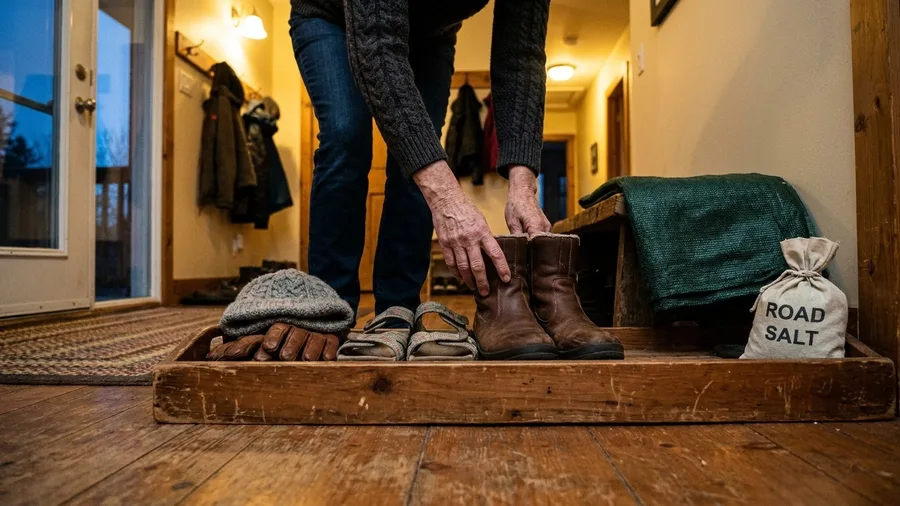
A hard freeze in the forecast is the trigger, not a Saturday circled on the calendar. When the low is headed into the twenties, you have this weekend and nothing more.
Twenty minutes, once, on that weekend: boots trade places with sandals, gloves and hats with sunscreen and sunglasses, the bag of salt with the folded shade cloth. Same bench, same tray, same hooks. Nothing gets bought.
The part that matters is the timing being before the first cold Monday, never after. Swap on Sunday night instead and the swap stops being a swap.
That Monday is when the boots are already needed at 7:50 in the morning, when the car is iced and nobody has twenty spare minutes, and a twenty-minute job becomes an emergency errand at 6:40pm in the dark.
The index card on the fridge gets rewritten on the same weekend, for the same reason, and comes back inside the same twenty minutes.
The card and the tray run on one signal: a forecast, not a date on the calendar.
Spring runs the identical job in reverse. On the first warm week when the forecast holds above freezing overnight, the boots go up and the sandals come down, twenty minutes in the same three places, the card given its summer version at the same time.
The reason it takes twenty minutes and not an afternoon is that nothing here is a new purchase. The objects already exist in your house. They only trade places.
A swap built on buying something would arrive late and cost money in the week you are least in the mood to spend either.
14. A two-week trial before you keep it

An actual change earns its permanent place through evidence, not through how convincing it sounded in the store.
Two at a time is the ceiling: run both for a fortnight. Three opened together cannot be told apart afterward, and when the whole bundle slides you have no idea which piece dragged it down.
The record is three lines on the counter before bed, with a pen clipped to the card. Did it happen. How the night went. What the day felt like. Three lines, because a full page is a second job and by Thursday it sits blank.
It was never the end of the winter that decided it. It was whether the thing was still running, unforced, on day eleven.
That distinction matters because week one runs on novelty. Anything survives a first week. By the second, the coat has slipped off the hook and the trial is choosing itself, and a habit still standing at the end of fortnight two with no willpower behind it is the only evidence you get that it cost nothing.
Keep whatever met that test. Drop the rest without regret and without a replacement — the point was to find out, not to fill the page.
Then write the verdict where next-you will find it: one sheet, kept with the winter gear, listing what held and what did not. Next November the question is not whether the bulbs stretch the evening, because the answer is already on the page and you will not have to relearn it in the dark.
💡 Tip: Use a notes app on your phone, not a paper journal. The lighter the record, the more likely you keep it for fourteen days.
Frequently Asked Questions
What if I can't wake up at 6:45 every day?
Start with five days: Monday through Friday at 6:45, and let the weekend drift no more than an hour. Once that holds for two weeks, add Saturday and Sunday. The fixed point matters more than the exact minute; what breaks the routine is a wake time that moves by two hours every weekend.
Do I need to buy all five items at once?
No. Buy the $35 lamp and the $20 boot tray first, because they cost the least and do the most in the first month. Add the $45 dawn alarm and the $40 smart bulbs in the same week as the first hard freeze, and the $30 blackout shade before the first bright June evening. The full kit is about $170, but nothing requires you to spend it on day one.
How do I handle a night that goes badly?
Shift the evening, never the morning. If lights-out ran to midnight, still get up at 6:45, and move dinner and the evening routine 30 minutes earlier the next night to pay back the debt. Sleeping in to recover is what turns one bad night into three.
What if I work outdoors already?
Skip the scheduled outdoor hour and take an indoor break at midday instead. The point of the walk is daylight and a change of scene; if your job supplies both, you need the opposite at lunch — a quiet room, a stretch, a meal away from the weather.
When exactly should I do the seasonal swap?
On the first weekend the forecast shows a hard freeze, before the first cold Monday. In spring, on the first warm week. Twenty minutes, same three places: the bench, the tray, the hooks. Doing it after the need appears is what turns a twenty-minute job into a rushed one.
How do I know which changes to keep?
Run no more than two at a time for two weeks and log three lines a night. Keep what was still happening in week two without effort; drop the rest. Write the result on one page and read it next November instead of starting from scratch.
Freeze the wake, buy the lamp, swap in twenty minutes
Order of operations, not a list. This week, fix the two free things: the 6:45am wake across all seven days, and the hook-and-tray reset at the front door. Add the $35 kitchen lamp and the 4:15pm bulbs in that same week, and put no more than two changes on the two-week trial at once. Everything else waits for the first freeze or the first warm week, which is exactly when the swap list says to act.
Then return to that first dark Monday. Sunset is 4:40pm and the alarm still reads 6:45am. The same morning, except the lamp is already on, the shoes are by the door, and the bulbs will be lit at 4:15 whether anyone notices the dark or not.
About $170 and twenty minutes twice a year, against a routine that no longer has to be mustered each morning. Set the 6:45 alarm for all seven days this week, then walk to the door and hang one hook. Next November the question is not whether the bulbs stretch the evening, because the answer is already on the page.
Set the two free things tonight
Put the 6:45 alarm on all seven days and clear one hook per person by the door. The rest of the kit can wait for the first freeze.