

Thirty minutes. That is how far a 62-year-old on a steady routine typically drifts in wake-up time from day to day, weekends included. One number, and it tells you more about whether your daily habits are supporting you than a perfect diet or a spotless calendar ever will.
You probably walked in believing a good routine means a disciplined, full day – every workout done, every meal planned, every task handled. And you may quietly worry that the routine you built or inherited is just keeping you busy. The turn is this: a routine that works shows up as texture in an ordinary week – mornings that start without negotiation, energy left after the chores, sleep that repeats, and a quick return after interruption. Not perfect adherence.
The 11 signs that follow are an audit of that ordinary week, not a performance score. They tell you what to keep, what to adjust, and what to stop treating as a failure. By the final sign you should be able to mark the ones that are mostly true, pick the single weakest spot to adjust first, and judge your routine by steadiness and how fast you return after disruption – nothing more.
How to Score the 11 Signs
Count the Days
Log 7 days. A sign counts as true only if it holds on 5 of them.
Two-Week Reset
After changing one thing, give it 14 days before you re-score that sign.
Skip Two Exceptions
A night of poor sleep or a travel day does not count. Score the week without them.
1. You wake at a steady time without a fight

A morning that runs on its own is the first place a working routine shows up. The tell is a wake time that lands within roughly the same window most days, weekends included, so the alarm reads 6:40 on a Wednesday and 7:10 on a Sunday.
Feet hit the floor within a few minutes of it going off. No half-hour negotiation with the snooze button, no lying there running through what the day requires before you have even stood up.
What follows is short and unremarkable on purpose. The kettle, a few minutes of stretching on the bedroom floor, the same shirt-and-trousers decision made the night before, keys where they always are. Small, repeatable habits like these are what keep people looking younger over the years.
None of it needs a meeting. That is the whole point: the first thirty minutes cost almost no decisions, which is why they leave something in the tank for the rest of the day.
Here is the counterweight, because one bad night will arrive. A single rough sleep, or one Saturday when you stay under the covers until nine, is a data point and not a verdict.
The steady wake time is the anchor. A late morning is weather passing through, and the anchor holds as long as you go back to it.
So run the test plainly. If the wake time you keep makes Monday morning feel calmer than it used to, the habit is doing its job.
If most days begin with forty-five minutes of hitting snooze and a scramble out the door, that is your honest answer, and this is the place to start.
💡 Tip: Set your coffeemaker or kettle the night before. Removing one morning decision makes the wake-up easier.
2. You have energy left for what you care about

Whether the routine is feeding your energy or just spending it shows up late in the afternoon. Around 4:30, check what is actually there: a body that needs the sofa, or enough left for a fifteen-minute walk, the school pickup, or half an hour at the workbench.
Once the first hour stops costing so much, the rest of the day has room to show what it kept back, and the 4:30 check is where you read the answer.
Then look at the whole week for one thing you picked rather than owed. A Tuesday walk with a neighbor, a standing call to a friend, a Saturday class you signed up for because you wanted to.
One is enough. The week does not have to be full of chosen things, but it should contain at least one, or the schedule is running you instead of the other way around.
The trap is a calendar that looks disciplined and is quietly hollow. Errands, appointments, and care tasks can fill every square from 7 a.m. to 8 p.m. and still leave you scraping the bottom by late afternoon.
A routine that leaves capacity is what steadies the week. A routine that fills every hour only looks full, and the difference is felt at 4:30, not on paper.
⚠️ COMMON MISTAKE
Do Not Confuse Full with Functional
Many people over 50 treat a packed calendar as proof their routine is working. If you cannot name one thing you did this week purely because you chose it, your routine may be running you rather than supporting you.
3. You sleep well enough to repeat the day

It shows up first as a wind-down you could run on autopilot, and then as a bad night that stays a bad night instead of stretching into a bad week. Those two things, more than any single good night, are what a working routine gives sleep.
The repeatable sequence is specific. Screens off around 9:45, a quick kitchen reset, clothes laid out for the morning, lights out near 10:30 most nights. It is familiar enough that you do not have to decide anything at that hour, which is exactly what makes it hold when you are tired.
The payoff lands the next morning. Consistent bed and wake times mean fewer and less frantic decisions before you leave the house: the clothes are already chosen, breakfast is the default, the departure time is clear. A quiet evening buys a calm morning, and the calm morning is what makes the evening easier to protect.
After a bad night, the instinct is to chase sleep all day, nap in the chair, go to bed early, and the instinct makes the next night worse. The steadier move is to keep your usual wake time and make the same evening's wind-down a little easier, an earlier kitchen reset, without the all-day pursuit.
This is the test. The sleep sign is not one perfect night; it is whether one bad night does not become a week of drifting.
How Steady Is Your Week?
A simple self-check for three routine anchors
4. A disrupted day does not derail the week

The real test of a repeatable night is what happens the week it gets broken, and a routine that works gets you back within a day or two instead of starting over from zero.
Picture the rain that cancels the morning walk, or the houseguest who fills three days with airport runs and extra cooking. A routine built for perfect conditions quietly shuts down; a working one shrinks to a shorter loop around the block, keeps the same wake time, and picks the walk back up the morning the guest pulls out of the driveway.
One skipped session is data, not a verdict. The pattern that should worry you is when a single missed workout or one takeout dinner turns into nine days off, because the routine only ever ran in good weather.
When the rest of the schedule breaks, hold on to the smallest fixed point.
Houseguest week can still begin at 6:40 with feet on the floor, and it can still end with the lights out near 10:30. Those two markers alone keep the machinery from seizing while everything else is upended.
Speed of return tells you more than the length of your streak. A routine that bends, drags itself back inside two days and carries on is in better shape than a flawless one that shatters the first time a Tuesday goes sideways.
💡 Tip: When your week is disrupted, pick one anchor to keep. Wake time is the easiest to protect.
Brittle Routine vs. Steady Routine
Brittle
- Restart after a break begins at week one, not day one
- Weather and guests become reasons to stop, not resize
- Both wake time and lights-out drift with the disruption
- A gap reads as proof the routine never worked
Steady
- First session back is shortened on purpose, still counts
- Same wake time survives guests, travel, and rain
- Lights-out holds even when the day around it does not
- One missed day is logged and released, not replayed
5. You eat and move without daily negotiation

If the forcing is small and the week still runs – but when every meal and every walk is a fresh argument with yourself, the routine has grown more complicated than it needs to be.
The sign of a workable setup is that breakfast and lunch mostly choose themselves. Two breakfasts on rotation, one dependable lunch, and a regular short walk of about 20 minutes after the midday meal is enough structure to carry a weekday without a planning session.
Working against that default is where the real effort belongs, not in deciding what to eat at 7:15 every morning.
Some push is part of any routine, especially on a cold morning. What you are listening for is the daily grind of renegotiation – standing at the open fridge at 12:30 with no idea, or talking yourself out of the same walk four days running – because that is friction the routine itself is creating.
The fix is duller than willpower and it works better. Repeat the same two breakfasts and the same lunch until they stop requiring thought, and put the walk somewhere it is hard to skip: shoes parked by the door the night before, the loop timed for right after lunch, a friend waiting at the corner so a no-show costs someone else's time, not just yours.
Defaults take the willpower load off the ordinary day. You do not need zero effort – you need to stop reopening the same two choices every morning before you have finished your coffee.
Your Default Day — At a Glance
⏰ Wake Time
6:40 a.m., within 30 minutes on weekends
🍳 Breakfast
Two options in rotation
🚶 Movement
20-minute walk after lunch
🛌 Wind-Down
Screens off at 9:45, lights out 10:30
📅 Weekly Review
10 minutes on Sunday
Why This Works
Fewer daily decisions mean more energy for what matters.
6. You keep the people who matter in the week

Yes, and a routine worth keeping has other people written into it – if your week is efficient enough to have squeezed out every unplanned conversation, something that matters has been trimmed away.
It happens quietly. The calendar fills with tasks because each one earns its slot, and the neighbor who used to catch you at the mailbox, the friend you meant to call, the Sunday dinner that used to be automatic, all drift off the schedule without anyone deciding to drop them.
What works is contact that sits in the week before the week fills up. A standing 8 p.m. call on Tuesdays, a Saturday walk with the same friend, a family dinner on a fixed night – booked early enough that the rest of the week arranges itself around them instead of the other way around.
If the week is too full, cut a task before you cut a person.
The extra committee meeting can go. The call stays. Losing an hour of admin is recoverable; losing the people who make the routine worth sustaining is the larger cost, and it tends not to show up until the week feels long and thin.
A routine that protects every task and leaves you alone in it is less steady than one that keeps support close. The human contact is part of what holds the week together, not a reward you earn after the list is finished.
💡 PRO TIP
Schedule the Call First
Put your social anchor in the calendar before you add any other commitment. A standing Tuesday call is easier to keep than a vague intention to catch up.
7. Your day has a reason beyond the clock

A routine is worth keeping when you can name, in one plain sentence, what the steadiness is for. The mindset behind that steadiness shapes how young at heart you stay as the years pass. That is a different question from whether your calendar is full and your people are in it, though the two are related: the schedule earns its place by protecting something you would miss if it went.
Think about the 7 to 8 a.m. block. Does it have a reason beyond itself, or does it exist mainly to fill the slot before the day starts? A named purpose could be a book draft, a walk before the heat, caregiving, or getting to work without chaos. What matters is that the hour points at something, not that it is occupied.
This is where routines built only around obligation tend to fail. When the job ends, the caregiving role shifts, or the committee disbands, a schedule organized entirely around that duty has nothing left to protect and quietly collapses. The wake time lingers for a while, then drifts.
This routine protects blank. Say it out loud once and listen to what comes out.
If the honest answer is a book you are still writing, a friend you would otherwise lose touch with, or knees that still hike the trail in October, the routine has a reason to hold. If the answer is closer to the calendar itself, the steadiness is running on nothing but habit.
That distinction is why purpose is what makes steadiness worth maintaining. A routine defending timestamps is easy to abandon the moment the timestamps get inconvenient; a routine defending something you actually value bends to keep it.
None of this asks you to justify every hour. Plenty of a working day is upkeep, and upkeep counts. The test is whether the first effort of your morning is aimed at something you chose, so that the calm of a steady week has a direction to go.
What Steady Routines Protect Most
8. You notice changes and adjust before burnout

You know when to change the routine by catching drift early, with a short look each week instead of a reckoning at the end of the year. Purpose fades quietly when sleep, energy, or the schedule shifts under it, and the weekly glance is how those shifts get noticed while they are still small.
Ten minutes on a Sunday is enough. Ask three questions and jot the answers on one page: what felt automatic this week, what felt heavy, what got skipped. Not a life overhaul, just a page of notes you can read again in seven days.
Then change one thing. Move the walk earlier, cut one evening commitment, shift dinner 30 minutes, and let the next week test that single change. A home repair works the same way: you turn one screw, watch the fitting, and adjust again if it still sits crooked.
The counterweight is real, though. Redesigning the routine every week is not adjustment, it is a different kind of scramble. If the same ten minutes keep producing a full rebuild, the routine is too complicated and needs simplifying rather than polishing.
Small corrections are what keep a week steady, because they arrive before a break rather than after it. You notice the walk has been skipped twice, move it, and the week carries on instead of collapsing into a restart from zero.
So the test is modest: a routine where you catch the drift and make one correction is working. A routine that only gets examined after it has broken is running on luck, and a routine you redesign from scratch every Sunday is not steady, just busy in a new way.
🔄 A Simple Weekly Adjust-and-Return Sequence
Flag the heavy spot
One line only. If two or more items feel heavy in the same week, fix the heaviest – not all of them.
Change one variable
Move it or cut it, never both. Swapping an activity counts as a second change – save it for next week.
Run the full week
No mid-week second guesses. Give it seven days minimum; three days is not enough signal to judge.
Score it 1 to 5
Steadier or just different? Only a higher score than last week counts as a win.
Keep, revert, or stop
Two flat weeks on the same change means revert. If every Sunday needs a rebuild, the routine has too many moving parts – cut one.
9. You can rest without treating it as failure

Rest earns a spot on the calendar, the same way a walk or a refill reminder does. Catching your breath only in whatever gap opens after the to-do list empties is not rest; it is leftover time, and there is rarely any. A working routine writes the gap in first: Sunday from two to four with nothing scheduled, a Thursday skipped workout, a Tuesday evening with the phone face-down and no task attached.
That slot is also what makes adjusting before a crash possible, because you cannot correct a schedule that never had slack in it. Notice which kind of rest you actually took. One easy day and then back to the morning walk is rest, and it tends to leave you fresher the next morning than you started.
Three weeks of not making the appointment call is avoidance, and it piles up interest. The task never shrinks while you wait; it just gets heavier to pick up.
On a day when the tank is empty, keep the smallest anchor and drop everything else. Wake at the usual time, run the wind-down at the usual hour, and let the walk, the meal prep, and the errands go.
The line holds: a routine with room for rest is a routine that lasts past the first hard month. When one low-energy day turns into a verdict on your character, the sign is weak, and the fix is scheduling rest before the week decides for you.
10. Health tasks get done before they become urgent

A routine that is working carries the boring health upkeep, not the emergency version of it. Rest and small corrections make room for that upkeep; without them, the refill and the appointment wait until they cannot wait.
The tell is whether things get handled while there is still slack. Refills flagged when about a week of pills is left. The dental cleaning and the annual screening booked at the front desk before you leave the visit, not penciled in for some vague later.
When health tasks live only in memory, they turn urgent at the worst possible moment. Last pill on a Sunday night, pharmacy closed, no refill, and Monday morning starts in a scramble that had nothing to do with anything you chose.
Put the refill day next to something the week already does. Sunday planning, the regular walk, the same page as the grocery list. Pharmacy auto-refill takes it off your memory entirely, and a written list on the same page means you never rebuild it from scratch.
The test is simple: does the upkeep happen before it becomes a crisis? If this one is mostly false, the routine is leaving a crisis in the drawer, and it will find you at the wrong hour.
💡 Tip: Put a refill reminder in your phone for seven days before you run out. That is enough buffer for a pharmacy delay.
11. You end most weeks steadier than scrambled
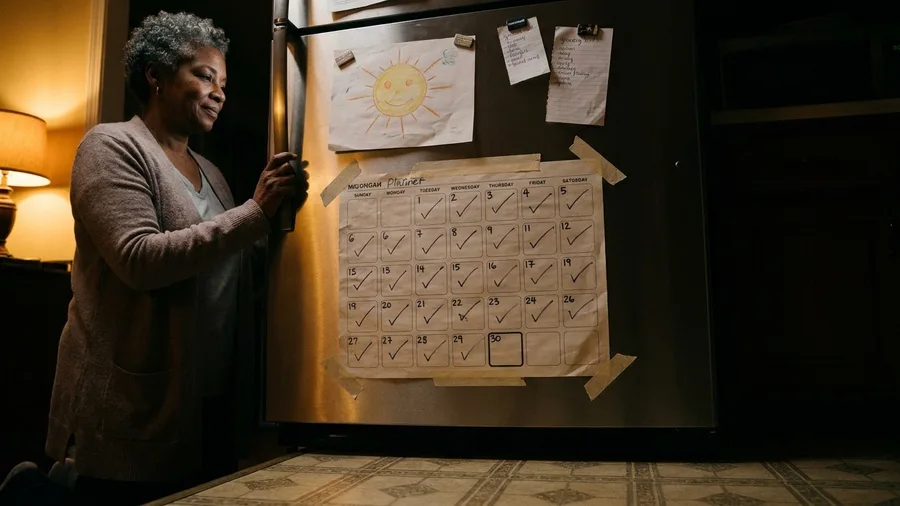
The overall sign is that most weeks end steadier than they started. Compare Monday morning to Friday afternoon, and the same small tasks, laundry, bills, meal prep, sit a little easier than they did a month ago.
That comparison is the whole verdict. The week has a calmer baseline, and when something disrupts it, you are back to the routine in a day rather than starting from zero. If mornings, energy, sleep, defaults, people, purpose, review, rest, and ordinary upkeep are mostly holding, this is what it adds up to.
The goal is steadier, not flawless. Not every sign has to fit, and a routine that is imperfect but easier to return to is working.
The first audit step is to mark which signs are mostly true in an ordinary week, then pick the single weakest one and adjust it next week. One change, tested over seven days, tells you more than a whole redesign.
Frequently Asked Questions
How long does it take to tell if a routine is working?
Give it four to six weeks of ordinary weeks. You are looking for a steadier baseline and an easier return after disruption, not a perfect record. If you cannot see either after six weeks, simplify the routine rather than adding more.
What if only some of these signs fit my week?
That is normal. The goal is not a perfect score. Mark which signs are mostly true and choose the single weakest one to adjust next week. A routine that is imperfect but steadier is working.
Is it a problem if I still have to force myself sometimes?
No. Some effort is normal. The sign of a workable routine is that most meals and most walks happen without a daily negotiation. If you are debating every decision every morning, simplify your defaults.
Should I track my routine or just notice how the week feels?
A short weekly note is enough. Ten minutes on Sunday to write what felt automatic, what felt heavy, and what got skipped. That is more useful than a detailed log you abandon after two weeks.
What is the single strongest sign a routine is working?
You end most weeks feeling steadier than scrambled. That means your baseline is calmer and a disrupted day does not derail the whole week. It is the summary sign that the other ten support.
Run the 10-Minute Self-Audit This Sunday
The verdict is simple: a routine is working if your weeks end steadier and you can return to it quickly after disruption, not if you pass all 11 signs. So this Sunday, take ten minutes with a piece of paper. Mark each sign as mostly true, partly true, or mostly false for an ordinary week. You do not need all eleven – you need most of them. Then circle the single weakest one and adjust that next week. Just one.
You came in wondering if your routine was only keeping you busy. Now you have an ordinary-week audit – mornings, energy, sleep, people, purpose, rest, health – not a perfection score. When the week breaks, keep the smallest anchor: the same wake-up time, the short walk, the call to a friend. Adjust one weak sign next week. A routine worth keeping protects something you value and comes back after interruption.
And thirty minutes is still the number to watch. If you can hold your wake-up time within half an hour across the week – even the messy ones – you have the steadiest anchor there is, and the rest of the signs get easier to fix from there.
Start With Sunday
Block 10 minutes this Sunday to mark which signs are mostly true and pick the one weakest spot to adjust next week.