
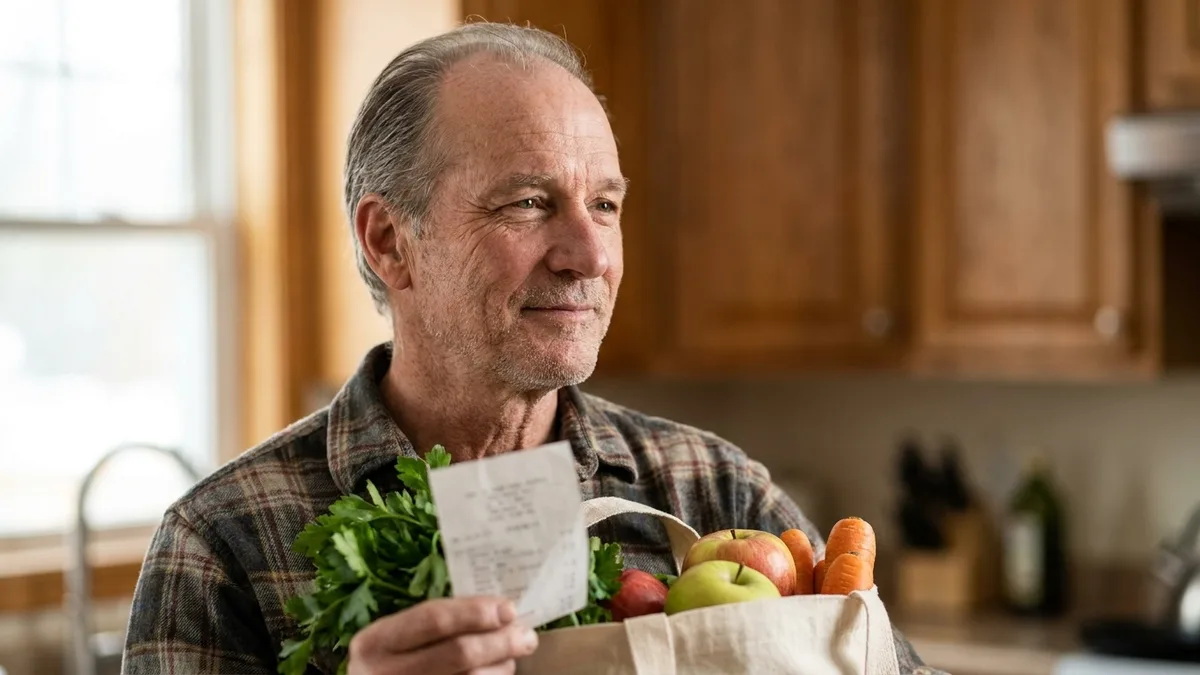
The receipt prints at 10:40 on a Sunday morning in Phoenix: 12 items, $128 before tax, and the first two things I lifted out of the cart were a $4.99 rotisserie chicken and a $9 bag of frozen broccoli.
I am a registered dietitian, I shop for a two-person household, and I did this exact run, prepped for 90 minutes that same Sunday, and ate out of that cart for seven days. The turn for me was admitting that healthy meals never needed a recipe plan.
Twelve items, one cart, ninety minutes once. What came out the other side was seven days of 20-minute weeknight dinners with no binder and no printout taped to the fridge.
A haul like this only works when every item has a repeatable role: protein, vegetable, grain, fat. Choose for the job, not the recipe, and the week becomes assembly.
Copy my twelve or walk in for four: one protein, one vegetable, one grain, one fat.
The Haul at a Glance
1. Rotisserie Chicken for Three Fast Dinners
The first thing in my cart is always the $4.99 rotisserie chicken, still warm through the plastic clamshell, because it is the one item on the list that is already cooked protein.
That sounds small. It changes the whole week.
Most people who decide to eat better buy raw chicken, get home at 6:40 on a Tuesday, and discover that the meal they planned needs 40 minutes in a 425-degree oven before anyone eats. The chicken in the deli case removes that step. I shred it on Sunday and the cooking is already done.
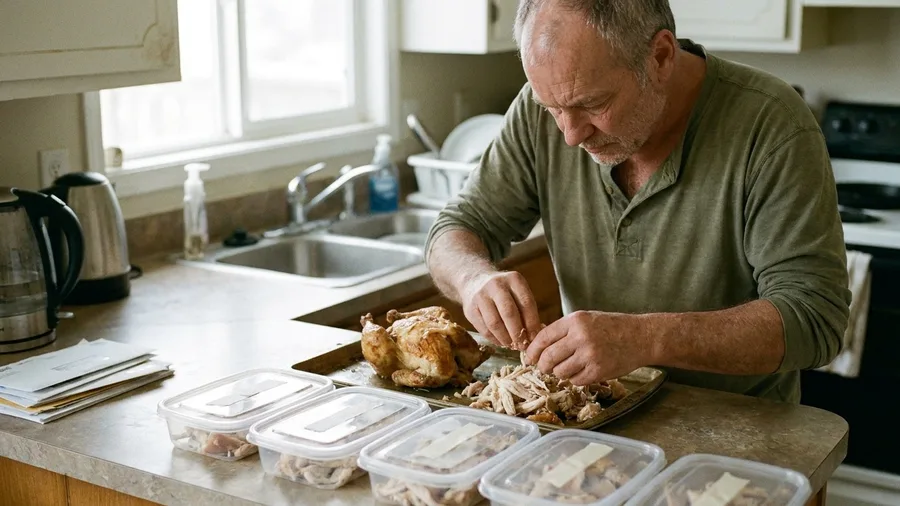
I stood at my counter with a sheet pan and five containers and pulled every piece of meat off the bird with my hands, which took about eight minutes. Each container got a strip of tape with a day written on it, so Tuesday's container said Tuesday. The carcass went into a pot with water and onion and became broth for soup.
The shredded meat went three ways across the week: tacos on Monday, soup on Wednesday, and a grain bowl on Thursday. None of those dinners needed the oven for the protein, which is why I could get dinner on the table in 10 minutes on a night I got home late.
If you want the fastest possible start to a healthy week at Costco, this is the item to grab first. It costs less than a coffee drink, it is already cooked, and it removes the cook-protein decision for three meals before the week even starts.
💡 Tip: Keep the bones in a zip bag in the freezer if you are not making soup that day. Two carcasses make a stock that beats anything in a carton.
| Item | Size | Price | Best use |
|---|---|---|---|
| Rotisserie chicken | 1 whole, cooked | $4.99 | 3 fast dinners, plus soup stock |
| Salmon fillet | 2 lb | $24 | 2 dinners, half frozen for later |
| Eggs | 2 dozen | $8 | Breakfast, snacks, breakfast-for-dinner |
| Canned tuna | 6-pack | $10 | No-cook lunches |
| Greek yogurt | 32 oz | $7 | Breakfast bowls, tuna salad binder |
| Frozen broccoli | 5 lb | $9 | Vegetable on the plate, never spoils |
| Baby spinach | 2 lb | $6 | Eggs, pasta, smoothies by day 5 |
| Sweet potatoes | 3 lb | $5 | Sunday roast, side or bowl base |
| Frozen berries | 2 lb | $10 | Yogurt and oats, smoothies |
| Quinoa | 3 lb | $12 | 5 grain bowls, keeps 4 days |
| Rolled oats | 5 lb | $10 | Breakfast, meatloaf binder |
| Olive oil | 2 L | $22 | Roasting and drizzling everything |
2. Salmon Fillets Portioned for Four Meals
A second protein matters less for variety than for sequence. If chicken is the only cooked protein in the fridge, by Wednesday you are eating chicken again or ordering out.
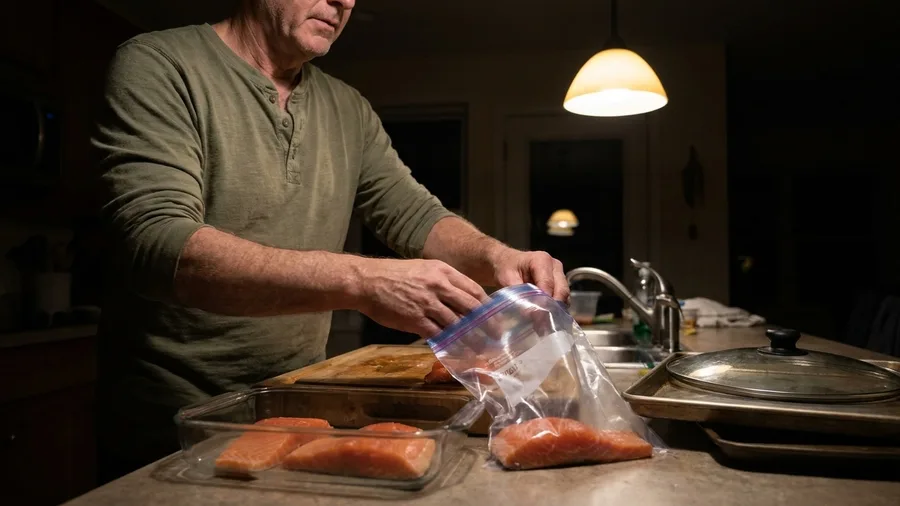
I buy the 2 lb salmon fillet for $24, the priciest thing in the cart, and cut it into four portions on Sunday before it ever sees the fridge shelf. Two go into a container for the front of the week, two go into the freezer for later.
Sunday night I roasted one portion on a sheet pan with frozen broccoli and chunks of sweet potato at 425°F, and the timer said 13 minutes when I pulled it. That is a 20-minute dinner with one pan to wash.
Four portions from one fillet covers two dinners for two people, which is the deal I make with myself: this removes the question of what protein anchors Tuesday and Thursday.
Salmon at 425°F wants 12 to 15 minutes depending on thickness, and it is done when the center flakes but still looks slightly darker than the edges. Overcook it and you have paid $24 for fish that eats like canned.
Here is the honest test before you put it in the cart. Will fish actually get eaten twice this week in your house?
If the answer is no, the fillet is $24 of waste wrapped in butcher paper, and you are better off buying a second rotisserie chicken. The item earns its place by removing a decision, not by being the healthier-sounding choice.
⚠️ COMMON MISTAKE
The Sunday Prep You Skip
Most people buy well and then cook nothing on Sunday, so Wednesday collapses. Ninety minutes is the whole ask: quinoa on the stove, sweet potatoes in the oven, chicken pulled, salmon portioned. Do it once and the weeknight version of you stops making decisions.
3. Two Dozen Eggs for Breakfast and Dinner
The protein that saves the week is not the one you plan around. It is the one sitting in the fridge when the plan falls apart at 6:40 on a Wednesday.
Two dozen eggs cost me $8, and they cover breakfast and the fast dinners I did not schedule. That is the cheapest insurance in the cart.
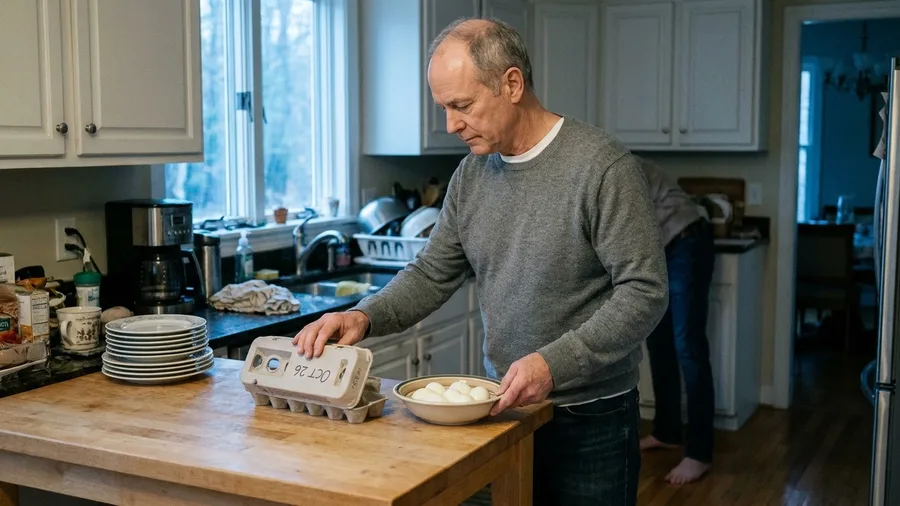
Sunday I boiled six and left them in a bowl in the door shelf. They were gone by Tuesday, eaten as snacks while I was putting other food away, which told me six was not enough next time.
The rest stayed raw for dinners: scrambled in a hot pan with a handful of baby spinach wilted in at the end, or fried alongside leftover roasted sweet potato, and either version is on the table in five minutes.
Breakfast-for-dinner is a real meal in my house, not a fallback. Eggs, spinach, a spoon of Greek yogurt on the side, and nobody asks what else there is.
What eggs really buy you is a meal with no recipe. Spinach and frozen broccoli are already in the fridge, and they turn a scramble into dinner without a single instruction to follow.
The one thing I watch: eggs are cheap per protein but they are also easy to under-eat and still feel hungry. Two per person, plus a vegetable, is the version that actually holds until morning.
The cart is not the meal plan. The ninety minutes on Sunday is the meal plan. The cart is just the shopping list that makes it possible.
— What I tell every client who asks me to write them a plan
One $128 run, one prep block, seven days of 20-minute dinners.
4. Canned Tuna for No-Cook Lunches
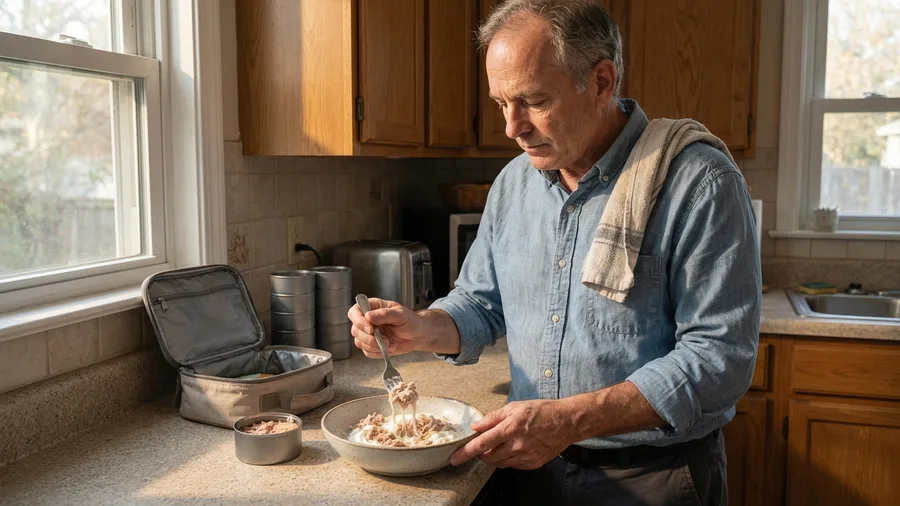
The meals you cook to order still leave a hole around noon on the days prep falls apart. Canned tuna fills it without touching a burner.
I buy the 6-pack of cans for $10 and stack it on the pantry shelf at eye level, where I can see it past the cereal. Nothing about it needs the fridge, so it survives the week prep gets skipped entirely.
a can of tuna stirred into a spoonful of Greek yogurt, a pinch of salt, whatever crunchy thing is in the drawer. Five minutes, start to container, and that is three lunches across the week from one tub and three cans.
The yogurt stands in for mayo and does the job better than I expected. It binds the fish without turning it into a wet paste, and it adds protein instead of just fat, which matters more at my counter because a lunch that holds me to 3 p.m. is a lunch I do not chase with crackers.
This one suits anyone who carries lunch to work. The cans live in the pantry and the yogurt lives in the fridge, and the two meet in a bowl in the time it takes the coffee to finish brewing.
I will be honest about the ceiling: this is a backup, not a lunch I would brag about. It earns its shelf space because it answers the question before I ask it, on the days I did not prep, when the alternative is the drive-thru two blocks from the office.
💡 Tip: Drain the can properly and press it with the lid, or your lunch is watery by the time you open it at work.
Quick Tips Before You Start
Label by the day
Write the day of the week on each container lid with a marker, not the food name. You will eat what is labeled Tuesday on Tuesday.
Split the freezer bags
Halve the salmon and the berries the moment you get home, so half sits in the deep freeze and half in the door for daily use.
Roast from frozen
Frozen broccoli goes straight onto a 425°F sheet pan. Thawing it first is the mistake I made on night one.
Pull the chicken Sunday
Shred all the meat before the week starts, and put the bones in a pot for soup. Weeknight you should never touch a carcass.
Buy one job per item
Before anything goes in the cart, name the weeknight job it removes. If you cannot name one, it stays on the shelf.
5. Greek Yogurt for Breakfast and Sauces
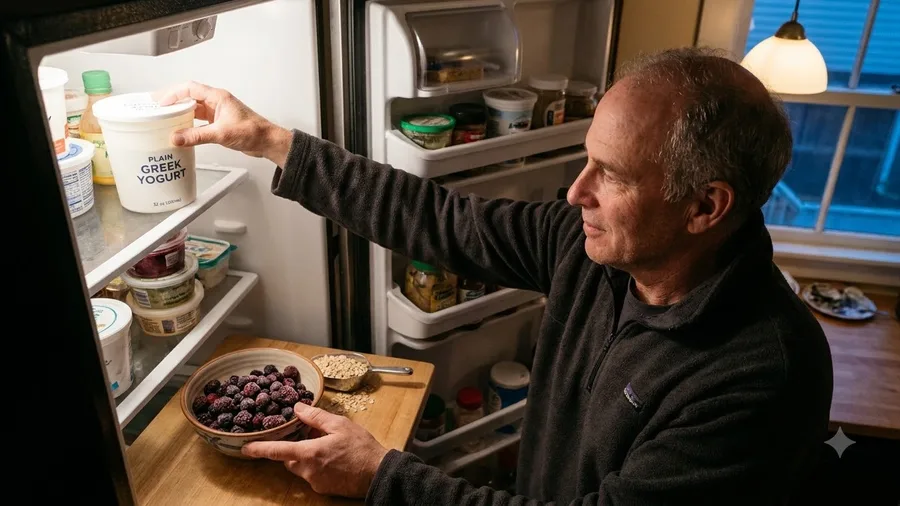
A can of tuna is only a lunch because something creamy binds it, and that same tub covers the morning meal you eat standing at the counter.
I buy the 32 oz tub of plain Greek yogurt for $7 and keep it on the top shelf of the fridge, front row, lid facing out. If I have to move anything to reach it, I stop reaching for it.
Breakfast takes ninety seconds: a scoop of yogurt, a handful of frozen berries stirred in cold, a spoon of rolled oats on top. No pan, no measuring cup, no decision beyond which spoon.
The berries thaw in the bowl while I pour my coffee, and the oats soften just enough by the first bite. That is the whole morning protocol.
Then the same tub comes back at lunch as the binder for the tuna, which is why one $7 container earns twice the fridge space of anything else in the cart. It covers breakfast, covers the afternoon snack on the days I remember to eat one, and rescues lunch from a dry can.
That reuse is the point. One purchase, three jobs, zero prep on the days you need it most.
The one thing I watch: plain, unflavored. The fruit-on-the-bottom tubs carry enough sugar to undo what you are trying to do, and the plain version is the one that works in both a bowl and a salad.
Frozen Broccoli — At a Glance
📦 Size
5 lb bag, $9
🔥 Cook From
Frozen, 425°F, 20 min
📅 Shelf Life
Months in the freezer
🍽️ Jobs
Side, egg filling, bowl base
💰 Per Serving
Well under a dollar
⚠️ The Mistake
Thawing it first
Why It Works
It is the only vegetable in the haul with no spoilage clock, so it is still there on the last dinner of the week.
6. Frozen Broccoli That Never Spoils
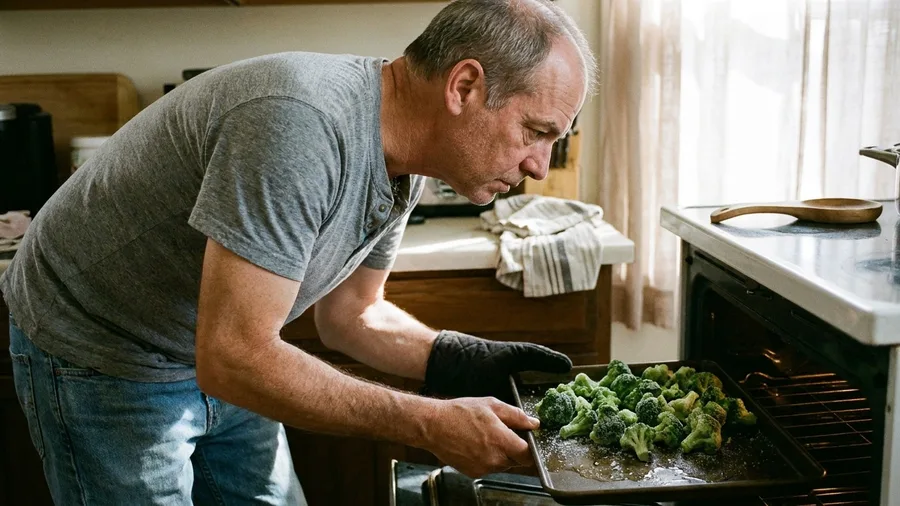
Dinner still needs a vegetable on the plate, and a bag of frozen broccoli is the one that will not go soft in the drawer before the week ends.
I pay $9 for the 5 lb bag and it goes straight into the freezer, not the fridge. That is the whole storage method, and it is why this is the vegetable I never have to plan around.
My first attempt was a mistake. I thawed the florets on a sheet pan and they came out limp and watery, the kind of side dish nobody finishes. The fix is to roast them straight from frozen, still icy, at 425°F for 20 minutes, tossed in oil and salt with the pan already hot.
The edges catch and darken and the centers stay firm, and it comes out closer to a roasted vegetable than a steamed one.
One bag carries a week of dinners: alongside eggs, folded into a grain bowl, next to the chicken on a plate. No washing, no chopping, no clock running while it waits in the crisper.
The bag sits in the freezer until the last dinner of the week, and it is still good then. That is what makes it different from the fresh produce you buy with good intentions on Sunday. The vegetable decision is already made, and it never rots before Thursday.
7. Baby Spinach for Eggs, Pasta, and Smoothies
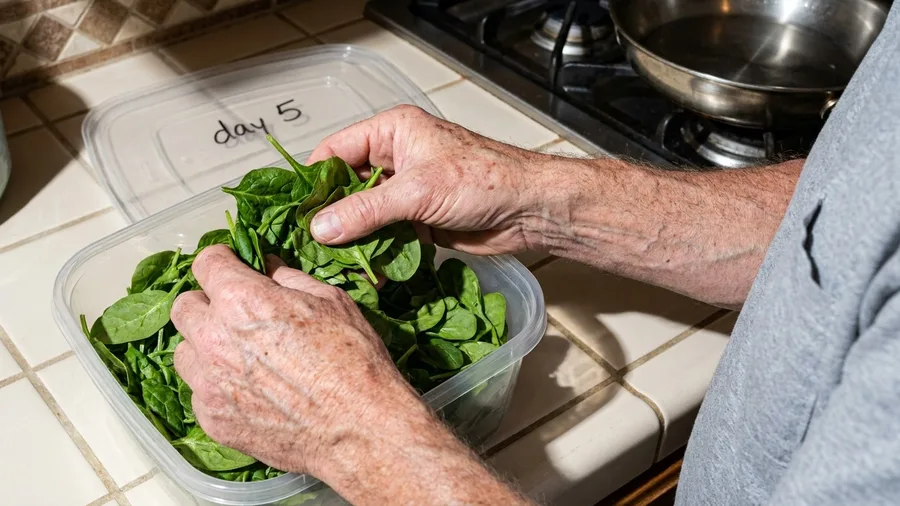
Frozen broccoli sits in my freezer as the vegetable I never have to think about. Baby spinach is the opposite kind of purchase: it has a clock, and I only buy the 2 lb tub, $6, when I know I will beat the clock. That is not a reason to skip it. It is a reason to buy it on purpose.
Spinach brings something broccoli cannot.
The leaves wilt in two minutes. Toss a double handful into scrambling eggs and it collapses to almost nothing, which means I can put a real serving of greens inside a breakfast without a side dish. Same with pasta: the hot drained noodles go back in the pot, spinach goes on top, lid on for two minutes, and it is done. A handful dropped into a smoothie disappears entirely, color aside.
The clock is the whole problem, and it is the one item in my haul I manage by date rather than by job.
I write day 5 on the lid with a marker the moment the tub comes out of the bag. Day 5 is a conservative line, not a guarantee, but it has never failed me in a Phoenix fridge. Then I schedule the tub rather than hope: eggs on Monday, pasta on Wednesday, a smoothie on Friday. If Friday looks like it will miss, the rest goes into a soup pot or the freezer, where it holds for a later minestrone.
If your week will not carry a tub of spinach through five days, do not buy it.
That is the honest test, and it is why frozen versus fresh produce settles it: broccoli earns a permanent spot while spinach is a judgment call each trip. Two pounds of leaves that rot in the crisper drawer is not a healthy purchase; it is money in the trash and one more small defeat at the back of the fridge. For a household of one, buy the smaller container or skip it altogether and let the broccoli carry the vegetable job by itself.
💡 Tip: A dry paper towel in the tub absorbs the condensation that turns spinach slimy by day four.
🕘 The Sunday Prep Block, in Order
Oven on, potatoes in
Heat to 425°F and get the 3 lb of sweet potatoes on a sheet pan first, because they take the longest.
Quinoa on the stove
Rinse the quinoa thoroughly, then cook 1 cup dry while the potatoes roast — that is 3 cups cooked.
Chicken pulled and portioned
Shred the rotisserie meat into five containers and label each lid with the day it gets eaten.
Salmon cut and half frozen
Portion the 2 lb fillet into four pieces and freeze two of them for the back half of the week.
Eggs boiled, berries split
Boil six eggs and move half the berries from the deep freeze to the door for daily use.
Containers labeled and stacked
Everything goes in the fridge with a day on the lid, front-to-back by the order it will be eaten.
8. Sweet Potatoes for a Sunday Batch
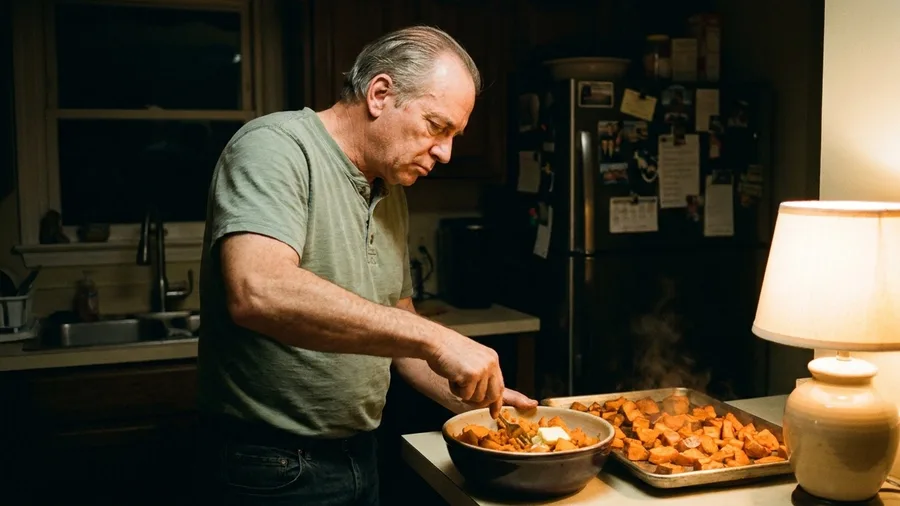
Where spinach demands to be used on a deadline, a 3 lb bag of sweet potatoes, $5, does the reverse: it gets more useful the longer it sits roasted in the fridge. Five days of cooked carb for five dollars is the best return in the cart.
The trick is roasting the whole bag at once, on Sunday, before I have decided what any of it is for.
I scrub them, prick each one, and put them on a sheet pan in a 425°F oven for about 90 minutes, until a knife slides in with no resistance. That long, slow roast is what turns the starch sweet and the flesh soft enough to mash. This happens inside the same Sunday block as the quinoa and the salmon, so the oven is running once and I am not standing over it.
Then it splits into two textures that do different jobs.
Half gets mashed with a fork, a knob of butter, and salt, and goes into a container for a side dish that reheats in the microwave in 90 seconds. The other half cools in chunks, and those chunks become the base of a grain bowl, get folded into eggs, or get reheated alongside a piece of salmon. One pan, three meals, no weeknight cooking.
The payoff is that the carb question is answered before the week asks it.
On a Tuesday at 6:15, the difference between a bowl and takeout is whether there is already something starchy and warm in the fridge. I have made that decision on a Sunday and felt it on a Thursday. Five days in the fridge is realistic for roasted sweet potatoes; past that, texture suffers and the flavor goes flat.
Five dollars buys you a decision you will not have to make again until Friday.
The Costco Cart: Two Ways to Fill It
The Haul That Works
- One item per job: protein, vegetable, grain, fat
- Four items that are already cooked or never spoil
- Fridge containers labeled with the day they get eaten
- Half the salmon and berries frozen on arrival
- A 90-minute Sunday prep block actually scheduled
The Haul That Wastes Money
- Twelve recipe ingredients and no plan for Tuesday
- Three bags of fresh greens and no day assigned to them
- A 2 lb salmon fillet nobody will eat twice this week
- Bulk quinoa that sits unrinsed and unused in the pantry
- No prep block, so Wednesday becomes takeout
9. Frozen Berries for Everyday Breakfast
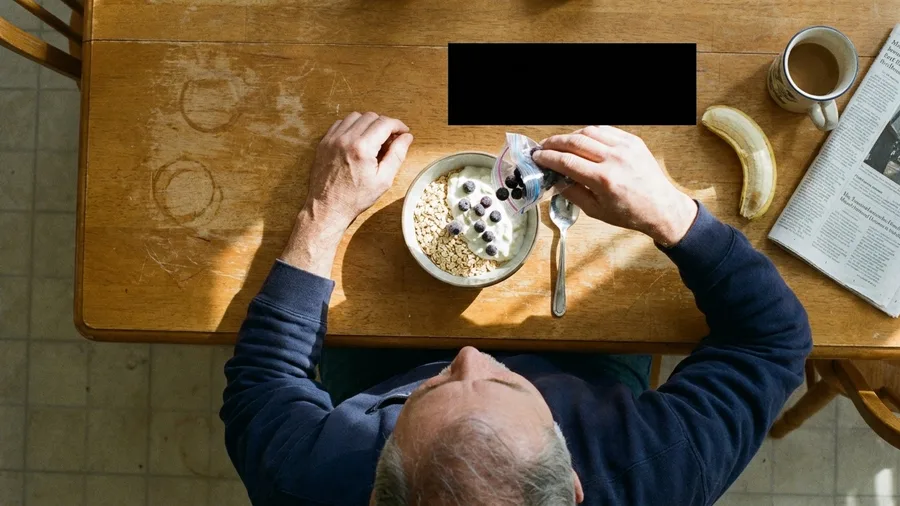
With a roasted carb and a vegetable waiting in the fridge, breakfast is the last meal that still needs an answer, and the 2 lb bag of frozen berries, $10, is what makes it a five-minute job. It is the fruit I have never once thrown away.
Fresh fruit and I have a long, expensive history. Berries especially: two days of glory, then mold, then guilt.
Frozen berries have no clock. They last about three months in the freezer, and the way I handle a bag keeps them from clumping into a solid mass. Half goes into the deep freezer in a zippered bag, and half comes to the door shelf for daily use. That second bag gets opened every morning, so it empties and refills on a schedule I can see.
The morning moves are simple.
A cup of berries goes on top of the Greek yogurt and oats, and the cold fruit softens the oats as it thaws. Into a blender they go with yogurt and milk and no ice, because the berries are already frozen and do the work of ice without watering anything down. The smoothie is thick and cold in about 60 seconds, no recipe, no measuring beyond a scoop.
This is the item that removes the fruit decision and the spoilage risk in the same purchase.
Fresh fruit is a running errand: buy it, watch it, use it. Frozen berries are stock. I keep them in the same mental category as the oats and the olive oil, not the spinach, and that reframing is what keeps a fruit on the table that I am not managing. Ten dollars for three months of berries is the quietest line in the cart and the one I replace without thinking.
Breakfast becomes a scoop, a spoonful, and a few seconds at the blender.
10. Quinoa for Five Grain Bowls
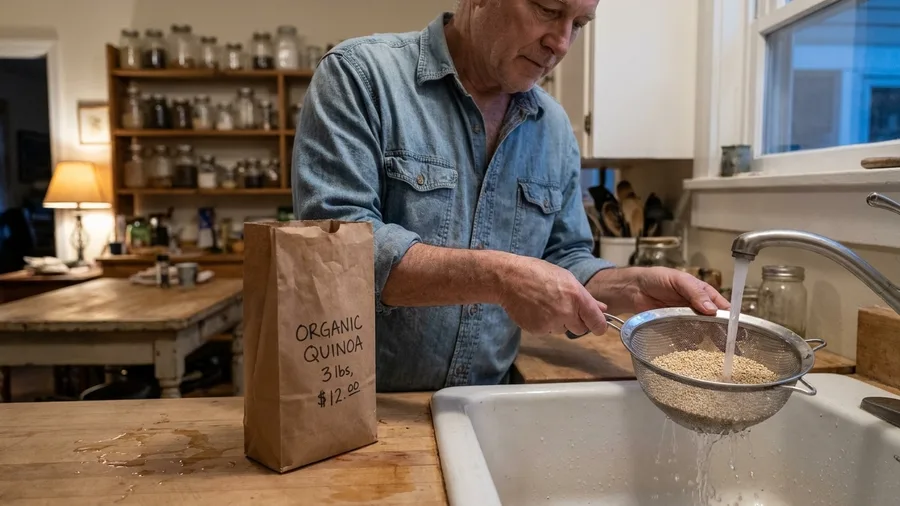
A bag of frozen berries makes breakfast a non-decision. Quinoa does the same thing for the grain half of the plate, but it asks something of you once. I paid $12 for a 3-pound bag, and one Sunday cook carried five grain bowls.
1 cup dry, rinsed well, into the rice cooker or a pot. It comes out as roughly 3 cups cooked, which is a lot of bowl base for the money.
It also happens to be the mistake I made first. My test batch went into the pot straight from the bag, and the finished quinoa had a bitter edge that no amount of dressing covered. Quinoa carries a natural coating called saponin, and rinsing under cold water for about 30 seconds clears it.
So the Sunday batch got a thorough rinse in a fine-mesh strainer before it hit the heat, and the bitterness disappeared. Small step, real difference in whether you actually want to eat the fifth bowl.
Cooked quinoa keeps about 4 days in the fridge, so it covers Monday through Thursday without a decision. I use it three ways: as the base under chicken and roasted broccoli, tossed cold into a salad with olive oil and whatever vegetable is left, and packed into halved bell peppers with the shredded chicken and baked as stuffed peppers.
The whole point is that the grain decision is already made before the week starts. At 6 p.m. on a Tuesday, I am not choosing between rice, pasta, and quinoa. I am scooping from a container.
💡 Tip: Rinse in a fine mesh strainer, not the pot. The saponin foam that makes it bitter needs running water to leave.
11. Rolled Oats for Breakfast and Baking
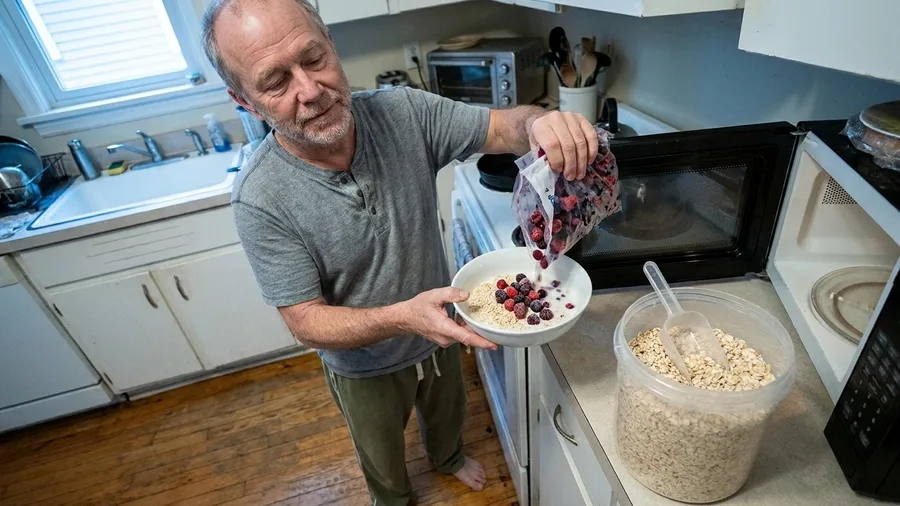
Quinoa handles the bowls. Oats handle the morning, and they cost less per serving than almost anything else in the cart. The 5-pound bag was $10, and it lasted well past the week.
Breakfast is 1/2 cup of oats, milk, and a handful of frozen berries in the microwave. Two minutes, stir, another 30 seconds. The berries thaw into the oats and sweeten them without added sugar, which is the same bag doing double duty.
Cheap is easy to say. The part that actually made it stick was removing the measuring step. I keep a 1-cup scoop right in the container, so the morning bowl is one scoop, milk to the line, berries from the freezer door, and yogurt on top if I want protein.
No recipe, no decision, no thinking before coffee.
Oats are not just a breakfast food. They work as a binder in meatloaf, replacing some of the breadcrumbs and adding fiber without changing the texture much. I also make a batch of granola on a weekend afternoon with oats, olive oil, and honey, and that covers snacks for the week.
In a sealed container, 5 pounds lasts about 2 months. It is one of the few pantry items where buying the big bag costs almost nothing per meal and takes up one shelf.
12. Olive Oil for Roasting and Drizzling
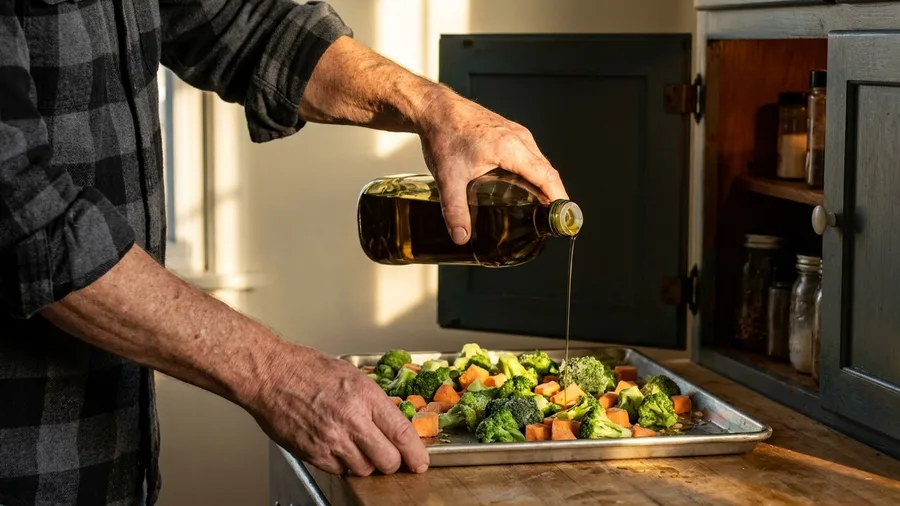
Roasted broccoli and sweet potatoes do not work without fat. Neither does a piece of salmon. The 2-liter bottle of olive oil at $22 is the item that makes every roasted vegetable and every bowl in the cart come together.
I use it for three things: tossing the frozen broccoli before it goes on the sheet pan, coating the sweet potatoes for the Sunday roast, and drizzling over finished bowls and salmon fillets. That is most of a week's cooking fat in one bottle.
Store it in a cool, dark cupboard, not next to the stove. Heat and light break down the oil faster than most people realize, and a 2-liter bottle takes long enough to finish that it matters. Kept properly, it holds for about 6 months.
The one caveat: $22 is worth it if the oven actually gets used weekly. If most of your meals are microwaved or assembled cold, the bottle will sit there going stale, and a smaller size makes more sense.
In my two-person kitchen, the 2 liters lasted about 3 weeks. That tracks with roasting vegetables four or five nights a week plus a drizzle here and there. It is not a glamorous item, but it removes the fat decision from every roasted pan and every finished bowl.
Frequently Asked Questions
Is $128 a week realistic for two people at Costco?
That is what I spent before tax on this 12-item run, and it covered seven days of breakfast, lunch, and dinner for two. The weekly restock drops to about $85 because quinoa, oats, and olive oil last roughly three weeks. Your number will move with what you already have in the pantry.
What if I live alone and cannot finish five pounds of anything?
Buy the perishables and skip the bulk dry goods, or split the big bags with a neighbor. The jobs still work at half scale: half a rotisserie chicken, a quarter of the sweet potatoes roasted, half a cup of quinoa cooked at a time. The spinach is the item to skip entirely if you cannot name three meals for it.
How long does the Sunday prep actually take?
Ninety minutes, and most of that is the oven doing the work while you pull chicken and portion salmon. The sweet potatoes take the longest, so they go in first. If you only have 45 minutes, cook the quinoa and pull the chicken, and roast the vegetables on a weeknight.
Do I need containers, or can I just leave things in the packaging?
Five fridge containers and a marker are the difference between this working and not working. Label each lid with the day it gets eaten, not the food name. The chicken in a labeled Tuesday container gets eaten Tuesday; the chicken in a takeout box gets forgotten.
What should I skip if I am cooking for one or hate fish?
Skip the $24 salmon and buy a second rotisserie chicken, which does a similar job for five dollars. Skip the spinach unless you have a plan for it by day 5. Keep the frozen broccoli, eggs, yogurt, oats, and berries, because none of them have a spoilage clock you have to race.
Can I do this haul without ever turning on the oven?
Mostly, yes. The chicken is already cooked, the tuna needs nothing, the eggs boil, and the yogurt and oats are assembly. You would lose the roasted broccoli, sweet potatoes, and salmon, so replace them with bagged salad and pre-cut vegetables, and accept a slightly higher bill.
Buy the Chicken and the Broccoli First
It held for seven days because nothing in that cart was decorative. The total was $128 before tax, and the quinoa, oats, and olive oil stretched about three weeks, which drops the weekly restock to roughly $85.
The $4.99 chicken and the $9 broccoli were never side notes. They were the template: one protein, one vegetable, one grain, one fat.
A no-plan week is not a recipe collection. It is a lazy cook's default: pre-decided parts waiting to be assembled at 6 p.m.
So buy the $4.99 rotisserie chicken and the $9 bag of frozen broccoli first, then build every return trip around one protein, one vegetable, one grain, and one fat. Get to the register by 10:40 and you are out before the crowd.
Copy the first two items
Next Costco trip, put the $4.99 rotisserie chicken and the $9 frozen broccoli in the cart first, then add one grain and one fat. That is the whole method, and it works on a Tuesday.