
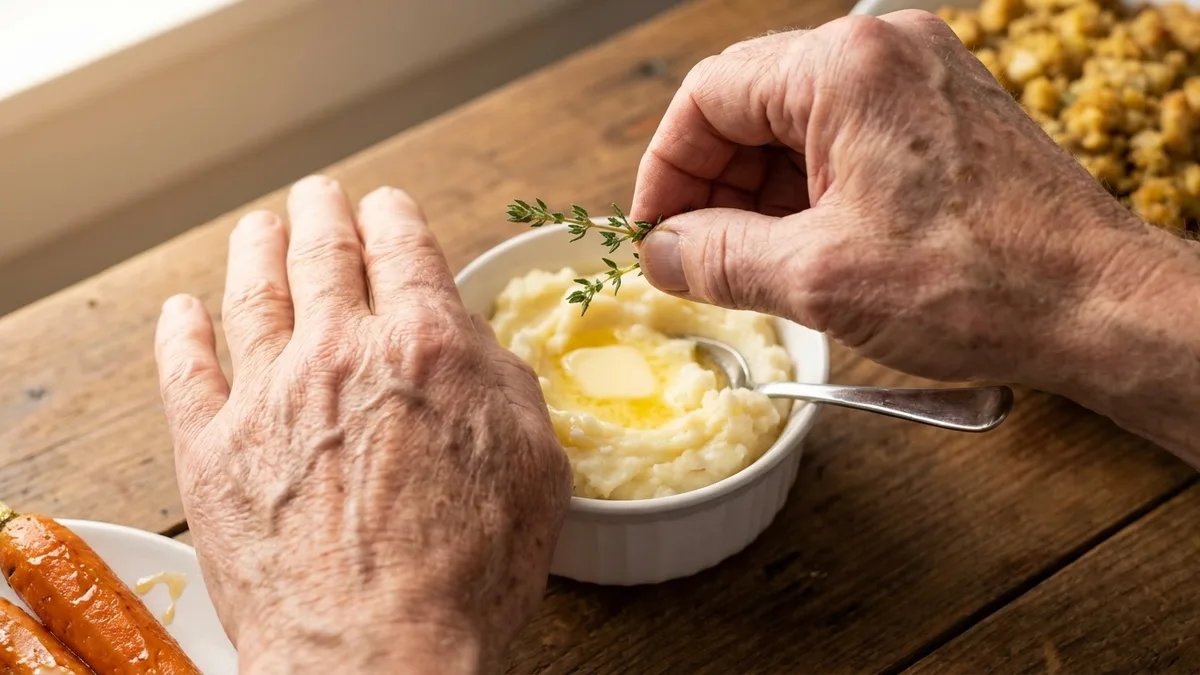
Fourteen dollars is what the ten swaps on this table add to a sixty-dollar side-dish budget, and about ninety minutes is what they take across a 375°F oven and a 425°F one, run back to back. For a host feeding ten, that is the whole cost of a plate that eats lighter without anyone at the table being told so.
The worry is always the same. Bring a lighter side to a table of ten and it gets spotted as a diet, somebody says something, and suddenly sixty dollars of sides has split into two menus, the real one and yours.
None of these swaps depends on a new name or a visible absence. The green bean casserole keeps its crisp oniony top, the mashed potatoes keep butter melting across the surface, and the sweet potatoes still go sticky at the edges.
Your family reads the dish before the ingredients. Title, color, temperature, the size of the scoop, the crust on top, all of it lands first, so the heavy element moves behind that cue instead of replacing it. Keep the signal, change what hides under it.
Start with three moves, not ten: the mashed potatoes and the gravy, the cranberry sauce left exactly as it is, and one dish made the old way on purpose. That is a table that reads as Thanksgiving, with nobody running a diet at it.
Quick Tips Before You Start
Run the oven twice
Set 375°F for the casserole, stuffing, and rolls, then 425°F for the sweet potatoes and carrots. About 90 minutes back to back covers the whole menu.
Reserve the cooking water
Save 3/4 cup of the potato water before you drain. It carries starch and flavor that lets you cut butter without the mash turning gluey.
Salt the top, not the pot
A finishing pinch on the surface hits the first bite. Under-salting the whole dish to save sodium just makes it taste flat.
Use the smaller dish
A deeper, smaller baking dish gives more crust per serving. The edge is what makes a smaller portion read as the good piece.
Whip the butter
Four tablespoons of butter whipped with two tablespoons of warm milk spreads like twice as much and looks generous on the table.
Pick one dish to keep classic
Choose one dish per table to make the old way on purpose and say so once. That single dish keeps the rest from reading as a diet.
1. Green bean casserole built on mushrooms
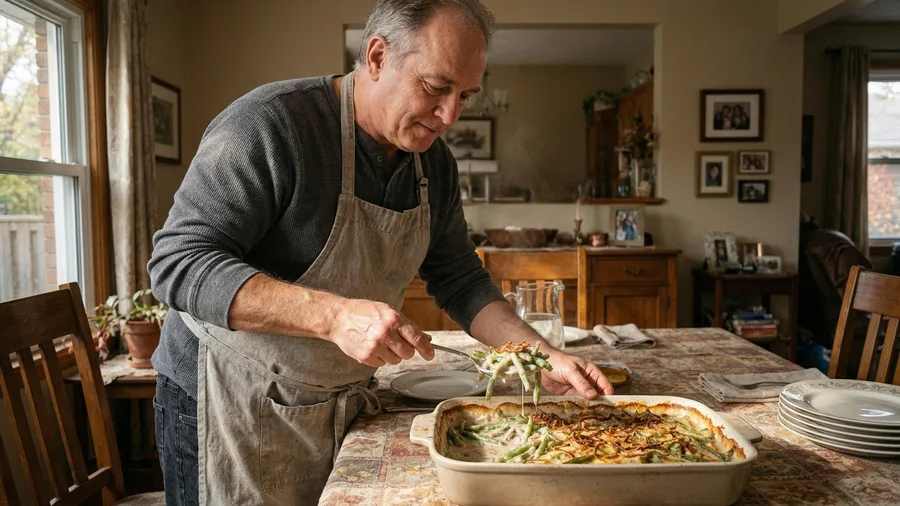
The green beans were never the problem. What makes the classic heavy is the can of condensed cream soup and the six-ounce can of fried onions dumped on top, and neither of those is the dish itself.
Slice eight ounces of cremini mushrooms and cook them in a tablespoon of oil over medium-high until the water they release has cooked away and the edges start to brown, eight to ten minutes.
Scrape them into a blender with half a cup of plain Greek yogurt and a quarter cup of 2% milk, and run it until the mixture is thick and smooth, with the same pale body and mushroom savor the soup used to give.
For the lid, spread half a cup of thin-sliced shallots on a sheet pan and bake them at 375°F for about twelve minutes, until they crisp and darken at the edges, then scatter them over the casserole the moment it comes out.
The calories land at 110 a serving against 220 for the canned version, and the dish keeps its name, its green under the cream, and the crunch the first fork hits.
Nobody clocks a swap they can still name. The title, the color, the oniony top, all read as the casserole before anyone tastes a thing, and by the time the sauce underneath registers, the plate has already made its case.
💡 Tip: Brown the mushrooms a day ahead and refrigerate the purée. The casserole assembles in ten minutes on Thursday.
| Dish | Classic version | Lighter swap | Calories per serving: classic to lighter | What stays the same |
|---|---|---|---|---|
| Green bean casserole | Canned cream soup + 6 oz fried onions | Cremini purée with Greek yogurt, shallot topping | 220 to 110 | Name, color, crisp oniony top |
| Mashed potatoes | 4 tbsp butter + 1/2 cup cream | Reserved water, buttermilk, 2 tbsp butter + butter pat on top | 260 to 150 | Creamy body, butter cue on the surface |
| Sweet potatoes | Marshmallow topping | Cubed, maple, orange zest, roasted | 340 to 140 | Sweetness and sticky browned edges |
| Stuffing | Sausage stuffing, scooped | Chestnut and apple, baked in muffin cups | 310 to 190 | Bread, herbs, crust on every side |
| Carrots | Brown-sugar butter glaze | Honey, Dijon, roasted | 180 to 90 | Sweet-salty glaze, bright color |
| Creamed corn | Cream-thickened | Puréed kernels + cornstarch | 230 to 120 | Thick spoonable texture |
| Mac and cheese | Four cheeses, large dish | Extra-sharp cheddar, smaller deeper dish | 380 to 240 | Sharp flavor, baked crust |
| Cranberry sauce | Whole-berry or jellied | Exactly the same | 110 to 110 | Everything |
| Gravy | Flour-thickened with fat | Defatted drippings + cornstarch | 70 to 30 | Roast flavor, glossy body |
| Rolls | 3 oz roll, cold basket | 1.5 oz roll, warmed, whipped butter | 200 to 110 | Warm bread, butter |
| **Total for ten** | **About $60 in sides** | **About $74 in sides** | **Roughly 40% fewer calories** | **A table that reads as Thanksgiving** |
⚠️ COMMON MISTAKE
Don't announce the swap at the table
The moment you say 'I made it lighter,' every fork slows down and someone starts looking for the difference. Serve it, name it the same thing you always call it, and let the empty dish do the talking. If someone asks for the recipe, that is the moment to mention the mushrooms.
2. Mashed potatoes with buttermilk and a butter top
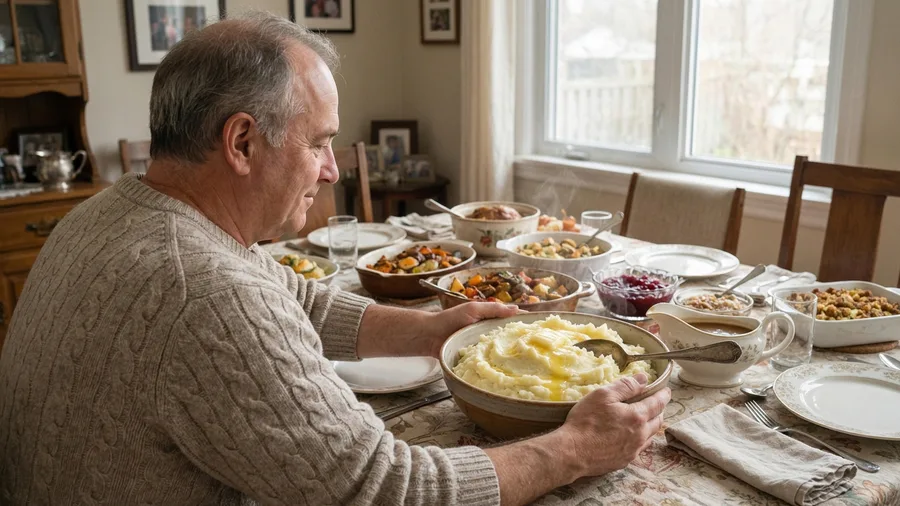
Mashed potatoes carry the same test to the place every eye lands first: the pat of butter melting across the top.
The body of the bowl comes from what is already in the pot. Save three-quarters of a cup of the cooking water before you drain two pounds of Yukon Gold, then mash with half a cup of low-fat buttermilk and that water, and the potatoes turn out smooth and full without a drop of cream.
Two tablespoons of butter go in for the whole batch. Against the four tablespoons and half a cup of cream in the richer version, that brings a three-quarter-cup serving to 150 calories instead of 260.
Save one more pat for the table. Drop it on the hot potatoes in front of the family and let it melt into a glossy pool across the surface; that first glance finds the richness cue exactly where it expects it, even though the interior is lighter than any bowl they have had.
If the cook is nervous about the whole business of lighter sides, this is the one to start with. The bowl still reads as the real thing from across the room, and nobody leans in to interrogate a potato that looks like every potato before it.
💡 Tip: Warm the buttermilk for thirty seconds in the microwave before it goes in. Cold buttermilk drops the temperature of the potatoes and makes them seize.
Mashed Potatoes — At a Glance
⏱️ Timing
Hold the drained potatoes in a covered pot up to 20 minutes if oven space is tight
🥄 Serving
One 3/4-cup scoop, not a ladle, keeps the plate balanced for 10
😋 Crowd test
Kids pass the gravy; adults ask for the recipe
📅 Make-ahead
Mash to within 5 minutes of serving, then finish with the table pat
🧄 Upgrade
Roast garlic in foil at 375°F for 30 minutes and mash it in
⚠️ Skip if
A guest is on a strict low-potassium diet — offer a second side
Why it works
Buttermilk and reserved water give the mash body that cream only mimics, so the single pat on top does the emotional work of a much heavier bowl.
3. Sweet potato cubes with maple and orange
Sweet potatoes need the same surface work, only at the edges, where a marshmallow topping used to promise something sticky and sweet. The same season-and-cost logic decides whether a vegetable is worth buying fresh, frozen or canned — see which produce to buy when.
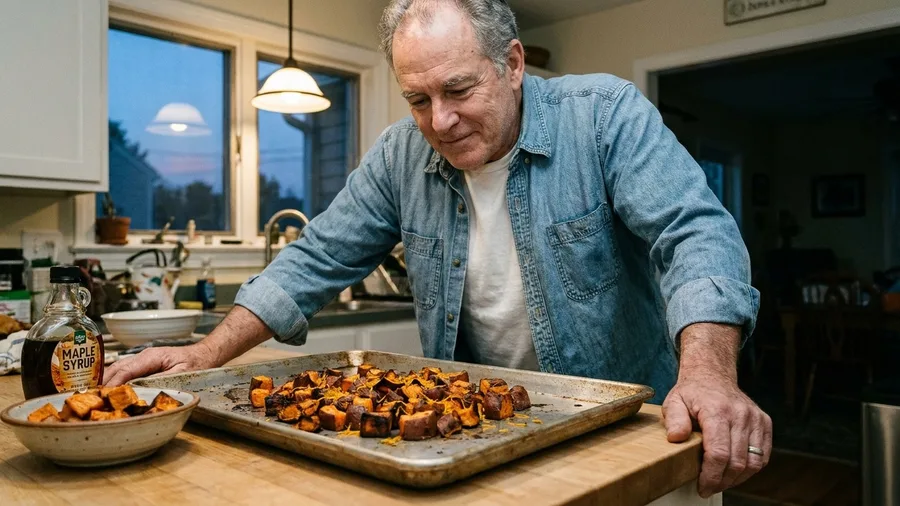
The topping was never the vegetable's flavor; it delivered sugar and chew. That job moves to the oven when two pounds of cubed sweet potato go onto a sheet pan with a tablespoon of maple syrup, the zest of an orange, and a pinch of salt, into a 425°F oven for twenty-five minutes.
By the end the cubes have collapsed slightly at the corners and gone dark and tacky where they met the pan. Those browned edges carry the sweetness the marshmallows used to, so the first bite still reads as sweet potato casserole rather than a plain roasted vegetable.
The calories fall to 140 per three-quarter cup against 340 with the marshmallow version, but that is not the question worth asking here.
The question is whether a lighter sweet potato dish is worth it when the marshmallow is the tradition, and the honest answer is that for someone at the table, it is the once-a-year dish.
So make both. Keep the marshmallow casserole in its usual dish, put the roasted cubes in a second, smaller bowl, and let the tradition stay visible with the lighter version standing next to it as a choice rather than a replacement.
💡 Tip: Cut the sweet potatoes the day before and store them in a bowl of cold water in the fridge. Drain and pat dry before roasting.
Two ways to handle the sweet potato
Make only the lighter version
- Frees the 425°F oven slot for the carrots, so both sheets run back to back
- One 2 lb batch fills a single bowl – no second dish to wash or find room for
- Anyone who came for marshmallow gets no option at all, not a smaller one
- Skip if a guest has already called ahead about the casserole
Make both, smaller bowls
- The marshmallow dish keeps its usual pan; cubes go in a bowl half that size
- Two sweet potato dishes cost about $3 more at the store
- Costs the 425°F slot twice – roast the cubes first, marshmallow casserole after
- Skip if counter space, not calories, is the real limit this year
4. Stuffing baked in a muffin tin
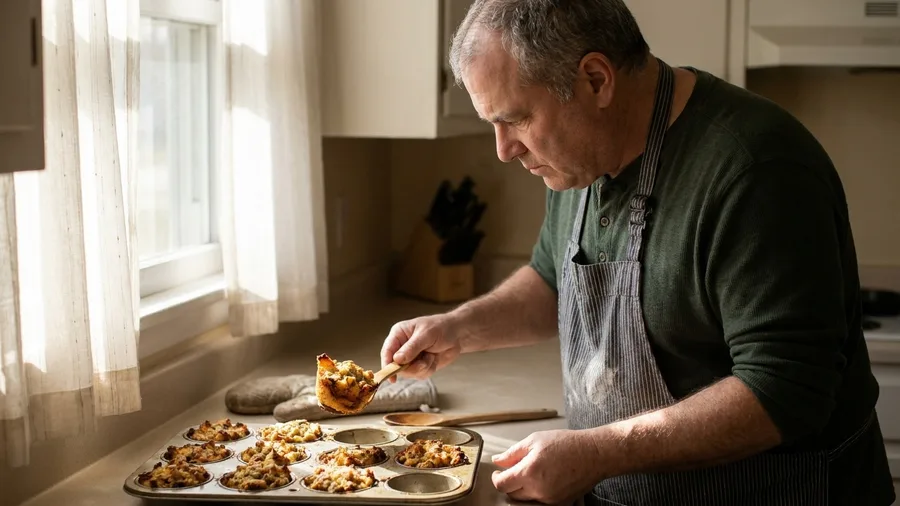
A vegetable can hide a sweet substitute under a browned edge, but bread has no such cover. Stuffing turns into a second plate of bread the moment the bread is the entire dish and the scoop has no edge to stop it, so the portion decision gets made at the scoop instead of the plate.
The fix is to bake it in a tin. Six cups of cubed dry bread, two chopped apples, three celery ribs, half a cup of chestnuts, two cups of stock and one beaten egg go into 12 muffin cups at 375F for 25 minutes, and the stuffing comes out at 190 calories a cup against 310 for the sausage version.
That crust on every side is the whole argument for the smaller portion. A cup with edges reads as the good piece, the corner everyone reaches for, rather than the small one somebody was handed.
The tin also does the math. Nobody stands at the table dividing a casserole dish into ten and quietly taking less; the cup already set the size, and a portion cue that looks like a serving choice does not read as a restriction.
Two apples and half a cup of chestnuts keep the mix from tasting like a lightened recipe. Chew and sweetness arrive where the sausage used to sit, and the stuffing still smells like sage and stock from the oven.
The swap suits a table where stuffing is a side. Skip it if somebody's Thanksgiving is defined by sausage stuffing, because a request is not the place to prove a point.
💡 Tip: Use a scoop with a release trigger to fill the cups evenly. A spoon packs some cups tighter than others and they bake unevenly.
Stuffing terms, decoded
5. Carrots roasted with honey and mustard
The tin handled the portion problem by setting the size before anyone reached the dish. Carrots arrive with a different problem: they are already a vegetable, so the only question left is where the sweet-salty note comes from and whether it can come from the oven instead of a syrup.
It can, and the carrot was never the heavy part. Glazed carrots carry their calories in the butter and the brown-sugar syrup that coats the vegetable, and the vegetable itself is mostly water and colour.
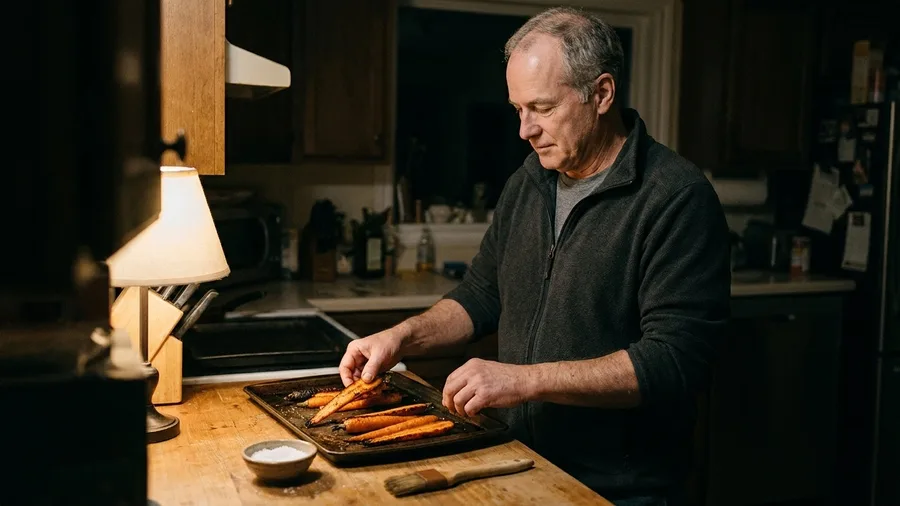
Halve 1 1/2 lb of carrots and roast them at 425F for 20 minutes with one tablespoon each of honey, Dijon mustard and butter. That lands at 90 calories a serving against 180 for the brown-sugar glazed version.
The sweet-salty note still arrives. It comes off the pan instead of out of a saucepan, and the colour stays bright because the carrots roast rather than candy.
The skin on a roasted carrot half tightens and browns at the cut edge, and that edge is what reads as glazed. Nothing on the plate looks like a vegetable that has been put on a diet.
This one suits a family that eats carrots anyway. If glazed carrots are somebody's specific request, leave them alone and spend the swap somewhere nobody is watching.
It is the least dramatic change on the table, and that is the point. Nobody at a Thanksgiving table has ever asked why the carrots were roasted.
💡 Tip: Leave the carrot tops on if you can find them. They look like a restaurant side dish and cost nothing.
💡 PRO TIP
Roast at 425°F and don't crowd the pan
The difference between roasted and steamed carrots is space. Use two sheet pans if you need to, and give each carrot a little room. Crowded carrots release steam and never brown, and browning is where the sweetness comes from.
6. Creamed corn thickened with its own starch
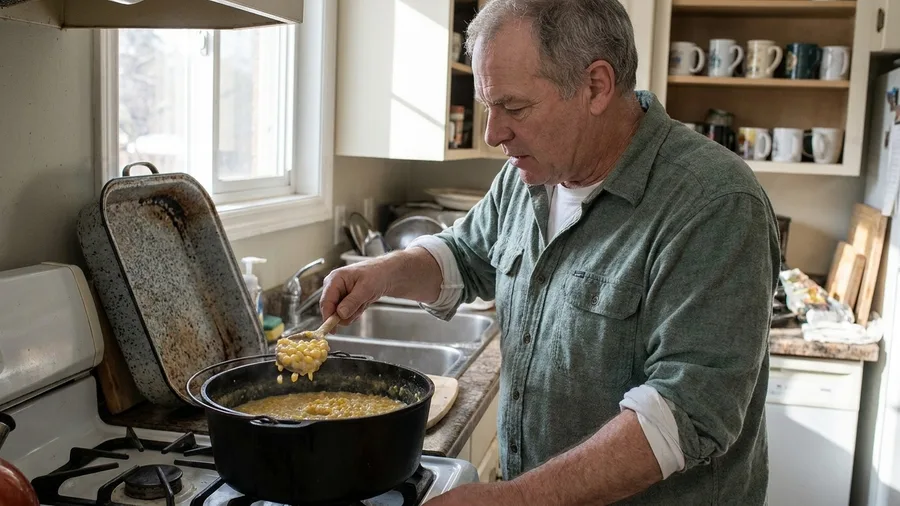
Creamed corn has to spoon thick and coat the plate, or the eye writes it off before the first bite. There is no browned edge here to carry the sweetness, and no crust to sell the portion. The texture is the whole argument, and it has to survive the swap.
Simmer 3 cups of whole kernels with 1 cup of kernels puréed with 1/2 cup 2% milk and 1 tsp cornstarch for 8 minutes. Let the pot thicken on the kernels' own starch rather than on cream. It comes to 120 calories a serving against 230.
The purée does the work the cream used to do. The whole kernels left in the pot keep it from reading as a sauce, so a spoonful still looks like creamed corn and not like corn soup.
This one is for the cook who serves corn as a vegetable. If the table is waiting on sweet corn pudding, a lighter creamed corn is the wrong argument to have at Thanksgiving, and it is fine to save it for a Sunday.
💡 Tip: Frozen corn works fine here. Thaw it first and pat it dry so the extra water does not thin the dish.
7. Mac and cheese with sharper, less cheese
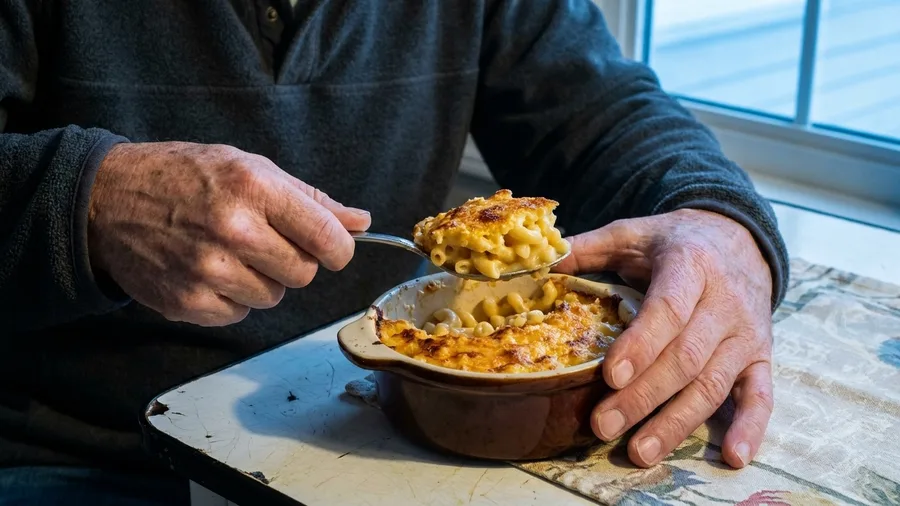
Some sides are believed by their thickness, others by their richness. Mac and cheese lives or dies on the second, and the mistake most cooks make is spreading the cheese thinner to cover a bigger pan: the sauce goes pale and slack, and the first spoonful reads as pasta with something poured over it.
The fix runs the other way. Shrink the cheese but raise its voice.
Eight ounces of extra-sharp cheddar carries a 12-ounce box of pasta, with 2 tablespoons each of butter and flour building the base and 1 1/2 cups of 2% milk loosening it to a pourable sauce. It bakes 20 minutes at 375°F and lands at 240 calories a serving against 380 for the four-cheese version most tables serve.
Sharpness registers in the mouth as richness, which is why a smaller amount of a louder cheddar never gets filed as less. The flavour cue climbs while the volume drops, and nobody at the table reaches for the word light.
💡 Tip: A teaspoon of Dijon mustard in the béchamel makes the sharp cheddar taste even sharper. It is the oldest trick in the cheese sauce playbook.
Mac and Cheese — At a Glance
📐 Pan Size
9×9 inch — an 8×8 browns too fast at the edges
🍝 Noodles
Elbow or cavatappi; boil 2 minutes shy of the box
🧀 Cheese Swap
Sharp cheddar plus 2 oz Gruyere if you want a pull
🧂 Salt
Hold it — sharp cheddar is already salty; taste the sauce first
✨ Crust
2 tbsp panko and 1 tsp oil, added at minute 15
⚠️ Skip If
A lactose-sensitive guest is at the table — the 2% milk is not the problem, the volume is
Why it works
A deeper pan keeps the sauce from drying before the pasta sets, so the smaller cheese amount stays glossy instead of seizing.
8. Cranberry sauce left exactly as it is
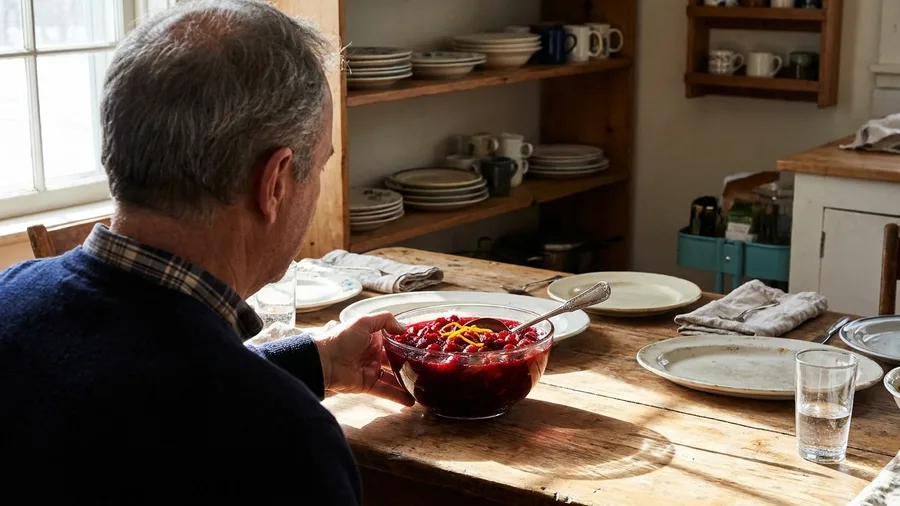
Almost every swap on a Thanksgiving table asks the cook to give something up. One dish asks for nothing.
Cranberry sauce lands at 110 calories per quarter cup whether it comes whole-berry from a pot on your stove or jellied and ridged straight out of a can. Twelve ounces of whole berries with half a cup of sugar and a strip of orange zest simmered for 10 minutes gets you the homemade version, and it saves you nothing worth counting.
That makes it the cheapest goodwill on the table.
A table where every single dish has been quietly adjusted reads, to a guest scanning the spread, as a diet wearing a holiday. A table with one dish left plainly alone reads as a table. The untouched bowl does social work no calorie saving can buy, and it costs you a can of berries and ten minutes.
So choose one dish per table and make it the old way on purpose. Then say so once, out loud, as you set it down: this one is exactly how it has always been. That single sentence turns the bowl from a lucky exception into visible evidence that the rest of the menu was a choice, and it buys you room for every quieter swap around it.
💡 Tip: Make it a day ahead. Cranberry sauce is better on the second day, and that is one less thing to do on Thursday morning.
9. Gravy from defatted drippings and cornstarch
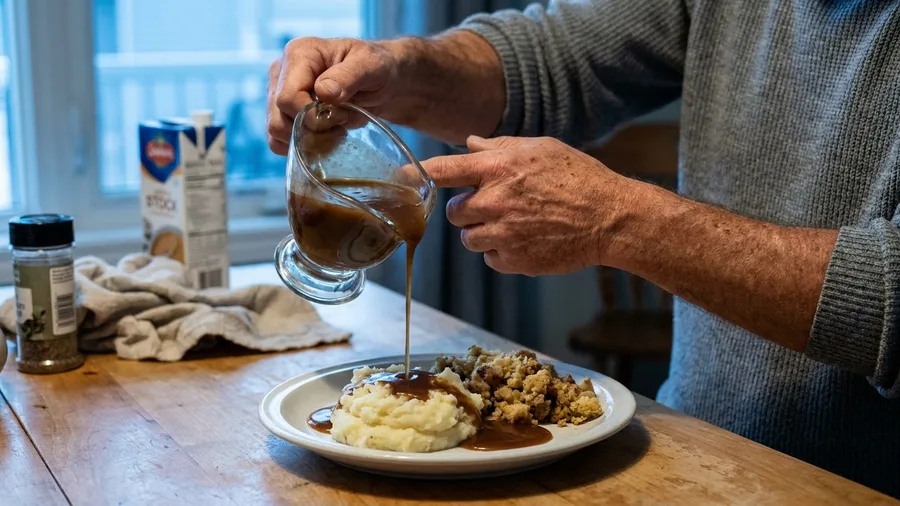
A quarter cup of gravy looks too small to matter, and that arithmetic is exactly backwards. Gravy is the one thing on the plate that touches everything else, so a saving made here gets multiplied down the whole meal without a single guest noticing a substitute.
The flavour never leaves. Pour the roasting drippings into a cup and let them stand until the fat rises, skim that fat off, then top the drippings back up to 2 cups with stock. Every bit of roast depth came from the drippings, and the drippings are still in the pot.
Cornstarch supplies the body the fat used to. Whisk 2 tablespoons into a little cold water first, stir that slurry in, and bring it up to a simmer. You finish at about 30 calories per quarter cup against 70, over mashed potatoes, stuffing and sliced bird alike.
Watch the heat at the end. Cornstarch turns cloudy if it boils hard, so pull the pan off the burner the moment it coats a spoon. Gravy is judged by shine before it is tasted, and a glossy surface is what keeps a lighter pour from reading as thin.
💡 Tip: Make the gravy in a glass measuring cup and pour from it at the table. It looks intentional and it gives you a spout.
10. Smaller rolls, warmed, with whipped butter
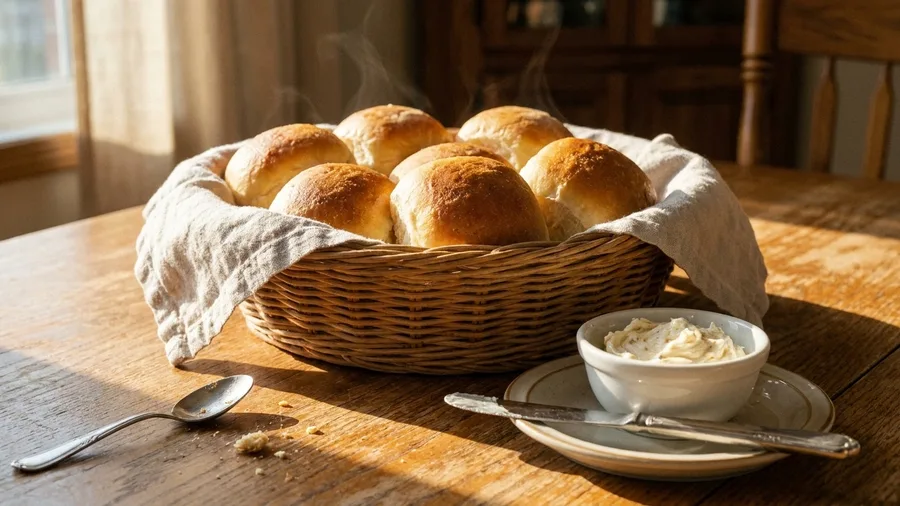
A spoonful of gravy spread across a plate is how a small thing becomes a large one. A roll works the same way, except the multiplier is a hand reaching back into a basket. Shrink the roll from 3 oz to 1.5 oz and the calories fall from 200 to 110, and anyone who has watched a bread basket at a holiday table can guess what happens next if nothing else changes.
They take two.
The mistake here is treating size as a solo decision. Size, heat and access do the work together, and skipping any one of them turns a lighter basket into a round of second helpings. Handle all three and most people stop at one without noticing they did.
The roll itself is a 1.5 oz portion, warmed to serving temperature rather than pulled from a cold bag. The butter is 4 tbsp whipped with 2 tbsp warm milk, which turns a hard pat into something that covers more surface with less of it and spreads the whole way across a torn half.
Then the basket. It arrives full and warm, because the first pass is the moment the roll is judged, and a hot roll settles the question in a way a large cold one never does. Warmth reads as fresh, and fresh reads as enough.
💡 Tip: Warm the rolls in a covered basket with a clean dish towel for 10 minutes at 300°F. They stay hot for the whole first pass.
Frequently Asked Questions
Will anyone at the table notice these swaps?
The two most invisible are the mashed potatoes and the gravy, because both keep the surface cue that people look for first: a butter pat on the potatoes and a glossy pour on the gravy. The more visible swaps are the sweet potatoes and the carrots, because their color and texture change slightly. Make both versions if those dishes are someone's tradition.
How much does a lighter Thanksgiving table actually cost?
Ten sides like these add roughly $14 to a $60 side-dish budget. Most of the extra cost comes from the cremini mushrooms for the green bean casserole and the extra-sharp cheddar for the mac and cheese. The other swaps are cost-neutral or cheaper.
Can I make these ahead of time?
Yes. The mushroom purée, the cranberry sauce, and the gravy can all be made a day ahead. The mashed potatoes are best on the day, but they can be held in a slow cooker on warm with a splash of buttermilk. The stuffing cups and rolls are best baked fresh, but they reheat well covered at 300°F for 10 minutes.
What if someone at the table is on a strict diet?
These swaps are lighter, not low-calorie. If someone at the table has a medical restriction, tell them what is in each dish plainly and let them decide. The cranberry sauce and the roasted carrots are the safest bets for most restrictions, but check with them rather than guessing.
Do I need special equipment?
A muffin tin for the stuffing and two sheet pans for the roasted vegetables are the only pieces you might not already have. Everything else uses standard pots, a baking dish, and a whisk. A smaller, deeper baking dish for the mac and cheese helps but is not required.
Which swap should I start with if I only do one?
Start with the mashed potatoes. It is the most invisible swap on the list, the bowl still reads as the real thing, and it is the one most likely to go completely unremarked. Once that works, the gravy is the next easiest, and after that you will have the confidence for the green bean casserole.
Three swaps, one untouched dish, and a table that reads as Thanksgiving
Begin with three moves, not ten. For a deeper bench of unfussy whole-food dishes to rotate in, see grandma's whole-food dishes. The mashed potatoes and the gravy are the two swaps nobody at the table will clock, the cranberry sauce stays exactly as it is, and one dish gets made the old way on purpose and said out loud once.
That is what the fourteen dollars and the back-to-back oven run actually buy: a table where the lighter plate reads as a choice rather than a restriction, and no separate diet menu ever gets set down.
The worry at the start was a family that spots a diet. The finish is a table where the title, color, top and temperature still say Thanksgiving, and the only announced decision is the one dish kept classic on purpose.
Guests remember being handed a full plate. They do not remember what was in it.
Print the ten-swap table and take it shopping
The comparison table near the top has every dish, both calorie counts, and what stays the same. Screenshot it before you leave for the store, and start with the mashed potatoes and the gravy.